← Call Me Back - with Dan Senor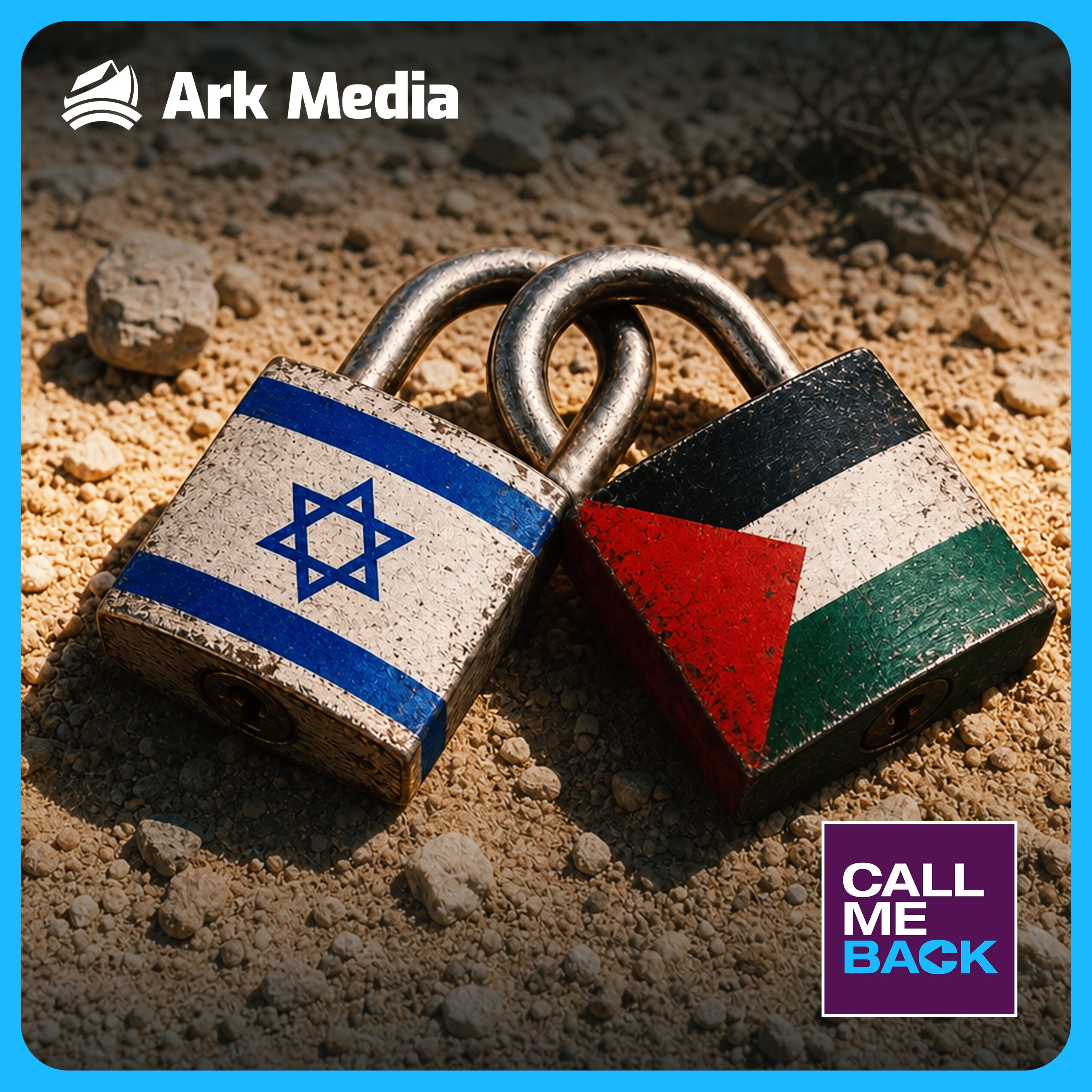
Call Me Back - with Dan Senor
Can we break the Israeli-Palestinian paralysis? - with Tal Becker
00:47:45
Loading summary
Transcript47 lines
- [00:02]
A
Over the past couple of years, CallMeBack has grown into something much bigger than we ever expected, a place for clarity, context, and honest conversations at a time when those things can seem hard to find. That's what ARC Media is all about, building a truly independent voice, which means no one shaping what we say or how we say it. To help support our rapidly expanding operations, we created Inside Call Me Back our Members Only feed. If Call Me Back has been meaningful to you and you want to be part of what we're building, I hope you'll join us. You can subscribe@arcmedia.org or through the link in the show Notes and to our insiders. Thank you.
- [00:51]
B
You are listening to an art Media podcast. There is genuine paralysis that is deeply understandable. There are those who, ideologically or politically do not want there to be progress and take advantage of the paralysis and trauma in order to advance that agenda. My argument is simply that if you think that this paralysis is serving us well and there's nothing we can do about it, then that's fine. But if you think it isn't serving us well, then asking what can we do about it? Feels like an urgent thing. I'm talking about the real thing. How do you create a dynamic in this impossible reality and in the tragedy that we face to nevertheless move to a better place and a more positive dynamic? If you want to produce change, the first thing you need to do is generate a belief in the possibility of change. And I think both societies believe fundamentally that change is not possible.
- [01:57]
A
It's 8am on Wednesday, July 15, in New York City and in Carlisle, Pennsylvania at the Army War College, where I am right now, for the AI and National Defense Summit hosted by Senator Dave McCormick. It's 3pm on Wednesday, July 15, in Israel. On Monday, we released a conversation with Rahm Emanuel after he gave a provocative speech at Tel Aviv University where he offered his own take on how Israel should address the Palestinian state question. It was a somewhat heated conversation, got a lot of attention, but one that I believe was done in good faith. But it got me thinking. Rewind the tape to 10 months ago when on this show, Archimedia contributor Tal Becker, who's also a senior fellow at the Hartman Institute and counsel to Hanigman llp, called the wave of Western recognitions of a Palestinian state. You'll recall that last summer, when country after country was recognizing a Palestinian state in this effort orchestrated by the UN and France. Well, Tal Becker called that wave of Western recognitions diplomatic theater, symbolic in nature and divorced from any actual change on the ground, he was right. Nothing had really changed, either then or since. There's no Palestinian government with effective control and there's no serious proposal on the table from anyone not from Ramallah, from Jerusalem, or from any capital in the Arab League, or really from any capital throughout the west that looks like a way out. Are we, by any honest measure, stuck? Today's conversation is about that paralysis, but not as a lament. We're going to work through it in three moves. First, what are the understandable and legitimate reasons Israel and the region are stuck where they are? Second, what is the next Israeli government, whoever leads it, actually need to do to get unstuck if stock is isn't a place any serious person wants to stay? And third, and this is where Tal and I actually diverge, what does unstuck look like in practice? Tal has spent decades in the room for these negotiations. He was on the legal team representing Israel at the Hague. He's been involved in numerous bilateral engagements between Israel and countries in the Arab world and Washington. He was involved in drafting the language for the Abraham Accords. If anyone can tell us whether unstuck is actually possible and what it costs, it's him. Let's get into it right after this message.
- [04:32]
B
I'm Deborah Pardes, the host of Ark News Daily. What's happening in Israel and the Jewish world right now matters, but it can be hard to keep up, let alone make sense of it all. That's why we started Ark News Daily. Every weekday morning, I walk you through the most important news, give you the context you need, and let you know what to look out for next. I don't try to convince you of anything, and I don't waste your time. On most days, I'll be in your ears for about 10 minutes or less. Then you can move on with your day, hopefully a little bit smarter than before. Subscribe wherever you get your podcasts or follow the link in the show notes. I hope to see you tomorrow.
- [05:18]
A
Tal Becker, welcome back to the podcast.
- [05:20]
B
Thanks, Dan. Good to be with you. Carlisle, Pennsylvania, you get around all the great spots.
- [05:25]
A
If you ever want me to help you plan a tour of this wonderful country, I'm your man.
- [05:30]
B
Great.
- [05:30]
A
Let me start with the most basic question. For purposes of this conversation, why do you believe we're so stuck on this issue? What explains it?
- [05:39]
B
Yeah, Dan, I think for a lot of your listeners this is going to be a tough conversation because so many of us, myself included, I imagine you as well, this is an emotional issue. And a lot of us, I think Especially those who care about the future of Israel and its security, have felt for a long time kind of under assault. There's, like, selective outrage, there's libels. And that can push you into a place where you want to be quite defensive. You don't want to ask, what do I need to do? How do we get out of it? You want to kind of just stay in the place of explaining why things are so hard. So let's start there. I think a lot of people like to hear the eloquent articulation of the position they already have. They go to a speech, I'm this way too, sometimes a podcast, to say, yeah, I agree with that. I would say a couple of things about why we're stuck, particularly now. The first, I think, is obvious, of course, and that is the impact of the war, these three years of war. I think both societies, as a result of the tragedy and trauma of this war, believe that the majority in the other society has a kind of fantasy of their disappearance or extermination. Whether or not they're right about that, I think that fundamentally, the feeling about the other side is that their aspiration is not to resolve the conflict, but to make the conflict disappear by the kind of total defeat of the other side. And when you have societies in that place, imagining moving forward is really difficult. And I think I would start there. I've spent a lot of time in the negotiating room with Palestinians, and one of my core experiences that I felt there was that it's kind of a dialogue between two traumatized people who need therapy on a national scale, and each of them have so many scars and have had their assumptions reinforced in certain ways, and it's so difficult to do it. So I want to start there. A second place is just around the language of Palestinian statehood and the idea of a Palestinian state. I think for a lot of Israelis, after October 7, that idea of a Palestinian state sounds the equivalent of creating the conditions for October 7th to happen again. Even before that, we haven't figured out a way for that Palestinian state not to be a failed state or a terror state. In other words, the Palestinian state would be a platform for continuing the conflict, not resolving it. I think that's a core Israeli fear and something a little deeper. I think if you took Israeli Jews and kind of put them on a couch in a therapist's office and you said to them, you know, what needs to happen now is to see the emergence of a Palestinian state, they would kind of be triggered and say, are you implying somehow that October 7th is my responsibility that the reason why it happened was because of things that we did. So the very conversation about what do we need to do? Falls into the place of all that trauma and pain around October 7th. And I hear, I don't diminish either Palestinian trauma and suffering or Israeli trauma and suffering. But I think for a lot of Israelis, a distinction that is made in the west between kind of Hamas or Palestinian terrorist organizations who are committed to Israel's destruction and the Palestinian civilian population who would just want to live in peace if only we could take away the capacities of those organizations. I think for a lot of Israelis, that misunderstands how radicalized Palestinian society is. And I think the experience of a lot of Israelis is, if you look at Palestinian society as much as we might want it to be different, the dominant Palestinian narratives are either in a kind of Islamist sense that Israel is a kind of affront to Allah and an illegitimate entity because of that, or the language that Israel is a kind of colonial entity and illegitimate because of that. In other words, the kind of mindset that Israelis believe Palestinians have is a mindset that rejects the very idea of Jewish self determination. Now we have radical voices within Israeli society too. And I don't want to diminish that either. On all my years of being involved in the peace process. It's got a bad name, that phrase, the peace process. If you want to produce change, the first thing you need to do is generate a belief in the possibility of change. And I think both societies believe fundamentally that change is not possible, that the societies they see, not just the leaders, but the societies they see are not ones who genuinely would like to move to that future. In Israel, we have a feeling of, you know, we offered and they said no. In repeated negotiating efforts of which I was involved in one degree or another. And that, I think feeds this environment, that we're just stuck and we can't do anything about it. And what I want to talk to you about today, Dan, and I like the way you set it up, is that despite all of that, and there's room for that, and it's understandable and our cynicism is understandable and our skepticism is understandable, there are a set of reasons why that paralysis is doing us a lot of damage. And we really need to think how we emerge from it and what might be possible, because there are a whole bunch of imperatives both related to the Palestinian issue and beyond that, that this kind of mode of being where we kind of throw up our hands and say there's Nothing we can do is doing us real harm.
- [10:54]
A
Okay, so there's a lot there. I wanted to jump in and react to a lot of things you said, but I figured in the spirit of giving you the opening framing, I would hold back. Let me just ask you a very basic question. How would you define what a Palestinian state is supposed to solve for for both Israelis and for Palestinians?
- [11:13]
B
Let me put it this way. This is a conflict about two peoples who each want a place on the planet to call their own. Two peoples with a story of indigenousness and belonging and a right to self determination that they want to real. And in its aspirational sense, the Palestinian state is meant to be that place where the Palestinian people realize their right to self determination in a way that isn't threatening to Israel, in a way that enables them to live in prosperity and peace, but that also respects the Jewish people's right to self determination in their own homeland. Because of a recognition of this idea that these are two peoples with a story of belongingness to this land. I'm a little allergic to the word solution, Dan, as listeners probably know, because I don't think foreign policy is really about solving math problems. You're trying to make life better. But those who advocate for Palestinian statehood in that way are basically saying we have to give an avenue for the Palestinians to have the full realization of their collective identity in a space of their own in order to create a reality where Israel is able to do the same and isn't threatened. But of course, from an Israeli perspective, that depends completely on whether that that state, first, is an entity that resolves the conflict or creates more appetite to continue the conflict. And second, whether in reality that state doesn't become a kind of terror state, failed state, or a platform for extremist actors, as we saw essentially in Gaza. And we have a situation of Iran trying to flood Judea and Samaria with weapons as well. Doesn't that become a reality in which we are threatened? But it turns out at the end of the day on this idea that this is a conflict between peoples that will be resolved by each people coming to terms with each other.
- [12:56]
A
So Tal, that's all very understandable, but how do you make the case to Israelis that they need to focus on this and get unstuck? Because I do think there's a sense of, you know, in my spirited conversation with Rahm Emanuel, I pointed out and he wanted to make the obstacle BB BB BB Bibi. Bibi and his government. And I tried to keep reminding him he has a much bigger problem than Bibi and his government. I mean, there's. If you look at the public polling, Netanyahu has something like 40% in terms of support for him as prime minister or his favorable rating, or whether or not he should continue to be his prime minister. But then you look at the percentage of Israelis who oppose a Palestinian state or a two state solution, it's like 70 to 80%. So there's a big chunk of voters who both loathe Bibi and loathe the idea of a Palestinian state. So how are you going to talk to them?
- [13:43]
B
Yeah, you know, it's very hard to overcome the cynicism and skepticism that anything is possible. And before I talk about the imperatives about why we. It's kind of urgent for us to try to unstick this. I'll just say that there's a conceptual issue that I do try to talk to Israelis about, and that's a distinction between the way we talk about security and the way we talk about peace. I think all of us understand that there is no such thing as absolute security, 100% security. And we, in Israel's policy, we're always asking, how do we become more secure? Not how do we become completely secure. Right. Because we know there are adversaries, there are threats. We're trying to diminish those threats, have the capabilities to confront them for some reason. When it comes for peace, unless you can offer a version of peace that is kind of utopian or messianic, you're this naive guy who's talking about peace, right? But the reality is, in the same way that you can talk about security having more or less security, you can talk about peace or relationships as being better or worse, having more or less peace. And the reality is the Israeli Palestinian relationship has gone through periods that have been better or have been worse. And our core responsibility is to ask, how do we make it better? That obviously includes confronting the enemies of peace, confronting Hamas, making sure we're secure. That never goes away. But just that basic question in Tehillim, in Psalms, it says, seek peace and pursue it. It doesn't say seek peace and achieve it. Why doesn't it say seek peace and achieve it? Because who the hell are you? You don't have the capacity to control all the variables and achieve peace. What you have the capacity, and I would argue the obligation to do, is ask, how do I make there be more peace? In other words, more security, more peace. Those things should be framed in a similar way. And we need to kind of move away from that kind of utopian language, of peace, to ask, how do we make this relationship better? I describe Zionism always as kind of operating in that space between apocalypse and the Messiah. And the gift that we have been given through Israel is the capacity to ask, what do we do to make things better? So there's that conceptual framework. And with your permission, Dan, I'll talk about some urgent imperatives that I think really strike me. And here I want to say this is. Even if you're cynical about what's possible in the Israeli Palestinian relationship, the first kind of train headed in our direction, I think, is Israel's legitimacy crisis. Ara's story is under assault in the west in particular, like never before. Now, it's true, at least in my view, that a lot of that is not just about Israel or its policies or actions. This came up a little bit in your conversation with Ram as well. Some of it is anti Semitism and hostility, for sure. Some of it is about the way the west sees itself and looks at Israel through the eyes. But some of it is also about Israeli policy in action. It is hard to imagine us confronting this challenge of our legitimacy crisis without articulating some kind of positive dynamic and working towards a positive dynamic on the Israeli Palestinian relationship. Not all of our critics are enemies. Yair Lapid had this line a little while ago at the Herzliya conference that the French are annoying, but they're not our enemies. Right. I kind of like that line. But basically what he was saying is that not every statement that says Israel needs to consider how to do something is something that we need to kind of be kind of defensive about. And here I would say it's hard to imagine us emerging from that legitimacy crisis, from helping our friends be our friends, without being in the business of aspirations and explaining what vision we have for moving the Israeli Palestinian relationship forward. At the very least, we have an obligation not to empower our enemies and alienate our friends to the extent that it's in our control. So even if you're cynical about the Israeli Palestinian relationship and Palestinian society and what kind of agreement is possible, even if you're an opponent of a Palestinian state, that question of how does Israel signal to itself and the world that it wants to move in a positive direction, I think that's imperative, number one.
- [17:47]
A
So that's imperative, number one. Let's go on to the next one.
- [17:51]
B
Imperative number two is that it may be, and you, Dan, are more the expert than I am in this. It may be that the next US President, let's put it mildly will not prioritize the US Israel relationship in the way that we believe it should be prioritized because of its importance given the dynamics on the Democratic side, but also on the Republican side. The US Israel relationship will undergo some significant changes. And I think that creates its own imperative because we need to ask ourselves, how do we use these next two years really well, to create a stable, secure reality for Israel so that when it comes to imagining and engaging with the next US Administration, we're not in a posture of asking for too much courage or too much resources from a political environment that may not be able to give that to us. And so the question is, what do I do now that enables to increase the chances of more security and more stability? And frankly, it's hard to imagine answering that question without asking what do we do in Gaza and in Judea and Samaria and the west bank to make it so that the risks of a serious conflict are diminished and the chances for positive movement exist. So I would say that's imperative.
- [19:03]
A
Number two, Tom, before you move on, there's just something that's gnawing at me. You said that the crisis now, you establish that the crisis now is a war on Israel story. And I would just say that there's been a war in Israel story going on for a long time. 1975, there was Zionism equals racism. Resolution passes overwhelming at the UN with Yitzhak Rabin as prime minister. I should add the early 2000s, the Durban conference, which was like a a festival of war against Israel story during the Bennett led government just a few years ago. You look at the reports coming out of the UN critiquing Israel's operations or policies in the west bank and Gaza. It reads no different than today. And that was when Israel's government included an Arab Muslim party in the government. So I'm a little sensitive to this idea that there's a war on Israel's story. I agree that it's more intense now. It may have hit 11, but it's not necessarily something new.
- [19:59]
B
Yeah, well, I certainly agree with you that it's not new. And I sometimes describe Israel's whole existence as operating in this kind of tension between the criminalization of Israel on the one hand and the normalization of Israel, Israel on the other. And that has been a constant throughout Israel's story. And we kind of move between them. You're right to mention that to me. And I'm a little upset at myself because I don't like doing these claims without some significant analysis like how do you actually measure it and give a metric? So in that sense, I give it to you. But both of us agree that we're not where we want to be, right? And that for me is all that matters. Is there space to make this better? Is there space to try to create conditions where our story is easier to have sympathy for and support for our friends, to feel like they can align with us? And here I'm talking about both Jews outside of Israel and non Jews. Is it in our interest to be seen as wanting to improve this relationship despite all the cynicism we have? I think the answer is yes, regardless of whether this is the worst it's ever been or not. A couple of other reasons why we need to kind of get unstuck even if we're feeling all these understandable feelings. And this analysis, I think has weight to it.
- [21:11]
A
Okay, and imperative three.
- [21:13]
B
So the third is actually in the realm of opportunity. And I think there's an open question as to whether there is still an opportunity for normalization and what it might take to get to real regional integration between Israel and the Arab states. We're in a complicated moment in the dynamic with Iran. The dust hasn't settled yet. But I do think it's fair to say that the prospect of normalization will be hard or much harder to advance without some serious positive movement on the Israeli Palestinian issue to create that frame that will make it easier for us to partner with those Arab states that are willing to partner to us now. We may not be able to go to the extent that they want to go. I think you're right. Most Israelis are opposed to a Palestinian state today for reasons that we talked about. But that doesn't mean we can't create, or at least there's an urgency to say, let's create the kind of positive momentum that perhaps enables, enables us to make best advantage of whatever openings of normalization there are. Because as you and I have spoken about, Dan, in my mind normalization is a critical component of the battle against the enemies of Israel and the enemies of peace. It is the ideas place where we try to move away from a zero sum conflict and create a space where you have Arab and Muslim states coming to terms with the Jewish state, which is critical for that criminalization, normalization battle that we talked about. So there is an imperative there in my mind to ask ourselves, what does the politics allow? What do we need to do? To some extent, what risks do we need to take to make the most of the benefits that normalization could bring us if we can do that. And I'll mention two other factors, Dan, finally. One is, I think in the second last two years of the Trump term, it's reasonable to assume that President Trump and his team will be asking themselves, how do we do something big on the Israeli Palestinian issue? How do we build off the board of peace and the Trump penny point plan and come with a vision, maybe a kind of deal of the century 2.0? I think the Trump team thinks big, wants to leave a big mark. If Israeli society and Israeli political level is stuck in this place where we can't even think about it or engage, we may not be able to effectively deal with that initiative from the Trump administration as best as we could. We want and should be partners to an effort to make the most of these two years in the language of it, that perhaps a Trump initiative may emerge. And something else which I'm sure will annoy some of your listeners. But I think it's important to say beyond all those imperatives, I think there's a moral imperative. And we are a people for whom the pursuit of peace is integral to our identity. It's integral to our texts. We are the people who said that everyone is created in the image of God. What's hateful unto you do not do unto others. And so I think it makes us, it obliges us to say the reality as it currently is, is not something we should be complacent about, is not something that the only move we have is to explain to people how it's so complicated and why others are to blame. And again, this doesn't mean we don't have an obligation to be vigilant on security and confront Hamas and all those who seek Israel's destruct or threaten Israelis. But there is another level to this, and that is to ask how do we do our best in that reality, to respect Palestinian humanity, to have respect for the things that we believe in in a realistic and not naive way. If we want to protect the soul and moral integrity of our people, we should not be in the business of saying we're okay with the situation as it is not in Gaza and not in the West Bank. So I think all of those imperatives, despite your cynicism, require us and in a way, give us the privilege of saying, all right, what is possible? What does the politics allow? The reality is there, the pain is there, the trauma is there, but we are not being served well by this paralysis. So what can we do?
- [25:16]
A
Okay, vital, you're saying that there's a politics problem that needs to be solved. And I just want to push back. Is isn't there a good faith problem to be solved? Because you're on the podcast in June of 2025 and you said, and I want to quote you here, there are some in the Israeli political ecosyste operate in good faith, but I would say most Israelis are actually operating in good faith. I don't feel I can say the same thing about those on the other side of this debate. That's what you said. First of all, do you still believe that? And if you do, is the paralysis fundamentally a good faith gap rather than a policy gap, or as you're saying here, a politics gap?
- [25:53]
B
I think it's all of the above. There is genuine paralysis that is deeply understandable. There are those who ideologically or politically do not want there to be progress and take advantage of the paralysis and trauma in order to advance that agenda. There's a whole host of different things going on. My argument is simply that if you think that this paralysis is serving us well and there's nothing we can do about it, then that's fine. But if you think it isn't serving us well, then asking what can we do about it? Feels like an urgent thing. The problems of Palestinian statehood remain and the diplomatic theater of the recognition remains. By the way, Dan, I'd just make a reminder that a few of those countries who did recognition had some conditions attached to that recognition. They said within a year there have to be elections in the Palestinian Authority. The pay to slay mechanism has to end. There are all these conditions associated with it to try to make it practical. I haven't seen any of those countries being vigilant or disciplined about the conditions they put to recognition, which really does demonstrate how much it was diplomatic theater and trying to appeal to different audiences. I'm not talking about any of that. The real thing, how do you make people's lives better? How do you create a dynamic in this impossible reality and in the tragedy that we face to nevertheless move to a better place and a more positive dynamic. Things can always be worse or better. And we have every reason to ask how to make it better. I'm not right now, Dan, having a debate at like Cornell University and wanting to win the debate as to who is more at fault. That is important, right? Because it affects Israel's legitimacy and Israel's story. But I'm not just in the business of debating. I'm in the business of trying to make people's lives better. And we all should be. The discussion can't stop at? Who do you point the finger at?
- [27:43]
A
We'll be right back. Hi, I'm Daniil Hartman, president of the Sholem Hartman Institute in Jerusalem.
- [27:50]
B
And I'm Yossi Klein Halevi, senior fellow at the Shalom Hartman Institute. What's more important?
- [27:56]
A
To be feared by your enemies or morally true to yourself?
- [27:59]
B
Should Israel strive to be a nation among nations? Or should it accept the fact that it is now a fortress apart?
- [28:06]
A
What do Israelis and Diaspora Jews owe each other? If you're Jewish or a friend and
- [28:11]
B
ally, these questions have been gnawing at you these past few years.
- [28:15]
A
For some of you, like for us, these questions have been keeping you up at night. And for some, they've been simmering in the background, waiting for answers.
- [28:24]
B
But dilemmas don't always have clear answers. What they do deserve are honest and respectful debates.
- [28:32]
A
And as it happens, Yossia and I love to challenge each other to get to the bottom of things.
- [28:37]
B
We look at current events through a lens that speaks to us most deeply, a Jewish lens.
- [28:42]
A
So if today's Jewish dilemmas are on your mind, tune in to our conversation on For Heaven's Sake, a partnership between ARC Media and the Sholem Hartman Institute.
- [28:52]
B
You can find For Heaven's Sake on Apple, Spotify, YouTube, or wherever you get your podcasts.
- [28:58]
A
See you there. And we're back with Tal Becker. So, Tal, against the backdrop of everything you just said, elections have been called. As we've been talking about this podcast for October 27th. There will likely be a new government a few months after that in some form. It's hard to know what right now, but. But what do you think is possible?
- [29:17]
B
You know, Dan, I sometimes make the mistake of reading the comments after we do a podcast. I don't know if you read your comments too much, and sometimes I realize that I haven't been clear enough because. Or else the person writing the comment just wasn't listening. So I want to start by saying that there are a set of Palestinian responsibilities and a set of Arab responsibilities. Security is a genuine threat, and I'm not diminishing any of that. And yet, if you ask what is possible on the Israeli side, it'll obviously be a function of the kind of government we have and the kind of politics it allows. And as someone who was in government for a very long time, I do tend to ask myself, what does the politics allow? As a core question, I'm not in some fantasy land as to what is required or even right. The question is, what can you do? And I think that there are five very specific things. And I'm gonna go through them because I think that we need to have begin to have a real discussion about what's possible and necessary. Number one, we need to articulate an aspiration. We need to signal to our friends in the world, to our partners in the region where we want to go. I do not believe, given where we are, that that aspiration can be a two state outcome. I do think that articulating an aspiration, something like Israel would like to live in a reality where both Israelis and Palestinians live in peace, security, prosperity and dignity is an important statement to make. We are not okay with this reality. We want to move out of it. And we may have differences as to why we're there, but we agree we want to move forward. I think there's nothing wrong with articulating an aspiration. You don't know how to realize there's everything wrong with not articulating an aspiration at all and just being in that state. I would start with that. Just some kind of North Star about where we want to go that enables our friends to feel like we are signaling to them. We're willing to listen to ideas. We're going to be skeptical and very serious about them, but we want to move in a positive direction, number one. Number two, probably the single most important immediate thing to do, and that is a very visible and obvious clampdown on Jewish terrorism in the West Bank. Now, that phenomenon is not, probably not the phenomenon as it's written about in the international media. I think the picture is a little more complex than people describe from a factual level. But it is a phenomenon that is a total moral bankruptcy on our part. Even if we weren't suffering hemorrhaging legitimacy and criticism, it would still be necessary for us to respond to it and the next Israeli government. I think, and there are indications from Israel, really quite significant parts of the Israeli political spectrum that that is and can be a core priority of the next Israeli government. And I think that's going to be critical. So that's number two. Number three is I think we need to suspend our cynicism for a little bit and say we would like to help the Palestinian Authority reform if it can. Now, most Israelis are very skeptical and cynical about whether the PA can actually reform itself, genuinely engage in an educational program that fights incitement, end pay for slave, do all the kinds of things that show that it can be a responsible governor, responsible partner. They have earned our cynicism. And yet I don't think we benefit a lot from kind of standing on the sidelines and saying the PA reform effort is going to fail. We are much better in saying, if you want to do this seriously, these are the benchmarks. Israel wants to support that effort. And I would note here, Dan, it's important to note we accepted the 20 point Trump plan to end the war in Gaza. That Trump plan really puts high priority on a serious process of reform of the Palestinian Authority for it to have a role in Gaza and for us to imagine how we move even to a better future. And I think the Saudis are also quite invested in that process of PA reform and we're better off keep our cynicism inside and say, you know what, we're not sure this is going to succeed, but nevertheless present ourselves as being a partner in that effort. So that's, I think, number three, number four, you know, Dan, you mentioned that most Israelis are opposed to two states, but I think polling suggests that they're also opposed to one state and a one state reality. They are very keen on a kind of separation where we're not completely intertwined one with the other in ways that just perpetuate friction and conflict. And there, I think there's room for the next Israeli government to think about what measures did particularly Smotrich take in the west bank that have created a reality in the west bank that actually makes it harder for there to be law and order and governance, harder for Israelis and Palestinians to live in dignity and with livelihood, but without one being in friction with the other. And there are elements of Smotrich's decisions. For example, recently the Israeli cabinet with Smotrich's initiative, kind of did this decision to privatize. A lot of the decisions that happen with respect to territory in the West Bank. There are some arguments why that may be legitimate, but that the end result of that is a process where there isn't government oversight over decisions that could cause real friction and real harm and potentially escalate into conflict. So I would say number four is looking at how to reverse some of those decisions to as best as possible create a reality that is livable for Israelis and for Palestinians. And number five is in Gaza. And with respect to Gaza, I would say that I would draw attention to point 17 of the Trump plan. And point 17 basically says that that where you can make progress to create a post Hamas reality in those areas of Gaza that are not controlled by Hamas, you should try to do so. And I think that you could imagine a policy that maintains massive pressure on Hamas does not give up one iota on the demand for disarmament, but takes really seriously the prospect in those areas not controlled by Hamas of how to begin to have normal life and so on. It will require incentivizing Palestinians to move there. It will require vetting Palestinians. But I think there's another example of that. Prime Minister Netanyahu has always said that Palestinians should have all of the capacity to govern themselves without the capacity to threaten us. That, I think, is a place where a lot of Israelis are, Naftali Bennett recently said in an interview. He also thinks that while he's opposed to two states, he's also opposed to one state. And he thinks that Palestinian livelihood and dignity can be advanced without it threatening Israel's security. And if you turn that stuff into policy, I think there's actually quite a lot that can be done that doesn't jeopardize Israel's security, but creates some positive momentum to make things better. The last thing I wanted to say is that I'm kind of conscious that for people hearing that, for some it'll be too little because they have this imagining of a grand solution. And to them, I would say we have one resource in the Middle east more than oil, and that is bad options. That's our most abundant resource. And I don't want to rule out the possibility that we may get to a day where we can do a lot more. I don't even want to rule out the possibility that we may be able to find a way for there to be a Palestinian state that isn't a failed state or a terrorist state, where that word state doesn't have with it the connotations or the reality that trigger so many Israeli concerns and fears. But I think we need to be really practical. What can be done now can't be like, in my view, this leap forward that ignores the actual people who are afraid, which is the Israeli public, the actual people who are traumatized. Israelis and Palestinians both together, and just some positive movement is critical. And I would say on the reverse for some, this, what I said will be too much. And I'm expecting the comments to say, tell what about asking the Palestinians for this? Don't you know, they just want to destroy us? Right? So I'm not naive. I've got a lot of hours under my belt on this issue. This is not about being naive. This is about understanding that pessimism and wisdom are not the same things.
- [37:29]
A
Okay, vital is that basically what we're shooting for, whatever the composition of the next government is that getting to a path where there's some self governance in Gaza by the Palestinians and in the west bank they have some kind of civilian administrative autonomy. And if the difference between that and a Palestinian entity having the capacity to threaten Israel, if the difference between those two is quote unquote statehood, then whatever you're envisioning is what is most realistic. But it's worth still striving for is just going to fall short of what many would call define as sovereignty, as real defined sovereign borders.
- [38:07]
B
So I would say to that that I'm not describing something that I think is the end of the road, of the end of the conflict or addresses all the core issues. I'm asking right now what's possible and right now what's possible to me at least given what happened on October 7, given the radicalization in Palestinian society, given what we've all been through, imagining a kind of something bigger than this to me at the moment, I'm not ruling it out, but just to me at the moment feels too far. So in the way that you asked your question, I'm not suggesting this is the five point plan for the future of Israeli Palestinian relations forever. I'm saying how do we move in a direction that helps Israel in a whole set of areas and creates a better reality to the one that we live now and makes it easier for us to demonstrate that we're moving forward now? This is one piece of a much what needs to be a much broader strategy. We can't advance this without also confronting the spoilers in the region and confronting Iran, who has a vested interest in making any progress on the Palestinian Israeli issue. Collapse. Confronting Iran is not a warmonger's agenda in my mind. If you're serious about a Middle east based on peace and coexistence, you better be in the business of confronting the enemies of that reality. And also the regional component. It's not just about Israeli Palestinian relations, it's also about the regional spoilers. It's also about regional integration. Those three things need to move together. And it's also about Palestinian responsibility and agency. We should also be in the business of demanding from them measures not for everything, by the way, it's not all about reciprocity. I don't think we should be demanding reciprocity for the articulation of an aspiration or demanding reciprocity for clamping down on violence by Jews in the West Bank. That is something we need to do for ourselves. But there are things that unless the Palestinian Authority reforms, we shouldn't do and would be unwise for us to do we have to use our leverage well and wisely? So that's the way I think about it. And it's a kind of way of saying, as hard as it is, let's emerge from the paralysis because it is in our vested interest to do so, both on the Palestinian issue and for our relations in the region and for our relations in the west and for our sense of self and who we are and who we want to be.
- [40:22]
A
In December of 25, you spoke about an emerging Judeo Muslim civilization growing out of the Abraham Accords, where the region's focus shifts away from who the land belongs to. The Saudis, the way they talk about normalization, they say it requires a credible pathway to statehood. So how do you square sort of what we're talking in very kind of practical terms with kind of statehood, as it's historically, traditionally technically defined sort of statehood agnostic approach, with the actual concrete reality that the Saudis or others may require?
- [41:01]
B
Yeah, so first I would say that the regional order is in flux, the situation is in flux, and we're going to need to see what's possible, what's needed, and we have needs, others have needs. We need to listen to one another to see what's possible and ask ourselves what are the risks we're willing to take and those we're not willing to take. If a failed state or a terrorist state is going to be in our border three years after October 7th, I don't see a lot of Israelis enthusiastic about this. The other thing I'll say though, Dan, is that Rahm Emanuel actually said something pretty interesting in the podcast with you last time. And there he said that he thought that the Arab states had a responsibility to make sure that a future Palestinian state was not a state that threatened Israel and was secure. So I think that those states who want Israel to move further on the Israeli Palestinian relationship should take serious responsibility for being partners in de radicalizing Palestinian society and creating a reality in which Israeli fears which have been well earned would be seriously addressed, if that's possible. And I would say I've actually shifted on this, Dan. I've noticed about myself since before October 7th and after October 7th. Before October 7th, I was very keen for us to move ahead with Israeli Saudi relationship if we could, with as minimum a Palestinian dimension as possible. I thought Israeli Saudi normalization was important for both countries and that it would have its own benefits on the Israeli Palestinian issue. Where I've shifted is that I think that one of the key components of our engagement with the Arab states in the region, including Saudi Arabia, should be insisting on those countries being partners with us in creating the kind of Palestinian governance and leadership and responsibility that makes it possible for Israel to move forward. And this will be a change, because a lot of Israel's experience, frankly, is that so much courage and risk taking and decision making is expected of Israel, and very little is expected of the Arab states who want this outcome. So in that sense, I'm not interested in some signing ceremony that simply improves the bilateral relationship that doesn't also ask, how do we take responsibility for the region? How do we make sure that Iran doesn't rebuild capabilities and threaten us all? How do we make sure that the extremist elements within Palestinian society are set back as much as possible? It goes back to that thing, Dan, that in foreign policy, the core question to ask always is, how do we make things better? And there, the Saudis have a role to play, the UAE has a role to play, Israel has a role to play, America has a role to play, and the Palestinians have a role to play.
- [43:43]
A
Okay, last question for you. Based on everything you've said here and beyond changing minds and changing hearts, what is the first concrete step you think an Israeli leader and a Palestinian leader must take to begin to break out of this paralysis?
- [44:00]
B
You know, I kind of regret that I studied law and not psychology, because I think that fundamentally what matters here is what people think is possible. And so what I would like our leaders to say to us is that they know that this situation is undesirable at best, and that they are committed to trying to make it better and that they believe that that is possible. And I really think it begins with the kind of broadcasting this agency in our sense of responsibility and possibility of what may be possible. And here I would say, for very understandable reasons, again, Israel has been, in the last three years, in a mode where our security has been focused on military means, and military means are a critical, indispensable element of guaranteeing security. But they are not the only tool in the toolbox. If we want to achieve peace and security and stability, or more peace, more security and stability, that toolbox needs to include what we do to enhance our alliances and partnerships, what we do to build the resilience and thriving of Israeli society, and how we signal that we are always ready to make things better and move forward. And not just in the mode of explaining why we're not to blame for how things are. We have a lot of people to blame. There's a lot of hate out there, a lot of anti Semites out there. But the blessing of Israel is we get to ask another question, and that is, what can we do about it? If I had a chance to institute a rule for the Jewish people right now, I don't have that power. You have that power down. So if you agree with me, you should do it. It would be. We're not allowed to ask anymore. How worried are you about X? How concerned are you about X? That's a common question in podcasts. As if there's this kind of number you give, it's a seven, it's a 12. That's how worried I am about it. The question to ask is, what do you think we should do about X? What do you think we need to act in order to improve X? That is the era we are in. We are in the era of Jews with power and responsibility and agency. We can't solve every problem, but we can all sure, ask the question, what can we do about it? And we can also, at least to some extent, answer it.
- [46:21]
A
All right, Tal, I'll leave it there. Those are wise words, not only just generally, but very specifically for those of us that are in the podcast business.
- [46:29]
B
Thank you, Dan. Appreciate it.
- [46:31]
A
All right, thanks, Tom.
- [46:40]
B
Foreign.
- [46:46]
A
Hi, it's Dan Sonor. Israel is heading into one of its most consequential elections, and this time, the whole world is watching closely. Hot takes and daily noise are pretty much guaranteed to populate your media diet. But as with any election, there's a deeper story about identity, religion, democracy, and what kind of country Israelis want to live in. That's why ARC Media launched Israel Votes, a special initiative across Call Me Back For Heaven's Sake. And ARK News Daily. You'll hear from the leading candidates shaping the race, along with analysis and reporting from two of Israel's leading political analysts, ARC Media contributors Nadavael and Amit Segal. Join us for Israel Votes, your front row seat to the election that could define Israel's Future. Go to arkmedia.org votes to watch and listen. See you there.