← The Curiosity Shop with Brené Brown and Adam Grant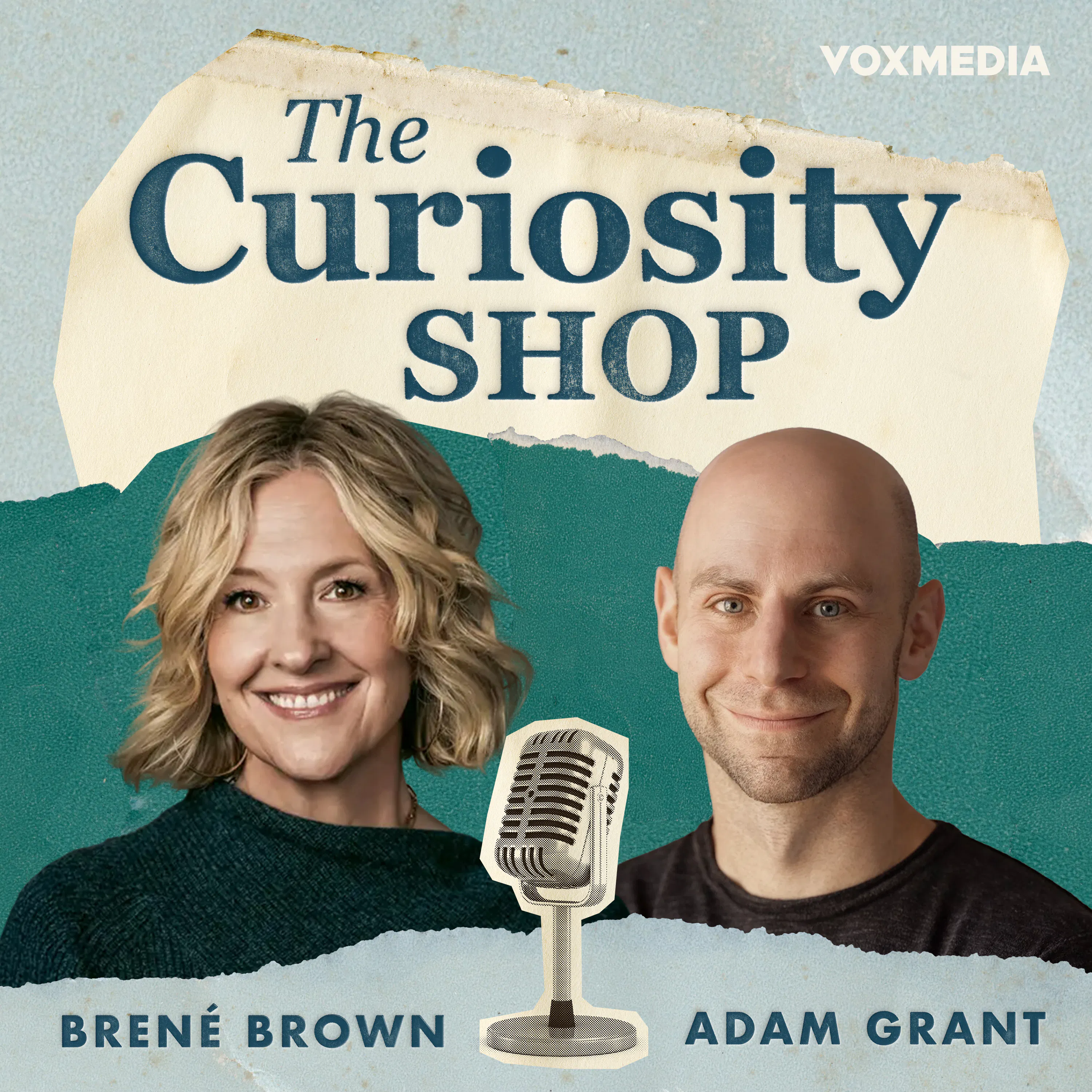
Loading summary
Transcript92 lines
- [00:00]
Adam Grant
Hey everyone, it's Adam Grant. The Curiosity Shop is on summer hiatus, but stay tuned as we'll be back with brand new episodes July 30th. In the meantime, we're revisiting some of our favorite conversations. Today's episode was originally recorded during Brene's Dare to Lead series on Strong Ground. In this episode, we tackle a question every leader eventually faces. What do you do when someone's giving their all but the results just aren't there? We talk about the difference between effort and excellence and how great leaders coach people toward meaningful growth. Let's dive in Monday.com AI agents took over my work and I absolutely love it. Chasing deadlines, writing status reports, updating stakeholders. Agents handle the daily grind. Now I stay in the loop only when it matters. Create your own AI agent in minutes
- [00:47]
Advertisement Voice
on Monday.com I'm pretty confident talking into a mic. Hey, I'm doing it right now. But home projects. I second guess everything. Is that noise normal? Is that water damage? And who should I even call? That's where thumbtack comes in. Upload a photo or voice note and their AI powered search helps diagnose the issue and match you with the right top rated local pro. Instead of second guessing or searching for hours, you get clarity and can hire the right pro with confidence. For your next home project, try thumbtack. They know homes. Hire the right pro today. Excuses are easy. An epic movie night. We don't have enough snacks. Dinner party with the girls. We'd have to decorate. Surprise date night. Nothing to wear but Amazon's Prime Same day delivery lets you say yes before the moment slips away. Try that new popcorn maker. Order those cheeky drink glasses. Get that new perfume and turn that I wish we could into. Into an. I'm so glad we did. Visit Amazon.comprime to find millions of items delivered fast. Same day delivery, it's on Prime. Available in select areas. Terms apply.
- [02:07]
Brene Brown
Welcome to the Curiosity Shop, a show
- [02:09]
Adam Grant
from the Vox Media podcast network.
- [02:17]
Brene Brown
Hi everyone. I'm Brene Brown and this is Dare to Lead. And I am back for episode six of this. This special series with my friend Adam. Hi, Adam.
- [02:27]
Adam Grant
Hey, Brene.
- [02:28]
Brene Brown
How's it going?
- [02:30]
Adam Grant
So far so good. But we'll see where this goes, won't we?
- [02:34]
Brene Brown
Yeah, I. You know, you're one of. So there. There are several. There are teachers in the book and the teachers in the book includes. You are folks who I thought their work was. Their. Their impact on the book and my research and my thinking was so big. It was more than just kind of a paragraph. It was. I wanted to share a lesson directly. So Think Again is one of my all time favorite books. And so I share an excerpt from Think Again in the book. Were you surprised to see yourself come up in yet another chapter?
- [03:06]
Adam Grant
I was. It's such an honor to be featured at all. And I of course skipped through the part that I wrote, not wanting to reread my own writing.
- [03:16]
Brene Brown
Oh yeah, that's horrible. I don't do that either.
- [03:18]
Adam Grant
The worst, I had so many edits. When I got into the first paragraph alone, I was like, ah, I can't do this. That's enough rethinking for now. And then, and then I thought I was home free and I'm just, you know, sailing along a couple hundred pages and all of a sudden I came across my name.
- [03:35]
Brene Brown
You're in. Yep. You're in the chapter called the Big Reward. And so I talk about your op ed. Let's get everyone caught up. So you wrote an op ed for the New York Times titled no, you don't get an A for effort. Tell me about the origin of this op ed. Tell me the premise.
- [03:57]
Adam Grant
Okay. This started when I was teaching a week long course for brand new MBA students. And at the end of the class a couple years ago, I got several grade complaints that were worded completely differently from any prior grade grubbing I'd come across. And different students wrote different versions of I'm not happy with my grade because it doesn't reflect the effort that I put into this course. And I was so surprised to read that because we don't grade effort, we grade excellence. Leaving aside the fact that in a week long course there wasn't a lot of room for Herculean amounts of effort. And I was really curious about why they expected to be rewarded for hard work alone as opposed to mastery. And what finally crystallized for me was that some of these students had been, they had taken the wrong lesson from Carol Dweck's work on growth mindset.
- [05:03]
Brene Brown
Say more. This is really, this is so interesting to me.
- [05:07]
Adam Grant
Well, there's a whole generation of, you know this well, of parents and teachers who were told, don't praise ability, praise effort. Because if you tell a kid you're really smart, when they fail, they're going to think, well, I didn't have the cognitive horsepower, I don't have the talent to succeed at that. Whereas when you praise kids for effort, when they fall short of a goal, they learn, oh, I need to try harder. And that's much better for their resilience it's better for their persistence, ultimately serves their growth. But if you take that too far and you only praise effort, what you're essentially doing is you're rewarding students for only their inputs and ignoring their outputs. You're telling them you should keep beating your head against a brick wall as opposed to saying, huh, that strategy is not effective for me. Let me find a different one. And I guess where I landed as I was working through this, this puzzle was I think we should be praising effort that leads to progress. We don't just want to look at how you know how much energy you expend or how long you persist. We want to ask, did that move you forward? Is your effort, is it fueling your growth? And if not, it might not be the right effort.
- [06:31]
Brene Brown
It's so powerful to me. And so there's 10 directions we could take this conversation. And I'm gonna write one of them down. Cause I wanna. If we have time, I wanna circle back to it. Let me write a. Make myself a note. Okay. So I read that op ed when it first came out. I agreed with it wholeheartedly. But no, and oh, you know, my commitment to the paradox, not, you know, Jim Collins would say the tyranny of the. Or or the genius of the. And I'm gon. And what I have found working inside of organizations is kind of dualistic thinking that either says I am going to praise and reward effort even when the outcome is bad, or on the other side, this is a perversion of the original growth mindset thinking. And if I see you putting a ton of effort into something but the deliverable or the outcome is subpar, then you get nothing from me. And so my thinking is that we should be rewarding effort with time, with our time. And so if I see you, we'll take the student example. If I see you really busting your ass, you're in class, you're taking notes, you're present, you're asking compelling questions. You have an active role because you know both teaching and MBA programs, you have an active role in your group. You are all in. And you're spending a lot of time and energy trying to move the ball down the field. And the ball's not leaving the 50 yard line. You know, it's just. I'm not going to call that a touchdown. I'm not gonna reward that with seven points because the ball's still on the 50 yard line. I'm also not gonna dismiss you for how hard you're working. Cause I see you working What I am going to reward you with is my time in trying to sit down with you and say, I see your effort. Let's talk about why the ball's not moving. Let's see. And this is really hard because I think in the dualistic situation, in the dualistic solution situation where you can just give them nothing or you can give them seven points, both of those answers are easy for you as the score giver because you don't. It takes no investment from you.
- [09:30]
Adam Grant
Right. You're just a judge. You're not a coach.
- [09:33]
Brene Brown
You're just a judge, not a coach. That's exactly right. You're a scoreboard, not a coach. Right. That's it. So to me, when I work with leaders, I always say, if you see effort, don't reward it and call it excellence or success because that's a lie. And that's usually about your own comfort. And also, don't ignore it because, man, one day you're gonna wish you had someone that put that much effort into something. Reward it with your time. So I'm curious about your take on that.
- [10:02]
Adam Grant
Oh, I find that very compelling. I think that's what's needed. Because if somebody's putting in the energy and they're not getting the result, then that's the ideal moment for coaching.
- [10:14]
Brene Brown
Yes, that's coaching.
- [10:17]
Adam Grant
That's when they need somebody to say, okay, you're working really hard. Let's talk about what it would look like to work really smart or it seems like we actually haven't given you the training that would allow you to master this area of expertise. So we want to invest in that and invest in you.
- [10:38]
Brene Brown
Support for the show comes from Shopify. Think of the most successful business. You know, at one point that whole operation was just an idea and making it a reality only happened through grit, excellent timing and the right tools. So when you want to turn your idea into something real, Shopify is there to help you do it. Shopify is the commerce platform behind millions of businesses around the world and 10% of all e commerce in the US from household names like Allbirds to brands just getting started. Their design studio lets you build a beautiful online store that matches your brand style. They offer a host of helpful AI tools plus built in marketing tools to help you create effective email and social media campaigns. If you've been sitting on a business idea, Shopify can help you finally make it happen. Everything you need to start selling is built in and ready from day one. With Shopify, nothing stands between your idea and a real business. So go make it one. You can go to shopify.com curiosity to start your free trial. That's shopify.com curiosity shopify.com curiosity support for the show comes from Bolen Branch Sleep affects everything in your life and lots of things can affect your sleep. Maybe you've noticed your fitted sheet has started slipping off the corners, or maybe your pillows just don't feel as supportive anymore as bedding slowly wears down over the years. You probably don't realize how much it's affected your sleep until you finally replace. Bole and Branch can help you upgrade. They make everything your bed needs. You might like their signature organic cotton sheets, pillows and blankets and comforters which are all designed to be breathable, incredibly soft and they get better over time. You can start with their signature sheets and it's common to get two sets to rotate through. I personally will add here. I am a huge fan of their Percal sheets. I have a high demand on the sheet. I need it to be warm when I'm cold and cold when I'm hot and for some reason and their Percal sheets just, I don't know, they keep the hot side cool and the cool side hot. So I'm loving it. Upgrade your sleep with bolan branch get 15% off your first order plus free shipping at bolenbranch.com curiosityshop with code curiosityshop that's Boland branch B O L L A N D branch.com curiosityshop code curiosity shop to unlock 15% exclusions apply.
- [13:26]
Adam Grant
Support for the show comes from Quince. The summer is full of opportunities to relax and your wardrobe should reflect that. Quince has all the well made summer essentials you need, all made from premium materials like European linen, organic cotton and washable silk. Quince's 100% European linen pants, dresses and tops are the pieces you can reach for all summer long. They're lightweight, effortless to style and start at just $32. And it's not just clothing. Quince offers everything from home to travel to everyday essentials. It's all affordable as well. Everything they offer is priced 50 to 80% less than similar brands. They're able to do that by working directly with suppliers to deliver exceptional quality without the traditional retail markup. One piece I'm loving this summer is the Flowknit Breeze Performance Tee. Make your summer wardrobe easier. Go to quince.com curiosity for free shipping on your order and 365 day returns now available in Canada too. That's Q U-I-N-E.com curiosity for free shipping and 365 day returns. Quince.com curiosity I need your help with something.
- [14:29]
Brene Brown
Uh oh, this is so exciting. I didn't think we were going to come here, so. But I'm so excited about it. One of the. So one of the questions I get a lot from leaders, especially not actually leaders, all the way from kind of first line managers all the way up to C suite leaders is I'm working so hard, I'm busting my ass, I'm working 60 hours a week and I'm not moving the ball. And when we get underneath, why there's so much effort and no result, I'm not exaggerating right now at all. In this context of geopolitical crisis, tariff issues, volatile markets, changing strategies, horrific supply chain issues, the problem identification always lands on prioritization. The lack of prioritization skills, no one's teaching it, no one's talking about it. The communication around it is terrible. What can you tell me or teach me about prioritization?
- [15:50]
Adam Grant
Ooh, that's such an interesting question.
- [15:52]
Brene Brown
It's such a crisis right now. Everywhere I go, it doesn't matter what industry I'm working in, even with sports teams I'm working with right now. Should we be prioritizing toughness or discipline? Should we be prioritizing accountability? And I think there's probably a swirl of things that all are related to each other. But what would you tell a leader that said, I'm working so hard, I'm not seeing the results because the priorities from on high are shifting daily.
- [16:25]
Adam Grant
Huh. I think I'm thinking out loud here,
- [16:28]
Brene Brown
but I love it.
- [16:29]
Adam Grant
I think maybe the best lesson I've gotten on prioritization came from a conversation I had a few years ago with Jeff Bezos, who, you know, whether, whether you love or hate him and whether you're an Amazon fan or detractor. I think Jeff has been remarkably effective at being clear on his priorities.
- [16:50]
Brene Brown
I don't think you can argue that no matter how you feel. Yeah, yeah, exactly.
- [16:54]
Adam Grant
You might not agree with what the priorities are, but he's clear on them.
- [16:56]
Brene Brown
Yeah.
- [16:57]
Adam Grant
And I was, I was asking him how he decides what to prioritize. And I came away from that conversation with a two by two that I think about maybe once a week. And I don't even have a real job, so this has to be much more relevant for leaders than it is for me. But Jeff said the two questions he asked himself when he's making a decision are one, how consequential is it how high are the stakes? And then two, how reversible is it? Is he walking through a door that's gonna lock behind him or is it a revolving door? And he said, there's only one quadrant there that I spend real time and energy on. It's the highly consequential, irreversible decisions because they really matter and you can't easily undo them next year. So imagine Amazon made a huge investment in the cloud. He's not going to wake up one morning and say, you know, all those billions we poured into cloud computing, just kidding, I want them back. It's not an option. He said with those decisions, he does not want a first mover advantage. He considers that a disadvantage. He will procrastinate as long as possible because he wants to see other people make commitments and make mistakes and learn from those. And also he wants to gather enough information, you know, qualitative and quantitative data to try to figure out what the right important, semi permanent commitment is. And he said, I don't waste a lot of energy on the other three quadrants. If a decision is less consequential or more reversible, I will act quickly on the best information I have and just stay open to doubting what I know. I will delegate it to other people. And I think that for me, this framework has, I guess it has two applications. One is in our own lives to ask, what are the consequential, irreversible decisions? Let's prioritize those. The other stuff probably doesn't matter that much. And two, this is a question to ask up the hierarchy, right? If you feel like you're putting in a ton of work and the leaders above you are not delivering on, giving you clarity, asking them, hey, we've got a lot of things we're being asked to do here which are most consequential for you, which are most irreversible for you. Do you agree that those are our top priorities? What do you make of all that?
- [19:11]
Brene Brown
God, I could talk to you for 12 hours about this. This is like what I. It's what I talk about every day with folks. And so it's really interesting to me. I think that, okay, I have like a lot of questions. So we're talking about rewarding effort with our time and our thought partnership. And I brought up the example of prioritization. I have a question for you, and we're getting pretty technical in this conversation, but I think that's helpful because I think a lot of leaders listen to our conversations and I think it's part of. You know, I think one of my favorite things about my conversations with you is we can talk about the morality of ordaining yourself to decide who lives and dies and we can talk about very specific prioritization challenges in leadership. So I love that. So thank you for that. I wonder if, depending on where you are in an organization, if part of rewarding effort with time is leaders helping coach leaders on how to make decisions and appraisals of what's consequential and what's not, what's reversible and what's not. Because I would imagine if I'm in the C suite, I have a different understanding of what's reversible and what's not reversible. I have a different understanding of what's consequential or not than if I report up to someone who reports up to someone who reports up to someone who reports up to the C suite. Does that make sense?
- [20:56]
Adam Grant
It does. It does. So how do you think about doing that?
- [21:00]
Brene Brown
Well, I'm thinking right now about 4634 misses in my own organization based on what you just said that have happened over the last two weeks. Because what I'm thinking right now in real time, I'm almost like, I'm almost breaking into a sweat is I have not talked to my teams about what feels consequential and reversible and irreversible and not consequential. I have not shared, I have not done mission critical communications, which is a part of the book. I have not shared with them what I believe is consequential and inconsequential and what's reversible and not reversible. I do not think my team is aligned.
- [21:47]
Adam Grant
Sounds like a conversation worth having.
- [21:49]
Brene Brown
Yes. Because what I do see is, and what I hear leaders talk about all the time is action over impact, which can feel really shitty. That's really shitty feedback to give someone like, hey, listen, I see a lot of your work, but I feel like you're engaging a lot of action over impact. And I wonder if that diagnosis is wrong because my mindset is different about what's consequential and reversible.
- [22:21]
Adam Grant
Yeah. If they have a different idea about what's important and what can be undone, then they're going to invest their action in other things.
- [22:31]
Brene Brown
Yeah. Because I'm getting stuff that is coming up to me that feels inconsequential and totally reversible.
- [22:38]
Adam Grant
Wow. And okay, so I'm curious about why that is. I know there's The. What's the famous parable about when Bob Rubin was the treasury secretary and he made an offhand comment in a hallway about gold. And then this rumor starts spreading like wildfire. Ruben loves gold. And all of a sudden, people are spending all this time analyzing gold markets and pricing, and people overweigh the offhand comments that leaders make. They're constantly trying to infer what's important by observing your behavior and observing your attention. Is there a signal you sent that said this thing that's inconsequential and reversible is actually really important to me?
- [23:30]
Brene Brown
Yeah. I'm having an IRL meltdown. Real time, folks. This is what it looks like. Yes. Because I'm. I can be. I can be undisciplined in my emotional reactions to anything that doesn't meet our value of beauty and excellence, and that can be perceived as life or death consequential. And therefore, people are spending wild amount of time. Amount of time on something that I had an emotional reaction to because there was a dangling modifier.
- [24:27]
Advertisement Voice
And
- [24:29]
Brene Brown
I'm making that up because I'm never really sure what that means. But, like, I. Yes, it's about my emotional responsiveness and going under the line and being undisciplined in my responses. And then my response is perceived as, oh, shit, this is life or death for Brene.
- [24:53]
Adam Grant
So coming back then, to where we started the conversation, you inadvertently rewarded effort on the wrong. The wrong things.
- [25:02]
Brene Brown
I don't know. I don't know if I rewarded effort on the wrong things or.
- [25:06]
Adam Grant
Sorry, let me say that differently. Yeah, sorry. No, no, that's not what I mean. What I meant is, through having an emotional reaction, you signaled that a different kind of effort would have been rewarded.
- [25:20]
Brene Brown
Yes. Yes.
- [25:22]
Adam Grant
But it's not actually the effort you wanted.
- [25:24]
Brene Brown
No, it's not. And in a more disciplined response, I would have been more focused on systems than people, and we would have corrected systems, not having, you know, and not making people feel like stuff is more consequential and irreversible than it actually is. Does that make sense to you?
- [25:49]
Adam Grant
Yeah. Yeah, it does. So how do you think about course correcting on that? Because it's. What's interesting is it's reasonable to assume that if you have a strong emotional reaction to something that's highly consequential for you, and separating those two things is not always easy for people. Why would you emote about something that doesn't really matter?
- [26:11]
Brene Brown
Oh, because I think that's probably a huge difference between you and me. Like, I am an emotional being. I am a.
- [26:21]
Adam Grant
Are you a highly sensitive person in the Elena Aaron sense?
- [26:24]
Brene Brown
No. No. But I am. I do want. If we send something to someone I'm working with and misspell that person's name, that can feel irreversible and consequential to me. But normally I think the response to that is, should be above the line where I'm a good coach, I'm a good challenger, I'm a good creative. What systems do we have in place to make sure things have a second set of eyes? What's the proofing channels that we're using? You know, that's the answer to that question. Not. I need six people spending 60 hours for three weeks on the mailing list.
- [27:20]
Adam Grant
Yes.
- [27:21]
Brene Brown
Does that make sense?
- [27:23]
Adam Grant
Yeah, it does. So this is. This is an interesting example of. Of something that it reflects. It reflects on your values, and therefore it's worth spending some time on. But it's not consequential in the capital C sense.
- [27:44]
Brene Brown
It's not consequential, nor is it, like, reversible in the capital. And it's interesting because I'm working with a company right now, and the CEO is really talking about experimentation and reversibility, and leaders are having a hard time seeing the same things as reversible as what he thinks are reversible, like pricing or we can try something. But I think if you're heading that market, it feels very different, you know, and so it does go back to. I never thought. When we award effort with time and thought partnership, I think we have to start by when we see effort as a leader and maybe even as a college professor, when we see effort that is not leading to success or mastery. Maybe one of the first things we need to do is reflect on our own part in that.
- [28:57]
Adam Grant
Yeah. Yeah. Did I send you a message explicitly or implicitly, that this was the effort
- [29:04]
Brene Brown
I wanted and this is how we measure success? This is the effort we're looking for in service of this mission completion. Does that make sense?
- [29:21]
Adam Grant
It does. It does. You know, it's so funny. My first organizational psychology class when I was a junior in college, I remember just falling in love with the material and thinking, I want this to be my future career. Not knowing what that would look like and studying really hard for the midterm and getting a B plus, and I was crushed. Crushed like this. This is my thing, and I didn't ace it. And I remember sitting down with the head TA and asking her, why did all the preparation that I did not result in an A Or at least an A minus. And she said to me, look, our expectations are really high in this course, and you regurgitated a bunch of material. We wanted you to think about novel ways of applying the material. So this was not a test of whether you know the course concepts. It's whether you can use and extend the course concepts. And I studied very differently for the next test and did much better on it because she had taught me how to redirect my effort. And I'm realizing now I failed to pay that lesson forward to the students who told me that their grade did not reflect their effort.
- [30:43]
Brene Brown
God, that's such. That's such a. That's such a great example. I mean, it's such a great example of rewarding effort. With a conversation with you about, yeah, you're smart, I get it, you understand the material. Interesting to see the transferability of your knowledge to different contexts and how can you apply it and get creative with it. Like, this is what I'm talking about. So I do think we reward effort with both our time. Well, I think we reward effort with our time. And we start. I think I'm going to start. I don't know what anyone else is going to do. I'm going to start when I see effort, but I see the ball not moving down the field. I want to start with myself and say, did I set this person up for success with a clear understanding of what are the priorities, what's consequential, what's reversible and what's not, and what is success going to look like? I think that's really. And then work with them because they may have a full understanding of that and still not be moving the ball downfield. And I think that's. That happens a lot, especially with young leaders and new people and students.
- [32:01]
Adam Grant
I really want to hear the postmortem on how this conversation goes. It's making me think, just thinking about your example of if we misspell someone's name. I'm realizing now, as you've talked about, that there's nuance in the reversibility concept that I hadn't seen before, which is, in technical terms, that is not a reversible mistake. You cannot unsend the email. You can't take back the letter. Right. The error was made, but the impact is reversible. You can show remorse to the recipient. You can let them know what a priority is for you to get it right. And then, as the saying often goes, the best apology is change behavior. You can demonstrate to them moving forward you're not gonna make the same mistake. And that, I think can reverse the impact, even though the event itself is not reversible.
- [32:59]
Brene Brown
I think that's true. I think that's absolutely true. And I'll just do a full confession here. Since we since like the Adam Brene confessional, this should be the new podcast, you know, with we each have the little collars on, take a picture of ourselves in a confession booth, which will take me back to Catholic primary school. The confession for me is if I can be above the line. You know, below the line is kind of hero, victim, villain. Oh, my God, you screwed this up. You have no idea how hard this is on me. I'll do it myself. Above the line is coach, challenger and creative. So my job as a leader and I can be not good at this. That's my way of saying I can be really shitty here is I can clean it up with a note to the person and say, you know, so sorry we did this, I apologize. Or if I can stay above the line, I can say, we miss Beldam, I'd love for you to reach out and make it right, which is so much more rewarding for that team member who did it, because then they get to clean it up and they get to not be the person who made the mistake and didn't show up again to clean it up. And so. But let me tell you what we're talking about here. If I pulled back from this conversation and asked myself, wow, a group of leaders had lunch on Thursday and listened to this conversation, what's going to be their first comment? Their first comment to each other when the podcast is over is they're going to say, well, that shit takes a lot of time. Getting that right takes a lot of time.
- [34:43]
Adam Grant
Thankfully, we recorded a podcast about that very excuse.
- [34:46]
Brene Brown
Yeah, we did.
- [34:48]
Adam Grant
We're like, do you want to, do you want to. You want to invest a little time now to save a lot of time later? Your choice.
- [34:55]
Brene Brown
That's it. That's it. I love it. Our podcast is going to become like a self referencing system. We're going to close the whole loop and we're just going to be like, if you disagree with this, see podcast 1A and we'll take you on there
- [35:11]
Adam Grant
at the Home Depot. Get up to 15% off all installed carpet projects for a limited time. Featuring brands like LifeProof, LifeProof with pet proof technology, Home Decorators, Collection, and Trafficmaster. Take your pick of carpet built for real life and designed for real comfort. Plus with installations starting as low as 49 cents per square foot and a free measure to get you started. We'll handle the hard parts for you. Offer Valley July 16, 2026 through August 2, 2026 exclusion supply for licenses, see
- [35:38]
Advertisement Voice
homedepot.com licensenumbers hey it's Christy from Lululemon. I'm in the office with what's new and the Breezily Collection has definitely caught my eye. If you're like me and want to add some lighter, airy pieces to your wardrobe, this is a great place to start. There's a Breezily tank, shorts and pants all in our Swift fabric, which is super lightweight and stretchy. They're flowy staples you can mix and match for a really easy, elevated vibe, whether it's to and from the studio or just for every day. The Breezily Collection is in store now, or you can shop online@lululemon.com hey friends. Olivia from Ollie between new routines and the ultimate group project known as parenting, you need science backed solutions that work with your life. That's where Ollie comes in. Start your mornings off right with multis made to support nutrition and immune health. Choose from our lineup of gut supporting probiotics and we've got occasional sleep support to help the whole fam chase their big dreams. Head back to class with the number one Gummy supplement brand. Stock up on ollie.com today. These statements have not been evaluated by the Food and Drug Administration. This product is not intended to diagnose, treat, cure or prevent any disease.
- [36:41]
Brene Brown
I just want to say, and this will be such a great time for you to practice taking a compliment, how much it has meant to me for you to do this six part series with me on the new book. It really has meant a lot to me and I appreciate you and I appreciate the conversations.
- [36:58]
Adam Grant
Well, I appreciate that and I was, I was so flattered that you were willing to have me do this because I've I feel like most of the learning that I've done from your work has been outside of interaction with you. It's been reading your books, it's been watching your TED talks, it's been listening to your podcasts and so to, to have a chance to talk to you about the book. Right after I finished reading Strong Ground was it was a treat for me and I think, I don't know if you remember this, but I think the first time we met it must have been 2014. I want to say we were speaking at the same event and you were in a green room and I walked in, I was like I don't belong here I had massive imposter syndrome. I should not be talking to Brene Brown. She's too big of a deal.
- [37:51]
Advertisement Voice
What?
- [37:52]
Adam Grant
And I remember. I remember being so uncomfortable and then thinking, but she's all about courage. So I need to have this conversation. And if that version of me had known that we were going to have a conversation like the series that we've just done, I think I would have been speechless. But you are. You are amazing at making me feel like I do belong, and I appreciate that. More importantly, I think there is so much insight in this book. I think it's a book that people need to reread because I think on a first read, there are so many rich ideas in it that prioritization could be a challenge. And I've already started to use it as a bit of a reference and say, okay, I need to go back to the empathy misses and look at those because I'm really failing on two of these. I need to revisit the chapter on paradox because I'm fighting against two things that actually have to be handled in tension. And so I think Strong Ground is a book that people are going to rely on over and over again.
- [39:02]
Brene Brown
I really appreciate it and thank you for being a part of the book. Thank you for being a part of the conversation and thanks for hanging with me as I struggle through real time learnings in our conversations. I'm already thinking if I could suck back all the copies of Strong Ground, I'd like to add four paragraphs, which is not something the book needs. It's hefty enough.
- [39:25]
Adam Grant
Save it for the next book.
- [39:26]
Brene Brown
Save it for the next book. Or we'll save. Maybe we'll do some podcasts in the future because this is too fun for me.
- [39:32]
Adam Grant
I always look forward to a conversation with you. And I think in the spirit of Paradox, the sequel to Strong Ground should be called Weak Sky. Don't ever write that book by Adam Grant.
- [39:48]
Brene Brown
Thanks for everything.
- [39:49]
Adam Grant
I hope no one writes that book.
- [39:50]
Brene Brown
No, I hope no one. Me too. But I do. I guess one way I didn't think Strong Ground would show up for me is I hope it is foundational for people in terms of changing their minds. Like, I've already changed my mind about some things that I wrote, and not that the conclusion is different, but there's a lot of nuance under some of these things that we got underneath in these conversations that I think will make me a better leader and a better person. So I'm grateful for that.
- [40:23]
Adam Grant
Well, I'm always excited to be part of rethinking as it happens in real time. And I think I'm just excited to see all the impact the book is going to have on people both in their professional lives and in their personal lives.
- [40:38]
Brene Brown
Well, thank you Adam Grant folks. Thank you so much.
- [40:44]
Adam Grant
We hope you're enjoying these conversations while we're on our summer hiatus. Again, just a reminder, we'll be back with brand new episodes of the Curiosity shop on July 30th. Thank you for listening.
- [40:55]
Brene Brown
The Curiosity Shop is produced by Brene Brown Education and Research Group and granted productions. You can subscribe to the Curiosity shop on YouTube or follow in your favorite podcast app.
- [41:05]
Adam Grant
We're part of the Vox Media Podcast Network. Discover more award winning shows@podcast.voxmedia.com hi, Ryan
- [41:11]
Brene Brown
Reynolds here for Mint Mobile. Are you looking for a beach read this summer?
- [41:14]
Adam Grant
May I suggest your big wireless bill? It's got suspense, mystery, a slightly flat emotional arc, and a shocking twist where you realize you've been overpaying the entire time.
- [41:24]
Brene Brown
Fortunately though, Mint's story is better.
- [41:26]
Adam Grant
Every plan $15 a month, even unlimited. That's it. Happy ending, zero tears. Give it a try@mintmobile.com Switch upfront payment
- [41:33]
Advertisement Voice
of $45 for 3 months, $90 for 6 months or $180 for 12 month Plan required $15 per month equivalent taxes and fees Extra initial plan term only greater than 50 gigabytes may slow when network is busy. See terms.