← Fresh Air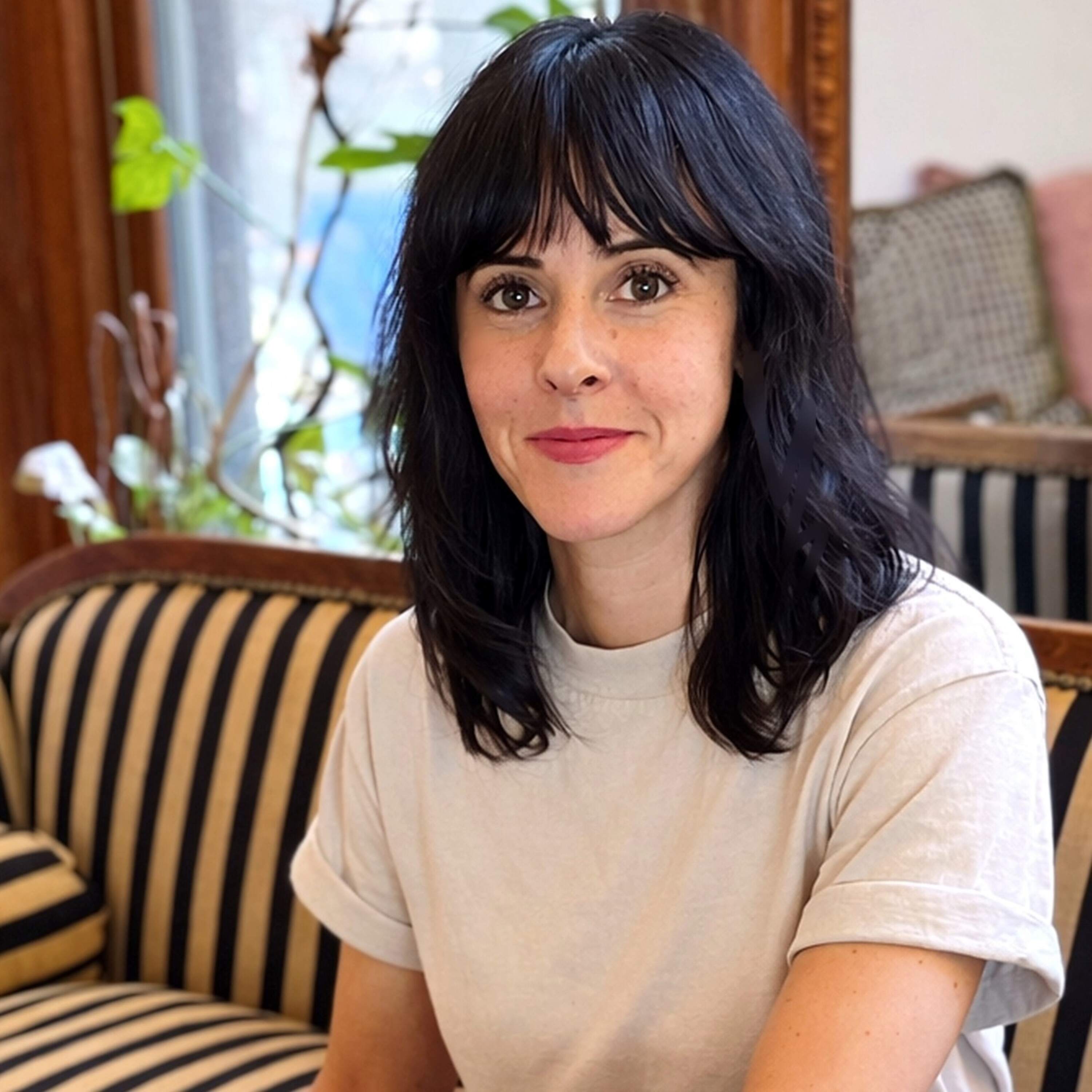
Loading summary
Transcript100 lines
- [00:00]
Terry Gross
This message comes from Whole Foods Market with their Summer Fruit Fest, highlighting seasonal organic produce, complementary pairings like prosciutto and cheeses, and proteins raised without antibiotics.
- [00:12]
Harriet Clarke
Savor the season.
- [00:13]
Terry Gross
Shop Summer Fruit Fest at Whole Foods Market. This is FRESH air. I'm Terry Gross. One of the last actions of the extremist left wing groups with roots in the 1960s was the Brinks robbery of 1981. Two militant groups, one an offshoot of the Weather Underground, the other an offshoot of the Black Panthers, robbed a Brinks armored truck carrying over a million and a half dollars. It ended in a shootout in which one security guard and two police officers were killed. Judith Clark was a getaway driver who was sentenced to 75 years to life. It meant leaving behind her 11 month old daughter. That daughter, Harriet Clark, is my guest. She's just published a novel that draws from her own experiences being raised by her grandparents and visiting her mother in prison every weekend for Most of the 37 years her mother was incarcerated. It required traveling about an hour from New York City to Bedford Hills Correctional Facility, a maximum security prison for women. Harriet knew her mother would never get out, but but she did get out after being granted clemency and released on parole in 2019. Harriet Clarke's new novel is called the Hill, a reference to the prison in the novel being on Top of a Hill. It's her first novel. She received the Paris Reviews Plimpton Prize and has received fellowships from the Iowa Writers Workshop and the Wallace Stegner Program. Harriet Clark, welcome to FRESH air. And congratulations on the book. You're an incredible writer and I'm glad that you wrote this.
- [01:49]
Harriet Clarke
It is an absolute trip and thrill to be speaking with you. And I'm so grateful to be on the show. Thank you.
- [01:56]
Terry Gross
I'm honored to hear you say that. I want to start with a reading that I think will help set up your story and your mother's story. And this is from pretty early in the book when Susannah, the child, the main character, is leaving the dentist's office with her grandfather and her grandfather has just had one of his teeth capped. So this is as they're leaving.
- [02:22]
Harriet Clarke
My mother had robbed a bank. The first woman said no. The second woman said, my mother had expropriated funds for the purpose of revolutionary struggle. The woman's tone suggested that she was possibly defending my mother and possibly mocking her. When my grandfather emerged dazed and swollen, it did not seem right to press for explanation, but he must have heard what the woman said, or the anesthesia must have caused his mind to wander. Because on the drive home, he spoke to me for the first time about my mother's crime. A misguided attempt, he called it, to steal from the rich and give to the poor. Then an elaborate explanation of the insurance mechanisms of banks, and further clarification that many people had money in banks, not just the rich. When this lecture got into the weeds, he shifted gears into another. Regarding imperialism, racism, militarism, also materialism. All the things he said that he and my mother opposed and that he assured me I opposed as well. His face was very close to the steering wheel. Your mother took it too far.
- [03:25]
Terry Gross
How old were you when you first learned why your mother was in prison? How was it explained to you?
- [03:34]
Harriet Clarke
I don't have a memory of coming into awareness of my mother's crime. It must have been explained to me, but I don't recall who explained it. My mother made clear from when I was very young that she was in prison because she had been part of something that cost three men their lives. So I think I knew from before I even knew what I knew that people had died and that my mother was in prison because of that. And she, in that sense, always raised me to understand that in some ways she was guilty and that was why she was in prison and that she would always be there. But I'm not actually sure who explained to me the details of the crime.
- [04:21]
Terry Gross
When you found out that she was part of a revolutionary group and that the robbery was supposed to support the revolutionary cause, what did you make of that? Did you know enough about politics when you learned that? Did you know enough about radical movements and where this robbery fit in?
- [04:45]
Harriet Clarke
Yes and no. I, unlike Susannah, I continued to have a relationship to the women in my mother's collective. I had a half sister, and so I returned to that collective every three weeks for the weekend. And they were still very actively political. And so I did grow up inside a far more political atmosphere than Susannah does. She's really in the aftermath of politics. And I grew up inside active organizing, so I think I did understand something about the particular movements and commitments they had. But again, you know, for 40 years, every conversation I ever had with my mother occurred in a crowded room that was surveyed by officers or on a phone line that was recorded. And so we didn't have the privacy to talk about some of the things that might have been hardest to talk about. And for most of my life, you know, my mother had to make prison a place I wanted to come to. You know, our visits had to be enjoyable. And so in that sense, too, it was very rare that we were sitting there getting into the nitty gritty of her crime, especially when I was young. You know, fundamentally, she was trying to play with me and have fun with me and let me feel close to her.
- [06:15]
Terry Gross
Would you describe how the prison looked to you as a child?
- [06:20]
Harriet Clarke
I think fundamentally, the prison looked to me like a hill. It's hard for me to remember what the prison looked like to me as a child, because I went there for almost 40 years, and it changed a lot in that 40 years. It became much more prison. Like, you know, it had initially been a reformatory for women, and so they would have when I was very young, you know, these brick buildings that actually didn't look too terrifying. And then, of course, over the years, it became much more. More and more barbed wire and gun tower and whatnot. But I think that primarily my memories of the prison from when I was a child, I was trying as minimally as possible to interact with the space and I primarily interacting with the people. So, you know, I knew all the officers out front. And so the experience of approaching the prison felt less like approaching a building or a series of buildings and more like approaching a series of people and processes I was about to engage with.
- [07:27]
Terry Gross
The prison was like your home or your second home because you were there every Saturday. Susanna, in your novel, vows to keep returning there for the rest of her mother's life, since the assumption was she was going to be there for the rest of her life. And that gives Susanna a sense of security, of routine of safety and of purpose, and, of course, of connection with her mother. Did you feel that way, too?
- [07:54]
Harriet Clarke
I mean, yes and no. I think that there is a way that the prison was a holding container for me and is meant to be a holding container for Susannah. I think in the prison, she's existing inside patterns that really do give a certain kind of steadiness to her life. Whereas, actually, I think one of the things that makes prison in real life quite difficult is that they're always changing things on you. You know, they don't want you to be stabilized and steady. The point is a certain kind of perpetual instability so that they can enact control over you. So I could wear the exact same outfit one week to the next, and they could say, nope, those sleeves are too short. You can't. So, actually, my experience wasn't quite as steady as Susanna's is, though I do think that I had an experience of peacefulness by virtue of the fact that I knew nothing was ever going to Change. You know, my mother had been in there as far back as I could remember, and she was going to be in there forever. And so that felt like a kind of steady peace for me and made me feel different than the great difficulties the kids around me were in.
- [09:06]
Terry Gross
Was it a good feeling to know
- [09:08]
Harriet Clarke
she would be there forever?
- [09:09]
Terry Gross
I mean, it was prison. On the other hand, she was always there. She was always waiting for you. You always knew where to find her.
- [09:16]
Harriet Clarke
Yes, I think that I did experience myself as having a peace that the children around me did not have. Because, you know, most children lose their mothers to prison within their active awareness. You know, they had a mother at home. Most women in prison were the primary caregivers for their children. Most women in prison, our mothers. And so they lost their mothers. And that is obviously an incredible trauma that I felt fundamentally spared. And most kids, even though their mothers often had long sentences, their mothers were actively trying to come home. And I never envied that. It seemed like another form of torture to me, the way these kids were always hoping, you know, they would. At the end of visiting hours, they would say, will you be there this weekend for my recital? And some of the women would say, I'll try, you know, or will you be able to be there for my graduation? There was always this possibility on the horizon that to me, seemed so torturous. And so I felt grateful to be spared a certain kind of hope and waiting. You know, I was thinking that writing
- [10:24]
Terry Gross
the novel was in a way of like staying visiting your mother in prison. It took you about 20 years, I think, to finish. It's not like it was the only thing you were doing, but you worked on it for 20 years until you felt like you got it right. And so for those 20 years, you were, like, living in prison. And so there were many years after your mother got out when you were still in your writing life in prison, and did you want to be there? Did you feel like there were still things you had to work out or that you weren't ready yet to. To leave that part of your life or to feel like you comprehended that
- [11:13]
Harriet Clarke
part of your life 100%? I think that that's true both with the prison, especially my childhood experience of the prison. The book allowed me to stay inside rooms and atmospheres that were still bewildering to me, that I was still kind of working something through about. But I really felt that in terms of my grandparents and their friends, you know, they had been my entire life until my grandmother passed away when I was 16. But by the time I was 19, every single one of their friends who had been very, very present parts of my life, every single one of them had passed away. And so an entire world I had lived inside was gone. And it felt to me like I was, you know, exiled from my own life in many ways. And so certainly working on the book was a way that I stayed in those room. I think, you know, the characters, the grandparents, friends in the book, none of them are exact transcriptions of any of my grandparents actual friends. But that feeling of being inside rooms while adults talk around you and, you know, fundamentally ignore you, that was the feeling of my childhood. And there was something meaningful to me, painful, but meaningful about being able to stay inside that feeling in those rooms and realms.
- [12:40]
Terry Gross
Did you do research for the book? Did you go back and read news reports contemporaneous with the Brinks robbery that your mother participated in?
- [12:51]
Harriet Clarke
Yeah. For many years, I had assumed that if I wrote a book that I would have to know a lot more than I did about lots of things, you know. So I read books about radicals in the 30s, 40s, and 50s to better understand my grandparents, and I read about radicals in the 60s and 70s to better understand my mother and her friends. And I read about prison officers, and I read a lot of books about children of prisoners. And finally I realized that I did not want to write the book that knew those things, you know, that I wanted to write a book that was about not knowing those things. That had to do with a certain kind of atmosphere of incomprehension that Susanna is inside. And that, I think, is a. Is a dominant quality to lots of people's childhoods, you know. And so I decided I didn't want to triumph over my childhood bewilderment. I wanted to see if I could kind of conjure the atmosphere of that bewilderment and see if it could be resonant for readers.
- [13:51]
Terry Gross
As part of my research for this interview, I read an article in the New York Times from early in your mother's incarceration. And it was a profile of her, and it describes her as reluctant to have participated in the Brinks robbery because you were a baby. But she felt she needed to prove her commitment to the revolutionary cause. She was in the getaway car. She didn't see the shooting. The money was thrown into the car. And the Brinks truck was carrying, like, $1.6 million. I don't know how much was actually stolen. And she portrays herself as a very kind of insecure driver and a really bad getaway driver and doesn't really know where she's going. And I think maybe gets in a little accident at the end.
- [14:38]
Harriet Clarke
Yes.
- [14:39]
Terry Gross
So did you read that? I don't know how much she told you. I don't know how much she wanted to talk about participating in the robbery and being the getaway driver. So, like, the more you learn, how did it affect your opinion of your mother?
- [14:56]
Harriet Clarke
I mean, one thing I'll say is that my mother was a getaway car driver. She wasn't the getaway car driver for the primary van that was used. But I worry that I do share certain qualities with Susanna in terms of a kind of willful unknowingness. I mean, I have made myself understand better the details of my mother's crime. But one of the things I had wanted to dramatize in the book, you know, there's a chapter where the grandmother who believes you should look things in the face, you know, she's always saying to Susanna, do you go out of your way to know nothing? And Susanna keeps saying, yes, you know, and that's a lot what the book is about, you know, what feels so threatening about knowing things about our loved ones, like knowing their mistakes or their sufferings or their histories.
- [15:43]
Terry Gross
You know, in the novel, the grandmother really doesn't want the burden because it feels like the burden of raising Susanna after Susanna's mother's in prison. Is that the vibe you got from your grandmother, that she wanted to be free, but she was tied down taking care of you?
- [16:04]
Harriet Clarke
You know, the older I get, the sadder it is to me how little I knew my grandmother. Not only because she died almost 30 years ago, but also because I really knew her in the wake of the two greatest tragedies of her life, which were her daughter's life imprisonment and then her husband, her great love's death. And so I think I knew my grandmother in incredibly grief stricken years. And so my grandmother did have a certain atmosphere around her of clearly being somewhat embattled with the life she had. But it's hard for me to source exactly where those feelings came from. And I will say the grandmother in the book is not my grandmother. But also the fundamental thing I had wanted to dramatize in that book was, you know, my grandmother did not want the life we had. And to some extent I did. I loved my grandmother and she felt like my whole life. And so I. You know, there's a moment in the chapter where the grandmother is fantasizing about how their life should be if the mother hadn't committed the crime. And Susanna says, I want to live with you. And the grandmother says, then you're wishing a man dead. And I think that was a real conundrum to me in my life, that sense of, how can I value my life if it's based off of a tragedy and suffering by so many other people? And so that was one thing that I felt I was trying to look at in the chapter. And also this, the fact that my grandmother and I did have this difference because she always knew we were inside a tragedy. She always felt this should not be as it is. And I fundamentally did accept the life I had and still found much of it meaningful and delightful even.
- [18:05]
Terry Gross
I recently interviewed Zaid Ayers, who's the son of Bill Ayers and Bernadine Dorn, who were two leaders of the militant left wing group the Weather Underground. And so Zaid wrote a memoir about growing up underground because his parents early in his life had, like, fake identities. They were basically in hiding underground. So one of the themes in his book is if his parents knew that they were going to continue as revolutionaries who were going to be doing revolutionary acts that could easily get them in prison. Why did they decide to have a child knowing that they could be locked away for years? And I'm wondering how much you thought about that, too.
- [18:58]
Harriet Clarke
You know, it's interesting because from the outside, people have often been struck by my mother's abandonment of me. And I know that that is touched on. This idea of the mother abandoning her child is touched on often in the book. But my actual lived experience was of my mother's profound devotion to me. Because, you know, most people have to share their mothers with the world. You know, their moms have partners and jobs and other kids and friends. And every time I saw my mother, all she was doing was giving me attention. I was her whole world. And so I didn't have the feeling of being abandoned by my mother. In my kind of conscious reality, I'm sure something in me did feel fundamentally abandoned in life. I think I've always felt somewhat precarious, but I didn't feel abandoned by my mother. And because her love for me was so present, it was never confusing to me why she'd had a child. I could see how much she wanted a child. I could see how much she loved me. And I was also, you know, if you're raised in a women's maximum security facility, you're raised around women who are perpetually being demothered, whose mothering is being disrespected. And I've never wanted to imply that my mother was less of a mother to me because she had other commitments. My experience is not that she's less of a mother. I think she's an incredible mother. I think she figured out how to mother me in some of the most difficult conditions possible. And so I think because I've never felt like I had a second class mothering experience, it doesn't feel to me like why did she even bother having a child if it was gonna be under these conditions? I knew she loved me and wanted me, and I knew it was the great tragedy of her life not to be able to be around me all the time.
- [20:50]
Terry Gross
Let me reintroduce you here. If you're just joining us, my guest is Harriet Clarke. Her new novel is called the Hill. We'll be right back after a short break.
- [20:57]
Peter Sagal
Terry?
- [20:58]
Terry Gross
I'm Terry Gross, and this is FRESH air.
- [21:01]
Shortwave Host
Everyone wants to know if AI is conscious, but consciousness is really hard to define.
- [21:07]
Harriet Clarke
It's the experience we're having right now, what it is like to eat chocolate or to look at the blue sky.
- [21:13]
Shortwave Host
So how do we know who or what is conscious? Check out the new ways scientists are finding to measure the elusive phenomenon on shortwave. Listen on the NPR app or wherever you get your podcasts.
- [21:25]
Harriet Clarke
This week on Newsmakers. Hunter Biden, I was seven years sober
- [21:30]
Terry Gross
and somebody asked me if I wanted a drink. And 10 years later I woke up at a motel with a crack pipe,
- [21:35]
NPR Newsmakers Host
a spiral of addiction and his father's legacy.
- [21:38]
Terry Gross
If my dad had won, he would
- [21:40]
Harriet Clarke
have kept his word. He would not have pardoned me.
- [21:43]
NPR Newsmakers Host
Hunter Biden, this week on NPR's Newsmakers. Watch or listen wherever you get podcasts.
- [21:50]
Peter Sagal
Hi, it's me, Peter Sagal, host of Wait, Wait, don't tell me. It's summer. And if you want to turn your pool party into a nerdfest, check out our news quiz. We got comedians, we got celebrities, we got games to help you laugh about the week's news. Yeah, that news. It'll be just like we're all hanging out at your backyard barbecue. Listen every week to Wait, Wait, don't tell me. On the NPR app or wherever you get your podcasts.
- [22:14]
Terry Gross
This is FRESH air. I'm Terry Gross. Let's get back to my interview with Harriet Clarke. Her new novel, the Hill, draws on her own experiences. When she was 11 months old in 1981, her mother, Judy Clark, drove a getaway car in the armed robbery of a Brinks truck carrying over a million and a half dollars. Judy was part of a Militant revolutionary group that was an offshoot of the militant revolutionary group, the Weather Underground. The robbery was in collaboration with a radical group that was an offshoot of the Black Panthers. The goal was to raise money for the revolutionary causes they stood for. One guard and two police officers were killed in a shootout. For Most of the 37 years Judy was in prison, Harriet spent every Saturday visiting her until you were eight, when your grandfather died. He drove you to the prison every weekend, and you'd spend the time with your mother. And there was a children's room where you could be with her. Was that considered like an important reform in the prison? I think not all prisons had that. And I think your mother's prison didn't have it forever either.
- [23:25]
Harriet Clarke
I mean, it is one of the greatest pieces of good fortune in my life that my mother's prison had that room because I was able to want to see my mother, because the environment in which I saw her could be playful. So there's a large visiting room that has dozens of tables. And then in the back of that room, separated by this kind of large plastic wall, is a carpeted room that has lots of toys and games and just places you can sit on the floor so that you don't have to be at these kind of stern separating tables. And it is run by women within the prison. In the book, it's run by nuns, but that's not accurate to the actual children's center. It was run by women inside. And so you can play with your mother. Your mother can touch you, your mother can read to you. You can, as much as possible, still be a kid with your mother. You know, they try as much as possible to keep the officers out of that room so you're not having a sense of constant surveillance. But eventually, you know, the last 20, 25 years were spent in the other room, where you just have to sit at the table and talk to each other, which luckily, my mother and I are incredibly good at.
- [24:47]
Terry Gross
After your grandfather died when you were 8, a nun from the prison took on the responsibility of picking you up and driving you to and from the prison every weekend. Was that a responsibility she took on herself? Was she assigned that? It seems so wonderful and unusual.
- [25:07]
Harriet Clarke
Well, I'm glad you think it's wonderful and unusual because it's made up. It's part of the novel.
- [25:11]
Terry Gross
Oh, I thought that really happened.
- [25:13]
Harriet Clarke
I thought I'd read that happen. No, there was an amazing nun at my mom's prison, and she did occasionally drive me to the prison, and she did many heroic things. When my mother was transferred when I was six to Tucson, Arizona, she actually flew me to Arizona to help enable me to visit my mother, because those visits were so hard for my grandparents. And so there was a nun who played a profoundly healing role in connecting me and my mother and also connecting my mother and my grandparents. But most of my rides to the prison after my grandfather died actually happened from the women in my mother's collective, both because they. They stepped in to help make sure we had that relationship and because it was a way that they could continue to see me.
- [26:02]
Terry Gross
Did they stay revolutionaries?
- [26:10]
Harriet Clarke
I would say every member of my family remains committed to opposing how oppressive and unjust the current systems of our country are and to imagining more just systems. So, yes, they have all remained political. They all use their retirement to do, you know, organizing on behalf of collective movements. My mother, too, has remained political. You know, she was an organizer before she went in, and she was an organizer when she was inside. She organized a huge amount in terms of the college program and parenting programs and an AIDS counseling program. And so in that sense, she was a revolutionary in the prison, too. You know, she's always thinking about how we can create better conditions for people's lives, and the prison really demanded that, and it's the work she does out of prison. So, yes, you know, I don't consider any member of my family an ideologue anymore, but I do consider them profoundly committed people.
- [27:12]
Terry Gross
When you talk about your family, you're talking a part about the collective that your mother was a part of, and the collective raised you for the first five years of your life. It's interesting you still think of them as your family.
- [27:24]
Harriet Clarke
When my grandmother died, I went back to live with two of the women from the collective, and they've always been my family. They're my primary family now because I don't have my grandparents in that particular part of my family from my youth. So, yes, I very much consider my extended family my family. I feel very lucky. You know, Susanna's life is quite narrow in the book, but I was very lucky. And when I fell out of conventional nuclear care structures, I really did fall into a vast network of care. You know, it's the two truths of my life that something in me has been and felt somewhat orphaned, and something in me has been incredibly well cared for by a very large number of people.
- [28:14]
Terry Gross
I want to hear more about the nun who worked at the prison and who helped you get to Arizona to visit your mother when she was transferred to a prison there.
- [28:25]
Harriet Clarke
Yes, that also was One of the great blessings of my life was to be raised with Sister Elaine, which thousands of children whose mothers were in Bedford Hills Correctional Facility. This was one of the blessings in their life as well, for many reasons, both because structurally, she created the children's center and the nursery and the programs that made us be able to have, you know, the good times we could have with our mothers. But fundamentally, Sister Elaine, she walked into that prison every day, and part of what you saw was how much she respected our mothers. You saw her take delight in them. You saw she always said, oh, my gosh, your mother loved you so much. Oh, my gosh. Your mother showed me this picture. Your mother showed me this drawing. Everything she did was to make it clear I respect the relationship you and your mother still have. I respect your mother. And that is incredibly important in an environment where what you are seeing constantly is your mother being degraded. You know, I think even some of your questions have to do with how critical I am of my mother. And the truth of the matter is, I think my mother will have to be out of prison a very long time before I could take a fully critical look, because it's very, very painful to be raised where your parent is perpetually being criticized, degraded, and controlled around you. You feel protective of them. And I think kids feel protective of their moms in prison. And we knew that Sister Elaine felt protective of them, too, that she was sometimes felt like the only protective force in there. And so she was just this experience of lightness in a very dark place and really gave me a way of understanding how you forbear in dark places.
- [30:12]
Terry Gross
You came to think of prison as collective punishment because the whole family is being punished.
- [30:19]
Harriet Clarke
It is collective punishment. I don't think of it that way. It is collective punishment. I mean, when I say that prison is collective punishment, I mean, you know, it's this very tricky balance in the book, where on the one hand, I'm trying to communicate that degrading conditions are degrading. These are forms of deforming people's lives. Not just the people inside, but the people who love them. You know, I didn't want to have a wedding because I didn't want my mother to not be there. I didn't want to have a child because I didn't want that child to grow up in prison like I had. You know, and so I feel like one part of me did want to show this is a system that's impacting millions and millions and millions of people across this country. And on the other hand, you know, you have to show that people resist their own degradation and that they're vaster than the circumstances they're in. And they do fight for meaningful lives.
- [31:11]
Terry Gross
My guest is Harriet Clarke. Her new novel is called the Hill. We'll be right back. This is FRESH air.
- [31:19]
Peter Sagal
This season on Planet Money summer School, we go to China, one of the world's biggest economies, and what we learned
- [31:24]
Harriet Clarke
is Americans are crazy, Chinese are crazy.
- [31:27]
Peter Sagal
These are two countries full of these crazy hustlers. The US And China are more alike than you might think. On Planet Money Summer School, a strange lesson about success, how to handle the downsides of progress. Listen on the NPR app or wherever you get your podcasts. Maybe you read the Odyssey in school and found that a pretty dry, dusty academic exercise, but the new movie adaptation is pure Hollywood. It's a gorgeous, spectacular take on the material that's bursting with big names like Matt Damon, Tom Holland, Anne Hathaway and Zendaya. We'll tell you why you should check it out on NPR's Pop Music Culture Happy Hour. Listen via the NPR app or wherever you get your podcasts. You've got a lot of ways to get news and a lot of podcasts in your feed that take a long time to get to the point. Here and now, anytime gets to the heart of the day's big Story, all in about 20 minutes every afternoon. Get smarter and expand your world fast. Listen to Here and Now anytime on the NPR app or wherever you listen to podcasts.
- [32:28]
Terry Gross
This is FRESH air. Let's get back to my interview with Harriet Clarke. Her new novel, the Hill, is based on her experiences visiting her mother in prison on weekends for about 37 years. She was a getaway driver when members of radical offshoots of the Weather Underground and the Black Panthers robbed a brinks truck in 1981. It ended in a shootout, leaving two police officers and a security guard dead. Your mother's sentence was commuted and she was released on parole in 2019. Was there a campaign for her release? Did you campaign for it?
- [33:04]
Harriet Clarke
I did not campaign enough. You know, my consciousness was entirely shaped by the knowledge that my mother would be in forever. You know, one of the differences between me and my mother is that she wasn't in prison her whole life and I was, you know, so if I, you know, if things happened when I was in, you know, coming to visit her and, you know, something happened and they made the visitors wait for hours outside in difficult ways. You know, my mother would say, you need to lodge a complaint. You need to do something. And I never would. Because I was institutionalized, I did accept things as they were, and I had accepted my mother was going to be in forever. And I think I just couldn't ever really rouse myself to believe she was going to get out in that way. I feel like. Of the many extraordinary changes brought about by my mother's release, one is that I will never have the arrogance of thinking something is impossible again. I had a fundamental skepticism that has now been humbled. So when other things seem like they stand no chance, I kind of think, well, your mother got free so much as possible when people come together to try to make something happen.
- [34:21]
Terry Gross
When your mother got out of prison, did she live with you at first?
- [34:25]
Harriet Clarke
No, she's never lived with me. And actually, I think that many people, my mother included, I think did expect that we would be making up for lost time. But actually, because I was so shaped by my mother's imprisonment, it's like my whole life, my whole life as a child, child, as an adult, I could never call my mother. You know, I have no memory of ever wanting to. Of having something upsetting happen and wishing I could call her or having something exciting happen. I just never. I knew I couldn't call her, and I didn't want to call her. And now, of course, she's like any mother, and she's like, why don't you ever call me? You know, So I think that maybe she and others thought, you know, now we would be together all the time. But actually, it's like I'm kind of this awkward teenager having to learn for the first time, how do, you know, get my mom to leave the house so I can drink with my friends?
- [35:20]
Terry Gross
You went to college outside of New York and grad school. Did you feel guilty for not being in New York where your mother was, not being able to visit her on weekends?
- [35:33]
Harriet Clarke
I remember the last visit I had with my mother before I moved to California. And I do remember feeling very heavy leaving. You know, it wasn't just that every week of my growing up, I visited my mother in prison. It was also that every week of my growing up, I left my mother in prison. You know, so I have a very strong muscle memory of what it feels like to walk out of the visiting room and down the hill. And, you know, you're feeling the prison at your back. You're feeling your mother at your back, the women there, and they're this kind of like presence you're carrying with you on the walk to the train. And on the train, and you're thinking of them and you're thinking of them until you're not, you know, until you're in the free world and you forget to think about them. And that's actually a terrible feeling. And anytime I could get a ride from my mother's prison, I often would fall asleep, you know, so that I could kind of wrap up my life inside with sleep and then wake up in the free world. And I remember very much the visit where I. Where I was leaving my mother to move to California. And I remember wanting very much to be able to fall asleep of, kind of wanting a break from this consciousness before I woke up in the next one.
- [36:55]
Terry Gross
Did you know your father?
- [36:57]
Shortwave Host
Yes.
- [36:58]
Harriet Clarke
Not really. When I was young. He was underground when I was very young, and then he was in prisons where I very minimally visited him until I was 12. So I really only got to know him when my grandmother was dying.
- [37:16]
Terry Gross
Were you able to build a relationship with him?
- [37:19]
Harriet Clarke
Yes, and I feel very grateful about that because throughout my whole childhood, you know, he was supposed to initially just be my sperm donor. He had. He had never signed on to be my father. It was only once my mother was in prison and my father was underground that the collective and the parents involved decided my sister and I should have each other. And so for most of my life, I referred to him as my sister's father, which, for the most part, I still do. But he was a really incredible man. He had incredible courage, and he was very different from my mother. And so I think that when he first got out and came into my life, he had a very different analysis of their behaviors and a different relationship to politics than my. And initially, I think that that was hard for me, but I feel very grateful now to have had both their influences and to. I mean, he had had cancer when he was inside multiple times. And, you know, if he hadn't been a doctor, the way they treated him would have killed him. And so he had spent a lot of time after he got out trying to bring attention to the medical mistreatment in prisons, and. And he was just a remarkably committed person. So now it feels like a great gift that I can think of him as my father because I'm very proud to have him as my father.
- [38:48]
Terry Gross
So you spent 20 years. That's not all you did, but over the course of 20 years, you were writing this book, you kept rewriting it. Why did it take 20 years?
- [39:01]
Harriet Clarke
I say in my acknowledgments that writing the story, the book, was really a cover story for wanting time to myself. And I think for many years. That was the case until 2017, when Trump came into office the first time. And that was when I decided, I think, in part because, you know, he had the family separation policy at the border. And I was seeing people have this rightful outrage at having kids taken from their mother's arms. And I really shared that outrage. But I was also a little bewildered, you know, like, don't you know that this is happening every day at jails and prisons all over this country? You know, all detention is family separation. And that was when I realized maybe people didn't know how massive this was. And that was the first time I thought, oh, I'm gonna I'm gonna write a book. And when I saw this footage of parents carrying their children hundreds of miles, you know, on their backs and in their arms, I knew that this was heroism. You know, I knew that I was seeing the hero's journey and that these were people calling on extraordinary reserves in themselves to try to keep their family together. And I realized that, you know, the protagonists of my stories who never seemed to really do anything, I thought I realized actually she also was a hero. You know, she was doing something incredibly difficult. She was resisting the great forces of separation, prison and death to try to keep her family together. And so once I knew she was a hero, then the story had to shape and I could finally write a book.
- [40:31]
Terry Gross
Harriet Clarke, thank you so much for talking with us.
- [40:35]
Harriet Clarke
Thank you so much for having me. It really, it's a great honor.
- [40:38]
Terry Gross
Harriet Clark's new novel is called the Hill. After we take a short break, rock critic Ken Tucker will review two new albums that draw on rock's past for their sources of inspiration. This is FRESH air.
- [40:52]
Shortwave Host
From the light bulb to the Internet, human history has been driven by innovation, and Shortwave is exploring how the technology of tomorrow will transform our future. Would you ride in a flying taxi? Will AI models fight wars? Hear about the technological frontier every Monday on Tech Camp, the new series from Shortwave Listen on the NPR app or wherever you get your podcasts. Iran, Lebanon, Israel, Gaza. With conflict unfolding in so many places, firsthand reporting has never mattered more. NPR supporters power that work. They make it possible for our journalists to go where news is happening. And supporters get perks for NPR podcasts, things like bonus episodes, archive access and more.
- [41:37]
Terry Gross
You can sign up@plus.npr.org this is FRESH AIR. Rock critic Ken Tucker has a review of two new albums that draw on rock's past for their sources of fresh inspiration. The first is Mission of Mercy from guitarist Mike Campbell, who co wrote most of the hits you know from Tom Petty and the Heartbreakers. Campbell's post Heartbreakers band is called the Dirty Knobs. The other album is Living in the USA by Low Cut Connie, led by Adam Weiner, whose fans range from Elton John to Barack Obama. We'll start with Mike Campbell and the Dirty Knobs.
- [42:21]
Ken Tucker
You loaded up your suitcase
- [42:26]
NPR Newsmakers Host
and your
- [42:27]
Ken Tucker
sleeping bag Took down all the pict and your beaded flag the thunderstorm was raging and you were soaking wet and you headed down the road with no regrets.
- [42:56]
NPR Newsmakers Host
I've read a couple pieces recently about how country country music is the place where rock and roll now resides, or how guitar rock is an outmoded form that persists only as nostalgia. Then I hear new work by Mike Campbell or Low Cut Connie's Adam Wiener and I'm reminded once again that rock and roll is always alive, always hiding in plain sight.
- [43:20]
Ken Tucker
I remember I still remember I remember I still. And how you made me feel I remember I still remember I remember I still remember you and how it used to be Some things never change Some things never change they always stay the same.
- [44:07]
NPR Newsmakers Host
That's Mike Campbell and the Dirty Knobs from their new album Mission of Mercy, in which Campbell continues with unabated energy and skill to explore the kind of elemental rock he made for decades with Tom Petty. Campbell's new work always avoids nostalgia while carrying an air of hard won serenity. Low Cut Connie is Adam Wiener's vehicle for piano based rock and roll tinged
- [44:35]
Ken Tucker
Drop your things and go with me babe we'll live like hippies in the USA and you know we may never get the chance again the way you feel is written on your face but two streets on there's a different place we can go Just to let ourselves dance again. Walk around his campus like we all place Such a strange feeling Pain can't Competitions in the United States For a
- [45:23]
NPR Newsmakers Host
decade now, as singer, songwriter and pianist, Weiner has fronted a shifting group of musicians putting on wild, sweaty shows that usually find him stripped to the waist and leaping off the piano. Wiener's method is liberation through controlled chaos. Better living through rhythm and blues.
- [46:00]
Terry Gross
Out.
- [46:18]
Ken Tucker
Of his bed.
- [46:34]
NPR Newsmakers Host
That's Let Me Speak to Bobby from Lokotkani's new album Living in the usa. Weiner was one of the first musicians to decline to play at the Kennedy center under the current administration, and given the tone of this collection and Weiner's recent statements, the Bobby in that song could be Health and Human Services Secretary Bobby Kennedy Jr. Now and in some of his earlier work, Wiener has spoken of the oppression of people in matters of race and gender. Overall, this album's finest moments occur when Wieners music embodies the soaring freedom promised by roots rock and roll. He's done a superb job of updating it on a song such as Can't Be Wrong.
- [47:15]
Ken Tucker
Well, I'm feeling pretty good today I'm feeling like I wanna us to say Baby anything you want us to say oh baby no it can't be wrong Getting naked in the afternoon maybe later underneath the moon Baby anything you wanna do Baby no it can't be wrong.
- [47:45]
NPR Newsmakers Host
Wiener says in a statement accompanying the album that every song here was, quote, recorded in one hot take. Just blurt it out, capture it and put it out. That's how rock and roll was born. But of course, Adam Weiner and Mike Campbell know that the music is more than blurt and release, that rock and roll was born from performers who very knowingly transfigured their experiences to create revolutionary art. The revolution is over, but its passion, complexity and rewards remain as life altering as ever.
- [48:20]
Terry Gross
Ken Tucker reviewed new music from the Dirty Knobs and Low Cut Connie. Tomorrow on Fresh air, my guest will be Andrew. He won a Tony for his performance in Hadestown. He's also in the new film of last year's London revival of the show. He's now on Broadway. In Cat's the Jellicle Ball. De Shields describes himself as Afro queer, a longtime HIV survivor and an unreformed hippie who grew up in Baltimore's innermost inner city. He's frequently described by others as a Broadway legend. I hope you'll join us to keep up with what's on the show and get highlights of our interviews. Follow us on Instagram. P R FRESH air Fresh Air's executive producer is Sam Brigger. Our technical director and engineer is Audrey Bentham. Our engineer today is Adam Stanischewski. Our interviews and reviews are produced and edited by Phyllis Myers, Anne Marie Boldonado, Lauren Krenzel, Teresa Madden, Monique Nazareth, Thea Chalmers, Susan Yakundi, Anna Bauman and Nico Gonzalez Whistler. Our digital media producer is Molly CV Nesper. Roberta Shorrock directs the show. Our co host is Tanya Moseley. I'm Terry Gross.
- [49:44]
Shortwave Host
Every story from shortwave NPR Science Podcast starts with a question like, why do we have nightmares? How does AI affect my energy? Bill at npr, we are here for your right to be curious about the world around you. You follow Short Wave wherever you get your podcasts because the more you ask, the more interesting the world gets.
- [50:08]
Harriet Clarke
On.
- [50:08]
Shortwave Host
NPR's wildcard. Podcast actor Tracee Ellis Ross says drugs have never been her thing. Benadryl makes me uncomfortable.
- [50:16]
Ken Tucker
I'm like, why do I feel like this?
- [50:19]
Harriet Clarke
No, I'm really not that person.
- [50:21]
Shortwave Host
Like, I really like alcohol, mostly because I like stemware. Watch or listen to that wild card conversation on the NPR app or on YouTube at NPR.
- [50:29]
Terry Gross
Wildcard.