
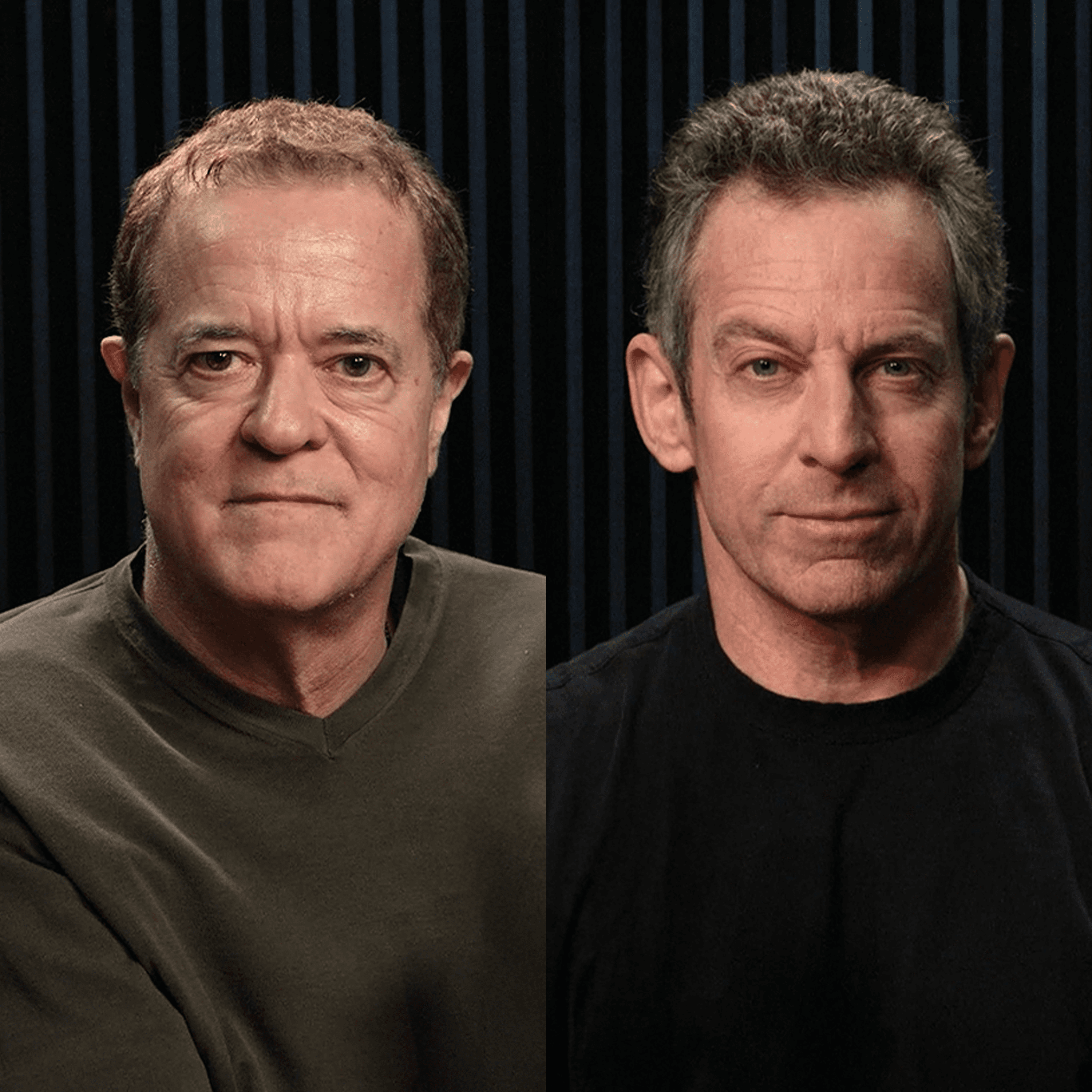
Podcast Summary: Making Sense with Sam Harris
Episode #463 — Privatizing the Apocalypse
Date: March 11, 2026
Guest: Rob Reid (VC, author, biosecurity advocate)
Theme: The perils of biosecurity, “virus hunting,” and the failed “Deep Vision” project.
Episode Overview
In “Privatizing the Apocalypse,” Sam Harris and returning guest Rob Reid provide an urgent and revealing discussion on biosecurity threats—particularly the story of the Deep Vision project, a high-risk, well-intentioned but potentially catastrophic U.S. government initiative aimed at cataloging viruses from remote locations worldwide. The episode revisits their past collaborations on biosecurity, details the alarming rationale and risk behind Deep Vision, charts the campaign that led to its (eventual) termination, and explores the shifting landscape of pandemic risk as advanced tech democratizes destructive bioengineering. The conversation underscores how “doing good” on a bureaucratic level can, if not wisely constrained, create vulnerabilities for the whole of humanity.
Key Topics & Discussion Points
1. Rob Reid’s Background and Motivation
(01:16–03:41)
- Reid is primarily a venture capitalist (with Chris Anderson of TED) investing in resilience-building ventures, but has dedicated much of his “public service” bandwidth in the past decade to biorisk and safety.
- His concern began as a subplot during research for his sci-fi novel “After On,” the premise of which entailed a cult seeking global destruction via synthetic biology (“synbio”).
- Reid’s TED Talk on the subject led to further connections, including a prolific four-hour podcast with Harris that drew the attention of policymakers.
Notable Moment (03:40):
“The Deep Vision project...had, in a worst-case, the potential to cancel civilization, is how it was put to me.”
— Rob Reid
2. The Deep Vision Project: Scope and Dangers
(05:07–10:05)
- Deep Vision’s Three Pillars:
-
Virus Hunting:
- Planned in ~12 developing nations, the project sought to collect ~10,000 undiscovered viruses from remote locations (e.g., bushmeat markets, bat caves) and extract them to laboratories in densely populated areas.
- All labs, even the most secure (BSL4), have “demonstrably leaked,” with no standard reporting, making uncontained lab storage a clear danger.
- Quote (06:26):
“An isolated bat cave that nobody is otherwise ever going to enter is a much better, safer place for a pandemic grade pathogen than a lab that’s staffed by imperfect humans.”
— Rob Reid
-
Characterization:
- Labs would experiment to determine which viruses could be true “weapons of mass destruction” (pandemic-grade). But this knowledge could not easily be used to make effective vaccines, due to safety/efficacy gaps and lack of outbreaks for trial.
- Publishing lists of “most dangerous pathogens” could encourage their spread through lab leaks and global research proliferation.
-
Publication of Genomes:
- The plan was to share (openly) the list and genome sequences of the most dangerous viruses, giving (by some estimates) 30,000 qualified people worldwide the means to synthesize them via reverse genetics.
- Quote (10:06):
“You were potentially giving the killing power of a nuclear arsenal to 30,000 completely unvetted strangers throughout the world.”
— Rob Reid
-
3. The Drive to “Blow the Whistle” and Stopping Deep Vision
(10:47–15:59)
- The initial public pressure (including Harris & Reid’s joint podcast, aimed at influencing Samantha Power at USAID) received no official response, partly due to the sudden distraction of the Ukraine invasion.
- Tristan Harris and Daniel Schmachtenberger subsequently helped Reid form a roundtable of cross-disciplinary experts. These connections soon funneled pressure groups in DC, including the Helena group (not a think tank, but a solution-oriented org).
- Key bipartisan allies:
– Senators Lindsey Graham, James Risch, and Rand Paul (who brought the issue to a hearing).
– Chelsea Clinton (leveraged her public health background and network). - The program was quietly paused and ultimately, a year later, publicly killed (formal cancellation: September 2023) due to mounting pressure.
Quote (15:35):
“The public demise of this program...sent a pretty strong signal that we don’t do this sort of thing anymore, hopefully.”
— Rob Reid
4. The Broader Landscape: Are Other Countries Doing This?
(15:59–17:14)
- China’s Wuhan Institute of Virology has long been involved in “virus hunting.”
- Previous USAID programs (like PREDICT) hunted viruses, but at much smaller scale.
- The risk landscape is far broader now, but (in 2021) a handful of entities worldwide actually had means to execute a program as expansive as Deep Vision.
5. The Potential for Catastrophe: “Dress Rehearsal” and the Future
(17:14–21:26)
- COVID is described as a “dress rehearsal.” In terms of infectiousness, it was high, but it was “remarkably benign” in lethality.
- The Deep Vision workflow could have uncovered and distributed multiple “pandemic-grade” pathogens at once—far more threatening than COVID and a real risk for civilization-scale collapse.
- Quote (17:26):
“I really do think of [COVID] as a dress rehearsal for something awful. And we appear to have failed this dress rehearsal in a variety of ways.”
— Sam Harris - The infrastructure, funding, and technology concentration that even enabled Deep Vision’s kind of risk was incredibly rare—much rarer than nuclear weapons proliferation up to that point.
6. Missed Foresight: Good Intentions, Catastrophic Blindness
(20:26–21:26)
- A tiny club of “well-placed do-gooders” dreamt up Deep Vision, despite their best intentions; it takes both capacity and opportunity for such dangerous blunders.
- The hosts reflect on how many similarly risky schemes might exist, escaping serious scrutiny.
- Quote (20:49):
“I have no idea who was on the USAID committee that came up with this idea, but I am quite confident it included no mass murderers, terrorists, or dictators...So that is a very powerful and grounding lens through which to look at a coming era...in which untold thousands of people will be empowered to have ideas as bad as Deep Vision—and worse.”
— Rob Reid
Memorable Quotes
- On lab safety:
“Every category of laboratory, all the way up to the highest biosecurity level, demonstrably leaks.” (06:00, Rob Reid) - On intentions vs. outcomes:
“With the best, actually literally with the best of intentions. But what a terrible thing to do, right?” (03:43, Rob Reid) - On the “democratization” of doomsday power:
“Giving the killing power of a nuclear arsenal to 30,000 completely unvetted strangers...” (10:06, Rob Reid) - On COVID as a mild prelude:
“Covid was remarkably benign as an infectious agent...I really do think of it as a dress rehearsal for something awful.” (17:14–17:26, Sam Harris) - On the risks of modern empowerment:
“Untold thousands of people will be empowered to have ideas as bad as Deep Vision—and worse. And some of them will be terrorist mass murderers.” (21:24, Rob Reid)
Timed Highlights
- 01:16–03:41: Rob Reid’s entrance into biosecurity advocacy; origin of concern from novel research.
- 05:29–10:47: Stepwise layout of Deep Vision’s dangerous design: virus hunting, characterization, then database publication.
- 10:47–15:59: Collaboration with public figures, congressional efforts, and the multi-partisan campaign that ultimately killed Deep Vision.
- 15:59–17:14: International context; comparison with past and present viral research programs.
- 17:14–20:26: The civilization-scale implications of multiple engineered pandemics vs. COVID.
- 20:26–21:26: Reflection on the sociotechnical landscape that allowed Deep Vision to happen—and how much worse it could soon get.
Takeaways & Tone
The conversation is serious and urgent, yet conversational, with both hosts displaying a mixture of awe at the technical realities of bioengineering, and grave concern for collective blindness to the risks. Both highlight how apocalyptic power can be unwittingly placed in dangerous hands under the guise of progress and public health, and how rare, cross-aisle, cross-institutional advocacy and whistleblowing (including proactive podcasts) played a decisive role in defusing this threat.
For a deeper dive on synthetic biology, biosecurity, and the moral hazards of technological “progress,” listen to prior episodes featuring Reid or read more at SamHarris.org.