← On the Media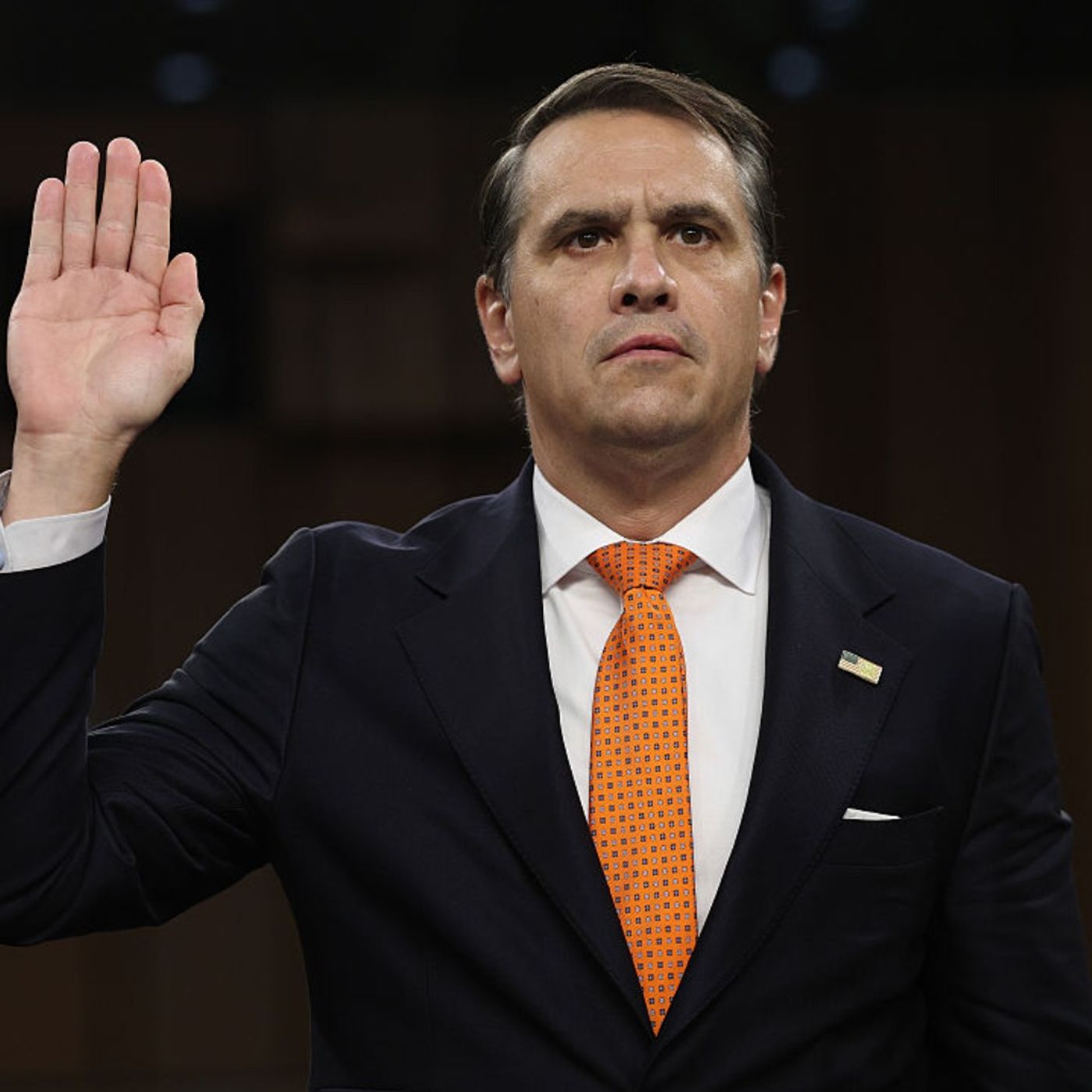
On the Media
From Subpoenas to Cockroaches: Journalist Intimidation 101
00:50:31
Plus, a documentary about the eBay stalking scandal.
Loading summary
Transcript202 lines
- [00:00]
Matt Gertz
We're not targeting reporters.
- [00:02]
Lee Levine
They're material witnesses.
- [00:03]
Ina Steiner
Just like a reporter would be a
- [00:05]
Lee Levine
material witness to a car crash.
- [00:07]
Brooke Gladstone
Todd Blanche this week defending the subpoenas of several New York Times reporters during his confirmation hearing for the top job at the doj. From WNYC in New York. This is on the media. I'm Brooke Gladstone.
- [00:21]
Michael Ohinger
And I'm Michael Ohinger. How does this administration's aggressive actions against journalists compared to those that came before?
- [00:29]
Lee Levine
Richard Nixon's undoing was ultimately his efforts to engage in a cover up. Donald Trump doesn't care about COVID ups. He does everything out in the open.
- [00:39]
Brooke Gladstone
Also on this week's show, sometimes reporter intimidation is ripped straight from a horror flick. Like what happened to two bloggers who wrote about ebay.
- [00:49]
Lee Levine
That reinforced my fear that the book had been a message. You're gonna lose your wife.
- [00:56]
Michael Ohinger
It's all coming up after this.
- [01:00]
Brooke Gladstone
On the Media is supported by Progressive Insurance. Do you ever think about switching insurance companies to see if you could save some cash? Progressive makes it easy to see if you could save when you bundle your home in auto policies. Try it@progressive.com Progressive Casualty Insurance Company and affiliates. Potential savings will vary. Not available in all states. From WNYC in New York. This is on the media. I'm Brooke Gladstone.
- [01:27]
Michael Ohinger
And I'm Michael Ohringer. On Wednesday, the New York Times filed a motion to quash the subpoenas that had been issued to three of its reporters delivered by federal agents to their homes.
- [01:40]
Brooke Gladstone
The New York Times says the Justice Department has subpoenaed several of its journalists after they reported on security concerns involving President Trump's new Air Force One plane.
- [01:50]
Lee Levine
Yeah, this is personal for President Trump. He's been angry about the new reports
- [01:55]
Michael Ohinger
involving this new plane. He said one thing to the public. Government sources said another thing to the public. And then Trump was angry about being contradicted by his own government. The orders came down the line from the White House to the FBI to the doj. Find the leakers. Forcing journalists to give up their sources at the very start of an investigation is not how these things are supposed to work. But we'll get to that in our next segment. We're going to lead with the story of the man who signed off on those subpoenas. Todd Bl, currently acting attorney general, who in his job interview on Wednesday for the top spot at the Justice Department said, we're not targeting reporters.
- [02:36]
Lee Levine
They're material witnesses. Just like a reporter would be a material witness to a car crash.
- [02:41]
Michael Ohinger
But it was something else. Blanche said a Slip of the tongue. In response to Republican John Kennedy's question that got the most attention this week,
- [02:49]
Ina Steiner
are you and President Trump friends?
- [02:52]
Lee Levine
I'm his lawyer. Was his lawyer.
- [02:55]
Brooke Gladstone
Oops.
- [02:56]
Michael Ohinger
The long history of the DOJ goes back to the Judiciary act of 1789. Back then, the role of AG was part time held by lawyers who also ran their own practices. The department grew in size and importance over the next century or so, up until the next big shift following Watergate and the Ethics in Government act, which reinforced the independence of the department from the president. And that held for a while. But from Trump's first term in office, it was obvious that he didn't want an independent and impartial DOJ or attorney general.
- [03:33]
Matt Gertz
That is just not how Donald Trump thinks about the position at all.
- [03:37]
Michael Ohinger
Matt Gertz is a senior fellow at Media Matters and author of the recent piece with Todd Blanche. MAGA media is finally getting its dream ag.
- [03:47]
Matt Gertz
He's been very clear through both of his presidencies that he wants to the Justice Department to serve his interests as he sees them.
- [03:58]
Michael Ohinger
This breaks with the long standing tradition at the DOJ to insulate itself from the White House. And we've seen that change dramatically across Trump's two terms. Can you take us back to his first attorney General, Jeff Sessions? How did he interpret the role and how did it go for him?
- [04:20]
Matt Gertz
Jeff Sessions is an arch conservative. He was the first senator to endorse Trump's 2016 presidential campaign. But at the same time, he was someone who thought that the ethical guardrails around the Justice Department should stand. In particular, he recused himself from the Justice Department's investigation into Russian interference in the 2016 election. And Donald Trump never really forgave him for that. Sessions was relentlessly hounded by Trump, by his right wing media allies, for refusing to just end Robert Mueller's investigation. He was in particular denounced by Jeanine Pirro, who was a Fox News host at the time. She and other Trump supporters on Fox called for Sessions removal and eventually that happened.
- [05:16]
Michael Ohinger
Yes. And as we'll see, Fox News as a critic and cheerleader of Trump attorneys general is kind of a theme here.
- [05:25]
Matt Gertz
Beginning in 2016 with the Presidential election, there was a real cottage industry that started up through the right wing media. It sort of revolved around figures like Sean Hannity and Lou Dobbs at Fox. And the idea here was to delegitimize the Russia probe and any other investig Donald Trump's actions and to suggest that the real crimes were committed by investigators looking into those actions. And it becomes the kind of architecture that all of these figures use to attack Jeff Sessions. The idea is obviously Hillary Clinton and Barack Obama and all of these other people committed crimes, and thus the inability to prosecute them is evident that Sessions himself is either in on it or is incompetent. Of course, this doesn't actually work when it's applied. So in one case we saw, Jeff Sessions did actually assign this Uranium One pseudo scandal involving Hillary Clinton to a U.S. attorney to look into. There was nothing to it. There was no one to charge. There was no behavior that was criminal. The claim that all of your enemies are criminals, it plays well on Fox News, but doesn't hold up in a courtroom. And that is the problem that Sessions and later Barr and later Bondi and soon Blanche will face.
- [06:59]
Michael Ohinger
Yeah, let's talk about Bill Barr, because when he came in about a year after Sessions was fired, it seemed like he might be a better fit. At the time. Sean Hannity praised him. He, as you say, urged him to investigate this cabal of deep state actors. And yet he was, like Sessions, ultimately forced out for not politicizing the DOJ enough.
- [07:23]
Matt Gertz
So Barr comes in and he actually does really seem to be going to the mat for this theory. He appoints a U.S. attorney to look into it. The problem, though, is that the standards that people on the right set for the criminal behavior was incredibly high. The idea here was that like, Barack Obama was going to go to jail for this stuff. And in fact, what the U.S. attorney ended up being able to actually prosecute, it was three people that no one has ever heard of. Two of them were found not guilty, and the third was found guilty but didn't even get any jail time. There's just a real disparity between the right wing media idea of the criminal behavior here and what prosecutors have actually been able to to find. Now, Barr doesn't fall out of favor for this. What happens to him, though, is that Trump got mad at him because there was an investigation into Joe Biden's son Hunter. And rather than revealing it shortly before the election, as Trump wanted him to do, Barr stuck to the regulations and didn't talk about it.
- [08:34]
Michael Ohinger
He also wouldn't say that the 2020 election was rigged.
- [08:38]
Matt Gertz
Yeah, this was really the last straw. Trump kept trying to get the Justice Department involved, take his side, and Barr wouldn't do it. And in fact, Barr publicly came out and said that there had been no evidence seen by the Justice Department of massive election fraud that would have swung the election. Soon after that, Trump put out a Social media post saying that Barr was stepping down, and he did so later that month.
- [09:06]
Michael Ohinger
It's wild hearing you talk about this. It's kind of making clear to me how little has changed, or rather how many old axes Trump and his media and his allies are grinding to this day.
- [09:22]
Matt Gertz
I would say one thing has changed, and that is Trump learned not to allow people like Jeff Sessions or William Barr to run the Justice Department anymore. The trajectory here has been to get people closer and closer to him. Pure loyalists who would be willing to do what he told them to do.
- [09:42]
Michael Ohinger
Yes. Enter Pam Bondi. Last year, she comes into the job of Attorney General after Trump has campaigned in 2024 explicitly on the idea of seeking retribution. How did that go for her?
- [09:57]
Matt Gertz
Well, it went well until it stopped going well. I would say she did attempt to put forward a bunch of pretextual prosecutions of various Trump foes. There were investigations started against everyone from Democr members of Congress who said that the military and the intelligence community shouldn't follow illegal orders, to James Comey and Letitia James for their roles in past investigations of Donald Trump. But they just haven't worked out. As time passed and the president's enemies kept not being in jail, he got angrier and angrier with Bondi's handling of the position, and eventually she was pushed out and Todd Blanche, who was her deputy, was given the top slot.
- [10:48]
Michael Ohinger
Todd Blanche, you write in a recent piece for Media Matters that his view is that the president, not the country writ large, should be seen as the Justice Department's client. How has he made that position clear?
- [11:04]
Matt Gertz
Shortly after he was installed as acting Attorney General, we saw the indictment of James Comey, the former FBI director. This is someone who Trump for years has raged for his role in starting the FBI probe of Russian interference in the 2016 election. But the pretext for the charges is this idea that James Comey had threatened the life of President Trump by taking a picture of seashells arranged in the pattern 8647 and posting it on Instagram with a note that was like, I saw these cool shells on my morning walk. That's it. That's the whole thing. And on that basis, they charged him with federal crimes. That's crazy. And I think Todd Blanche knows that that's crazy. But Trump wanted James Comey indicted, and Todd Blanche provided the indictment that he wanted. We've seen the appointment of Joe digenova, who is this fixture in the right wing media, someone who's been around as a Republican lawyer since the era, and he's been put at the helm of this sprawling, quote, unquote, grand conspiracy inquiry into Trump's political enemies. The idea of this is that all of the investigations that touched on Donald Trump, from the Russia probe to the Mar A Lago investigation to the January 6 investigation, are all part of the same grand conspiracy to infringe upon Donald Trump's rights. This is a way they're getting around the statute of limitations to try to push through some bizarre charges about things that happened back in 2016. This is the sort of thing that you do if you want Donald Trump's approval. You get a person that he's seen a lot on television to helm a effort to prosecute his political enemies.
- [13:05]
Michael Ohinger
Since becoming deputy attorney general in late 2024, Blanche, who never really made frequent media appearances before, became a Fox News. I know that you've watched many of his appearances. What stood out to you that he
- [13:21]
Matt Gertz
is there and there so frequently? He's been on at least 23 times on Fox weekday programs since then. He's a big favorite of the top hosts like Sean Hannity.
- [13:33]
Michael Ohinger
Yes. You wrote about Todd Blanche's appearance on Sean Hannity's podcast in early June, where the two of them discussed a familiar topic, the grand conspiracy, as Hannity put it, which he says goes back 11 years of whether or not you had powerful, high ranking government officials conspiring to take down Donald Trump. If you promise that you're gonna turn up evidence of a grand conspiracy and you inevitably don't, aren't you kind of just signing yourself up for failure?
- [14:05]
Matt Gertz
I think Blanche recognizes that during that podcast, he said outright this conspiracy totally. But his question was whether they would be able to prove it. He said, we know everything you're talking
- [14:18]
Lee Levine
about is true, but then the next step is, okay, we have a set of laws that you cannot violate if one's violated, what was it? And then how can I prove it? So even if it looks really bad,
- [14:30]
Michael Ohinger
we have to have prosecutors who put evidence in.
- [14:32]
Lee Levine
This is, oh yeah, and we knew it.
- [14:33]
Ina Steiner
And that's what we're working on now.
- [14:35]
Matt Gertz
So he is saying that while he is trying to make this case, it may end up not working out in some way. A lot of this stuff just sounds better in a cable news monologue than it does in a courtroom.
- [14:49]
Michael Ohinger
You wrote Blanche is the latest resident of the attorney general's office. But even if he wins a confirmation, he may not be the last of Trump's second term. What won't change is Trump's desire for an attorney general who will make the DOJ an arm of his will, which means that anyone willing to take the job should be summarily disqualified.
- [15:09]
Matt Gertz
I thought what was really interesting about the hearings for Todd Blanche was that while there was some criticism from Republicans of his work on the Jeffrey Epstein case, his role in the $1.8 billion slush fund for purported victims of weaponization of government, there wasn't any critique of that idea that the attorney general shouldn't be independent from the president. Everyone in the Republican Party seems to have bought into the president's premise that at least during a Republican administration, the Justice Department should be an extension of the White House. And that I think, is just very dangerous territory.
- [15:58]
Michael Ohinger
I agree with that. And it also seems short sighted because a Republican may not be in office in two years.
- [16:05]
Matt Gertz
Yes, but all of the people who are currently fine with these political prosecutions of Democrats will turn around at that point and decry the politicization and weaponization of the Justice Department. This isn't a consistent position that they have for whether or not the Justice Department is independent. It is simply about gaining and retaining political power. And so it'll switch over remarkably quickly.
- [16:36]
Michael Ohinger
And on and on we go. Matt, thanks for coming on the show.
- [16:40]
Matt Gertz
Thanks for having me.
- [16:41]
Michael Ohinger
Matt Gertz is a senior fellow at Media Matters.
- [16:46]
Brooke Gladstone
Coming up, previous administrations have issued subpoenas to journalists. So what makes this time different?
- [16:52]
Michael Ohinger
This is On.
- [17:01]
Brooke Gladstone
On the Media is supported by Dell. Back to school starts now. Get long lasting battery life on the Dell XPS laptop powered by Series 3 Intel Core. So you can work from anywhere now starting at $699 with exclusive student pricing starting at 599. And it's lightweight, portable and packed with enough processing power to make multitasking a breeze. So say goodbye to distractions and hello to more free time because finished your work faster. Complete your setup with savings on select monitors and more. Must have electronics and accessories, limited time deals and free shipping on PCs and more await you@dell.com deals. That's Dell.com deals.
- [17:54]
Michael Ohinger
On consider this, NPR's afternoon news podcast.
- [17:57]
Matt Gertz
We cover everything from politics to the
- [17:59]
Lee Levine
economy to the world. But every story starts with a question.
- [18:03]
Michael Ohinger
At npr, we stand for your right
- [18:05]
Lee Levine
to be curious to make sense of the biggest story of the day and what it means for you.
- [18:12]
Michael Ohinger
Follow Consider this Wherever you get your podcasts,
- [18:17]
Brooke Gladstone
this is ON THE media. I'm Brooke Gladstone.
- [18:20]
Michael Ohinger
And I'm Michael Ohinger. The legal questions around how and if journalists can be subpoenaed and have their reporting materials revealed to a federal grand Jury date Back to a 1990s 1972 Supreme Court case called Bransburg v. Hayes.
- [18:36]
Lee Levine
In that case, the Nixon Justice Department and the J. Edgar Hoover FBI issued a subpoena to Earl Caldwell, who was a reporter for the New York Times.
- [18:47]
Michael Ohinger
Lee Levine is a media lawyer and author of the upcoming book In Bad Earl Caldwell and the Fight for a Free Press. He says the Nixon administration wanted Caldwell to testify about his reporting on the Black Panther Party.
- [19:02]
Lee Levine
The real purpose of the subpoena was to disrupt Caldwell's relationship with the Panthers so that he would stop publishing stories that were contrary to the administration's preferred narrative that the Panthers were a bunch of violence prone thugs. Caldwell fought the subpoena all the way to the Supreme Court.
- [19:22]
Michael Ohinger
That Supreme Court case was titled Bransburg v. Hayes. He was one of three reporters who was trying to fight a subpoena at the time. What was the precedent set by that case?
- [19:34]
Lee Levine
The reporters in the case had argued that under the First Amendment a reporter is protected from being compelled to disclose identities of confidential sources or information received in confidence by a subpoena issued through the government. And the court ruled in a 5 to 4 decision that absent a showing of bad faith on the part of the government, a reporter does not have a First Amendment based privilege to refuse to testify, at least before a grand jury.
- [20:11]
Michael Ohinger
Can you give some examples of when the government has successfully argued that a journalist should testify?
- [20:19]
Lee Levine
Sure. Another high profile case arose out of the criminal investigation into the leak of the identity of a covert CIA agent allegedly in retaliation for her husband's public writings that contradicted the George W. Bush administration's views about whether Iraq had enriched uranium. And three reporters were subpoenaed in that case. Tim Russert of NBC, Judy Miller of the New York Times and Matt Cooper of Time magazine. Russert, who I represented, was able to work out an arrangement whereby the prosecutors did not ask him any questions about why any source told him in confidence. But Miller and Cooper for a time both refused. They both were held in contempt for refusing. Their contempt citations were upheld by federal courts of appeals. The Supreme Court refused to hear their cases and at that point TIME turned over the information that Cooper had about his sources. And Judy Miller went to jail.
- [21:28]
Michael Ohinger
Yeah, she spent 85 days in jail before her source essentially gave her permission to go public.
- [21:37]
Lee Levine
Yes, her source, who was Scooter Libby, a White House official gave her a written undertaking that he was no longer holding her to her promise of confidentiality.
- [21:48]
Michael Ohinger
Those examples you just cited happened under the Bush administration. Was his DOJ particularly aggressive in its attitude towards journalists.
- [21:59]
Lee Levine
I will say in fairness, the subpoenas in the Miller Cooper Russert investigation were not issued by the Bush administration. They were issued by a special prosecutor named Pat Fitzgerald, who was appointed to conduct the investigation because Scooter Libby, the target of the investigation, was a White House official. And one of the reasons that those subpoenas were issued, I think, was that Pat Fitzgerald was not subject to the internal Justice Department guidelines that place limitations on the ability of the Justice Department self imposed to issue subpoenas. That said, the Bush administration did take a much more skeptical view about the worth of a reporter being able to keep a promise to a source. So in another case, it's subpoenaed to testify in a criminal trial. Another New York Times reporter, James Rison, who had written a book in which he talked about a bungled CIA plot to provide faulty materials for building a nuclear bomb to Iran. He was subpoenaed to testify at the criminal trial of his source. The government found out who he was anyway, but he was subpoenaed to testify. He fought that all the way up to the Supreme Court and lost again.
- [23:22]
Michael Ohinger
So Risen was forced to testify and basically ended up giving information that anyone else could have. Why put him through it?
- [23:31]
Lee Levine
The cynic would say it was because the administration wanted to secure an appellate ruling that reporters didn't have First Amendment rights to protect confidential sources in the context of federal criminal prosecutions. There had not been a federal appellate court decision rejecting that. And in this case, the United States Court of Appeals for the 4th Circuit ruled by a vote of 2 to 1 that there was no privilege.
- [23:59]
Michael Ohinger
So James Risen's source in his book State of War was a former CIA operative named Jeffrey Sterling. In 2011, Sterling's attorney told the New Yorker's Jane Mayer that Risen was targeted as part of an aggressive campaign by the Obama administration to pursue leakers similar to the Bush administration. He said, quote, attorney General Eric Holder is every bit as aggressive as a prosecutor as John Ashcroft. He just has more friends in the media. Is that true? Is that fair?
- [24:30]
Lee Levine
I don't think that's fair. And I say that as someone who represented the Associated Press in a case in which the Holder justice department secured without AP's knowledge, copies of their reporter's phone records. I think that Holder very quickly realized that this was not who he wanted to be and not what he wanted his legacy to be. So after that, he did engage in a very good faith process of revising the federal government's Justice Department's internal Guidelines to make them even stronger.
- [25:06]
Michael Ohinger
The examples that you've raised are troubling, but till now, they've still been relatively rare. Past administrations have claimed that they did some self policing and that they tended to issue a subpoena only when they exhausted all other options. Can you talk a little bit about these policies?
- [25:26]
Lee Levine
Well, well, prior to the Nixon administration, there were no policies. And prior to the Nixon administration, there's no real record of reporters ever being subpoenaed by the Justice Department to testify in criminal proceedings or in grand jury proceedings or anything like that. Which is why when the Nixon Justice Department started doing it to Earl Caldwell and others, there was such an uproar. And the response to that uproar was the Justice Department, through Attorney General Mitchell, promulgating for the first time guidelines that were supposed to bind the attorneys at the Justice Department and limit substantially their ability to subpoena reporters. And one of the requirements was that the journalist should be the last resort, not the first resort. Those guidelines stayed on the books until 2024. In the Biden administration, Attorney General Garland issued whole new regulations that basically said, we're getting out of this business. We're not subpoenaing journalists anymore at all.
- [26:40]
Michael Ohinger
Wait a second, though. I like full disclosure. I was subpoenaed by the Garland administration for my reporting on January 6th, and I ended up having to testify in
- [26:51]
Lee Levine
a federal criminal trial that was in the Biden administration.
- [26:54]
Michael Ohinger
Yeah, yeah. I was not compelled to give up any source. There was no source in my story, nor was I compelled to give up any reporting materials. I was subpoenaed to authenticate evidence. Nevertheless, I mean, this was a huge
- [27:08]
Lee Levine
issue in the Earl Caldwell case, that Caldwell always took the position, and the Times took it as well, that we have no objection to authenticating our reporting. What we object to is doing it behind the closed doors of a grand jury room when nobody knows what we're saying.
- [27:26]
Michael Ohinger
Okay, so now in 2025 and 2026, the Trump administration has basically thrown out the book and has used subpoenaing journalists as much more common practice. In 2022, when the Supreme Court opinion overturning Roe v. Wade was leaked, Trump said at a rally, but you get
- [27:48]
Lee Levine
the information very easily.
- [27:50]
Matt Gertz
You tell the reporter who is it, and the reporter will either tell you or not. And if the reporter doesn't want to tell you, it's bye bye, the reporter goes to jail.
- [28:00]
Brooke Gladstone
And when the reporter learns that he's
- [28:02]
Matt Gertz
going to be married in two days
- [28:03]
Brooke Gladstone
to a certain prisoner, that's extremely strong,
- [28:06]
Matt Gertz
tough, and mean, he will say, you know, he or she, you know, I
- [28:11]
Ina Steiner
think I'm going to give you the information.
- [28:12]
Matt Gertz
Here's the leaker.
- [28:13]
Michael Ohinger
Get me the hell out of here.
- [28:15]
Lee Levine
It all started with a raid on the home of a Washington Post reporter. Guys, good evening.
- [28:21]
Ina Steiner
We'll start by saying this is unprecedented. FBI agents raiding the home of Hannah Natenson, a Post reporter, seizing two laptops,
- [28:30]
Brooke Gladstone
her phone, a Garmin watch.
- [28:32]
Ina Steiner
Free speech. Experts I spoke with say this sends a clear message to journalists that is
- [28:37]
Lee Levine
deeply concerning the gone but not forgotten Doge era, where she was actively soliciting sources in the government who could talk about what was going on in their agencies and departments. So she was subject to a raid. The Post was at the same time subpoenaed for documents relating to her reporting. All of that is still in litigation. Then, not so long ago, the government issued subpoenas to the Wall Street Journal and to the Post seeking information about their early reporting on the Iran war. We know now that both news organizations filed motions to quash those subpoenas. And then mysteriously, the subpoenas were withdrawn. And now we have the latest example, which is reporters for the New York Times being subpoenaed for information about the sources who provided them with information that they published about the new Air Force One.
- [29:39]
Michael Ohinger
And as an experienced lawyer in this space, is it fair to say the New York Times will probably successfully fight this?
- [29:46]
Lee Levine
It's always dangerous to predict these things, but I think that the Times and their reporters will prevail in the lower courts. Right now, we have a very small sliver of protection for reporters, and that is that the only situation in which a subpoena would violate the First Amendment would be if it was issued in other than in good faith.
- [30:14]
Michael Ohinger
You're referring to the opinion from Bransburg v. Hayes?
- [30:18]
Lee Levine
Yes. The majority opinion was written by Justice White in which he basically said in no uncertain terms that in the normal case, a reporter has no First Amendment based right to decline to answer questions posed to him or her by a grand jury. The only exception is, Justice White said, is if the subpoena were issued, and I quote, other than in good faith,
- [30:45]
Michael Ohinger
how do you go about proving good faith or bad faith on the part of the government when they're coming after journalists with these subpoenas?
- [30:54]
Lee Levine
The good news, at least from the Times and its reporters standpoint here, is that, you know, Richard Nixon's undoing was ultimately his efforts to engage in a cover up. Donald Trump doesn't care about COVID ups. He does everything out in the open. So there is this long and detailed record of why these subpoenas are being being issued and what the goal is and what the motives are. So there's ample ability to make that case.
- [31:24]
Michael Ohinger
So, Lee, of course, the New York Times, with its unlimited money and its elite lawyers, can fight off these types of threats. What does it mean for the rest of the news media that the subpoena is now in play more than ever?
- [31:44]
Lee Levine
Well, it kind of depends on how this episode plays out. If the Supreme Court does not ultimately intervene to change the law, this would be a net positive because it would reinforce the message that you can't do what the Trump administration is attempting to accomplish here. On the other hand, till it's totally resolved, it's going to to make it difficult for reporters to get sources to come forward. It's going to be difficult for news organizations that have to fight these subpoenas.
- [32:21]
Michael Ohinger
So how then are you feeling about the state of the First Amendment?
- [32:24]
Lee Levine
I have no reason for optimism other than I can't believe in my bones that this will be allowed to stand and that the Supreme Court would voluntarily jump into the fray here. I analogize it to Justice Thomas, his repeated calls to overrule New York Times versus Sullivan, the key defamation protection that the press enjoys. And despite the fact that he's constantly writing dissents from the court's refusal to take cases asking it to revisit Sullivan, the fact of the matter is that there aren't the votes on the Supreme Court to do that. So I'm hopeful that the same will be the case here, that the Times will prevail up through the federal courts of appeals and the Supreme Court won't intervene.
- [33:15]
Michael Ohinger
Let's hope so, Lee. Thank you very much.
- [33:17]
Lee Levine
You're welcome.
- [33:19]
Michael Ohinger
Lee Levine is a media lawyer and author of the upcoming book In Bad Earl Caldwell and the Fight for a Free Press.
- [33:28]
Brooke Gladstone
Coming up, another case of journalists being silenced for their reporting, but this one involves live cockroaches.
- [33:37]
Michael Ohinger
This is on the Media.
- [33:48]
Brooke Gladstone
On the Media is supported by Dell. Back to school starts now. Get long lasting battery life on the Dell XPS laptop powered by Series 3 Intel Core. So you can work from anywhere now starting at 699 with exclusive student pricing starting at 599. And it's lightweight, portable and packed with enough processing power to make multitasking a breeze. So say goodbye to distractions and hello to more free time because you finished your work faster, complete your setup with savings on select monitors and more. Must have electronics and accessories, limited time deals and free shipping on PCs and more await you@dell.com deals that's Dell.
- [34:42]
Michael Ohinger
On consider this NPR's afternoon news podcast.
- [34:44]
Matt Gertz
We cover everything from politics to the
- [34:46]
Lee Levine
economy to the world. But every story starts with a question.
- [34:51]
Michael Ohinger
At npr, we stand for your right to be curious, to make sense of
- [34:55]
Lee Levine
the biggest story of the day and what it means for you.
- [34:59]
Michael Ohinger
Follow Consider this Wherever you get your
- [35:01]
Matt Gertz
podcast,
- [35:05]
Michael Ohinger
this is on the media. I'm Michael Loewinger.
- [35:07]
Brooke Gladstone
And I'm Brooke Gladstone. Journalist intimidation doesn't always come in the buttoned up form of a subpoena from the government. Sometimes it's ripped straight from the stuff of horror movies. Like what happened to Ina and David Steiner, a middle aged couple living in the small town of Natick, Massachusetts. The Steiners started selling items on ebay soon after the company launched in the 1990s. They liked turning a profit off yard sale fines and engaging with a growing community of sellers. These were the halcyon days of ebay, which was founded by the ponytail Birkenstock wearing techie Pierre Amidyar on the premise that people could be trusted to buy and sell things online because people basically do the right thing. Ina and David decided to launch a newsletter with practical tips for other ebay sellers, like how to photograph items, how to pack them, how to get good shipping prices. This newsletter grew into E Commerce Bites, a full fledged online trade publication where they published news about ebay and other e commerce platforms and also the equivalent of their own YouTube channel before YouTube existed.
- [36:26]
Ina Steiner
I'm Ina Steiner for AuctionBytes.com we're here at the Buy Safe seller organized meet and greet. It's at the beach in Las Vegas and let's go talk to some people and find out what's going on.
- [36:37]
Brooke Gladstone
But then in 2019, the Steiner's story goes completely off the rails.
- [36:42]
Ina Steiner
One day Ina is at her computer and gets a message, a DM from Twitter.
- [36:48]
Brooke Gladstone
Jenny Karchman is a documentary filmmaker who captured the Steiner story in Whatever it takes Inside the ebay scandal.
- [36:57]
Ina Steiner
It's anonymous, the picture is a skeleton avatar. It's scary and it has no followers and it's following no one. A message pops up and it says, ina, what's your problem with ebay? You know, that's how we pay rent.
- [37:16]
Brooke Gladstone
That doesn't sound so scary.
- [37:18]
Ina Steiner
No. Later in the day, she gets another one. It says hello with exclamation point all in caps. An hour later, the next one pops up wtf? R letter U letter there with question mark, question mark. The next one says, I guess I'm gonna have to get your attention another way. Her inbox to her email. Suddenly it's flooded with subscriptions to all kinds of newsletters from escort services, how to sign up for tsa, newsletters about irritable bowel syndrome pornography.
- [37:59]
Brooke Gladstone
Well, it quickly moves into the real world when the Steiners start receiving packages. Oh, my God.
- [38:07]
Ina Steiner
Right? So the message Ina gets right before things start coming to her home is, you don't have the balls to talk to me. Stop hiding behind your computer screen. You okay? The next day, they get a phone call from a company saying they're trying to deliver a wet specimen. David and Ina don't know what a wet specimen is, so they ask, and the person on the other line says it's a fetal pig. And they are really confused and really worried. They call the police. The police come, and as the police are leaving, there's a package at the door. It's a pig mask from the movie Song.
- [38:46]
Brooke Gladstone
It looks much scarier than the masks you see on Halloween.
- [38:50]
Ina Steiner
Correct. It's worn in the movie by a murderer. Now they're really frightened. And then it just keeps escalating from there. And the packages become more and more threatening.
- [39:02]
Brooke Gladstone
For instance, a book about surviving the grief of losing your spouse. This is addressed to David. And then a funeral wreath addressed to Ina is dropped on their back porch. David is really upset.
- [39:18]
Lee Levine
That reinforced my fear that the book had been a message. You're gonna lose your wife.
- [39:27]
Brooke Gladstone
Then they get, and now we're headed into grossness. A box of cockroaches, they get a box of live spiders, they get a box of maggots. There was a package. The name on it was David Steiner, but it was deliberately addressed to the next door neighbors. And it was a box of barely 17 Hustler magazines. This was, I guess, a reputation destroying ploy.
- [39:54]
Ina Steiner
Whoever was doing this wanted to destroy the Steiners. And it was working.
- [39:58]
Brooke Gladstone
They had eight or nine cameras set up all over the house. A system of alarms that would go off at every door. A rig of a laundry cart with baking pans. So if someone broke in, they'd hear it. They put golf clubs next to the door to use as weapons. And then they started sleeping in separate bedrooms so that if one was injured, the other could escape.
- [40:20]
Ina Steiner
It's terrifying to think that what is happening to you won't stop. They don't know how to stop it. Nothing is being done because the police are not finding any leads.
- [40:33]
Brooke Gladstone
But then people seem to be trailing them in person. They were able to capture a license plate, and finally they get some answers.
- [40:45]
Ina Steiner
The police get the credit card of the person who rented the car, whose name is Veronica Zeh. Ina Googles veronica Zeh. Her LinkedIn comes up, and she is in the security team at ebay. And they are, they are totally shocked. The company that They've spent almost 20 years covering, working with, working alongside their sellers is doing something to them, and they don't know why.
- [41:18]
Brooke Gladstone
They share this information with the police, who are flabbergasted.
- [41:24]
Ina Steiner
They investigate further, and they find names of more people from ebay who are also in Natick, Massachusetts, on the same assignment.
- [41:34]
Brooke Gladstone
So let's step back for a second. Ebay went public in 1998. It blew past expectations. But by the late aughts and early 2010s, the company was struggling. And in 2019, eBay is targeted by Elliott management, an aggressive group of investors, to say the least.
- [41:58]
Ina Steiner
Elliott management is an activist investor. Its interest is in going into companies that they can squeeze more value out of if they make some changes, and then selling the companies for a profit.
- [42:12]
Brooke Gladstone
And around this time, Jim Baugh enters the picture. He's the head of ebay's security unit.
- [42:19]
Ina Steiner
When Devin Wenick became CEO, Jim Baugh was hired to be Devin Wenwig's bodyguard. He worked for Bill Gates, he worked at the Oscars. He protected Joe Biden. He worked for Amazon in other capacities. He had a good reputation.
- [42:37]
Brooke Gladstone
Baugh had, I think it's fair to say, some grandiose notions. He was trying to build an elite team that would change the global security landscape. He assigned reports about global conflicts and quizzed his team on subjects like the middle east. His team was plied with a lot of celebratory wine at the office, which they drank at those times when he didn't move them to tears. He had sex with at least one of those employees. And he was also peculiarly obsessed with movies. And he made his employees spend many work hours watching and dissecting particular movie clips.
- [43:24]
Ina Steiner
At a certain point, the team working directly under Baugh is made up of young, very attractive women who are college educated. But in many cases, this was their first job. They are very impressionable, very eager to please. And these movies were shown to inspire
- [43:44]
Brooke Gladstone
loyalty, trust, team building, and unquestioning obedience.
- [43:50]
Ina Steiner
Absolutely. So he shows a movie like Zero Dark Thirty, where the team is damned if they are gonna let anything come between them and their mission.
- [44:01]
Matt Gertz
We're spending billions of dollars.
- [44:03]
Michael Ohinger
People are dying. We are still no closer to defeating our enemy.
- [44:09]
Matt Gertz
And what the have we done about it, huh?
- [44:12]
Ina Steiner
And he shows them a clip From Training Day, where Denzel Washington forces Ethan Hawke's character to do drugs in front of him.
- [44:22]
Michael Ohinger
A good narcotics agent should have narcotics in his blood.
- [44:28]
Matt Gertz
What, are you gonna smoke that?
- [44:29]
Lee Levine
Nope.
- [44:30]
Ina Steiner
You are.
- [44:31]
Brooke Gladstone
An important one is the scene from Full Metal Jacket, a sergeant diminishing his soldiers.
- [44:39]
Matt Gertz
Why is your footlocker unlocked, sir? I don't know, sir.
- [44:42]
Michael Ohinger
Get out.
- [44:43]
Matt Gertz
Well, now let's just see if there's anything missing.
- [44:48]
Ina Steiner
The message was, you are nothing. Do not get attached to anything. You will serve me. And he is going to strip them of anything that they might feel an attachment to that might make them an individual, because then they will be a good soldier.
- [45:07]
Brooke Gladstone
So. So 2019, eBay is embattled. Targeted by the investors at Elliott Management. BAW is intensively intimidating and manipulating the young women on his security team. And the Steiners are continuing to report on ebay. What are some of the articles that Ina is writing that really annoy the top brass?
- [45:32]
Ina Steiner
Ina writes that that Devin Wenig, who was then the CEO of eBay, is receiving 152 times more in salary than the average ebay employee. Devin Wenick decided he was going to redo the main building of ebay and build a bar on the campus, a replica of Walker's, a watering hole in Tribeca. He spends a lot of money doing that. And Ina reports about this really irked Devin Wenick here. He was trying to do something good for his employees and she's saying maybe spend the money the company's making on something else.
- [46:13]
Brooke Gladstone
This tiny trade publication gets under the skin of Devin Wenig, and he and his chief communications officer, Steve Weimer, started sending each other messages, grousing about Steiner's reporting. Weimer said, we are going to crush this lady. Wenig says, if you're ever going to take her out, now is the time. Weimer loops in Jim Baugh. I'm going to read some of those because they're gobstopping. Weimer says to Baugh, quote, I want to see her ashes as long as it takes, whatever it takes. And Baugh responds, will take two weeks. Weimer says, I'll embrace managing any bad fallout. We need to stop that's capitalized her. Weimer follows up with quote, anything caps again, we can do to solve this problem should be explored whatever, period, it period takes. Period. I want her done. Burn her to the ground.
- [47:17]
Ina Steiner
It was shared with executives, including the legal team at ebay, who did not respond. As far as I know, the CEO said, take her down. I cannot assume that he meant send them Bugs and terrorize them. I do not know that to be true, but whatever he meant, he wanted to harm them in some way.
- [47:39]
Brooke Gladstone
It's those messages that launched the stalking campaign, right?
- [47:42]
Ina Steiner
Yes. Suddenly the wheels start turning. And Veronica Zay is the young woman whose first job was at ebay other than working at an amusement park. She wants to please Bob more than anything because she wants to be a manager, a full time employee.
- [48:01]
Brooke Gladstone
Now, as soon as they find out that this is linked to ebay, the local Natick police bring in the FBI,
- [48:09]
Ina Steiner
and the FBI escalates it to the Attorney General's office in Massachusetts.
- [48:15]
Brooke Gladstone
And then what happens?
- [48:16]
Ina Steiner
Andrew Lelling was the Attorney General of Massachusetts at the time. He decides they're going to bring charges against Jim Baugh and the six people who worked in his unit who carried out the plan. They all take a plea. The four men and one woman serve in prison. Jim Baugh goes to prison for 57 months. He's now free. Veronica and Stephanie Stockwell, another young woman. They received both two years of probation with one year in home confinement. And they are felons for the rest of their lives. The AG in this case decided not to prosecute ebay or the executives who
- [49:02]
Brooke Gladstone
were involved, despite all of the explicit words in the messages.
- [49:07]
Ina Steiner
He says that is just how executives talk.
- [49:10]
Brooke Gladstone
It's locker room talk. Is that what you're saying?
- [49:13]
Ina Steiner
It is locker room talk. Ebay received a deferred prosecution, which means that they pay a fine, but not to the Steiners, that goes to the government and that they're kind of under surveillance for three years and then that would be dropped.
- [49:27]
Brooke Gladstone
And of course, Wenig went on to poverty and despair.
- [49:32]
Ina Steiner
Wenig received a severance fee of $57 million. He exited shortly before this case became public. Steve Weimer went on to run the Boys and Girls Club of Silicon Valley.
- [49:45]
Brooke Gladstone
Isn't that nice? What's Wenig doing now?
- [49:47]
Ina Steiner
Devin Wenig is on the board of General Motors and he's also the head of an AI company that is supposed to help journalists do their work.
- [49:58]
Brooke Gladstone
What have the Steiners gotten so far from ebay?
- [50:02]
Ina Steiner
The Steiners received a letter of apology.
- [50:05]
Brooke Gladstone
And how are they doing mentally?
- [50:07]
Ina Steiner
The stalking campaign didn't stop them reporting, but boy, has it changed their life forever. They suffer extreme emotional consequences. They vetted me for a year before they would agree to let me make this film because they thought I was working for ebay. They don't trust anyone. They don't have the windows open when you go to their house.
- [50:32]
Brooke Gladstone
What do you think the story tells us about our current political situation where journalists are facing subpoenas simply for reporting.
- [50:43]
Ina Steiner
What happened to the Steiners is crazy and terrible and wild, but really what happened is the CEO of a company wanted their reporting to somehow stop.
- [50:52]
Brooke Gladstone
It's not about boxes of cockroaches or pig fetuses. It's about the fact that the executives thought they had the right to do
- [51:02]
Ina Steiner
it and that enough intimidation would cause enough of a chilling effect that the Steiners would stop what they're doing. I see this administration doing that same very thing to reporters, because sending subpoenas to the door of a reporter is to say, what you're doing is not going to be allowed.
- [51:24]
Brooke Gladstone
It might as well be a pig
- [51:27]
Ina Steiner
fetus or it might as well be a box of maggots.
- [51:32]
Brooke Gladstone
Jenny, thank you very much.
- [51:34]
Ina Steiner
You're so welcome.
- [51:36]
Brooke Gladstone
Jenny Karchman is the director of Whatever It Takes Inside the ebay Scandal, which is available to stream now on Amazon Prime. We reached out to ebay and to the executives. We didn't hear back before our deadline, but they did provide statements that were included in the film. Steve Weimer's comment through his lawyer read, at no time did Mr. Weimer have knowledge of illegal conduct of any kind. If he had, he would have actively worked to stop it. And the statement provided to the film by Devin Wenig reads, these outrageous and unacceptable actions against the Steiners were orchestrated by a troubled and rogue employee without my knowledge. I would never condone such behavior which does not represent my values or those of the company I led for many years. Had I been aware of what was going on, I would have stopped it immediately.
- [52:50]
Michael Ohinger
That's it for this week's show. On the Media is produced by Molly Rosen, Rebecca Clark Callender and Candice Wong, with help from Ella Walsh. Travis Manon is our video producer.
- [53:01]
Brooke Gladstone
Our technical director is Jennifer Munson, with engineering from Jared Griffin. Paul. Eloise Blondio is our senior producer, and our executive producer is Katya Rogers. On the Media is produced by wnyc. I'm Brooke Gladstone.
- [53:17]
Michael Ohinger
And I'm Michael Oinger.