← Radiolab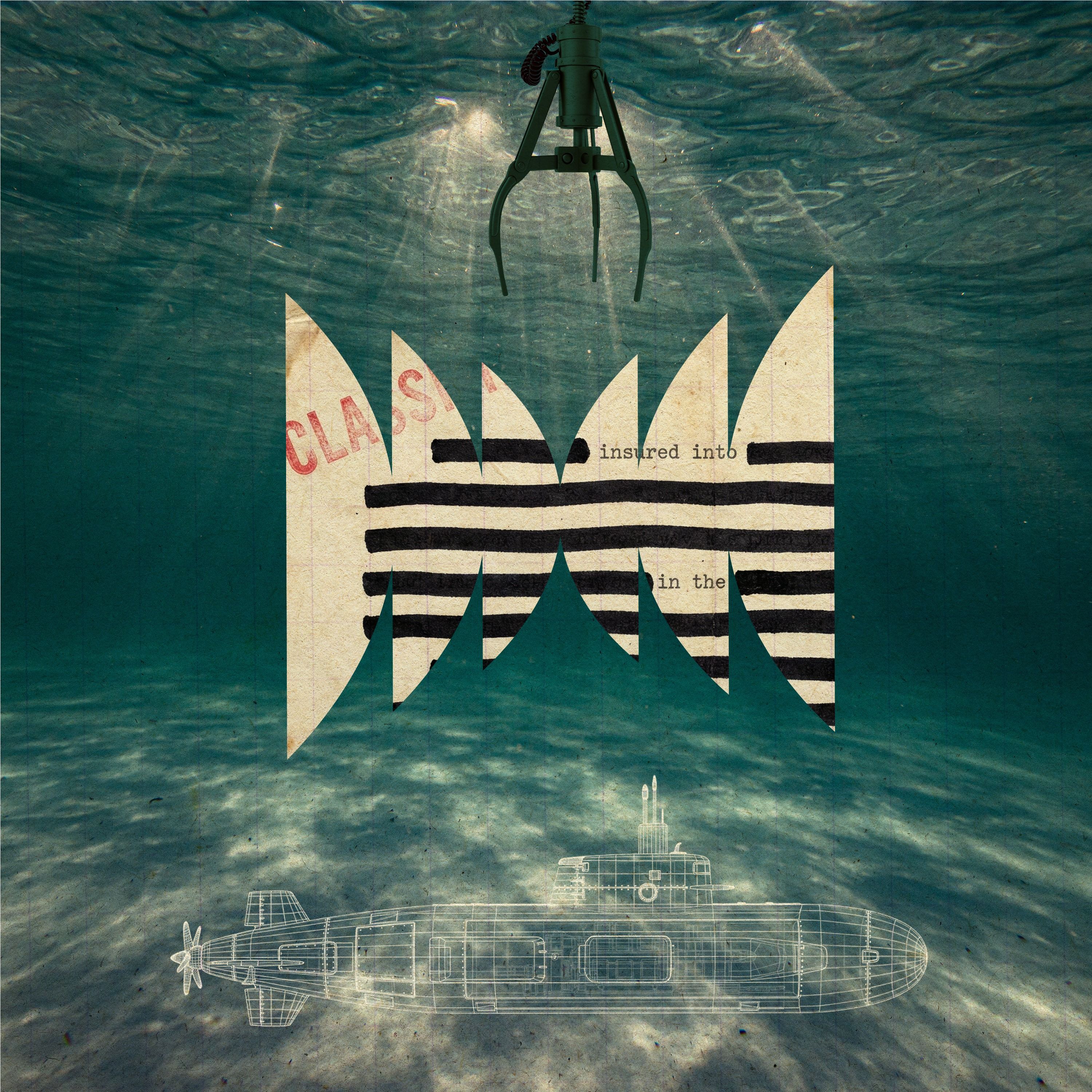
Radiolab
Neither Confirm Nor Deny
00:29:05
Whether it comes from government spokespeople or celebrity publicists, the phrase “can neither confirm nor deny” is the perfect non-denial denial.
Loading summary
Transcript225 lines
- [00:02]
Radiolab Sponsor Announcer
Radiolab is brought to you by Progressive Insurance. Here's a helpful fact that you might not know yet. Drivers who switch and save with Progressive save over $900 on average. Pop over to progressive.com, answer some questions, and you'll get a quick quote with discounts that are easy to come by. In fact, 99% of their auto customers earn at least one discount. Visit progressive.com and see if you can enjoy a little cash back. Progressive Casualty Insurance Company and affiliates. National average 12 month savings of $946 by new customers surveyed who saved with Progressive between June 2024 and May 2025. Potential savings will vary.
- [00:39]
Latif Nasser
Hey, this is Radiolab. I'm Latif Nasser and I happen to be allergic to peanuts, like even tiny traces of them. And when you have an allergy like this, you just go around every day paranoid that there are peanuts in everything. So you always check the ingredients and. And at a certain point during my childhood, there started to be written on the back of basically everything in the grocery store, this phrase may contain peanuts. And that phrase drives me up the wall because it's like, yeah, duh, it may contain peanuts. That's why I'm looking at the ingredient list in the first place. You are not giving me any more information than I had before I read this, and it is your job to give me that information. The story we have for you today is about an equally meaningless phrase that arguably has even higher stakes for democracy as a whole. We made this episode over ten years ago, but the phrase that it's about continues to flourish and be used at the highest levels of the American government, including for cases like Jeffrey Epstein and the war in Iran. I can neither confirm nor deny that you will enjoy it. Wait, you're listening.
- [01:55]
Jad Abumrad
Okay.
- [01:56]
David Sharp
All right.
- [01:57]
Gabby Santis (Staff Credits)
Okay.
- [01:58]
David Sharp
All right.
- [02:00]
Ira Glass
You're listening to Radiolab Radio Lab from wnyc.
- [02:08]
Jeff Larson
Rewind.
- [02:12]
Jad Abumrad
Hey, I'm Jad Abumrad.
- [02:14]
Robert Krulwich
And I'm Robert Krilwich.
- [02:15]
Jad Abumrad
And today on the podcast.
- [02:16]
Ira Glass
Hey, Robert, can you scoot back a little bit from the mic? I think I'm worried.
- [02:19]
Jad Abumrad
We have a cloak and dagger maritime adventure in secrecy and truth from reporter Julia Barton.
- [02:23]
Ira Glass
So, Jeff, maybe first you could start off just by introducing yourself. Yeah. So the story for me begins with this guy.
- [02:28]
Jeff Larson
Yeah, My name is Jeff Larson. I'm the Data Editor at ProPublica.
- [02:32]
Ira Glass
ProPublica is this investigative journalism outfit and
- [02:35]
Jeff Larson
Jeff does a lot of their data based reporting.
- [02:37]
Ira Glass
So in any case, it was summer of 2013, you know that big story about how the NSA had Just been monitoring millions of Verizon customers that just came out. Jeff's watching the story like all of us are. And then the thought occurred to him, geez, they're monitoring all of these people?
- [02:52]
Jeff Larson
Hey, does that include me?
- [02:57]
Ira Glass
So he goes over to the NSA's website. He was surprised to find that right
- [03:01]
Jeff Larson
there on the site, you could file a Privacy act request for your metadata.
- [03:07]
Ira Glass
They have a little online form right there.
- [03:08]
Jeff Larson
This is a service that they offer to everybody. And so I went ahead and did that.
- [03:13]
Robert Krulwich
And this is yourself you're requesting. You're saying, what do you know about who I called and who I heard from?
- [03:19]
Jeff Larson
Yes, exactly.
- [03:20]
Robert Krulwich
What were you expecting?
- [03:22]
Jeff Larson
The best case scenario would be just a page of all of the communications, actually, to my wife. My wife's a Verizon customer, and I'm an AT&T customer. So all my phone calls to my wife, I guess I didn't think that I would ever get any response back.
- [03:40]
Ira Glass
So we hit submit, expecting nothing to happen.
- [03:43]
Jeff Larson
But it was actually really, really quick. I think it was on the order of 10 or 12. You know, it came to my home address, sort of a manila envelope. You know, my wife called me immediately when she picked up the mail and said, hey, you know, you got a letter from the National Security Agency. And there was complete panic in her voice.
- [04:07]
Robert Krulwich
So now she's looking in the cabinets for small, little beeping objects.
- [04:11]
Jeff Larson
Yeah, right, exactly.
- [04:12]
Ira Glass
And when he opened up the letter, could you read it?
- [04:14]
Jeff Larson
Yeah, I actually have it up right now.
- [04:16]
Ira Glass
The letter said, we cannot acknowledge the existence or non existence of such metadata or call detail records pertaining to the telephone numbers you provided.
- [04:29]
Jeff Larson
Exactly.
- [04:30]
Robert Krulwich
What does one know when one hears that response?
- [04:33]
Jeff Larson
I don't know. I mean, when you're a reporter and you hear that, it's sort of. It puts you in this weird place.
- [04:39]
Ira Glass
So Jeff takes the letter into work the next day, and he shows it to a colleague who had been doing
- [04:44]
Jeff Larson
a lot of reporting on drone strikes in Guantanamo.
- [04:47]
Ira Glass
And he's like, what the hell is this? Does it mean something?
- [04:50]
Jeff Larson
And she said, that was a glommer response.
- [04:54]
Robert Krulwich
How do you spell. How do you say. How do you spell glomar or glomar?
- [04:59]
Jeff Larson
Glomar is G, L, O, M A R. Glomar.
- [05:05]
Ira Glass
What did you think just of the word?
- [05:07]
Jeff Larson
I thought it was some lawyer named Glomar who had argued, successfully argued the case because it sounded like a bit of legalese. I didn't know the fascinating story behind it.
- [05:20]
Ira Glass
So I started looking into it and right away found this nutty Story involving a nuke, a claw, a billionaire, some manganese, and this classic tension between secrets being really necessary and really harmful.
- [05:35]
Jad Abumrad
Some manganese.
- [05:36]
Ira Glass
But to get there, you have to start with this guy. Okay, let's just start out by getting your name and how we should identify you.
- [05:42]
David Sharp
Well, my name is David Sharp. That's my real name. That's what you were wondering.
- [05:49]
Robert Krulwich
This makes it all much more mysterious. What have been some of your other
- [05:52]
David Sharp
names during the mission? My name was David Sholes.
- [05:56]
Ira Glass
So in the late 60s, David was working at the CIA. He'd been there for a while and he got called onto this new thing called Project Azorian.
- [06:04]
David Sharp
Ah, yes. I started the program in 1969.
- [06:08]
Ira Glass
Here's what you need to know. In the late 60s, the US and the USSR were playing this high stakes chess game with their nuclear submarines cruising around international waters.
- [06:20]
David Sharp
There was a lot of harassment that
- [06:22]
Ira Glass
went on, inching on each other's territories. In fact, In January of 1968, a US naval ship was captured after leaving Japan. And everyone was worried that the Soviets
- [06:31]
David Sharp
had our code books and there was an interest in getting even.
- [06:34]
Ira Glass
Well, two months later, in March of 1968, a Soviet sub called the K129 just vanished. We don't know exactly why it sunk. There's all kinds of conspiracy theories about what might have happened. It just sank to the bottom of the ocean. And once the Soviets sent their search crews out trying to locate it and failed, we came in and somehow, through our sensor technology or whatever reason your conspiracy theory of choice might tell you, we found the boat. So then the thought was if we could get inside that thing. Such a bonanza.
- [07:15]
David Sharp
There was a lot to be learned, whether it would be the code books, the cryptographic equipment, or, and this is the big one of the nuclear missiles.
- [07:24]
Jad Abumrad
It had nuclear missiles on board?
- [07:25]
Ira Glass
Yep.
- [07:26]
David Sharp
The chief of naval operations, he really wanted to see if we couldn't recover that submarine, the whole thing.
- [07:33]
Ira Glass
The problem was that the sub was three miles below the surface of the ocean. And the pressures at that depth, according
- [07:38]
David Sharp
to David, are roughly £7,500 per square inch.
- [07:42]
Ira Glass
Which meant to get the whole thing up, they were looking at scenarios where
- [07:44]
David Sharp
they'd have to lift something like £14 million.
- [07:47]
Ira Glass
Oh, that's all? No big one. So their solution is to get a room full of top secret engineers together and just start spitballing ideas like what if we just went down there and
- [07:58]
David Sharp
attached rockets to it and blast the target up to the surface?
- [08:04]
Ira Glass
Well, wait, how do we catch it when it comes back?
- [08:06]
Walt Logan (Pseudonym)
Down.
- [08:07]
Ira Glass
It's heavy. What if we. Okay, we could.
- [08:09]
David Sharp
We could put these pontoons or gas filled bags and float the target up.
- [08:14]
Ira Glass
Except that we can't get the gas in there because of the pressure.
- [08:17]
Robert Krulwich
Boy, these must have been amazing meetings where you could say anything.
- [08:21]
David Sharp
You could say that.
- [08:23]
Ira Glass
So in the end, they settled on a claw.
- [08:28]
Jad Abumrad
A claw.
- [08:28]
Ira Glass
The idea was to build this gargantuan eight fingered claw and, and a boat. And then you would put the claw in the boat, bring it out on the high seas, and then you would lower the claw on a three mile long piece of pipe string. And then like one of those carnival games, you know, where you. You have to grab the toy by remote control.
- [08:50]
David Sharp
Yeah.
- [08:51]
Ira Glass
You would position the claw over the submarine and. Exactly so. And then you would yank it off the bottom of the ocean, pull it back into the boat. Gates would open on the bottom of the boat and the claw and the submarine would come into a chamber and you would have it and.
- [09:07]
Jad Abumrad
You're not making any of this up.
- [09:08]
Ira Glass
I am totally not making it up. The CIA made it up.
- [09:12]
Jad Abumrad
Cause it just sounds weird, but they did it.
- [09:14]
Ira Glass
They got the money, they got the approval from the President, but they still needed a cover story.
- [09:19]
David Sharp
So they called up Howard Hughes.
- [09:20]
Jad Abumrad
The billionaire.
- [09:21]
Ira Glass
Yep. And they asked him, or probably his people, do you guys think you could just pretend to have this sudden interest in manganese mining from the bottom of the ocean?
- [09:31]
Jad Abumrad
That was.
- [09:32]
David Sharp
Yes, partly because Howard Hughes was a known inventor.
- [09:37]
Robert Krulwich
Wasn't Howard Hughes at this point living in isolation in Las Vegas, his fingernails growing inches long and being pretty bizarre?
- [09:45]
David Sharp
You know, I don't know if he was living in Las Vegas, but the rest of that I think is probably pretty accurate.
- [09:51]
Ira Glass
Anyway, so they end up building this
- [09:52]
David Sharp
massive ship, the Hughes Glomar Explorer.
- [09:55]
Jad Abumrad
The ship was called Glomar. That's where the word comes from.
- [09:58]
Dina Temple-Raston
Yeah.
- [09:58]
Ira Glass
It was built by this company called Global Marine. Global Marine Glo. Mar.
- [10:05]
David Sharp
Oh.
- [10:06]
Ira Glass
And In July of 1974, they get the boat out there and they lower the claw. The claw descends three miles to the bottom of the ocean where the sub is. And the claw had lights and cameras on it so they could see what was happening. Do you remember when you first saw.
- [10:24]
David Sharp
Saw it? Yeah, I do. It was a very badly mangled hull. And we could see it very well.
- [10:30]
Ira Glass
They actually could watch as the claw wrapped its massive claw hand around this sub and began to pull it back up 14,000ft, 12,000ft.
- [10:41]
David Sharp
About 9,000ft from the surface. We were beginning to feel some cautious optimism that we might Just pull this thing off after all. And then I felt just a little, a little bump in the ship. And we went to the control center and everything looked normal on the television screens. But then it suddenly occurred to the operators that these television images had not been refreshed. In other words, they were television images taken maybe 15 minutes ago. And when they refreshed those images and got the real time picture of what was going on, it showed that we had lost. We had lost most of the submarine, basically.
- [11:27]
Ira Glass
The part of the sub with the nukes, with the missiles, maybe with the code books and all the stuff they wanted. That part broke off. And years of work, millions of dollars just slowly sank to the bottom of the ocean.
- [11:43]
Robert Krulwich
Did your heart go?
- [11:46]
David Sharp
Yeah, yeah, it did. It was intensely emotional.
- [11:57]
Jad Abumrad
And in the end, did they find anything?
- [11:58]
Ira Glass
We still don't really know. They've never actually disclosed what they found in that piece. From David's description, it sounds like they didn't get a lot. But here's the whole reason I'm telling you this. It's because not long after that, like, intense moment of disappointment, the story starts to break in the press. Journalists are starting to call up the CIA. They're asking all these intense questions. They're onto it. And the CIA has to figure out what to say and what not to say.
- [12:30]
Latif Nasser
What the CIA comes up with after the break.
- [12:35]
Radiolab Sponsor Announcer
Radiolab is supported by Capital One with no fees or minimums on checking accounts. It's no wonder the Capital One bank guy is so passionate about banking with Capital One. If he were here, he wouldn't just tell you about no fees or minimums. He'd also talk about how Capital One cafes are open seven days a week to assist with your banking needs. Even on weekends. It's pretty much all he talks about. In a good way. What's in your wallet? Terms apply. See capitalone.com Bank Guy Capital One NA Member FDIC. Radiolab is supported by Memorial Sloan Kettering Cancer Center. In a small groundbreaking clinical trial, 100% of participants with a specific type of rectal cancer saw their tumors disappear using immunotherapy alone. Researchers at MSK are now studying this approach in cancers of the stomach, liver and more. And a majority of tumors are disappearing. For MSK Giving day, all gifts will be tripled. Learn more@msk.org Radiolab Radiolab is supported by Smalls. Did you know that some cat foods contain so much carbohydrate filler that they're closer to a granola bar than a prey animal? It's True. In fact, dry kibble can be 30 to 50% carbs, despite cats having almost no dietary need for them. Smalls fresh recipes are over 80% animal protein, and they never use fillers or artificial ingredients. Their food is so healthy that 88% of cat parents say that after feeding Smalls, they notice that their cat has better digestion, is softer and shinier, and has more energy to play because it's actually good for cats. If you want to invest in your cat's health, Smalls is giving you 60% off your cat's first order, plus free shipping and free treats for life when you go to smalls.com Radiolab that's 60% off your first order, plus free shipping and free treats for life when you head to smalls.com Radiolab
- [14:22]
Ira Glass
this is Ira
- [14:23]
Robert Krulwich
Glass on this American Life.
- [14:25]
Jad Abumrad
One thing we like is a good
- [14:26]
Robert Krulwich
mystery sometimes about really big things, things
- [14:29]
Ira Glass
you hear in the news.
- [14:30]
Jad Abumrad
But most times the little mysteries are the best.
- [14:34]
Jeff Larson
Our lost and found is currently filled with pants.
- [14:36]
Walt Logan (Pseudonym)
I don't know.
- [14:38]
David Sharp
I've never seen this happen.
- [14:39]
Latif Nasser
I've got skirts, I've got shorts.
- [14:41]
Ira Glass
This is true. This is true.
- [14:43]
Jad Abumrad
Mysteries of every size each week. This American Life. Wherever you get your podcasts.
- [14:55]
Latif Nasser
Latif Radiolab we're jumping back in where we left off. A US mission during the Cold War goes awry, and the CIA has to figure out what what to say and what not to say.
- [15:05]
Walt Logan (Pseudonym)
It's a dilemma, there's no question about that.
- [15:08]
Ira Glass
Which brings us to Walt, Walt Logan. Which is, just to be clear, not your actual name.
- [15:14]
Walt Logan (Pseudonym)
It's a pseudonym.
- [15:14]
Ira Glass
Okay, so in 1975, Walt was a lawyer at the CIA.
- [15:18]
Walt Logan (Pseudonym)
At that time, I was the associate general counsel.
- [15:21]
Ira Glass
And as the story was breaking and all these journalists were asking questions, it
- [15:26]
Walt Logan (Pseudonym)
became his job to develop the response.
- [15:29]
Ira Glass
Simple, except not so simple.
- [15:33]
Walt Logan (Pseudonym)
Yes, there's a diplomatic element of what's going on in here that isn't so obvious, and that is that you have the Soviet Union and the United States at odds.
- [15:43]
David Sharp
And the problem was that we didn't want the Soviets to know either what we had found out or what we hadn't found out.
- [15:52]
Ira Glass
Either way would have been bad, says David Sharp.
- [15:54]
David Sharp
If we said that we didn't recover any information on Soviet missiles, which was the truth, then that would tell the Soviets that they don't have to worry about the security regarding their warheads.
- [16:05]
Ira Glass
David says, we wanted them to worry. This is the Cold War. We might as well make them think we found something.
- [16:10]
David Sharp
On the other hand, if we said that we did recover information on the missiles, but we're not going to tell you. That would be lying.
- [16:19]
Ira Glass
And they couldn't do that.
- [16:21]
Jad Abumrad
Wait, don't governments lie all the time? Why couldn't they lie?
- [16:24]
Ira Glass
Well, because this is 1974. This is the year of Watergate. This is the year that Congress rakes the entire federal security apparatus over the coals. This is also the year they revisit something called the Freedom of Information act. Foia. Actually, FOIA had been around for a while, but that's when FOIA finally got some teeth. The law says anybody, any American, should be able to ask the government for documents. And the government has to respond. It has to fork over that information.
- [16:59]
Walt Logan (Pseudonym)
Well, let me put it this way.
- [17:02]
Ira Glass
Walt's not a huge fan of this law.
- [17:04]
Walt Logan (Pseudonym)
The GLOAM armor is a tremendous investment of time and resources. And to willy nilly give it over to somebody who writes a letter to the agency is preposterous.
- [17:16]
Ira Glass
The way Walt sees it, the CIA's job is to keep secrets. And keeping secrets keeps America safe.
- [17:22]
Walt Logan (Pseudonym)
Yes.
- [17:23]
Ira Glass
In fact, every CIA employee is legally
- [17:26]
Walt Logan (Pseudonym)
bound to protect something called Intelligence sources and methods.
- [17:29]
Ira Glass
It's not an option, it's a law. Hence his dilemma. So there he was, between a rock
- [17:36]
Walt Logan (Pseudonym)
and a hard spot.
- [17:37]
Ira Glass
Under the FOIA law, the public has a right to know. On the other hand, under Walt's oath, he has a legal obligation to not tell.
- [17:46]
Jad Abumrad
It's like the classic tension of our times.
- [17:47]
Ira Glass
Exactly. Walt has to say something. He has to be truthful when he says it, but he also cannot reveal anything.
- [17:55]
Walt Logan (Pseudonym)
That's correct.
- [17:57]
Ira Glass
And people at the Agency had been trying to figure this out for months, which is why they brought in Walt. And how long did it take you to come up with this kind of response?
- [18:07]
Walt Logan (Pseudonym)
I would say probably a half an hour.
- [18:10]
Ira Glass
Wow. That half an hour of work has tortured journalists and lawyers for almost four decades. Here's what he came up with.
- [18:19]
Walt Logan (Pseudonym)
The glomar response was basically the. We can neither confirm nor deny the existence of the information requested. But hypothetically, if such data were to exist, the subject matter would be classified and could not be disclosed. Very straightforward. Now think about that. That addresses what you were just trying to put your finger on. You can't confirm it, which would be giving up secrets, nor deny it, which
- [18:51]
Ira Glass
would be a lie.
- [18:52]
Walt Logan (Pseudonym)
But if it was classified, it couldn't be revealed anyway.
- [18:55]
Ira Glass
Suckers. As you can imagine, people who filed these FOIA requests, when they got a response like that, they were like, that's not going to stand. Here you are the sucker. They fought it in court and the fight went on for years. Knock down, drag out. But eventually the government wins.
- [19:13]
Jad Abumrad
The judge ruled in their favor.
- [19:14]
Ira Glass
Well, the judge agreed to their logic that sometimes revealing even the existence of documents endangers national security. I was like, hey, Barack, man.
- [19:24]
Latif Nasser
Hey, listen, Jayden.
- [19:25]
Ira Glass
And to make a long story short, use of this kind of response exploded to the point where now you hear actors like Will Smith Smith using it.
- [19:33]
Jeff Larson
I can neither confirm nor deny.
- [19:37]
Ira Glass
Here are Pixar characters using it. Hollywood publicist.
- [19:40]
Gabby Santis (Staff Credits)
I can neither confirm nor deny the rumors.
- [19:43]
Ira Glass
Ex Congressman Anthony Weiner. Congressman Weiner told John Carl that he could neither confirm nor deny that the photo was him. It's become this total boilerplate phrase of our time.
- [19:56]
Latif Nasser
I'm going to ask you guys just
- [19:57]
Robert Krulwich
directly, have you had personal experience with Viagra?
- [20:00]
Latif Nasser
Have you?
- [20:01]
Jeff Larson
Can't confirm or deny that that was
- [20:03]
Ira Glass
Zac Efron on Conan. But on a much more serious note, since that initial glomar response in 1975, more and more government agencies have begun to use it. Surprisingly, and not the obvious ones, we found some from the Department of Commerce, Department of the Treasury, Department of Energy.
- [20:22]
David Sharp
It makes you wonder how they got along before then.
- [20:24]
Ira Glass
Centers for Disease Control.
- [20:26]
Walt Logan (Pseudonym)
I was amazed that this thing has legs.
- [20:28]
Ira Glass
And it makes you wonder why does this thing have legs? Why now?
- [20:33]
Jad Abumrad
Yeah, it is weird. Like that guy, that ProPublica guy you. You started with.
- [20:38]
Ira Glass
Jeff Larson.
- [20:39]
Jad Abumrad
Yeah, that guy. If all he's asking is what do you know about who I call? And the only answer he's expecting to get is like, we know you call your wife. Why would they glomar that?
- [20:48]
Ira Glass
Well, they told him in that letter that if they confirm or deny the existence or non existence of of those
- [20:55]
Jeff Larson
records, it would help the adversaries of the United States.
- [21:00]
Robert Krulwich
And just so that I can empathize with the United States of America for a moment, why would that be? Right? Like if they said you called your wife on Monday at 3:00', clock, Thursday at 4:30, she called you back at 6:15. What would an enemy then learn, do you suppose?
- [21:16]
Jeff Larson
I guess that they would learn that they have records of me calling my wife.
- [21:23]
Ira Glass
So the statutory reason why I've read that Your sort of FOIAs are denied with a glomar request is that if you say someone is under surveillance by acknowledging records or you say they're not under surveillance by acknowledging no records, either way, it outlines the contour of the program. It's a tiny crack through which people can sort of puncture the wall and get information about the larger program.
- [21:49]
Robert Krulwich
There you go. You've just given us the government's position. That makes perfect sense to me. I mean, look, if a thief were to come up and say to me, I'm a cop, are you investigating me? If I say yes, then he can hide. If I say no, then he will go rob another bank or the other robbers will know that I missed a really good bank robber and I'm terrible at it in any way. I seem like I feel suddenly dangerously exposed.
- [22:09]
Jeff Larson
I don't know. It's all very, very confusing and you could wrap your brain around it and never get to sleep for the rest of your life if you thought about it really hard.
- [22:20]
Jad Abumrad
And by the way, there is a, we should say a very good argument against that argument from the government that
- [22:25]
Dina Temple-Raston
transparency is a good thing. If you have an agency that doesn't have any sort of constraints on it or doesn't have the proper oversight, it oversteps.
- [22:36]
Jad Abumrad
That's Dina Temple Rastin, counterterrorism correspondent for npr. As Julia was reporting her story, we ended up calling Dina just to sound her out because she has been glomared on drones. She's been glomarred on terrorism investigations.
- [22:50]
Dina Temple-Raston
I've never actually heard it as being glomared, I have to say.
- [22:54]
Jad Abumrad
And she told us something interesting, that this whole non denial denial state of weirdness has created some very unique situations for her as a reporter. Like say on any given Monday, she sits down, writes a FOIA request about the drone program which will get glomared. Then on Tuesday the government will turn around, organize a meeting for reporters about the drone program.
- [23:18]
Dina Temple-Raston
Let's say a story about a drone target is out and it seems incorrect to the White House in a big enough way that they feel they need to correct the record. So they will often conduct a conference call on background with a number of reporters from a number of different organizations and basically say to those reporters, okay, here are the following people who are talking to you, but you are not allowed to say who they are. And they're going to put this in context for you. And you can quote them as. And they usually set the ground rules, you know, senior administration official or administration official familiar with the program or something like that. And what then happens is they get to correct the record without officially confirming that something is going on. I mean, there's an interesting thing about the White House and government that they believe that they still have deniability if a high ranking official who is unnamed in says something is going on. And as soon as a name is attached to that, then the information, in their view, fundamentally changes. It suddenly becomes concrete.
- [24:19]
Ira Glass
And actually, that's kind of what happened with the Project Azorian, that glomar mission from the 70s even now, the only reason that we know half of what we know about this whole thing is because some historians were really dogged with their FOIA requests, and they found out about this whole series of internal CIA newsletters. And in one of those newsletters, there was an article with a title that clued them in that this was about the glomar mission. They FOIAed that specific article.
- [24:48]
Jad Abumrad
Oh, and that's what ultimately sprung it loose.
- [24:50]
Radiolab Sponsor Announcer
Yeah.
- [24:51]
Ira Glass
When they have a name of an article, then they can FOIA that. And then it's really hard for them to say no documents exist because they have the actual title of it.
- [24:58]
Jad Abumrad
So when it gets specific.
- [25:00]
Walt Logan (Pseudonym)
Yes.
- [25:00]
Ira Glass
So the CIA released this article, but I mean, by now, decades have passed, and that's what people now say about the Glomar response, is that it's just a delaying tactic because Congress. In 2000, I talked to this one guy, Jamil Jaffer. He's the deputy legal director of the aclu, and they get glomared all the time.
- [25:20]
Latif Nasser
We've come to expect them.
- [25:21]
Ira Glass
Now, unfortunately, he says, you know, I mean, when they get a glomar, they don't get upset. They just think, okay, well, we've got another two years in court.
- [25:29]
David Sharp
That's what it means.
- [25:30]
Latif Nasser
It means you have two years of litigation before you even get to the point of arguing over whether the government has a right to withhold the information.
- [25:38]
Jad Abumrad
What's happening over those two years?
- [25:40]
Ira Glass
Well, they're trying to strategize. So if they really want to know about a program and they really want to get those documents, they will look for any sort of mention of those documents by public officials in the same agency. So say you have a pen, and you love this pen, but you don't want anyone to know about it. Someone asks you if it exists, and you say, hell, no.
- [26:03]
Jad Abumrad
Can't confirm or deny.
- [26:04]
Ira Glass
Right. And then you're at a party and you just mention it in passing. You can't help yourself.
- [26:09]
Jad Abumrad
Love this pen. You should check out this pen.
- [26:10]
Ira Glass
Right. Well, I was nearby. Now I take it to a judge, and I say, look, he's talking about this pen at a party. He's bragging about it. He can't refuse to confirm or deny its existence anymore.
- [26:21]
Jad Abumrad
So they're looking for cracks in the glomar over those two years.
- [26:25]
Ira Glass
Yeah. And it's this really expensive legal strategy that most people can't even get to. Only big outfits like the ACLU can even challenge them.
- [26:33]
Latif Nasser
And the government may ultimately lose in all of these cases, but it will lose at a time when the public debate will have moved on to something else.
- [26:41]
Ira Glass
And that's one of the real dangers here. He says. It's that by the time the truth finally comes out, we don't actually care anymore. It's ancient history, but not for everyone.
- [26:55]
David Sharp
Well, the divers who were specially trained,
- [26:59]
Ira Glass
going back to that Glomar mission, the original Glomar mission, for a second. David Sharp says after they were able to pull that last fragment of the sub out of the water, they were able ultimately to look inside. And were there people in there?
- [27:14]
David Sharp
There were, there were. There were three crew members that were basically whole and recognizable, and there were major parts of another three crew members. But they were. They were given the full, full respect that I think the Soviet Navy would have conferred upon their own people under those conditions.
- [27:45]
Ira Glass
The problem was we were keeping the whole thing secret. And that allowed the Soviet government to do the same thing. They probably didn't want the embarrassment of acknowledging that they'd lost this really important submarine. They also didn't want to derail arms talks that we were having with them. And for a bunch of other reasons, they just pretended it never happened. But they had to say something to the families of the sailors who died on that submarine. Here's the widow of second in command on the K129. Her name is Irina Zhuravina, and a while ago she was interviewed on Russian television. She's showing the death certificate for her husband. And then she reads it. I'll translate it as best as I can. Swedettles. Twas Mertu death certificate. Cause of death presumed dead.
- [28:41]
Walt Logan (Pseudonym)
What?
- [28:42]
Ira Glass
This. Horrible, inhumane death certificate. I don't know who is the author? I've wanted to know for 30 years who is the author of this horrible, inhumane document. This is what we've been living with for 30 years.
- [29:07]
Jad Abumrad
They wrote cause of death presumed dead on the death certificate.
- [29:11]
Ira Glass
Yeah.
- [29:12]
Jad Abumrad
Doesn't even make any sense.
- [29:13]
Ira Glass
And that's cruel. Yeah, in this context, it's cruelty. That's what she's saying. Giving an answer that says, nothing can be worse than just silence.
- [29:43]
Latif Nasser
Big thanks to reporter Julia Barton, who has since gone on to become a legend in the non fiction podcast world. Also, you might remember that our story started with an editor at the investigative journalism outfit ProPublica. And I wanted to shout out ProPublica's newest podcast, Paper Trail. If you like well told stories about people trying to expose high stakes secrets and lies, I think you'll enjoy it. The host herself, Jessica Lussenhaupt, is a longtime investigative reporter and the Executive producer, Kathryn Wells, used to work with us here on our Supreme Court show. More Perfect paper trail from ProPublica. That is it for us. I cannot confirm or deny that. I will catch you next week.
- [30:40]
Gabby Santis (Staff Credits)
Hi, I'm gabby. I'm from the bay area, california and here are the staff credits. Radiolab is hosted by lulu miller and latif nasser. Soren wheeler is our executive editor. Sarah sandbach is our executive director. Our managing editor is pat walters. Dylan keefe is our director of sound design. Our staff includes jeremy bloom, w. Harry fortuna, david gable, maria paz gutierrez, sindhu nainasambandan, matt kielty, mona maudgaukar, alex neeson, sara khari, natalia ramirez, joanna strogatz, anissa vitce, arian wack, molly webster and jessica young, with help from gabby santis and maya applebee melamed. Our fact checkers are diane kelly, emily krieger, natalie middleton, angeli mercado, and sophie semay.
- [31:40]
David Sharp
Hey Radiolab. Michael, Tacoma, Washington Leadership support for Radiolab science programming is provided by the Simons foundation and the John Templeton Foundation. Foundational support for Radiolab was provided by the Alfred P. Sloan Foundation.