Loading summary
Transcript57 lines
- [00:00]
William Shawke
Foreign.
- [00:17]
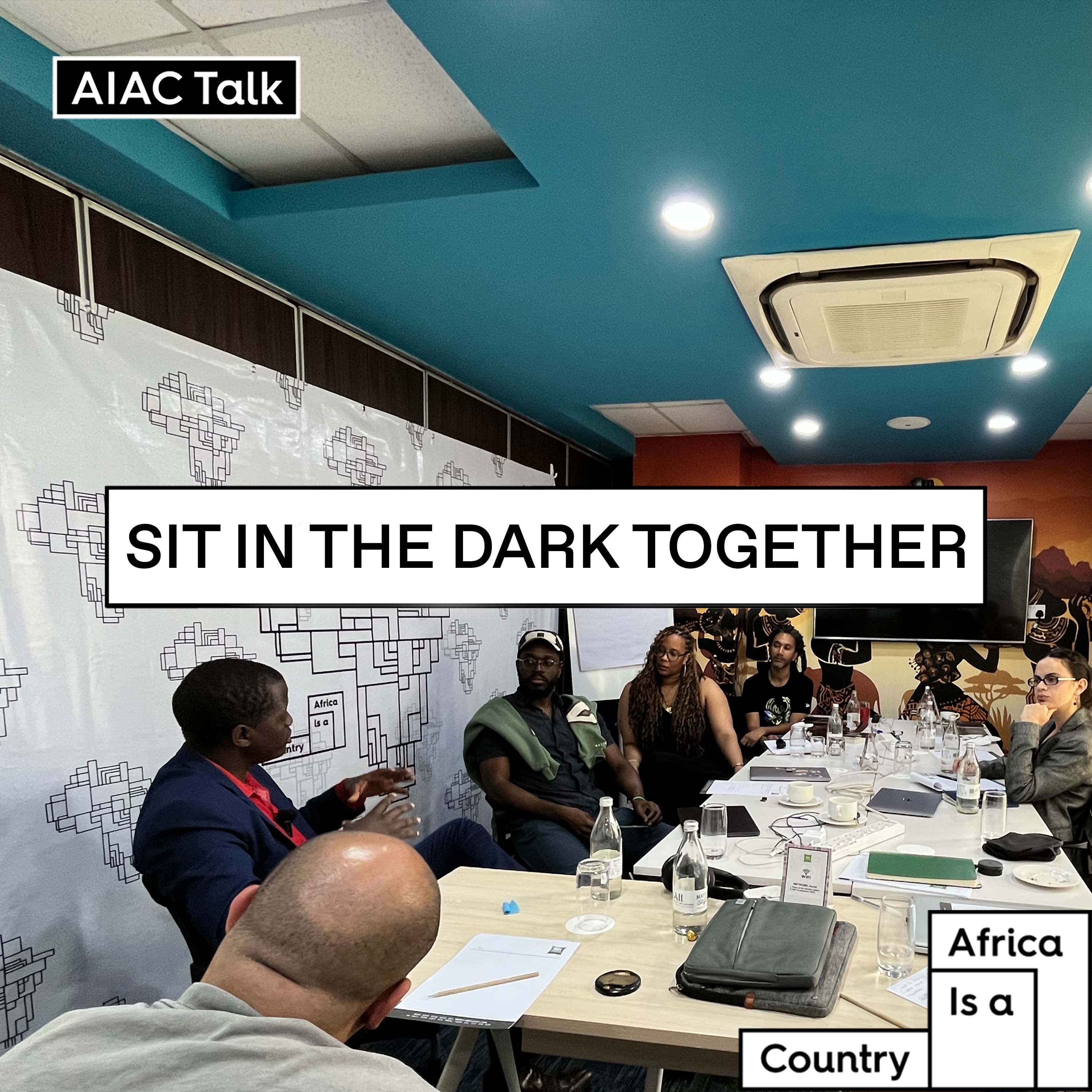
Hello and welcome back to the Africa Is a Country podcast. My name is William Shawke and you are listening to this, which is AIAC's regular destination for news and analysis of global events from a Pan African and Left perspective. This week we are playing back a roundtable that we held earlier this year. If you'll remember, In June of 2025, Africa as a Country held its inaugural Festival of Ideas in Nairobi, a week of screenings, workshops, panels and long, searching conversations about the future of political and cultural life on the continent. As part of the trip, our editorial team sat down with Joe Kabuti of the Elephant, one of Kenya's leading platforms for critical commentary and analysis. Joe has been a long and astute observer of the Kenyan public sphere, and in this wide ranging conversation he reflects on the country's shifting political landscape, from the promises of the 2010 Constitution to the emergence of a new Gen Z led revolt demanding a wholesale renegotiation of Kenya's social contract. As fellow travelers in the struggle to build a more critical, independent and solidaristic media, we approached this conversation with Joe not simply as observers, but as participants. The crises facing Kenya, including shrinking civic space, intensified repression, the return of theological, authoritarian rhetoric, etc are not unique. They resonate across the continent and beyond, including in our own work. So we probed questions such as what are our responsibilities as editors, writers and podcasters in such a moment? What new forms of public imagination are needed? How do we hold space for resistance and opposition while sustaining intuitions and institutions of critique? This wide ranging conversation explores all of these questions, from the ghosts of Kenya's post independence promises to the radical promise of the Gen Z revolt, from ideological decay wrought by structural adjustment to the shifting terrain of faith and power. In this conversation, Kubiti offers a very sobering and searching diagnosis of where things stand and what might come next, a reminder that if you enjoy the AIAC podcast, make sure that you subscribe. Wherever you listen to your podcasts, follow us on social media. But most importantly, head over to africasaccountry.com where you can find new articles and analyses on global events from a Pan African LF perspective. So without further ado, here is our roundtable conversation with Joe Kabuti of the Elephant.
- [02:47]
Joe Kabuti
I understood this conversation. It's really a conversation to have together with a particular moment of history and I think to locate where we are today in our newsrooms. I think we have to locate ourselves in, I think in a particular moment of history, which is that six years ago, November 9, the fall of the Berlin Wall and what transpired after that was we know the history was the great triumphant American era and things were good overnight. Reading Karl Marx was bad and wearing Reebok was good. We watched Jordan and Les Matt Stalin. So that was where we came. We came from here in East Africa but in particular Kenya which is my context of this conversation. The liberal democratic dispensation in America ushered in actually met with a lot of joy because at the time Kenya was facing, we were facing an economic recession then. We're going through structure adjustment programs which we just signed from the 1980s. Something similar to what happening today of course a different name we're calling to austerity, debt driven austerity. But the conditions are really much the same. Cutting back of health, education, etc again just like now. Also Kenya was under authoritarian regime, you know, under the president. So it's almost similar just like, just like now because his political disciple if you may is president. Right. So there's a kind of, kind of similarity with where we're facing today in terms of just the political economic measures. But interestingly what was useful about then and now was the young population that came or coming out of particularly university. We had something called jab. Jab was government sponsored. Students would be given quite a bit of money to be a two year university student. So you had quite a bit of time and freedom to be a leftist, a radical etc so all that was cut because of now the programs. But then the question then was what do we do with the graduates who are coming out of university. Of course Kenyan political players and public policy pundits didn't have a solution for that. So what was then what came was that a black market was formed so that the civil society as we know it coming out from the 90s rather cementing itself in the 90s was largely donor driven, was largely western driven, was largely pushing Western liberal democratic ideals and values. However, because of the context of where Saati was it was a welcome change. The then ambassador, the US ambassador to Kenya, Smith Hempstone championing these kind of things. If you look at the draws for that moment we see even the church key players like Reverend Timothy Njoyer saying Kenya is now ripe for democracy. So there was a whole, those are all the local forces, international forces came together. In a sense it was a useful marriage if you may. So at that time it was cool to be a civil society actor, it was cool to be a anti corruption crusader because you had western allies. It was cool to push liberal democratic values because you had western allies. And it Was cool to do this kind of stuff so that because you had people supporting you, because you are aligned to what in that sense, the American dream was pushing world over. So we went that way and a couple of things went that way. And you can proceed to the next slides. We went that way and for a moment there, you know, for a moment there, we're all told that, no, it's the end of history, right? The end of history. And as. Yeah, my center history. And the only thing that was left to do was now to. To have technical fixes to your political problems. So you. You didn't, you didn't, you didn't. We didn't need to philosophize our moment. We didn't need to. To have a kind of political consciousness for kind of daily struggles. All you needed this was a model. So it was the lecture not working. It's probably the problem with either. No, there are some technical fixes. So it's in Kenya. Maybe it was the ballots are not coming. Where do we get the final tallies? Is the polling station or is it the telling Center? The national Telling Center. So we go to court then. Now the Macau ruling is the polling station is a final verdict. So that became our dance. That became our dance. Even to the extent that even when we. Even when we pushed out Moi, that was our dance. Our dance was we're doing technical fixes. So authoritarian is bad, democracy is good. We removed Moi. Then of course, President Kibaki comes into Power in 2002 and we continue this kind of liberal democratic agenda. And it was great, particularly for this generation, the young guys who had come in, who now came of age agitating for this. It was useful, it was fun. Civil society was a thriving intellectual space with all these kind of ideas backed, as I said, by Western donor funds and the liberal democratic model. It was great, a good time to be alive. So much so that even in 2002, when President Kibak came into power, it was again a moment of euphoria for country. And this generation again. This generation again set up things. You know, the late Binyavanga Wainana, who is. Who is part and parcel of this generation, wrote a fascinating book, how to write about how to write about Africa. And it was a valve. It was cool. Things were good, you know, and we loved it. Kwani was set up. It was a literary space, was expanding, was bajoning. And we were enjoying what was happening in this particular time, isn't it? And we even contested, as you guys are, you know, you said we contested the idea that Africa is not a country, you know. And you, and you know this publication is called by that. And it was a time for that, the 2000s and the time for that so much that even in 2007 with the post election violence that it just seemed like a blip. It was a blip, blip in blip in our journey, our liberal democratic journey. It was a blip in the, you know, this dark cloud in a, in a, in a, in a rainy, rainy Paradise. Of course, 2010 because of 207. We cemented these gains and we promulgated our constitution in, in August 27th, 2010. And things were things, things kept moving, things kept moving. However, I know just like history doesn't move in a straight line, but it rhymes, you know. An accident happened in 2013. Suspects former President Uru Kenyatta and current president William Ruto teamed up. Teamed up and they pushed an impressive campaign to win power. So this was almost like it was a chink towards our liberal democratic game. So they clinched power and we found ourselves in a hole, you know. So what happened after this was about 2014, 2015, members of this generation, because this generation felt that no, all the things we had sacrificed our 20s and now 30s for. There were increasing democratic recessions. Civil society 2014, 2015 had now been been named evil society. We're seeing blowbacks in implementing the 2010 Constitution, particularly in health reforms, devolution. We're seeing increasing counter blowbacks, but also a kind of counter reform, counter reform agenda. So members of this generation sat together, particularly the progressives of this generation. Late night coffees, teas, debates. And in 2016 the elephant was formed and was formed as a platform for dialogue to speaking truth to power, to emergency in society. It was like exciting times because now it was how we needed a space. By then there was a shrinking civic space. Dennis Galava Gado and many people in our many columnists and editorialists within Kenya newsrooms were being let go. I don't want to say fired because fired. When you say fired, terms kind of HR problem. There was no HR problem. They were being let go. A lot of the calls were coming from state operatives that know that the editorials are too far, their cartoons are too far. So they were let go. Interestingly, an anecdote. Many of them were being let go by being given a scholarship to the uk. So they go scholarship, where you come back, you don't have a job. So it was an interesting way of letting go of people is that you promote them. The Peter Principle says they promote the level of incompetence by this way, giving them scholarships to the uk. So that's how it went. It was exciting. Early days is exciting because not just the elephant in many ways spurred a kind of environment within Kenya's public sphere to rethink our society. And in early days, things were exciting. You know, we wrote about ourselves to ourselves, you know, in the lines of Steve Biko. We wrote what we wanted. And I think that was exciting. And there was a lot of exciting time in Kenya's public sphere in that particular time. But again, he doesn't move in a straight line. So with COVID and. With COVID and stuff. But interestingly, because of the conversation happening in the public sphere, not just inspired by platforms like Elephant, by Africa as a country, Debunk media, Africa uncensored, Barrasa Media and all other kind of media outlets at the time, but also that conversation in the public sphere. Many narratives, many narratives that were held very strongly pushed by the state were dispelled or also were. Were dispelled, but they were, you know, they were falsified by, by that kind of stuff. So by the time we're getting to 2020, Covid is happening, the political elite realized that the prevalent narratives in which they were able to capture power and manipulate the voters were not able to hold forth. Of course, by then, Kenya was already 2018. We already signed our first. Our first IMF discretionary loan. So we're already beginning our journey of austerity, the that we are in. So, I mean, cost of living is high. The youthful narratives that are held were not able to hold together. And as Nanjala Nyabora writes in her book Digital Democracy and Politics, the new forms of politicalization were happening digitally. You know, they were being rendered digitally to different kind of spaces, either through digital platforms, but also generally the Internet. So Twitter, of course, now X, Facebook and also the dark web, WhatsApp, etc, so it's almost like a reconstruction of public happening in real time. Current President William Ruto, understanding this, marshaled a unique kind of campaign, realizing that the old narratives of the political elites to hold on to power, parochial tribalism, we're not appealing particularly for a younger demographic who increasingly are being socialized. The politicalization is coming from there, from digital platforms, marshalled a kind of campaign dubbed Hasas Dynasties. So it was a kind, it was a really on form, it was a class campaign. On substance, it was hollow. But at the time, campaigns unfortunately are pure branding schemes. In most parts of the world, we don't have ideological conversations about them. But that level, that kind of appeals attracted largely the youth, you know, largely the youth who showed up in droves and voted for him because the margin was thin. But it showed a shift towards Kenya's politics, again backed because of the success of the kind of work that the elephant and that had done in the last since 2016. So it was a kind of. It was a kind of. It was a hard moment, if you may, for this generation, particularly the progressives who thought, you know, what was the liberal democratic experiment for? If after 30 years, 30, 30, 35 years of advocating for it, pushing for it, leads us to this moment where it was actually a member of YK92. YK92 was a political vehicle of President Moi organize the youth against these liberal democratic reforms that actually were now coming into many parts of Africa and in this particular case, Kenya. So it was a kind of, you know, it was a kind of moment of disillusionment really for many in the country. So again, Naji Nyabola wrote a piece for the Times and said if you hear an airy silence coming from Kenya, it's because we're all in disbelief of what has just happened. And at Kenya this particular time is a histocracy, is what she defined Kenya As. So from 2022, there was a kind of stalemate to where we are, isn't it? And last year something happened, you know, something fantastic happened is that the younger generation, interestingly, they're actually the children of the generation that actually began this journey, took to the streets, the Gen Z revolution and began agitating for what was started by their parents not be complete. So which was actually the push of, you know, the push of constitutionalism, you know, real reforms, particularly police reforms, economic reforms, the full population of the Constitution, sovereignty, which is the conversion around debt, sovereignty around looking into conversion around, around Chinese debt, but also IMF and World bank and also Western powers. So that has been the conversation pushed by his generation. So to the extent that now we find ourselves here, so we find ourselves here today in a kind of revolutionary moment kind of thing that we don't know where we are going in the sense of. In the sense of we don't know what's going to come out of this, but we know where we're not going. So I mean, as you rightly put, it's actually, to quote Gramsci, he says, the old world is dying and the new world is not yet born. Now is the age of the monsters. So we find ourselves in a kind of the age of the monsters. Where we know where we are from, we don't know what's coming but when the age of the monsters. So just to tie that just two ideas before I conclude is that one, we are Kenya in many ways is in a revolutionary kind of moment. We have been here, we have a couple of pathways out of here but we are not articulate, we're not aggressively saying how do we move kind of this stuff. Even though are pushing for kind of self tied, self styled kind of Russian oligarchy kind of path. We were trying to create a kind of Bolshevik kind of revolution but then you know, but then it was captured by kind of Stalin kind of stuff where. And that also happened for the last couple of years. But then we have the, the youth in a sense are. The Gen Z's are coming. Coming to age in a kind of very kind of French Revolution kind of esque ness where they're really kind of, they're really trying to push a kind of new social contract with the Kenyan state. But then also, but also on the other side we have the older guard who are kind of seeing what's happening and are trying to kind of stall the revolution a kind of kind of German revolution kind of 1848 kind of way where you know, you capture revolution and you, you bring reforms with your kind of peace. So these are kind of scenarios that we are finding ourselves in for the youth but for our newsrooms because our newsrooms are. We are finding ourselves in a kind of hard place with what's happening not just in Kenya but also globally. We're finding ourselves in a very hard place where there's a kind of shrinking contrary civic space, journalists being intimidated, abductions but not just by journalists but by other people of course just the technological shifts happening in the newsroom but also donor interests moving towards other spaces. So lack of Western allies. So the Gen Z is also coming to the coming. They are doing this thing they're doing without support from Western allies as it was for their parents. So this is the kind of space that they're finding themselves. So just want to conclude with one last point and I've been reflecting about the Jewish rabbi Jesus of Nazareth biblical tale that he sends his disciples out and tells them go cast out demons. And they come back and they tell him we tried and nothing happened. And then he tells them some of this kind of stuff goes with through prayer and fasting. And I think I was thinking about this tale when I was talking about the age of the monsters because in a kind of theologically, you know, monsters Are demons. You know, they take territories. And so I was just thinking about how then do we think about ourselves within these kind of spaces of thinking, of thinking about our freedom? And I think we have to start thinking about our newsrooms with a kind of holding these two things intentional about prayer and fasting. And I'm not advocating for having newsrooms that do deliverance and prayer and prayer, prayer corners. But I think when we think about this notion of prayer is a notion of deep meditation. I think as editors, as journalists, sometimes we. The noise. We have to start creating pockets of silence where we're able to meditate on what actually we need to do. We can chase everything with the Age of Monsters. We have to really, really focus on what's the light and really think about that stuff as a meditative kind of practice. And to think about how do we even equip ourselves as journalists in these kind of times to think of ourselves as newsrooms, as spaces of prayer, but then also lastly, to think about our newsrooms as spaces of fasting. And I'm not advocating for guys not to have meals. I think food is important for journalists, very important. But I think it's also that thing to rid ourselves from unnecessary baggage. I think we find ourselves in Kenya, but also I think in Africa and the world where we haven't been here in. We haven't been here before. How do we negotiate? Also rethink how we are looking at a multipolarity shifting hegemons, wars, farmines, droughts, counter revolutions and counter reforms all at the same time moving, trying to move the needle forward towards a better, more just society. And I think we have to really start thinking of ourselves, of how then do we first fast away of the gunk that we have carried to be sojourners in a better world that I think this moment is calling us to create. So, friends, with those very few remarks, I just want to leave us with a quote by Teju Cole, the great American poet and writer said that we have to learn how to sit in the dark together. So I think one of the things we have to very, very clearly and carefully is to really learn in this particularly grim times as a society, to learn how to sit in the dark together. Thanks, guys. Amen.
- [25:27]
William Shawke
I've noticed the amount of capital investments at the same time as austerity has come in loans, there's been foreign companies investing obviously in infrastructure.
- [25:40]
External Academic/Researcher
Right.
- [25:42]
William Shawke
And so my question to you is, what is the opportunity to. I mean, what is the demand? So the protest movement, like, what is the demand from foreign capital. And so that, and I'm thinking it.
- [26:01]
Joe Kabuti
Made me think of.
- [26:05]
William Shawke
Following contributed to the site in the past is running for mayor of New York and his proposal is to extract, you know, extract tax from the foreign capital that has taken over New York or like multinational capital and to you know, it's time for you to pay your dues and destroy this austerity regime that you know that was intensified during COVID He's doing well. We don't know if he's going to win but he is surprisingly in the top two for candidates. And I'm wondering what is the ask of the Gen Z generation? Is it possible to hear demand for capital to pay their due back to society?
- [26:59]
Joe Kabuti
That's a good question. And I think this is a question that no one is asking particularly here because one we're calling Gen Z is our children or you know, or you know our children and you know they are badly behaved children or kids who are raised badly. And so this is the kind of stuff that's happening. But if we listen very carefully to what they are saying is that Gen Z are asking for a new social contract with the state. A new contract with the state. So how I was thinking about coming here is that what happened is that older generations, their parents in particular because their parents generation actually for the constitution pushed for a legal contract. I mean we assumed it was also social contract but it was a legal contract where it was almost like a stopgap measure to check our elites had gone too far and we said we need a stopgap measure that was the constitution of Kenya. So what they're asking for is much more philosophical where they are pushing for a social contract with the state and they're saying that we don't just want this thing written in a legal in a constitution, we want it lived out and then we pushed for that. So we have yet to push for certain reforms that have been pushed back. For instance police reforms. We had a truth just regulation commission that is gathering dust in parliament. Nothing has been done to it with the crickler commission with all these commissions that reports were done but there wasn't any intentional and political will to implement those reports. So it's a really social contract. Two is that even as they are agitating for a new field contract the question has been and is if we push the state how come the state is operating the same kind of behavior particularly around capital etc. And I think what they are pushing for is actually the reforms of those institutions. We said we are pushing for the reform of the state. But we didn't realize that the state also has to intercourse in the media calls, in civil society, in the private sector. So what Gen Z are pushing for is a complete overhaul of those other states for the state etc so that they can be totally reformed and begin to the church as well begin to look like what they want to see. So and I think that that that's a cornerstone of their reform agenda because even when talking about foreign capital, the.
- [29:35]
William Shawke
State has the power to do it, but the state doesn't have the will.
- [29:39]
Joe Kabuti
Precisely. But also, but also, but, but more importantly also other actors, there was an assumption that other actors now will also imbibe the spirit of the constitution. And I think what Genesis are now saying with a full contract is that they want civil society to be reformed, they want the church to be reformed, they want the media to be reformed. So to fully now get the gains of what the constitution was now promising for the promising to every Kenyan. In Algeria we had a similar movement in 2019.
- [30:18]
William Shawke
We're still, it's been six years, but we're still not. The old world is behind us.
- [30:23]
Joe Kabuti
We're still not in the new world as well. We're still with the monsters.
- [30:26]
William Shawke
But one of the things that we noticed as journalists was initially when the.
- [30:31]
Joe Kabuti
Movement broke out, you know, social media was a big part of conveying real sentiment, showing real images on the street.
- [30:40]
William Shawke
But the state, it's a resilient, it's a resilient thing and they found ways.
- [30:45]
Joe Kabuti
To muddy those waters.
- [30:46]
William Shawke
Whether it's troll accounts, bot accounts, whether it's other journalists that decided to tow the state line and, and their way of seeing things.
- [30:57]
Joe Kabuti
What's been the experience? Sort of like in Kenya, do you guys deal with these kinds of things?
- [31:01]
William Shawke
How do you combat it?
- [31:03]
Joe Kabuti
That's sort of my question. Yeah. So I mean so recently there was a prominent politician and she said something bizarre to the effect that we have to pray the spirit of social media out of Kenya. So she was using very theological terms, very kind of very theological, Christian, Christian deliverance kind of terms for the Spirit. There's a dark spirit on social media that is corrupting the youth. So I think there's a couple of things. Social media has gone through different variations. So the state is increasingly trying to figure out how to muzzle social media. But it's hard because the Internet is connected to our financial systems. So disconnecting the two is proving difficult. So I think particularly after the Gen Z Revolt last year, June 25th last year. Is that what the state has Done has gone into state abductions, intimidation and kind of co opting some of some of the faces within the revolution. Yeah, precisely. So you offered money, you offered opportunities, you offered, you know, opportunities, money and you know, it's the usual, usual tactics. You know, the state trying to, trying to contain then two also one thing really interesting in Kenya is because Kenya is a very religious society is by the language, the language in which we talk about the protests, particularly by the state. So the state, the language that the state uses to talk about the protests is kind of. These are juveniles, delinquents who are misguided who need to be morally guided into. Into. Into. Into being. Well, yeah, into being. Well, well, kind of, you know, good, good, good, good, good human beings kind of thing. So the language, the language, the language is used aggressively try and muzzle, but also to shift, to shift blame.
- [33:16]
William Shawke
Has it been effective with some demographics?
- [33:19]
Joe Kabuti
So it hasn't been effective because at the core, as I said, and I think is something that I think is unique to Kenya is that this is the first generation that is philosophically oriented. So when you're in your philosophy, unless you answer the philosophical question, I mean we'll be here till we'll be here. And I think because again, because of the archaic parochial nature of the state, but also political elites unable to be philosophical in any way, the thing that's throwing bottles of water and jobs will figure this thing out. It's impossible. So your philosophical question, which is Genesis are pushing for a new social contract. That's a philosophical paradigm they're pushing for at the same time, which is also a pain point for us, is that we're in a recession. So if we're not in a recession, you could co opt not a few, but a part of it with opportunities. But since we are both one in a philosophical moment, but also in a recession, it's impossible. I mean, you have to answer both those questions at the same time. In fact, if you answer a philosophical question, you're able to answer the economic question. But where we are unable, our elites are, they're unwilling, but also they're unable to answer those questions. So what has happened is that we have been in this kind of cul de sac of that's why two days from today, you know, we're going back to the streets because they've been unable to answer these questions.
- [34:52]
External Academic/Researcher
Job Kenya I think if I got that right, this kind of scholarship program of the past that funded the student radicals of the 80s and 90s. And so that made me think about like student Unionism and like student organizations. I mean so, and of course then one thinks about unionism in general and the sort of associational groups that aren't necessarily dependent on external funding. Of course story across a lot of the like third wave democracies in Africa has been that those kind of groups have tended to be absorbed into the political settlement. But have there been remnants of the previous radicalism that are in conversation with the Gen Z thing or you know, or. Yeah, or do they do, you know, so the two ifs there if they're remnants and then if they're in conversation and if not then what happened to that, you know, to the kind of radicals of the old association or groups.
- [35:59]
Joe Kabuti
So I mean, so I, so I mean they're always remnants I think And I think Dr. Would write, written and talked about this well better than I have is that from 65, 1965, there's been, there's been, there's been a progress. There's been progressively over the years to stifle, to kill or to co opt the Syrian movements and the unions. The unions unfortunately in Kenya were already killed by the late 80s. They already been killed or co opted. The complete muzzling of a student union. In 2018 there was a law that was passed in Kenya which completely has now killed our student politics just because of the legal infrastructure arrangements of that law means that student politics has now been rendered almost obsolete in Kenya because of now there is lack of space in kind of projecting and also agitating for political reform. But tied to this is that tied to this is Tandikem Kandariwe, the late, a late political economist. When he talks about SAPS programs he uses very unique language. He calls it Africa's Great Depression. And what happened was that there was a muzzling of, you know, our universities were completely destroyed. Health sector, education, unions, productive work. So you, you don't have what you need. What do you need labor unions for when you don't have labor? I don't have labor. When increasingly our elite's primary way of expanding the economy is through the service sector which is legitimately or through procurement, which is either buying and selling or in this case importing and exporting. So you're running a real logistics Kenya. Kenya is becoming a logistics company. So labor has shrunk significantly and what remains of it is completely muzzled and stifled. So we are finding ourselves in a space within another wave of, another wave of austerity which is really hard because it's now completely now killing any kind of remnant within the universities within our health sector is completely destroy. This is the last year in which Kenya is going to have primary education. So basically you have a functionless state that its only usefulness is the monopoly of violence. So we're finding ourselves. So Gen Z's are finding themselves where it's really pushing for a full flow, as I say social contract, where they everything of the past has been destroyed, where they're agitating for a new kind of reality that is hard for not just for the city but for every other generation because they're pushing for a new kind of reality that currently is not willing and unable to steer that new kind of imagination.
- [39:34]
External Academic/Researcher
So okay, if I quickly follow up, I mean, so yeah, no, that's a really interesting helpful response. So there's an extent to which the story is kind of urban, right? So, so what about the countryside at the moment? Like is the Gen Z phenomenon also playing out in the countryside? How might, how are the dynamics different? And okay, one variable that I think about in the context of Nigeria, I wonder how factors here is that. So we're also undergoing what feels like a new structural adjustment. The currency has just been re liberalized and like major subsidies removed. One of the justifications as it was in the 80s, is that agricultural produce because of inflation will be more expensive and so farmers will be the ones to reap the benefits. It's kind of rebalancing the political economy in favor of farmers. So it didn't really happen in the 80s, but it looks like there's some of that happening now. So I guess I wonder like maybe two things. One, yeah, what, what's the story in terms of the push for reform or the new social contract in the countryside? Are you getting some of that? And then I guess like we had this very interesting conversation with smallholder farmer yesterday that really opened my mind to dynamics in the countryside. So to what extent is there really a rural population with a political voice in Kenya? This kind of sounds like from that conversation that there's sort of possibility of an extinction of smallholder farmers or at least there's a desire to kind of. So yeah, I mean, so maybe it's the second question first in a way that like is there possibility of political voice in the countryside? And if there is, then what are they saying at the moment? What, you know, what are like people outside of the city saying at this moment?
- [41:38]
Joe Kabuti
Good question. So let's look at some statistics useful to answer that question. Last year the Gen Z Protest out of 40, 47 counties, 37 took part actively. So it was not just an urban thing. It was 37 counties out of that. However, which is interesting, which is I think important to note is that a lot of the narratives are coming from urban areas. But ultimate statistics is also important is that Kenya currently is 32% urbanized by 2050. Will be. Since it will be 50%. So we're increasingly. Our urban rate is 6, 4 to 6% per year. So we're increasingly urbanizing aggressively. So I think that's another dynamic that also have to start thinking where it's not people coming to the capital cities of Nairobi, Mombasa, Kisumu, El Dorad, but we're increasingly seeing, largely because of devolution, that other secondary towns and cities becoming. Becoming urbanized. So to my mind what's happening is that it's what happened in the UK with the industrial revolution, but without industry. So it's actually people moving from the agrarian societies into towns and cities. So that same thing is happening. 1 Agrarian societies within Kenya being transformed very aggressively into towns. So. And a large of it is actually service. The service sector is what's driving this kind of production. So no professionals at scenes kind of places moving into, into. Into towns and professionals and a lot of it. Transport, logistics. I said no. Kenya is, you know, Kenya has become really, really a supply chain kind of economy moving things in and out. So, so, so you have that, that said is that it's, it's against an argument. So this is not my original argument. It's an argument by Tandikem Kandariwe that though the Africa Great Depression is happening there, one of the things about saps and, and this is subs is that it, it kills the state. Now the state still has, you know, still has colonial baggage with it. So with that kind of kind of. It's a very, kind of. It's a very tense, tense kind of argument is that it provides people who are not within the state to flourish a bit. Yeah. And we saw that, we saw that guys were in rural areas like today, for instance. Tea farmers are happy in Kenya. Milk farmers are happy in Kenya. Yeah. But the conversation is that they're not many. Right? Yeah. And then also what happens is that to what extent do they thrive? They may thrive because they're still. They sell their primary produce as milk only. But if they now move higher up the value chain, they now have to organize because now they can't make yogurt because there's someone who controls a yogurt market and etctc. So it's a kind of. So it's a mixed bag and I think there's, there's that it's useful to hold all these arguments and debates to see what kind of process we are going towards.
- [45:00]
Media Industry Professional
So my question is kind of bringing it back to the media conversation. Like you've mentioned how you know, the Gen Z is really focused on the philosophical social contract and really kind of get gleaning answers as to what they want out of the state. And you know, my assumption is that a place like Elephant is there to kind of help facilitate those conversations. But like you and I had a side conversation talking about how, you know, right now media is at the behest of capital, right? So the places to have these conversations, like in Africa as a country, like an Elephant, like so many of these places are suffering at the need of how to prop up our industry so we can continue to facilitate this transition while also remaining solvent. Are there conversations like that happening in Elephant magazine about how to continue to facilitate the dialogue with Gen Z while also confronting the limitations of the current media financial ecosystem? And what are you guys thinking about in that current conversation?
- [46:01]
Joe Kabuti
Interesting. So yeah, so that's closer home and more painful and personal as a journalist. So I think yes, there are those conversations of course. Now how does the media rethink itself out of, out of, out of this kind of context? I think more broadly is that I think it's not an elephant or Africa as a country. I think it's a media conversation. For Filipo Chieng, one of the veteran journalists in Kenya wrote a book called I Accused the press in the 80s and in it he says that African journalists have to ask themselves two consistent questions. The technical know how of journalism. So it's not writing well, shooting videos while editing well, the technical know why of, of journalism, which is, which is the rightly philosophical social context of, of what's happening. So I think it's, it really is a media question because I said earlier, which is, and it's with all the humility is that the social contract that Jesus are pushing is for reform not just of the state, which is clear what needs to be reformed because there's been agitation for that. There's a constitution, we have commissions, we have stuff like that. But it's a reform of the whole edifice of what is a state, including the media. So even I as a media practitioner, we have to go through a reform process, you know, because sometimes we are agitating for certain things. But for instance the media, we, you know, we're not upholding the 2/3 gender rule for instance, or, you know, so we are, you know, we are throwing stones. We're throwing stones. We are, you know, poking the specs in your brother's eye. Yet you have logs in your eye. So I think it's an internal philosophical conversion that everyone needs to have within their sectors. Because the social contract isn't Was. Wasn't just the independent contract. It was the conversation the independence generation asked, pushing now to. For MAU MAU and stuff was that the school contract they were asking for was Africanization. And that was. That's what they pushed for. They wanted Africanization, they wanted black faces. And that was a conversation from 52 where I said to state of the emergency all the way to 60, the 60s now. And of course now partly taken. But that was a conversation. Civil society, black faces, media, black faces, now the now there is a push for an unusual contract. And I think where we are missing it is because we are used to. Everybody is used to saying it is probably on the streets. Let's look at government, you know, like, and I mean government like, you know, the executive and stuff like that. And of course they, more often than not in Africa, they are the bigger problem. But this kind of times, like we're living in the independence generation is not looking at the government. The conversion is looking at the whole state. So even civil society has certain. You also have state logics that actually if we go and ask people like this, this is. This one will tell you working and government is the same thing because you have logic with those places that have mirrored the logics of the state that people are. People are asking to reform.
- [49:40]
Media Industry Professional
Hi.
- [49:41]
Joe Kabuti
Hi.
- [49:41]
Media Industry Professional
Thank you. Related to that question, I'm curious, with the disappearance of Western donor funding, have you or any other kind of alternative media newsrooms considered other funding models and what were they or are they? Exactly. And then just in terms of the Gen Z revolt, I'm curious, who are the journalists or, I don't know, influences perhaps who covered that particular revolution now emerging as perhaps thought leaders or philosophers to capture that moment?
- [50:19]
Joe Kabuti
That's a good question. So I think, I think, I think, I think the conversation about the models is such a pain point to the whole sector. No, no, no, I. No honor is such a pain point because it's touching on livelihoods, it's touching on careers. So I think, to be very honest, I think it's one of those. There was a story I read years ago, the late Christian apologist Ravi Zacharias, he was preaching in Russia post the collapse of Berlin Wall and he preached and the general who came and asked him and told him, I hear what you're talking about with this Christianity and all these. But you need to understand for the last. He was in his 70s. For the last 50 years I believed in communism. If I accept this idea, what do I do with my history? So I think that that's where the media finds itself. If we accept change, what do you do with our history? I think I find that's a very painful internal conversation that we are unable to. What do we do, the history, if we are supposed to now reconfigure our whole media model around what news is, how do we report what we consider analysis in the age of AI? Yeah, so I think that's. And I think that's the kind of space where there are models of community journalism. There are those little experiments that some are working, some are still early days. But I think as I said, it's a conversation for the media sector within itself to have a flu conversation for technical know why and know how of what we need to do. And then now we say this is now what we are as, as new journalists for, you know, 21st century AI, authoritarian world is dying kind of kind of work. Absolutely, yeah. And then for journalists, I think, I think a couple of outlets, I think, I think the silly Voice is one of the outlets that has emerged that is doing very phenomenal work. Easily voice, doing easily voice, very, very phenomenal work. Particularly the last couple of, you know, months cover recovering, carrying the Gen Z of course at the elephant. We have covered the Gen Z as well, I think. Yeah. In terms of journalists, I don't think, I don't think I can name like a particular journalist who's saying because it wasn't a moment for a person, it was a moment for a collective. But what we are seeing, imagine is new kinds of thought leadership. I attended an event, a cultural event and I was taken aback by the level.
- [53:11]
External Academic/Researcher
Of.
- [53:13]
Joe Kabuti
Consciousness with Gen Zs in particularly how they articulating themselves in the world, particularly around liberal democratic values. And it's cutting across a whole generation, not just urban folk, but even rural folk. How I think it's part of it is I think there's an article in the New York Times a couple of years ago the sociology of the smartphone, how the smartphone has just fundamentally changed just how the political civilization. So you're talking to them and you realize how much aware but the kind of new consciousness emerging, particularly they are right their rights. What was before the purview of university professors and a few activists is a Daily experience. They have things like drunken lectures. So you find Gen Z in a place in Nairobi and they are partying and drinking, but they're having gross conversations. They're taking walks to the park and you to the park. And when they go to the park they are having meditations on meditations on red descartes. And this is our university professor. These are just your usual graduates having that. So I think it's a kind of new phenomena that is in my view we have never had a generation like this in Kenya at least in my view and also in my experience where they are, they're flirting more with ideas as part of their daily experience. That's why I was liking them to a kind of French Revolution kind of, kind of stuff for, for you know, the Jacobins like you guys believe in this stuff, you know.
- [54:58]
Media Industry Professional
Sorry, can I ask a follow up, follow up question? So would you say this kind of consciousness is limited or is it limited to graduates or is it just kind of pervasive? Because I'm, I'm thinking about what happened in South Africa quite literally just a decade ago with roads must fall and fees must fall. Like that felt like it was limited to a very particular kind of black South African university student. And I don't necessarily think it infiltrated like the public sphere or at least like spread to young students who are elsewhere or young people who are elsewhere. But to me this sounds pretty pervasive. This, you know, I don't know.
- [55:37]
Joe Kabuti
Yeah, so I think it's very pervasive, very true one. But also to qualify it, it's not anti capitalist. So I think I have to have to Very, very qualified. So for me, when I look at it, it's almost as if they are, they're absorbing the Z cast of the world where it's multipolar. So the crux of it is that it's liberal but it's diverse, but it's not anti capitalist. I mean there are elements of anti capitalism for sure there. But I mean, but broadly speaking, the consciousness, I wouldn't term it as anti capitalist. Like, like, like it's a new broad left or like the roses must fall. But it's, it's, it's, it's almost a rejection of a kind of parochialism, a kind of, it's almost, when I look at it, it's almost, if I was to give it a kind of majoritarian kind of perspective, I would say it's almost like it's a rejection of a particular kind of capitalism. But not, but, but not so it's almost like it's an, it's a push towards a kind of democratic capitalism. I know that's an oxymoron, but. Yeah.
- [56:41]
William Shawke
And I feel like that's like tangible all of a sudden. You know, this like massive multinational company and so not only are you seeing your rights in your pocket, you're seeing the engine.
- [56:56]
Joe Kabuti
Yeah.
- [56:56]
William Shawke
Thing that's putting it there.
- [56:58]
Joe Kabuti
So. Yeah.
- [56:58]
William Shawke
How do you. That million dollar building that just went up, how can that change my, my kitchen table?
- [57:07]
Joe Kabuti
Yeah, yeah. I don't know. Yeah, yeah. So you absolutely agree. So I don't, I don't, I don't think it's a, it's not an anti capitalist kind of kind of movement, but it's, it's a kind of, it's a redistribution kind of movement. I want to be part of this thing. So it's a, it's a distribute, it's a distribution kind of kind of movement. So. But that said, of course they are very progressive elements within it. Extremely progressive elements within it. So as I say, it's a new kind of contract within the state. I mean, absolutely. I mean as a journalist I cover it and analyze it. As a philosopher, it concerns me to the extent that this kind of stuff just leads to one of the three things. Corruption, adoption and. Or muzzling it all together. So.
- [58:08]
William Shawke
Have you read the Vincent?
- [58:10]
Joe Kabuti
Yes, yes. Though that, though this concerns me on one hand but also on the other hand what is interesting because we have never been here in Kenya, but also in the world. It also is interesting because the late Sameer, I mean maximum talks about the Great Awakening. So within, within this con, within this contradiction, there's also a Great Awakening as well. So it's a complete mixed bag that we can't, we can't. I think the more I think about it and I think is we have to locate this new paradigm with new kind of philosophical lenses because I think we are also with multipolarity. Also to my mind means the death of the usual left, right kind of politics. So I think also I think we have to start thinking about a new kind of imagination, a new kind of ideological plans. How then do we speak about ideological politics in a multipolar world? Because we have China, we have Iran, we have Russia, we have. All of them are contesting Global power and other little players. Brazil, etc. I think with this kind of contestation is that the usual ssr, east, west kind of conversations I don't think are useful. I think it was not my original ideas. I think it was Louis Gordon actually who Actually says this. The philosopher Gordon says that our challenge today is that we are still our ideological frames for seeing the world. We're using the past or near recent history events for articulating the world. But to actually begin to actually have new frames to see about capital. A lot of these capitalists also there's Western capital, there's a lot of Chinese capital here at the same time. So I think we're in that kind of age where thinking about new lenses of analyzing who we are, analyzing the world would be useful rather than just the usual Marxist kind of right wing, left wing frames of seeing the world. Anything you want to say that we.
- [60:25]
William Shawke
Should know and that we haven't asked.
- [60:27]
Joe Kabuti
You about how you guys are going on the streets if you're around. I'll be in the streets from tomorrow. Yeah, we'll be supporting the agency. Yeah, there's a rerun, there's a rerun. And then on Wednesday we're on the streets. I think. Yeah, I think we are, we are, I think we are. So. So one thing though, I mean for, I mean African countries, for the left hand, I think particularly for guys cover Africa, is that I think this is just my own personal reflections, is that we are underplaying the role of religion in how shaping governance. But political debates, Africa and I think the global African, African parts of the non Western world are increasingly, if you look at the statistics, both not just the Abrahamic faith, so Islam, Christianity and not Judaism, particular to Islam and Judaism, Islamic Christianity are increasing and there's a re rendering of the world, but also a kind of interpretation of the world that is coming organically from these kind of spaces. So I think for us really starting to think about even within our newsrooms, how religion is shaping. I think religion in my view is and will become the most potent force shaping our governance questions for the foreseeable future.
- [61:57]
William Shawke
Churches by vote. Sorry, churches by vote.
- [62:01]
Joe Kabuti
Yes, yes, yes, yes. And we're seeing, we're seeing that and I think we have to start thinking about that much more intentionally and aggressively in terms of like, hey, how then do we. What's coming out of that stuff? I mean, because I mean if we are to go into history, is that Europe finds itself as a superpower by interpreting Judeo Christian texts, you know, Judeo Christian texts, you know, and coming. And what we see, what we call the European secularism was a rejection not of the subtext, but a rejection of the primary identity. But the subtext was still the European understanding of Judeo Christian texts. So I think even as the world is resetting. I think my argument is that the most potent governance questions moving forward are going to be theological reflection. I guess it happened here in the 80s them here. Yeah, yeah.
- [63:17]
William Shawke
Brazil, right?
- [63:18]
Joe Kabuti
Even in Brazil. But this one is interesting. But know with the Brazil in the 80s and 90s, you know, the Nigerian scholar Bezo Badari writes, you know, new Pentecostalism, that's a different thing because they. The Pentecostal preacher replaced the professor as the meaning maker. Because you're seeing now with ACPs, universities can't employ. So all of a sudden now the Pentecostal preacher becomes the kind of existential manager who is now actually telling people how to live. This to my mind this is different from then because then the Pentecostalism, the wave in Brazil, in Africa was still supported. It was the other side of liberal civil society. Because civil society, as I said earlier, there are two coins. It had the liberal society which came from the NGOs and. Etc. But the other side of it was the conservative, which was the Pentecostal, which we really talk about was the Pentecostal churches. This is completely different. What I'm talking about is almost a kind of. This is the age of the monsters is a kind of how do you. How do you kind of reread, you know, this kind of text within a multipolar world.
- [64:30]
William Shawke
It's not irrelevant to the global north either. I mean, I guess Europe less so. But I don't know if you come to the United States fully as the Old west as you know, it is a colony. Me and Pentacons is driving much of the political conversation. You have the dance challenges like the.
- [65:11]
Media Industry Professional
Influence, it's just so the Mormonism.
- [65:23]
Joe Kabuti
Well, thanks.
- [65:24]
William Shawke
Thank you so much.
- [65:26]
Joe Kabuti
Thank you so.
- [65:32]
Media Industry Professional
Much. Sa.