← The High Performance Podcast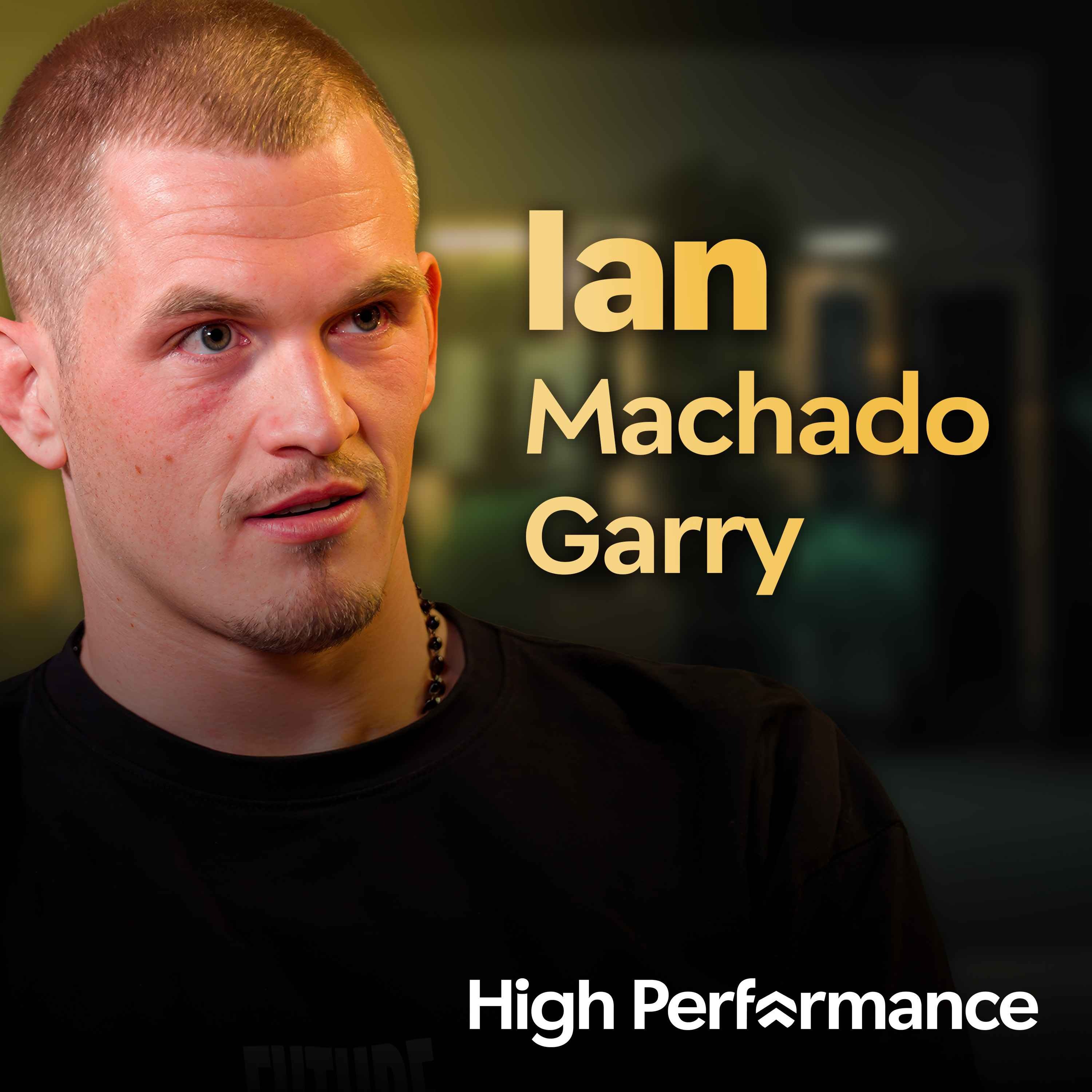
The High Performance Podcast
Ian Machado Garry: From Window Cleaner to UFC World Title Contender (E425)
01:23:39
Loading summary
Transcript257 lines
- [00:04]
Ian Garry
Being the next Conor McGregor is not a fucking plan wrote down on words on a piece of paper. A 16 year old Ian Gary who was sat in bed on his laptop watching highlights. That's what I want to do. I want to do that. I made my UFC debut at MSG when I was 23. It's a bloody, beautiful, violent sport. Earlier this year, nit kick from Kerry. This is going to be a drock. Cover shot Ian Machado Gary. I'm going to fight Islam action for world title. When I I beat him, it is undeniable that I am great. The future is inevitable. I'm gonna say something that I think a lot of people wouldn't expect, but I feel like the 1% is by doing less.
- [00:43]
Interviewer 1
What do you say to those people that believe that Islam can win? Even in the 90s, early 2000s, they had no voice. So if the media decided you were a certain way or you were a certain person, there was no opportunity. Cause the only way to tell a different story was through the media who didn't want to tell a different story. There's no social, there's no opportunity for. Whereas now you can. Like the narrative control an athlete has now I think is so good for you.
- [01:11]
Ian Garry
I think that's what the power of social media has brought. It's control.
- [01:16]
Interviewer 2
Yeah.
- [01:16]
Ian Garry
I feel like from my end and from my experience, I've controlled a lot of my outcomes of my life due to my social media and my presence online being so strong.
- [01:30]
Interviewer 2
Yeah.
- [01:30]
Interviewer 1
Yeah.
- [01:31]
Ian Garry
Because what I would I have gotten, the fights I gotten if I didn't have the name I had, would I have gotten, would I have changed my family's life the way I have if I didn't have the social media in regards to like pay and outcome and just honorable like general online kind of push like in the fans point of view. I feel like it's had a massive impact on my life and I hate it. I know I don't use it that much, you know what I mean? But like I feel like the fans love it. It hypes the fans up for fights. It, there's an element I love about controlling it so that I can control the narrative, what people see. Yeah, that's what matters most. Because if I do an interview with someone and it's for a media outlet, they can spin it whatever way they want, they can write the headline, they can control it all. Because the second I say goodbye, it's out of my control. On my Instagram, on my social media, I can control everything. I can control What? It's what the caption is, what I'm saying, what I look like, what my family looks like, and just make sure that I'm giving the most true and honest version of me.
- [02:47]
Interviewer 2
Yeah.
- [02:48]
Ian Garry
And nobody can spend that, so that's what I love.
- [02:50]
Interviewer 1
Do you think that getting this fight against Islam, Makhachev, do you think you've helped to make that happen aside from just being a great fighter?
- [02:59]
Ian Garry
I believe so. I know I've earned this fight from fighting, but I absolutely know that my online presence has helped funnel fans into the same mindset because I've earned it. There's no doubt that I've earned it. I beat the former champion. My reward for winning this fight means my next fight is a guy I already beat on three weeks notice. That's my reward. That's. That's my next opponent. Does that make sense? A guy I already beat after Makhachev, when I beat him, my reward is you have to fight a guy again that you already beat on three weeks notice. I've earned the fight. I went in and I beat him by three rounds. Dominated me, couldn't take me down. The whole point of his game was he couldn't take me down. It's a guy who trained with Islam. So afterwards, I dropped this epic leaving the octagon. There's a video of it. It's great. I dropped this epic. A guy actually handed me in the stand. He had, like, a massive leprechaun hat. So I took it off him in the stands, put it on my head, and then I was like, Islam, he couldn't stop me. He couldn't take me down. Went through this whole kind of. I just dropped an epic promo for the fight. I was like, so it's your job, your d show up, fight the best contender in the world, and you're looking at him. Ian Mashadow. Gary. It was. It was wild. It was epic. It's just like you can control the narrative, which I love. I think that's. That's epic.
- [04:25]
Interviewer 1
I'm gonna find that video. I'm looking for it now on YouTube.
- [04:27]
Ian Garry
I want to Instagram.
- [04:29]
Interviewer 1
Find it for me.
- [04:30]
Poem Reader
Yeah, have a look. There you go.
- [04:33]
Ian Garry
You can't stop me. He couldn't take me down. And Islam, he came to your camp and he couldn't do it. So try doing yourself. Ring that belt, ring that record, and I will see you wherever you want, my friend. All the best. It's sick. Layla's hold. I'm holding my wife's hand. She's by my side. She's got Leo. It was just epic. It was, like, perfect.
- [04:55]
Interviewer 2
But what I find remarkable about that is that you've just come out of a bruising experience, right? Your adrenaline is high. And the presence of mind to recognize that moment and then go into promo mode rather than sort of fighting mode is incredible. How do you make that switch?
- [05:14]
Ian Garry
It's just who I am, that I. I love that element. Like, I thrive off adrenaline. I feel like that's where I operate. The best is just in that clear, calm, focused mindset. And in that after. Ahead of a fight, you think about the fight. You think about the worst things that can possibly happen in the fight. Because if you don't. You don't respect your opponent enough, I can think, I'm gonna fight you now. I should think you should be able to do nothing to me. But what if he hurts me? What if he does that? Okay, how do I prepare for that mentally? Because if you're not prepared for it, then if it happens, if any slight element of your plan comes off the track at any point, you can crumble. But if I have seen, ah, this is fine. I've thought about this. I know this could happen. It's a fight. This is one of the best guys in the world. You know what I mean? So I find when I fight, I think about all of the bad things that could potentially happen so that it pushes me to train even harder so that I'm ready for every single element of that. I feel like I train for the fight to be fluid, just easy. Like, just. Just completely, like, it's a walk in the park. So that from the hardest element to the easiest element I've prepared for. And then you start to think about, well, what am I? What do I want next? Because if I'm not focused on what's next, then I'm not. I'm not pushing myself. I'm not pushing myself. So when I beat Bilal Muhammad in my last fight, I was like, after this fight, I'm going to fight Islam Akshay for the world title. So I have to win this fight. I have to drive myself to win this fight so that I can get to that next position. Because when I beat him, I lock myself in as the number one contender of the world and next in line to fight the champion. So all of those things go through my mind. And it's the same with this fight. Now when I'm going in to fight the world champion, I'm already thinking about who do I want to defend against? So I feel like you have to think about all of those things so that when I get on the mic and someone puts a microphone on my face straight after for the post fight interview, I'm ready. I've already dreamt, thought, understand what I want to do next. And it's just. It's in me. It's that competitive nature, that competitive spirit that I just. I thrive off.
- [07:46]
Interviewer 2
So we've had a few guests on here. Tom Dale is one that spoke about what you've just described of you Visualize and then you catastrophize, and the combination of both of them makes you powerful.
- [07:56]
Ian Garry
So I've never. I've never thought about it as catastrophize. Say it again.
- [08:01]
Interviewer 2
So you visualize and then you. But you also catastrophize. What could go wrong?
- [08:05]
Ian Garry
Because I've never heard that, but I love it. It's basically what I just said.
- [08:07]
Interviewer 2
Yeah, yeah. But what's the percentage? What's the mix of Visualize you're positive, that fluid outcome and the catastrophizing disaster?
- [08:16]
Ian Garry
I feel like when I start my. When I know who I'm gonna fight, I start with the negative elements. What could go wrong? What could he do right? How. Where could he try win the fight? How could he try win the fight? Is it gonna be by taking me down and holding me down? Is it gonna be by trying to cause chaos and make it a scramble and I have to be smart with my defense and move my feet and get out the pocket? What. What are the ways that this person I'm fighting, I believe, could he try to take advantage of to win this fight? Once he does that, I train for all those so that in the fight, I know mentally I've done it. And the closer to the fight every week that gets closer, it's more and more and more and more positive. So as I get to a week out from the fight, fight week itself, I am putting people in body bags when it comes to just the outward, the pace, the mindset, the freedom of my body being able to move and go because I have gone, I've seen how this can play. If it's the worst element it can possibly be, and I know I'm ready for it. And every single second along the way since when I started that, I've been getting closer and closer and closer to perfection.
- [09:38]
Interviewer 1
We'll be right back after a quick word from our partners. What is the worst that you see when you look ahead to Makhachev being
- [09:45]
Ian Garry
held down for 25 minutes and just having a boring fight? He's a phenomenal wrestler, a phenomenal grappler. And if you allow him the ability to stay on top and utilize his grappling and his wrestling, he can suffocate you and just lie on you like a weighted blanket. And you just find it so hard to move. And I'm like, that's not fun for anyone. It's not fun for me. Shouldn't be fun for him. And it's definitely not fun for anyone watching. So I feel like. And he did that, he did exactly that to win the world title fight. And I feel like that's the worst case scenario because the best in the world lose fights by getting knocked out or getting submitted in this sport, in mma, I don't. Winning and losing isn't like boxing. It's. It's a very recency biased sport. They love you, they hate you. You win, you lose. Oh, he won again. We all love him again. We've forgotten about the loss. Does that make sense?
- [10:47]
Interviewer 2
Yeah.
- [10:47]
Ian Garry
And I feel like far too many fighters focus on not losing as opposed to winning. Like, just focus on winning. That's all you need to do. If I go out there in that fight and he outskills me and he's better than me, but I fought him as hard as I could, I can leave that octagon proud that I did everything I possibly could to win that fight. Does that make sense? It's not gonna happen.
- [11:11]
Interviewer 1
Why?
- [11:11]
Ian Garry
Because I'm too good. I'm just too good. I just. I feel like I've been put on this earth to fight. And there's just a divine guidance that when I get in that octagon, everything just goes my way. Every time, Every time. I don't know what it is, how it works. I don't care to question it. I just enjoy it. I just feel like I am doing what I love. I'm doing what I was put on this earth to do. And I've got so much more to do.
- [11:51]
Interviewer 1
So where does fear sit then? Because I look at Makhachev, he's had five round title fights, he's defended belts, he's moved weight classes, he's beaten champions. You've never fought for a UFC world title?
- [12:05]
Ian Garry
Nope.
- [12:05]
Interviewer 1
This is the guy that's done it all against the guy doing it for the very first time.
- [12:09]
Ian Garry
Yes.
- [12:10]
Interviewer 1
There must be fear.
- [12:12]
Ian Garry
I mean, no, because it's not fear. I'm not afraid of anything. I don't know how I would word it in regards to fear. Cause it's not fear.
- [12:28]
Interviewer 1
What was it, Tom? Aspinall told us about fear going into a fight.
- [12:31]
Interviewer 2
Can you remember Tom had that?
- [12:33]
Ian Garry
I'm pretty sure I've heard Tom say like, everybody's afraid. It's how you manage fear.
- [12:37]
Interviewer 2
Yeah. It's the custom marks and stuff.
- [12:38]
Interviewer 1
Yeah.
- [12:39]
Ian Garry
I'm genuinely like, I'm not afraid. There's nothing I see him doing that I'm afraid of. There's nothing I think of him doing that I'm afraid of. There's. I chose to do this sport for a living. I chose to get into mma. I wanted to be a world champion. I wanted to prove I was one of the best in the world and I have to do that by beating some of the best in the world. So for me, there's no fear. There's risk of, well, you could lose, you could be unconscious, you could be xyz. But without that risk, I'll never achieve the dream.
- [13:19]
Interviewer 1
Correct.
- [13:20]
Ian Garry
So it's not fear for me. It's part of the process. As I said, I think about all the things that can happen in a fight so that you're ready for them. I know how good Islam Makhchev is. I know how talented he is. He's 291 in the sport. He's a two weight division champion. He's the most successful lightweight champion of all time and had the most lightweight defenses of all time. He is the current welterweight champion of the world. He came up a division and won the title. He is tired for the longest consecutive active win streak in UFC history. And if he wins his next fight against me, he will break the record for the longest consecutive wins. So I have a two way world champion, the number one pound for pound fighter on the planet, and the same man is looking to break the record for the most wins consecutively in the ufc. And that's the man I get to fight to prove that I'm the best in the world.
- [14:30]
Interviewer 1
Sounds to me though like all of those things are your energy source.
- [14:35]
Ian Garry
When I beat him, there can be no doubt. When I. When I beat him, it is undeniable that I am great.
- [14:46]
Interviewer 1
See, one quick thing because I think what's interesting is like you say, this was always the story, this was meant to be. This is written in the stars. What I find really interesting is your first shot at being the UFC world champion is not against a fighter where there's any doubts. It's not a fighter that lucked into being the best. It's not against someone where people think he has got things he doesn't deserve. Like you are fighting the greatest. There is to fight right now. I wonder whether that is so important to you because there can be no questions if you beat him.
- [15:21]
Ian Garry
My whole career, I've had a lot of expectations. I've had a lot of pressure from the outside world of the fans and the sport itself to be this. Be this star to live up to the hype that Conor set. Conor McGregor set. Being from Dublin, Ireland, I've had a lot of comparisons to Conor due to the fact that we're both from Dublin, we're both from Ireland, we both talk to talk, we both walk to walk, but we will fight anyone on the
- [15:50]
Interviewer 2
planet
- [15:52]
Ian Garry
and that's nothing to do with me, but everything to do with people comparing me to him. Right? I've been very vocal about how I started this sport, being a fan of his and being inspired by Conor on his rise to greatness in the sport and completely transcending the entire MMA scale to this entire world, everybody. He transcended the sport to a next level when Conor fought for his first UFC world title. He fought the number one pound for pound fighter who hadn't been beaten for a decade, and he knocked him out in 13 seconds. I cannot wait to step into the octagon against Islam Makhachev and beat him because there will be no doubt that I have done it against the best. To be the best, you have to beat the best. And my next opponent right now is regarded by everyone in the world as the number one ranked town for pound fighter on the planet. Make no excuses. There will be no doubt after the fight. I just want it to be known that Ian Machado, Gary is great.
- [17:11]
Interviewer 2
I love the compelling nature of what you're telling us, but can I take you back to further in the process?
- [17:16]
Ian Garry
Take me wherever you want to go.
- [17:18]
Interviewer 2
Well, I'm interested in that period where you engage in what could defeat me, what are the things that could kill me here? And I'm interested in how you manage that process because that must evoke emotions of sort of wariness, fear, maybe a
- [17:34]
Ian Garry
little bit of hesitancy, frustration, frustration.
- [17:36]
Interviewer 2
So.
- [17:36]
Ian Garry
So trying to unlock the keys to solve what I believe to be his kryptonite, as such.
- [17:43]
Interviewer 2
But they're all comfortable emotions and I'm interested in how you handle that process to get to where you are now, where you've got this compelling confidence that you know you have the keys to the puzzle.
- [17:54]
Ian Garry
The life I live is ruthless. The sport I'm in takes no prisoners. Like, it's. It's a bloody beautiful, violent sport. And if you don't come in ready. Then you get thrown to the sharks. Like when the going gets tough, you either swim or you drown. And I feel like putting yourself in a position where, you know, mentally and physically, you have felt that uncomfort gives you the ability to focus and fight through. And if you don't put yourself in uncomfortable positions, then you're lying to yourself.
- [18:37]
Interviewer 2
So tell us about how you do it though. Like who's there with you? When you watch an opponent and you unpick and go, they're great at that. That could be a threat to me.
- [18:44]
Ian Garry
Me, just you. When everything is said and done and I retire and my career has unfolded over the next decade, I want it to be abundantly clear that I am one of the most intelligent fighters to ever grace this planet. I have an incredible fight IQ and my eyes see things differently to the rest of the world. That's what separates me from being good and great, but from being great to on a different level is that I can see things. I can look in your eyes and I can see what you're gonna do before you do it. And I love that about me because I can literally during the fight, during sparring, during the fight, whatever it is. Obviously people are unpredictable and people will do things. But when I am in my flow state and I am. I've separated from the world and my body is just moving, I can see your mind and I can see it through your eyes. That's why I never take my eyes off your eyes. When I fight, I'm locked in. I put my chin down, my chin goes into my chest, my shoulders cover my face and I look through my eyebrows and I watch your eyes and I will see your movements through your head because one, I've set you up to do them because my movement is beautiful and majestic, but also I can see how you are trying to counter these. And then I just pick my shots
- [20:11]
Interviewer 1
and to get into that place, is there a process that you have to go through ahead of the fight?
- [20:18]
Ian Garry
Yeah, I think there is. I think the way I fight again is I focus on early on in my camp. I focus on the negative elements. The what could he do to have success? I slowly windle that out so that I'm having more and more and more and more success. And then it's a let the horse run. We often refer to myself as a. Like a racehorse, you have to let the horse run and at what stage in the process before the event. And I feel like about a month out from the fight, we take the reins off and.
- [20:55]
Interviewer 1
And what does that look like letting the horse run?
- [20:58]
Ian Garry
It's beautiful. It's so beautiful. When. When. Like, when I have my coaches, like, it gets to the point where my wife starts to scream.
- [21:07]
Poem Reader
Audible.
- [21:08]
Ian Garry
Whoa, that's spiral. When my coach is like, damn, baby, that's beautiful. Do it again. Do it. Like, there's just an energy when we get into that flow, when we're training. I have a coach of mine, kind of Coach Strout. He is from America. He is my bad conscience in a fight. That's how I describe. He's that devil on my shoulder who's going do this to hurt someone. Do that to get him. Do it again. Do it again. And it's just. But the way he coaches and corners me, the things that he says, they're just. It's almost like it's a. Like a hype man. Like, it's, like, so fast. Baby. Yeah, do it again. He can't touch you. Do it again. Oh, like, my favorite moment ever. And I don't think this has ever been clipped up in the ufc, but I hope someday they do it. I fought a guy called Neil Magni. Neil Magni has the most wins ever in the welterweight division in the ufc, and he's been known as the gatekeeper of this division. Like, when you beat him at the time, I beat him. You're deserving of a top 10 spot in the world, which is exactly what happened. But in between the second and third round, I came down, sat down in the corner. He goes, hey, what's up, man? Here you go. Take some water. Okay.
- [22:27]
Interviewer 2
Sweet.
- [22:27]
Ian Garry
And he goes. I was like, what's up? And he goes like, you good? I said, yeah. He's like, all right. See that chair over there? All right, I'm gonna sit down, enjoy the show. What he's just done, he just walked out the cage and said, I'm just gonna sit down and enjoy the show. Now, the confidence that gives a fighter sat on that stool in between rounds two and three, I'm going back out for another five minutes to fight this bloke. And he's like, take your water. See that chair? I'm gonna be sat there enjoying the show.
- [22:56]
Interviewer 2
What did that do for you?
- [22:58]
Ian Garry
I just went sweet. Like, yeah, I'm on the same page as you're. Like, this guy can't touch me. I'm on a different planet here. And it's like having those. When the horse runs free and when I move and when I go and when I've just got all of my cylinders just operating at the highest level, I feel like it's just poetry in motion, like it's just beautiful controlled violence.
- [23:21]
Interviewer 1
But even in that place, things do still go wrong. You still do get tested and pushed to your limits. When have you been in a fight in that place?
- [23:31]
Ian Garry
Never.
- [23:33]
Interviewer 1
You've never been in flow in a fight and felt you could lose?
- [23:35]
Ian Garry
No. If I get to that place, you're not touching me. Since my last fight, I've probably done 12 rounds of sparring. I don't spar a lot outside of a fight. I do other things to mentally get me ready. I've probably done 12 rounds of sparring. So 12, five minute rounds, I'd say I've been hit, maybe every one of them got me once, twice. So 12 to 24 times in however 60 minutes of fighting, I don't get hit a lot. So for me, there's no, when I'm in that state and when I'm operating, people can't touch me.
- [24:19]
Interviewer 2
But you said you do other things psychologically. What are they?
- [24:25]
Ian Garry
I put myself in positions when I'm training where we play drills or we do things that force me into where I believe this opponent could have success. So for example, if I'm fighting a big striker who's sloppy and aggressive, well, I'll probably get people to be sloppy and aggressive and work my defense and feel it and understand it and understand how to move around that and utilize his energy to get out or take advantage of those holds. And you have to see an opening. You're not going to see it in a fight if you've never prepared for it. I tell you what, when I was fighting MVP Michael Venom Page, Michael Venom Page has been around the sport a long, long time. I don't know if you guys know about him. He's an English fighter, phenomenally talented on the feet. He makes great fighters look like amateurs. And it's an incredible talent to have, but it's a very specific skill set that he has. I have watched fight after fight after fight. People just look dazzled, like they've never seen anything like this before. When I fought him, I didn't want to fight him. I was ranked 8 or 7 in the world. He was ranked 15 in the world. I had just come off a whim and I'm like, I want to fight one of the guys up there, not someone behind me. And literally the fact was nobody above me would say yes. So I'm like, so you're telling me. And I'm speaking to the bot like one of the guys high up at the ufc, you're telling me that nobody above me is saying yes. And he's like, yeah. I'm like, well, that shouldn't be allowed. And he's like, well, I can't control people and what they want to do, whether they want to fight them. I was like, you literally can. That's your job. Your job is to matchmake and put me and him in the fight whether he likes it or not. There is no other option for that fight. Does that make sense? You have to fight and that's it. So anyway, I was like, do you know what? I'll do it. And the whole point of why I did it was because it was on the Conor McGregor fight. Conor McGregor's gonna come back. The Irish are meant to be there. It was meant to be me and him, co Main, and it all fell through. His fight fell out. My opponent that it was meant to be co Main, didn't wanna fight and just wouldn't sign the contract and was faffing about. So I was like, you know what? I just wanna fight. I want to be active. I'll fight mvp. I don't really want to do it. I have no interest in doing it. He's not like anybody else in the sport, so there's no benefit moving forward that I see a fight with him giving me. So I was like, all right, sweet. My main sparring partner, the person that I needed most in that fight to help me get ready for that, was a 47 year old. His name was David Kerr and he was from Brazil. And he did the first two and a half minutes and the last two and a half minutes because he couldn't do much more at the time. He's 47 years of age, but he had the best simulation of that movement. And I did multiple training sessions with him to understand just his movement. And once I understand the pattern of his movement and the way to kind of figure it out, I went, right, there you go. I can solve that problem. And that's how I kind of put myself into a position where I can understand my opponent's strengths and where he might try place me to be in a position of weakness and eliminate that position.
- [28:01]
Interviewer 1
Can I ask you about finding an edge like this? Because you don't know what Islam is doing to prepare for you.
- [28:08]
Ian Garry
I couldn't care less.
- [28:09]
Interviewer 1
But you have to know that you're doing more. You have to know you're finding every little edge. Can we talk about, as the fight approaches, when you're in camp, what finding those 1% actually looks like for you, the places that you have to put yourself to be doing more than anybody else.
- [28:24]
Ian Garry
I'm going to say something that I think a lot of people wouldn't expect, but I feel like the 1% is by doing less rest and recovery and joy. Joy as a 1%. Like, I enjoy spending time with my wife and my kids. I enjoy spending time with my friends and my family. I feel better when I'm playing in the garden with my little boy.
- [28:50]
Interviewer 1
You're looking at your watch, thinking, another hour of sparring and I'll be even fitter, even stronger, even more prepared.
- [28:57]
Ian Garry
I train once a day for maybe five days a week, even in camp, hard. When I show up at those sessions, I give it 100%. Whatever I'm doing, I'm always focusing on something each session that helps me get to where I want to be in my expectations of myself. The 1% for me are nutrition, recovery, sleep, joy, laughter, friendship. Everything you do affects your life. So I can be the best. I want to be on the mats and when I spar, I can be the best in the world. But if I'm an arsehole to my wife and I'm not being her best friend, then I go into the cage going, oh, thank God I'm not. That's not the energy I want. I want to be with my friends.
- [29:58]
Interviewer 1
So you have balance even in camp. No fighter I've ever spoken to has balance in camp. And you know that from your background.
- [30:04]
Ian Garry
That's. But what you've just said is the problem in camp. This is my life. There should be no camp. There should be no, oh, I've stopped training, but now I'm getting back in because I've got to fight. This is my life. But like everybody, I'm a professional.
- [30:23]
Interviewer 1
Every fighter ever has done that, but I'm a professional.
- [30:27]
Ian Garry
Two of my biggest fights of my life, actually, I'd argue three of the biggest fights of my life have been on short notice. I fought My pro debut 16 February 2021 in Cage Warriors Liverpool on seven days notice against an animal. I fought the arguably the biggest challenge of my career so far on three weeks notice again, Shavkat Rachmanov, who was 180 and had 18 finishes going into that fight. Yeah, I took him on three notice. When everybody else in the world said no, I was like, yeah, I'll do it, let's go. I fought straight after that fight. I fought a guy called Carlos Platches, a Brazilian, a knockout specialist. He had had 11 knockouts in a row prior to that fight, his fight got cancelled and said, hey, Ian, we need you. Can you fight Carlos Pratches in three weeks notice? Yeah.
- [31:30]
Interviewer 2
Sweet. I'll see you there.
- [31:32]
Ian Garry
Being in a position where you can constantly mentally and physically accept the fight is me being in a position to do what I love most. I want to fight. I'm livid that I have to wait nine months between my last fight and my next fight. I would have fought twice in between that or at least once. At the very bare minimum, I want to compete. Like, I want to be active. I don't want to spend the best years of my life inactive. And I'm 28 years of age right now, thank God I'm young, but if I was 34 and I was waiting nine months, I'd be livid. So over the next decade, if I find, considering I'm at the top of the sport right now and I plan to dominate this division, activity matters for me. You have to be a professional. You have to live the life you enjoy so you can reap the benefits. And if I'm not always, look, I pig out and I eat. I have no problem with that. There is things you can do when the time is right. You can sit down, you can eat a massive meal. If you want to have a massive pizza. Chuck. Oh, do you know what? I want to go to the cinema. Let's go. I've got all the snacks. Cool. But. And that's important. It's important to have that in your life because that is mentally letting go and just being present.
- [33:10]
Interviewer 1
Balance.
- [33:10]
Ian Garry
It is balance. And if you don't have that, then life will find a flow for you. I'm very happy with. We bought a home in England in October of 2024. I want to say, and the amount of. My wife told me before, I couldn't believe this. I've never bought a home. It was my first time buying a home. And she was like, listen, I promise you, it's going to sound ridiculous, but when you buy a home, you will travel more freely. I'm like, that makes no sense. You're telling me I'm going to invest all of my hard work, all of our time and energy into earning this money to buy a home and then we're gonna be able to leave. I was like, that doesn't make sense. Like, I'm literally gonna be like, all of the money we've earned as a couple and everything we've done is into this. I'm not gonna wanna leave. I've just spent however much money I've spent on this house to be there. And she was like, I promise you, the first year we had our home, we were there for. We were, we were gone. Traveling the world for seven months accumulated over the. The year. Yeah, we'd go for three weeks here, we'd go for four weeks there, we'd come back for two weeks, we'd go again. And we, we had like. I had never understood that, but I was like, oh, it does make sense. So what when I travel the guitar and I come back and I go, oh. So after my last fight, I, I fought in Qatar. Absolutely loved it. It was a great experience. I flew out to Qatar two weeks before the fight to settle in because I was like, the heat, the humidity, I need to make sure I'm ready for this. I don't want any upsets. So me and my whole camp, my whole team, we went out there, we trained for two weeks. We loved it. I stayed in Katara after the fight for like three or four days. We went to a place called Banana island, that's an anantara, whole resort that was just made for kids. So I was like, you know what? My kids need to be able to be happy and be free post fight. Because all the last two weeks has been, daddy's gotta fight, let's focus. Daddy's gotta fight. Lex, focus. Like there is things that they necessarily get not neglected on, but there's. It's less of a focus for un. Even though on fight Week, I'm still bringing my kid to jump jumping centers and kids play areas. Like, I do everything I possibly can to be the best dad.
- [35:27]
Interviewer 1
Because on Fight Week.
- [35:28]
Ian Garry
On fight Week, have you ever known
- [35:30]
Interviewer 1
a fighter not going to camp?
- [35:33]
Interviewer 2
No, I like, I like what you're talking about.
- [35:35]
Ian Garry
I think if more people did it, there would be more athletes that would succeed.
- [35:44]
Interviewer 1
They'd excel.
- [35:45]
Ian Garry
Yeah, 100%.
- [35:47]
Interviewer 1
We'll be right back after a quick word from our partners.
- [35:49]
Interviewer 2
So many athletes we've spoken to here sometimes wrestle with the idea of the word sacrifice. Some of them have. Some athletes have said, well, I don't sacrifice anything because I've chosen to do this. Whereas some see it that I've had to deny myself some of the pleasures of life to pursue what I want.
- [36:07]
Interviewer 1
Now
- [36:09]
Interviewer 2
where do you sit on that in that debate?
- [36:12]
Ian Garry
I think sacrifice is a massive part of any, any human searching to be extraordinary or game changing. Because you might not understand what I'm trying to do. And if you don't understand what I'm trying to do, Then I don't want to explain it to you. I just have to keep focused. And sacrifice sometimes means friends, family members, people I love and adore who don't understand what's going on in here and can't comprehend it because they aren't me. I'll see you in 10 years. Because right now, I'm on a focus. I'm focused on what I am trying to achieve, and I need 100% energy on that. And this is why I love my wife so much. Because from the second I met my wife, there's never been any conversation about anything else other than what's best to help me get to where I want to be. She is my biggest believer sometimes more so than I am. Like, way more than I am. Like, she's like, you're better than you think you are. And since I've had her in my life, there's just been that I talk to her and we go to the moon. Like, we are just. We just go together. Hence, why that tattoo I showed you earlier on.
- [37:46]
Interviewer 2
Yeah, yeah.
- [37:47]
Interviewer 1
What is it?
- [37:48]
Ian Garry
It's a tattoo of a kid's book.
- [37:49]
Interviewer 2
It's a Hats.
- [37:51]
Ian Garry
It's a tattoo of two turtles with hats. It's by an author called John Classen, and he has kids books, and one of them is about, like, I want my hat back, and a bear can't find his hat. And he goes, and he finds it, and it was a rabbit who stole his hat. And then he brought out a sequel, and my wife bought it as a present for me to read for my birthday, to read for my little boy. And I was like, oh, she knew we loved it. We read it every night and stuff like that. He'd love it. And I remember being in bed, and I was just, ooh. I just. I got emotional about it. I was like, this is so beautiful. It's about two turtles, and they both find a hat, but there's two turtles and only one hat. The hat looks great on both of them, but there's only one hat. So we must go. They go watch the sunset together. They go fall asleep together. And the whole time in the story, one of the turtles is constantly thinking about the hat. And the other one is like, we must go now. Let's keep going. We must watch the sunset. We must go to sleep. And when that turtle goes to sleep, in his dreams, he is like, I have a dream. You are there, and you have a hat, and I am there, and I have a hat, too. We both have hats. Sometimes living in the fantasy, and us Both having hats together is better than reality. And if we can live in that reality or we can live in that fantasy. Choose the fantasy.
- [39:27]
Interviewer 2
Yeah.
- [39:28]
Ian Garry
Because you can create that. You can make that happen if you fully believe it. So I got that tattooed on me because I was like, I never, ever, ever want to forget that.
- [39:36]
Interviewer 1
And you really put both Leo and Layla and Layla's other child central to what you're doing. I mean, I've seen Leo at fights. Yeah, I've seen.
- [39:47]
Ian Garry
Do you understand how annoyed he would be if I went to fight without him? If he found out I went to a fight without him, he wouldn't speak to me. He's three. He would not speak to me.
- [39:58]
Interviewer 1
He's not three. He's nearly four. As he told me when I met
- [40:00]
Ian Garry
him, I swear, when it's his next birthday, I said, how are you? How are you?
- [40:03]
Interviewer 1
And he went, I'm nearly four. That's his name.
- [40:07]
Ian Garry
He's been like, and you three. And when my ex birthday happens, I'm going to be four.
- [40:10]
Interviewer 1
You walk out to Layla as well.
- [40:12]
Ian Garry
I do the song. Yeah. Eric Clapton, Leila.
- [40:15]
Interviewer 1
Do you ever lay eyes on them during a fight?
- [40:18]
Ian Garry
I hear Layla woo. I hear her screams, I hear her.
- [40:22]
Interviewer 1
And what does it do for you?
- [40:23]
Ian Garry
I don't fight for anyone in this world other than myself. That's what I chose to do. It's my joy. It's my favorite thing. That's what makes my head, my cogs spin in my head. It's what brings out a beautiful competitive nature that I've had. We could sit here and start playing chess and I'd. I'm gonna beat you with chess. Like, that's the way my brain is. It's the way I love it. But I have a love and a joy for martial arts that it just completely takes over when I start going. So when I enter that octagon and I know that my wife and my child are there, I just want to put on a show for them. I just want them to be happy and proud. Look at daddy. Look at your daddy. He's amazing. And I just want to make them proud. And that's why I sit there and say, like, no matter what I do in that octagon, win, lose, draw, win by knockout, get knocked out, win by submission, get submitted, as long as I've done everything in my ability possible to go into that competition, go into that octagon and compete against one of the best fighters in the world, as long as I've done everything I can, I'm Proud of myself. I know that I've. I've left no stone unturned. And I know my little boy will be proud of the way I competed. I know my little boy will be proud of the way I even prepared for the fight. I know my wife doesn't care whether I win or lose. I know my team don't care whether I win or lose. Obviously, we all want the success, but when I enter that octagon, it's all on me to do. Nobody else can do it for me. And I love that. I love that. It's all on me. Nobody has higher expectations in this world of me than me. I'm not here to live up to anyone else's expectations. I'm here to live up to mine. And trust me, when I don't finish a fight, there is nobody that is more annoyed than me. When I don't do what I said I was gonna do or what I thought of or what I dreamt of. When I don't achieve that in a fight due to someone else's toughness or hard work or correct preparations, I lose sleep over that one. And it pushes me to be better and better and better. And it excites me.
- [42:45]
Interviewer 1
I can see. And you. I can see the emotion in you when you talk about, yeah, Layla. And I love it.
- [42:53]
Ian Garry
I would stop by reading tomorrow about
- [42:55]
Interviewer 2
him
- [42:57]
Ian Garry
right now, 100%, everything. Nothing else would matter. I'm a world champion. I'm one of the greatest fighters to ever live. But I don't have my soulmate by my side. I don't have that person, I told you, who, since I met her, has given me that conscience of, you can do whatever you want. You're the greatest. Go do it. I see how hard you work. Go be that person. Go do it. Go show the world. If you had to tell me that, Ian, okay, you can go. And you can have the most legendary career of your life, or you can sit in bed and read a book to your child and hear him talking and giggling and laughing away. It's not a question for me. I would choose that all day, but I choose to fight. And one of the beautiful things that my wife has explained to me in these years of being with her is you can do both. You can have your cake and eat it, too. You can have. When one door closes, two doors can open. And if you don't think that way, then it won't be that way.
- [44:15]
Interviewer 2
That must be intoxicating for you to hear that idea that you can have your cake and eat it how does that contrast with the advice that your mum gave you when you first told her you wanted to go down this route?
- [44:27]
Ian Garry
My mom was only doing what she believed to be correct as a mother, and I cannot fault her for doing what she did, which was telling me that being the next Conor McGregor is not a fucking plan wrote down on words on a piece of paper.
- [44:44]
Interviewer 1
It was like a letter to you
- [44:45]
Ian Garry
I wanted to follow. I was in college. I only went to college to please my mom. She said, ian, please go to college. Like your sister didn't go. I don't know if your brother's gonna go. I was the middle child. Can you please go? Because I want you to go to college. You need to get a degree to succeed in this world. You need to go to college, then get a good job. And it sets you up for the typical nonsense we hear about this world today, right? It's complete, like rubbish, in my opinion. It's bollocks. It really is. I believe as kids now, take as many of them out of school as physically possible and they will be better, better humans instead. They'll turn into robots. They just won't listen. Yada, yada, yada. I decided on my own that I was gonna quit college. I didn't ask for anybody else's opinion. I was gonna drop out. I didn't ask for anybody else's opinion because it was nobody else's decision to make. And if I go to my mom or my dad and I have this conversation, then manipulation can happen. And I didn't want anybody else's thoughts, opinions or ideas to make my mind form, make my mind up for me. So I didn't tell her. I rang my uncle on the way home from doing it. I said, listen, don't. Do not tell my mom. Keep this between me and you. I'm gonna figure out when is the right time to tell her. But I need a job because there's no way I can just be sat at home. They'll kill me. I was like, so, listen, I need a job. Can I come clean windows with you? He had a window cleaning business that my grandad set up when he was younger. And he was like, yeah, no problem. We'll figure it out. Let me know. You can start in a week's time. So I'm sat at home. Keep in mind now, very pivotal point of the story. I had never trained mma. I hadn't trained mma.
- [46:56]
Interviewer 2
Cool.
- [46:56]
Ian Garry
I didn't train. I wanted to. I kept talking about it, but I'd never done it. So I quit. College. And I went and I joined the gym and I said, this is what I'm gonna do. And I started cleaning windows and I started training. And then one day my mom comes in and goes, you're meant get up at it, but you're meant to be in college. I was like, about that. And I was like, I can tell this is not the right time because she's about to get a train in 20 minutes. She got the 5, 5 past 8 train every morning to go into work. And I was like, Anita's like 25 to 8. Like, she's not going to be happy about this. And. And I was like, I dropped out of college. And she was like, you, You. And I was like, just. She stormed out of the room. She couldn't even look at me. She was livid, fuming. So I was like, look, I am not having you come in here and ruin my morning. Locked the door, put the lock on. She literally slid 3A, four pages under my door. I remember I read them all. And I was like. She was like, you never finish anything. You always say you're gonna do things, but you quit, you drop out, you never follow through. Yada, yada yad. I'm like, I'm 18 years of age or whatever it is. I've been in basically nappies my whole life because I've been forced to follow a school system that I didn't want to be in in the first place, but I knew that I wouldn't have a roof over my head if I quit school. So I did what I was told to do as a kid, because I was a kid and you're my parents. So, long story short, again, this is not short, but the moral of the story is in that letter that she wrote me, the word for word in quotation marks being the next Conor McGregor is not a fucking plan. I made my UFC debut at msg. I made my UFC debut at MSG when I was 23, and that letter got blasted everywhere. What, was your mum there the next? No, she couldn't fly because it was Covid and I was so happy because of it. Why? Because I was like, you know what? You fucking guys didn't show up when you needed to and give me the love and the support, so you shouldn't be there before for the, oh, that's my boy. It's like, no, like, you can be that's my boy. Behind the scenes when it matters, not when, oh, yeah, there's the flag.
- [49:35]
Interviewer 1
No, but like you say, your mum was just scared for you.
- [49:38]
Ian Garry
It doesn't matter, though. You can be scared for me and support me.
- [49:41]
Interviewer 2
Yeah.
- [49:43]
Ian Garry
One thing that I have, and this is, again, I don't hold this over my parents, but it irritates me to push me to be the best, if that makes sense. Because I never and genuinely like to any parent in the world, I feel like if you take this approach towards your kids, it will give you a better relationship with your kids. Because I know I have to deal with mine because of the relationship I've been given with my parents. I will be behind you 110%. If you want to be an artist and your art is terrible, I will still be behind you because it's not my life, it's yours.
- [50:33]
Interviewer 1
I saw a great line the other day and it was from a psychologist who basically said, if I could give parents one piece of advice, it's just be a cheerleader. He said, don't be a coach, don't be a teacher, don't be a leader. Just be a cheerleader. That's all your job is. But we have to also remember you're doing it for the first time. Your parents were doing it for the first time. Like all of us. And I wish our kids realized this. All of us are trying to fucking figure this out.
- [51:00]
Ian Garry
Of course we are. And it's not that easy.
- [51:02]
Interviewer 1
Of course we are.
- [51:02]
Ian Garry
I'm not saying it's easy. I'm not saying saying what she did was wrong. But I take that and I use that as fuel every day because I'm like, I can't.
- [51:10]
Interviewer 1
And I wonder whether that's why Laila is so significant in your life. Because she has arrived as your cheerleader.
- [51:17]
Ian Garry
She's my earth angel. She is my earth angel. She is the person who, when I need guidance, I go to her. And I feel like any smart man in the world should look at his wife and know that that's the person I need to listen to. Like, if the world was run by women, we'd all live in a better world. Like, it would all be simpler and easier. That's the fact of the matter. Whether you want to agree with it or not, or you think whatever it is. If women ruled the world and we just listened to them and let them take over, it would be an easy one.
- [51:51]
Interviewer 2
Can I just jump in, though? Because we want to get to your relationship with Layla, but I don't want to miss the window cleaning round.
- [51:58]
Ian Garry
Oh, it was so much fun. I loved it.
- [52:00]
Interviewer 2
But what elements of that life did it, like, still exist in you now? Like, what did that teach you that no training camp could ever.
- [52:10]
Ian Garry
I loved it. I absolutely. I tell you what, there was one. There was a couple of things about it I hated. And getting a bucket of water, climbing up a freezing ladder to clean windows in the freezing cold winters in Dublin. It's not enjoyable. I don't care what your motivation in life is. You cannot go in that moment. It's gonna be worth it. Everything in that moment, when you are sat there scraping literal pigeon shit off a window three or four times. Cause it's been dried in by the sun, but now it's freezing and cold because it's 6am in the morning and the sun hasn't come out and I'm shaking. Cleaning the window, it makes you more grateful when you're not doing that for everything else in life. Does that make sense? When I'm cleaning gutters and I've got plastic gloves on and the roofers have made the. Have basically put the roof tiles too close to the gutter, so they're getting too full. And I rip my gloves and I'm nearly gagging in my mouth because my hand is going through moss and wet water and I'm. And I can feel it. And it's in my nails afterwards and I'm looking at them, they're black. And I'm going, I can't wash that out until I get home and like soak myself with bleach. Like, it feels like it makes me more grateful.
- [53:50]
Interviewer 2
And what's the tattoo you've got on your arm that you showed me?
- [53:52]
Poem Reader
These.
- [53:53]
Ian Garry
So.
- [53:53]
Interviewer 2
No, no, but the tattoo that says precisely that.
- [53:56]
Ian Garry
I've got you.
- [53:58]
Interviewer 2
You've got the one that says grateful.
- [54:00]
Ian Garry
I've got my. Yeah, I've got my grateful on my wrist. I just find, like, when I see the prayer hands, it makes me take a second and think about how grateful I am that my life turned out the way it is. I believe it's. It was meant to be this way. But also I can control my faith. I can control what I'm going to do tomorrow. I can control that. I'm not closed into a box. I don't have that idea of you must be this and you must do this. I can do whatever I want and I can change it up tomorrow because that's. It's very kind of inception vibes. Like, it's not. It's not the way it's meant to be. You can force it to be the way you want it to be.
- [54:48]
Interviewer 1
I think you're also a really interesting counterpoint to what we get told a modern man has to look like with this rise of the manosphere, in this conversation about be powerful, impose yourself on people, you know what a real man is, show emotion. What is a real man?
- [55:02]
Ian Garry
A real man is a father, is a husband, is there for his wife and his kids, even if they're not together, is still there, still shows up. A real man is someone who does the right thing even if he doesn't want to. A real man is sticking to your word. And I feel like nowadays people's word means nothing. A real man is someone who's able to vocalize his emotion and frustration and talk to people, even in the darkest of times, because we should have people that we can talk to. And the reason I think men think they need to be strong and masculine is because it's a warped idea of what masculinity needs to be. And people think, oh, if I express my feelings, my emotions, that's what females are like. Now, I don't know the stats on this unless it's gonna go somewhere where I genuinely. I don't know the details on, but I know for a fact more men killed themselves than women.
- [56:20]
Interviewer 2
Correct.
- [56:21]
Interviewer 1
It's the biggest killer for men of our age.
- [56:23]
Ian Garry
So why? Because I don't feel like I can talk to you about the things I need to talk to you about. Because I'm not a real man.
- [56:33]
Interviewer 1
Yeah.
- [56:35]
Ian Garry
Community, friendship, love and joy, I believe are pillars for every human on this planet. And things that we all need. And if you don't have them, but you have other things, forget the other things and focus on those things. Now, love does not have to be a partner. It does not have to be someone. It does not have to be a wife. It can be a sport. It can be a friendship. It can be. I love coming and chatting to you blokes every week. And I love when we meet up and we chat because I can express myself in a way that I want to. It might mean I love going to the golf course and hitting some shots in the driving range. Cause I can just be free. There's so many ways that it can be done. But I feel like you are right. In this world, there is an element of toxic masculinity where I need to be strong. I need to be the man of the house. I cry watching Disney films. I am so in touch with my feminine side that I feel like I'm more masculine because of it. And I don't care what people think about me. I don't care about people's opinions of Me or what I do. I love who I am. And I'm constantly trying to be a better human, a better person, a better father, a better husband, and a better fighter every day of my life.
- [58:11]
Interviewer 2
That's.
- [58:11]
Ian Garry
If I'm not doing that, then I'm not going the direction I see.
- [58:14]
Interviewer 1
I think it's so good. I got a message on Instagram. I talk a lot about men's mental health. I talk a lot about male connection, the challenges of men. I'm a lot older than you. I'm 48. And at this age, there's a real issue of losing connection with other guys. And I had a message from someone on Instagram just saying, thanks for all the conversations you put out about men, male mental health, and connection. They said they went to a therapist, and the therapist said to them, you do realize that all you're doing with everyone in your life is sharing information. You're not actually having a conversation. I think this is such an important point. I think as guys, we just share information. How are you? I'm good. How's life? How's work? How's your family? Great connection. Man is so important.
- [58:59]
Ian Garry
I have been steaming in my head lately because I dislike inactivity. And there has been times lately where I've just not been a nice friend to Layla. And I've just not been there because I'm so angry and so annoyed that my career is being put on hold due to the politics of the sport. And I, as a professional athlete and someone who wants to achieve great things in the sport, I find that incredibly difficult. And she has noticed a trend with. When I am in that feeling of other people slowing me down, slowing the horse down and not letting the horse race, that I become a worse friend to her, and I say and act differently than I should to her. And I've started to see that. And the only way that I can stop that is by realizing it. I'm talking about it, and I have to have people that I can talk to about that. Otherwise, the only person I'm gonna talk to is her. And then my relationship with her becomes up and down. And you need to do this to be better, and you need to listen to me and don't tell me what to do. I know what I'm. Whereas all she wants to do is help me be the best version of me. All I wanna do is see her smile and see her happy, and you need to have people around you that you can talk to.
- [60:38]
Interviewer 2
So who does that for you?
- [60:39]
Ian Garry
A lot of it's to Myself to say what am I really annoyed about, what's really bugging me and am I being honest with myself? Then I have to take that to my wife, talk to her. And then there's a very small amount of people on the planet that I would talk to because I keep my circle very close. A lot of my male friends or a lot of my friends, full stop are older than me and I feel like I enjoy spending time around people that are older than me because I learn. And you said you're 48 years of age. I'm pretty sure if we got a room of 48 year old men and a room of 28 year old men like I am, the men will speak differently to each other. And you and your mates might be able to say things very differently than the way me and my mates would because enjoy the relationships, the people I see, the things I do more and more and more because I realized through my years of living that there are things that matter and things that don't matter. Most 28 year olds are like, I want to be rich, I want to be famous. I want to have this card and press this girl, I want to do this thing. I want to have money, I want to have this nice watch. When I go up and I, I pull up at a bar with a watch on, she's like, oh, he has money, I'm gonna get laid. They couldn't care less.
- [62:03]
Interviewer 1
I think there's so much less freedom for your generation. 100 Harry and I went out the other day. It was a friend, a young friend, guy your age, personal trainer. So most of the people there were mid-20s. And my wife and I went along like 20 years older than most of them. And she nudged me and she said,
- [62:17]
Ian Garry
look around the room.
- [62:19]
Interviewer 1
I looked around, she said, what do you see? And I was like, well, I see a, you know, in these young people. I was like, well, I. Quite a lot of Botox, quite a lot of lip filler. And she goes, no, no, no, you're missing the point. She goes, where's the joy?
- [62:32]
Ian Garry
Yeah.
- [62:33]
Interviewer 1
Now, when we were 25, do you remember we were doing the conga. We were just done. We were just like, we were childish and stupid. These people were sitting there like so. They wanted to be so rigid, so perfect.
- [62:44]
Ian Garry
They were cool. Look at me.
- [62:46]
Interviewer 1
The guys were all like that. Absolutely. And it was like, there's a genuine fear because everything's captured, everything's shared, everything's seen, everything's how I look. The joy, the freedom, the flow.
- [63:00]
Ian Garry
I used to work in My local Gaelic club and we used. Me and my mate used to work when they had like big events on and I would watch like 50, 60, 70 year old women danced to their heart's content. Whether they looked good or not, they didn't care. And when I see older men and older women, they don't care for mine or your opinion of what they look like or what they do because they've realized that there's more in life than what other people think about me. And the reason you see a lot of people today botoxed and lip filler all up is because one, there's a very negative element of that that is marketed towards women needing to look a specific way to be pretty, which is so toxic in this world, but not something we need to get onto. But it is insecurity and I find that to be sad.
- [64:08]
Interviewer 1
You know how long we live for on average number of weeks? I don't know, 4,000 weeks.
- [64:14]
Ian Garry
That's wild.
- [64:15]
Interviewer 1
The chances of being born, 400 trillion to one.
- [64:21]
Ian Garry
Lucky me, I won the race.
- [64:22]
Interviewer 1
So every, every single one of us is a miracle.
- [64:25]
Ian Garry
Exactly.
- [64:26]
Interviewer 1
On average we only get 4,000 weeks and we use that time worried about other people's opinions, not daring to push the boundaries. And you are, you to me are the epitome of someone who has taken a look at the world and the world says this is how you have to act if you're a young guy, this is how you act if you're at school, this is how you act if you're a UFC fighter, this is how you act if you're a partner or a dad and you've just questioned every single one of those and look where you've ended up. I do want to talk to you though, about the challenge of your life. There's a few things because you're not scared of an opinion, as you've shown. You're not scared of controversy.
- [65:00]
Poem Reader
You.
- [65:00]
Interviewer 1
There was a hate campaign targeting you and your family for a while. That is not something that you can train for. So I'm interested in on the cost for you personally of that. But also you've mentioned Neil Magni already who you fought previously. He said something absolutely ridiculous in a press conference and I showed Damien the video of you not letting it go absurd where you. And for people that he didn't see it, he was kind of.
- [65:23]
Ian Garry
I'll explain. Yeah, yeah, you explain it. You're better explain this.
- [65:26]
Interviewer 2
I.
- [65:26]
Ian Garry
Because I only want to cut you off there because I felt so powerfully like emotional about this.
- [65:32]
Interviewer 1
Yeah.
- [65:34]
Ian Garry
So I Fought a guy called Neil Magni. Now, Neil Magni is. His nickname is the Haitian Sensation, and he is a black man in America. Right? That's important to the story because I believe a lot of the comments I got were from people in the black community explaining how this is part of the culture. Now, listen, I was smacked and hit as a kid. It was part of my upbringing, too. Do you know what I mean? I'm sure a lot of the older people in England and Ireland, it was a part of their lifestyle, too. Whippings and things at school were still a thing. So it's not like it hasn't happened to me. It has happened to me. It's that I need to teach my kid boundaries. So I'm gonna smack a kid, right? It's not right. If I can change anything in my life that I definitely don't want. I'm 28 years of age. I still remember a wooden spoon being smacked across my hands. I remember turning to my dad and going, it doesn't hurt anymore. I'm used to it. Turn it over. Shouldn't have fucking. Should have kept her out shut in. I feel like what we learn from our generation, we need to make changes to be better. So Neil Magni decided that he was going to, at a UFC press conference, say. And it was a stupid sentence that he said. His idea was to try and say that he is going to beat me like he's beating a child. But they were not his words. And his words dug deep under my skin because I had a little boy who couldn't have been much older than a year if even. I don't even think Leo was one. So I was fuming, and he said, there's two types of ass whoopings you give people in this world. There's a type of ass whooping you give people who talk about your mom at school. And then there's the type of ass whooping you give your kid. And being a father, I've got accustomed to giving that type of ass open. And I'm gonna do that to Ian. His child was 2. Now, people spun that. And this is why I dislike American media. Nobody wanted to cover that. We have a masculine man, a fighter, a UFC fighter, an animal inside that cage. Just openly talk about how he beats his kid. Now, whether it was meant to be funny or satire, commentary, they were not the words that came out of your mouth. So when you say that, and I think about that as a kid, and I think of my past and the fact that I was smacked with a wooden Spoon as a kid to be d. And I think about my little boy who was asleep in the bed when I listened to this. I was livid. And I pulled him up on this. And we were at a press conference and he didn't get a word out of his mouth. Did you see?
- [68:52]
Interviewer 1
Yeah.
- [68:53]
Ian Garry
Yeah. I made you sit the. You sit down, you shut your mouth and you think about the words that came out of it. Because the last time a microphone was put in front of you, you said some outrageous things. Sit down, be quiet, and I will give you the ass whooping that you deserve on Saturday night. And I beat the brakes out of me.
- [69:12]
Interviewer 1
That's interesting because you didn't let it go.
- [69:15]
Ian Garry
No, I didn't let it go. I couldn't.
- [69:16]
Interviewer 1
But some, some people would. Some people would think, you know what?
- [69:18]
Interviewer 2
I'll do my.
- [69:19]
Ian Garry
I'll do my.
- [69:20]
Interviewer 1
My talking in the ring. I'll let him know in the ring what I think. I mean, I know also you said, like, I'm gonna make this fight last and you're gonna be in pain.
- [69:27]
Ian Garry
I didn't want to finish him. I made sure he fought every single second of that fight. I could have finished him at any point I wanted to. I believe in that fight. If you want. If you watch a fight for flow state, watch that fight from the minute 1 to minute 15. I was basically wiping his arse. It was that easy. It was like, come on, kid, I'll wipe. Come on, clean your bum. There you go. Come on. Like it was a walk in the park. I wanted to inflict as much physical pain as possible because he irritated me and he got under my skin with saying something about kids and that just annoyed me. And as a man, I felt like it was my due diligence to give him an ass whooping that maybe his kid couldn't give him. But we have weight classes for a reason in this sport. We have divisions in this sport that mean that I cannot go and fight a 70 kilo man because I'm bigger than that 70 kilo man. So why on earth should a man ever raise his hand to a kid?
- [70:32]
Interviewer 1
No, you were totally morally in the right place. But I know that some people would think, you know what? I just. I know it will also bring me heat. And the thing I mentioned about when
- [70:41]
Ian Garry
what's morally right and what's morally wrong, if there's a fine line, right, there's being racist and there's not being racist. There is no. Which one should I be? There's only one, right? There is no Right or wrong, Should I beat my kid or talk about beating about my kid? Or even just bringing a conversation up about beating a kid is morally incorrect. I couldn't let that go.
- [71:09]
Interviewer 2
It reminded me. I don't know if you'd ever seen the poem by an Irish writer called Dara Fleming.
- [71:17]
Ian Garry
Never.
- [71:17]
Interviewer 2
If I ever have boys, they'll be dangerous men.
- [71:20]
Ian Garry
No, I've never had it.
- [71:21]
Interviewer 2
And there's a line in it. When Jake showed me the video, it said, no, my boys. It starts with, if ever boys, they'll be dangerous men. They'll smile at dogs and children and be a tonic to friends. But there's a line in it said, they won't stay silent even when it's uncomfortable for them. They'll learn that their actions are more effective than words and they'll use their voices to amplify the unheard. They'll know that love isn't something to perform. They'll see beauty in all its forms. My boys won't grow learning to emotionally hide. There's more to it. But if I ever have boys, they'll be dangerous men but the danger they'll be won't be the ones society meant.
- [72:00]
Ian Garry
That's beautiful.
- [72:03]
Interviewer 2
But much of that press conference reminded me of that. That. That emotional intelligence, that willingness to speak up even when it was uncomfortable. What does that cost you, though?
- [72:14]
Ian Garry
I got so much backlash off that comment, off calling him up on his own words. And I was baffled, baffled. And I just couldn't wrap my head around it. I'm like, hold on. We have had a man gloat about the fact that he's been accustomed to beating his child.
- [72:40]
Interviewer 2
Yeah.
- [72:40]
Ian Garry
Whether he is joking about it or he is serious, irrelevant. I believe it was full on serious. And I took. I felt like it was my duty to call him up on that. And I couldn't just sit there and keep my mouth shut.
- [72:58]
Interviewer 1
And the cost to you,
- [73:01]
Ian Garry
just backlash. People saying negative comments on my Instagram, people responding and sending messages to me, my wife, my team. People who had nothing to do with it.
- [73:15]
Interviewer 1
So your message to those people that have an opinion about you, I couldn't
- [73:19]
Ian Garry
give a. I just. I'm sorry. I told you I wasn't gonna swear on this. I couldn't care less for anyone's opinion of me or my family or what we're doing in our life choices. Because you don't walk in my shoes. You are not in the position where you need to make these decisions. And the truth is, I think if a lot more people made the decisions that I made they might be better humans.
- [73:48]
Interviewer 1
Which brings us really nicely to, I suppose, the most important question of all. As part of our Quickfire questions. As you stand on the brink of your first UFC world title fight, what do you say to those people that believe that Islam can win?
- [74:06]
Ian Garry
I've been put on this earth to do what I love and be the most free version of myself. I don't care for what people think. I'm sure there are people that think he can beat me and what I think is all that matters. So when I enter the octagon with him on August 15th in Philadelphia, Pennsylvania, and that cage door got shut afterwards, the future is inevitable.
- [74:39]
Interviewer 1
How impressive. We've got a few quick fire questions to finish with.
- [74:42]
Ian Garry
I heard the word quick fire when I thought of that question, but you can't ask me to answer that one quickly. Go ahead.
- [74:46]
Interviewer 1
Greatest advice you've ever been given.
- [74:49]
Ian Garry
You have more than one option in life. Do what you love and everything will sort itself out.
- [74:56]
Interviewer 1
Very good.
- [74:58]
Interviewer 2
What's your biggest strength?
- [75:00]
Ian Garry
My mindset?
- [75:02]
Interviewer 1
What's your greatest weakness?
- [75:04]
Ian Garry
I don't feel like I have any. What other people see as weaknesses, I see as things that I need to improve on. I don't see it as a weakness.
- [75:13]
Interviewer 2
Love that.
- [75:14]
Ian Garry
I just see it as something that I haven't yet had time to change or adapt.
- [75:20]
Interviewer 2
What advice would you give to a teenage Gary just starting out?
- [75:26]
Ian Garry
That's why this fight is so fun, because it's literally a 16 year old Ian Garry who was sat in bed on his laptop watching Highlights of Conor McGregor and Jon Jones and GSP winning world titles and dominating the sport. And I said to myself, that's what I want to do. I want to do that. That's what I want to do with my life. Follow your dreams and have a lot of fun along the way.
- [75:54]
Interviewer 1
What is the significance of these?
- [76:00]
Ian Garry
My little. My little boy ahead of. I beat Carlos Pratches and one of the things I negotiated with the UFC was when I win the fight against Carlos Pratches, who is a surging star right now, he's the number two ranked fighter in the world. I beat him. I'm number one. And people are arguing whether he should get a title shot next, I'm like, I beat the bloke, but he's that good and he's that dangerous that people forget about it. So after I beat him, I negotiated into the contract that I would weigh in two weeks later for a world title fight as a backup. And I gave these to the current champion of the World or the current? The challenger of the world. Challenger for the world title, Jack Della Maddalena. I gave him these because we read that he liked Peanut M and Ms. And I just kept putting them. I sent them to his. I found out where he was training. I sent them to his gym. I found out where he was living. I sent them to his hotel. I found out when he would walk in. I knew. I found out on the schedule what time he was having a meeting with you guys. I left him there for him to see, and I just wanted him to mentally break and try. See if I could force a missed weight cut so I could have an opportunity to interject and win a world title. It was a little bit of mind games, a lot of fun.
- [77:22]
Interviewer 1
I love that. And the final question, your golden rule for living a high performance life.
- [77:28]
Ian Garry
Love the life you live and live the life you love. If you're not loving what you're doing and you're not doing what you want to do and you're not having fun and change everything because we have, as you said, 4,000 weeks on this planet. Use them all wisely because they can end tomorrow.
- [77:46]
Interviewer 1
Amazing. What an incredible conversation. I look forward to when you're no longer the future champ.
- [77:53]
Ian Garry
It's inevitable. It's just a matter of time. Has been since the day I stepped onto the rock, stepped into the cage, and nobody's getting in the way of me winning that belt.
- [78:02]
Interviewer 2
Amazing.
- [78:03]
Interviewer 1
Ian, thank you so much.
- [78:04]
Ian Garry
Thank you. As I appreciate it, mate.
- [78:06]
Interviewer 1
Have a look at this. If you like this, you can keep rolling on this.
- [78:10]
Poem Reader
Will dangerous men they'll smile at dogs and children and be a tonic to friends they'll send flowers to their mother just because and they'll be a shoulder for many when the world is too much My boys will know that vulnerability is strength they won't bottle anger they'll learn how to express they won't let pride be the reason they hide wearing masks While they're hurting inside now my boys will be dangerous men they won't stay silent even when it's uncomfortable for them they learn that their actions are more effective than words but they'll use their voices to amplify the unheard they'll know that love isn't something to perform they'll see beauty in all of its forms My boys won't grow learning to emotionally hide they'll reshape masculinity into something they like make it softer to touch they'll know that who they are is more than enough they'll know that Being a man doesn't mean carrying the burden alone. They'll learn that an emotional man is a man fully grown. They won't settle everything with violent swings. They live in truth, even when that truth stings. So, yeah, if I ever have boys, they'll be dangerous men, but the danger they'll be won't be the one society meant. Thank you very much.
- [79:38]
Ian Garry
I mean, that's absolutely perfect. It's beautiful. It's correct. In so many different contexts. They'll speak up even though it's uncomfortable for them. They're not.
- [80:01]
Poem Reader
What?
- [80:01]
Ian Garry
They'll be dangerous, but not what society meant. There's so many different. It's a beautiful, beautiful poem that in every single way, shape and form is correct.
- [80:17]
Interviewer 1
And
- [80:20]
Ian Garry
I feel like every man should just listen to that and understand it, because every element, every word will shape men to be better men. But not better for us, but better for everyone. Everyone.
- [80:41]
Interviewer 2
Yeah.
- [80:42]
Ian Garry
I'm the type of person that I'll get on my knees and talk to a dog before I talk to its owner. That's absolutely spot on. Correct. We'll all be better to women if we're better men. We'll all be better to kids if we're better men.
- [80:56]
Interviewer 2
Yep.
- [80:58]
Ian Garry
Not bottling anger inside, but spilling it out. We've got so much technology in this world and so much abundance that I feel like we're losing parts of what it is to be human and to have community and people that we love and adore and trust. Maybe we need to go back a couple generations to get better. That's beautiful. I thought you'd like. Thank you.
- [81:24]
Interviewer 1
Yeah. Well, good spot.
- [81:25]
Ian Garry
I appreciate it. Thank you,
- [81:27]
Interviewer 1
Damien.
- [81:28]
Interviewer 2
Jay.
- [81:29]
Interviewer 1
Well, I think one of the most remarkable conversations we've had on high performance and a very important conversation to talk to a man who uses his fists to make his living talking about emotion and love and compassion and empathy and principles. I think that was the most. Most astounding conversation.
- [81:51]
Interviewer 2
Yeah, definitely. I think especially in this age, you know, where people talk about this manosphere and these like, performative masculinity of showing off your muscles, showing off your wealth, showing off your status. To see somebody that could do all of that and chooses not to, somebody that chooses to reveal vulnerability, to reveal raw emotions, reveal kindness, lies at the heart of it. Love was a constant theme of it. I think it was a challenge to that narrative of what people expect masculinity to be and to look like.
- [82:22]
Interviewer 1
And I was thinking about you, actually, during the conversation, because you grew up in boxing gyms in Manchester. You spent your life surrounded by about boxing. I think that's a fighter not of the ilk, of the fighters of yesteryear. No. So different the way that he wears his heart on his sleeve.
- [82:36]
Interviewer 2
Yeah. And, like, I don't underestimate the courage it takes to do that. You know, like a principle is only a principle when it costs you money. You know, a principle to stand up and call somebody out for what might be a casual remark that the guy might not have meant, that he literally hits his kid, but then that becomes acceptable, that people do think that talking about hitting children is acceptable. And so to stand up and call it out and use his platform for good, well, that speaks volumes for me, that. About the character of Ian.
- [83:09]
Interviewer 1
Listen, particularly if you've got a young man in your life, maybe send them this conversation. Let them hear Ian's reaction to that incredible poem. Let them understand what being a man actually should look like in 2026. If you enjoyed the conversation, please, like, please follow, please subscribe, Please pass it to someone that you think could benefit. We've got loads of amaz conversations with fighters from all different disciplines, but from myself, Damien, and the whole team, thanks for watching.