← The High Performance Podcast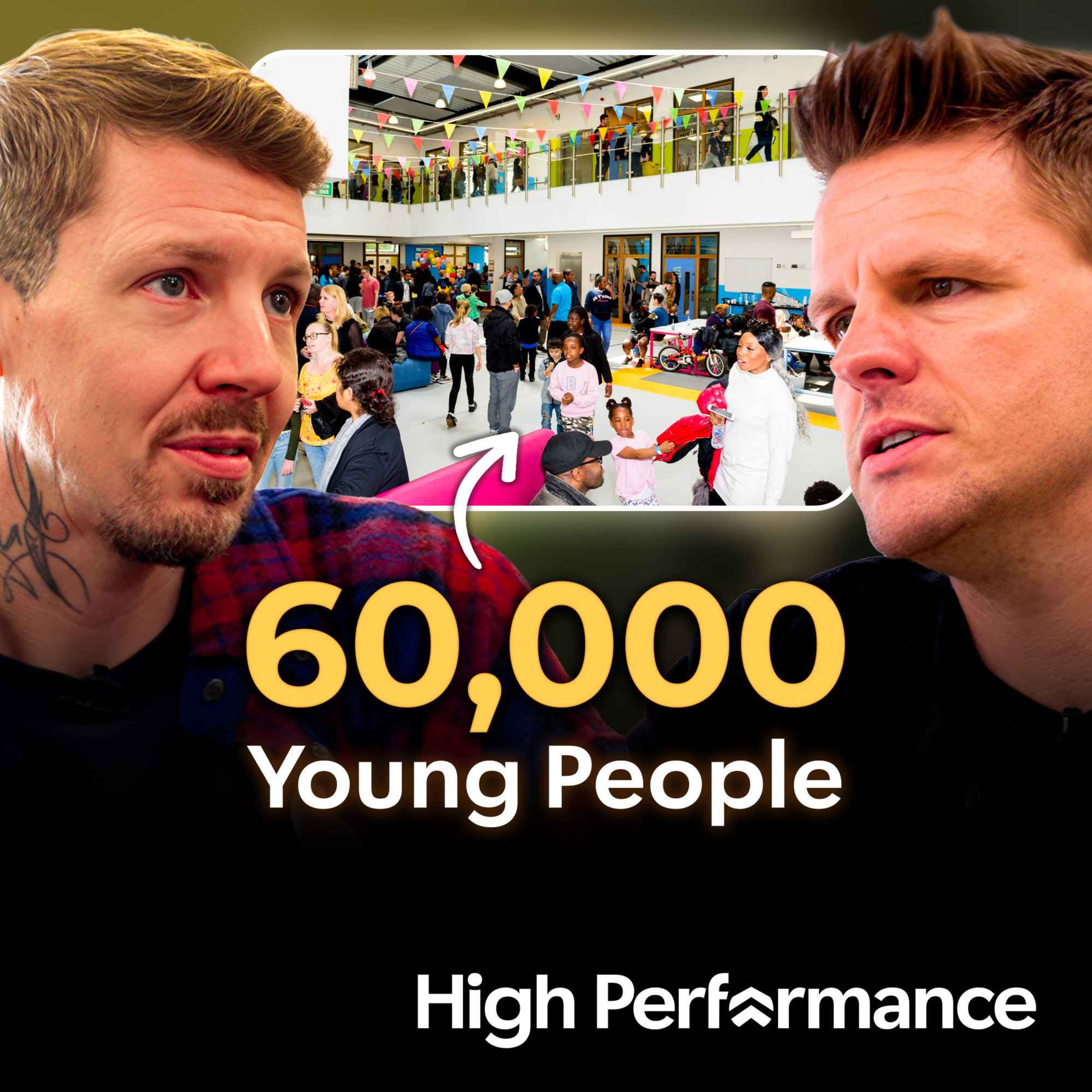
The High Performance Podcast
Professor Green on Childhood Struggles, ADHD & Finding Community at Youth Zones (E421)
00:32:58
Loading summary
Transcript146 lines
- [00:00]
A
Before we get into today's episode, a massive thank you to Apple Podcasts for including High performance in their 2026 creators we love campaign. If you've just found the show, welcome. Nice to have you with us. Head to Apple Podcasts to see mine and Damien's favorite episodes from the last six years of High Performance.
- [00:18]
B
I was shocked to just see the facilities here. They're incredible. Especially at a time when, forgive me if this is the wrong number, but, you know, there's been, I think it's a 70% closure of youth clubs. That was where I found kind of my home and my belonging. I guess it was the same for a lot of us. We didn't really fit in elsewhere. I couldn't get to school. I just couldn't, you know, rage. There was no language which could help that process and it would be traumatic all the way up until I got to school and then I struggled a lot.
- [00:47]
C
What were you looking for, do you think?
- [00:48]
B
Probably community, A space of belonging. I never really felt like I fit in very well anywhere else. Thank you for asking me something I've never been asked.
- [00:58]
A
That is the voice of Stephen Manderson, or as you might know him, Professor Green. So Steve grew up in Hackney and what he just described, that absence, that feeling of nowhere to go and nobody quite seeing you, well, that is the reality for hundreds of thousands of young people in this country right now. And today I'm really proud to say that we're bringing you this episode in partnership with the players of the Postcode Lottery, because we went to visit a place called Future, the on site youth zone in Barking and Dagenham, one of 19 youth zones across the UK supporting 60,000 young people built specifically for the places that need it most. And we went to Future to find out what these places actually do, but also why they matter More than ever. I want you to hear Steve's story because once you know where he came from, the conversation that follows with Jamie, the man who runs the Youth Zone with some incredible teenagers, Olivia and Lily. And can I just say, I've thought about those two a lot since we recorded this episode. You're going to hear from them and they live this reality every single day. So why is this episode important to you? It's important to you because this might not be something that you require in your life, but it is absolutely something that so many young people across the UK need. They need to be seen, they need to be heard, they need to matter. And thanks to the players of the Postcode Lottery, there are Places that make them feel exactly like that. So to start with, let's go meet Stephen.
- [02:26]
C
Stephen.
- [02:26]
B
Hello, mate. What's happening? You all right?
- [02:28]
C
Nice to see you, man. You good?
- [02:29]
B
Yeah.
- [02:30]
C
So look at this place. I mean, when someone said, we're coming to speak to each other at a youth club, I didn't have this in mind. I mean, this is insane.
- [02:38]
B
No, the youth club that I grew up spending most of my time in was nothing like this facility.
- [02:43]
C
When you first were using a youth club as a kid, what was it? What can you remember of that building?
- [02:49]
B
It was right next to the swing park in my estate. It was plastic chairs. There were games to play. At a point, I think we even had a computer in there, maybe the first PlayStation or something.
- [03:01]
C
Climbing wall.
- [03:01]
B
There was no climbing wall. But, you know, we used to do activities. We'd play football. There'd be trips sometimes to Roller City, which was a skating rink in Edmonton. But yeah, nothing. Nothing like this. I was shocked to. To just see the facilities here. They're incredible. Especially at a time when, forgive me if this is the wrong number, but, you know, there's been. I think it's a 70% closure of youth clubs, of all youth clubs have disappeared, as have the staff and then the remaining staff. How the kids access them if there are no youth centers where they're familiar with them working. And so it's incredible to see something like this which undoubtedly is gonna literally change the outcomes of kids. It's encouraging physical activity. All of the conversation around how poor kids mental health is these days. People obviously suff when we were kids, but not in the way that kids are today, not to the extent that kids do today. And I think a lot of that comes down to the lack of physical activity. You move, you feel better. I know it's hard for me to say. There's been times when I've said I'm depressed, but I'm not doing the things which make me feel good. So I think unless you're moving well, eating well and sleeping well, it's wrong to say you're necessarily depressed. You know what I mean? And this offers a lot of opportunity for kids to come and move.
- [04:14]
C
Stephen, I want to go back to the day that you would have walked into those youth clubs as a kid. What were you looking for, do you think?
- [04:20]
B
Unknowingly, probably community, a space of belonging. I never really felt like I fitted in very well anywhere else. It's kind of weird thinking back, you know, like, even to just some of the trips that we went on. I mentioned when we spoke downstairs about going to Roller City, but, like, skating was a subculture I found my way to. That was where I found kind of my home and my belonging, which was for. I guess. I guess it was the same for a lot of us. We didn't really fit in elsewhere. But the youth club was also home for that. And it was a place where areas weren't as segregated as they can be now. And I think the great thing about youth clubs is if you especially. And team sports, if you forge relationships between people that live on this estate and that estate, irrespective of them being from either side of the lines, those relationships are more likely to continue.
- [05:09]
C
Yeah.
- [05:09]
B
And they remove those lines, as opposed to kids, you know, staying there and staying there, neither crossing over and not forging those relationships. I think there's so much positive and good that comes from these spaces.
- [05:23]
C
And what was going on outside of that space in your home life that was challenging for you at that time?
- [05:31]
B
A lot. Life was quite challenging for me anyway, because there was undiagnosed and therefore unmanaged autism and adhd.
- [05:39]
C
And how was that showing itself every day?
- [05:42]
B
I couldn't get to school. I just couldn't, you know, rage when, you know, told to or asked to or encouraged to. There was no language which could help that process and it would be traumatic all the way up until I got to school. And then I struggled a lot. I just couldn't get my uniform on. There was a lot that was really, really difficult. And then my dad was in and out of my life, which was hard. My mum was there more consistently, but I wasn't raised by either. I was raised by my great grandmother pretty much until I was 13 and my nan and my Uncle Mark.
- [06:18]
C
That undiagnosed ADHD and autism that you spoke about, that must have been really, I just think really lonely, because you probably didn't even know what was going on. You couldn't even explain why you were unable to go to school or put a uniform on.
- [06:31]
B
No, because I had an operation when I was 6 weeks old on my digestive tract. When I say I've got. Got this, you know, tummy ache or belly ache, it was okay, well, off to the doctors, which wasn't great because I think that fed later on into. I was diagnosed with everything apart from what was actually at the crux of it generalized anxiety disorder, OCD, depression, when I was, you know, in my 20s. But as a young kid, OCD and anxiety. I had a psychiatrist that I saw. No one suggested or Even looked at these other things, which are probably at the crux of it all.
- [07:06]
C
Look, from what I've seen of you and a couple of times that we've met, you're obviously kind, intelligent, smart, empathetic, understanding. A lot of that comes through in your music as well. So I wonder, aside from those moments that were traumatic, how, like, were you aware of the kind of the challenges you were creating for other people and how that made you feel and whether that then impacted how you behaved because you kind of felt bad for what you'd unknowingly and unwittingly done?
- [07:35]
B
Thank you for asking me something I've never been asked. Yeah, yeah, yeah, I was. There was a guilt that came with a lot of the behavior and especially with the sense of relief that come after. My nan would have had to have left for work, and therefore I wouldn't be going to school. There would be a sense of relief, but then there would be a feeling of guilt because I haven't got the tummy ache that I told my nan I had. But that was the anxiety dissipating because the stress was then removed because I didn't have to worry about putting my uniform on to go to school or, you know, all my ideas of what it would be like when I got there. And so, yeah, because that would make room for the anxiety, would make way for guilt. But then there was so much that was good. I have to say that it's so important because there was so much fun. There was so much love and care and nourishment in my house. My great grandmother lived through two world wars, and I never got to ask her the questions that I wish I could have around them. But I remember, like, some of the earliest memories I have of walks with her before she became housebound, when, you know, she would tell me where, you know, there's an estate there because it was bombed, you know, and just. She was just this wealth of information that I never quite ever got to because she passed away when I was 13. But to have, you know, it's like, right. Parents who become grandparents are generally softer with their grandkids than they were with their kids. So you can imagine my great grandmother, I have the softest, most loving and protective person that if I didn't have. I hate to think about what life would have been like.
- [09:06]
C
And I think one of the. One of the big mistakes that people make when they look from the outside at the life you lived or the life of young people will come to this youth club. You know, we're here in Dagenham.
- [09:15]
D
Right.
- [09:15]
C
And there will be huge deprivation all around this place. People forget that just because there's deprivation, it doesn't mean there's no love.
- [09:23]
D
No.
- [09:23]
C
In fact, often that's the only thing people can offer their kids, because they can't offer them beautiful holidays or delicious meals or restaurants or new shoes. They can just offer them comfort.
- [09:34]
B
But you know what? Since having a kid, I realized how insignificant all of that stuff is as far as creating core memories for my son, because he cares about whether or not I have the time to stop and look at the spider that he's seen as we walk by, like we did last night on our way home from a walk we went on. And it's the simple things. It's really easy to. Especially in today's day and age. And I can only imagine, because I'm not a kid, I know what it was like to be young, but I never had access to all the things that other people have. So I can only imagine what it's like for kids nowadays to feel like they're without. Because I think disparity is so visible.
- [10:10]
C
Yeah.
- [10:11]
B
But it's the simple things that really enrich life. I couldn't tell you about any of the toys I had as a kid, but I can tell you about my nan's blue blanket. And that's really hard to explain to a kid who hasn't lived through enough life to understand that and be on the other side of it and look back. But I do wonder how much damage is done by way of parents being distracted now.
- [10:34]
C
Huge amounts, I'm sure. You know, as we know, there's a mental health crisis among young people in this country. And there'll be a number of reasons for that. And I guess one of them will be the fact that there's. It's not easy being a parent either in this day and age. There's a lot of distractions for parents that there weren't 30, 40 years ago.
- [10:49]
B
I can't imagine what it would have been like to have gone, run into my great nan and her. Just looked at her phone.
- [10:55]
E
Yeah.
- [10:55]
C
I think one thing that is interesting, when you talk about things that you had or didn't have, you come to an incredible youth centre like this, and there's skate ramps and there's a fireside football pitch and a climbing wall and a sports hall, and we're in here talking in a music room. I mean, we have to give props to the gym in this building, by the way.
- [11:12]
B
Absolutely.
- [11:12]
C
It's like one of the best gyms I've ever been in. But I still don't think that this building is about those things. I think this building is about the people who are in it, not the things that are in it.
- [11:23]
B
No, absolutely. But it's the opportunity for the people who frequent it. Right. Like who come here. There's so much more opportunity given that they have these things here and they're accessible. I look at it and just think, how much better would it be if schools looked more like this versus lines of chairs? And to some people, they're like, oh, they're so bought into the archetypal idea of what education must be that that sounds like chaos. How would it work? I guarantee you they'd get more work done out of kids. I think there's probably diagnosis where it needn't even be made. If we could only improve things like schools. Because you look at kids growing up in working class environments, they are the most dysregulating environments. There's stress, financial stress, every kind of stress, which immediately is dysregulating. A lot of people present as ADHD for reasons that are poor diets, too much screen time, stress in the household. And I think it's sad that we're not doing more as a country. More. That's speculative. I just can't fathom it. Right. Even from an entirely selfish point of view. If you want to afford more people to the labor force, then you've got to improve outcomes. So why wouldn't you be more speculative and take a punt on the things that won't make immediate change, but over time will make really substantial difference?
- [12:46]
C
I do think it's harder than ever to say how you genuinely feel or to have a strong opinion about things because of the modern world where offence is taken or it causes big problems. I had a chat with someone the other day and they said something really interesting to me. They said, your problem is you don't actually talk to people. All you do is exchange information with people. I never really thought about it. I said to how? What do you mean? And he said, well, look at your sort of core friendship groups. They're always around your work or around your business or around the things that you're doing. You're just sharing information with people. You're not actually sharing feelings and things. And I wonder whether we're moving into this era with young people where it's going to be harder than ever to actually talk, to actually converse, to share
- [13:27]
B
our feelings, which is weird when everyone's got a place to Say everything and everyone presumes an opinion is valid or even that an opinion is an opinion and not just an idea because it's never challenged. Yeah, I've got this theory that, you know, an opinion isn't an opinion until it's challenged. It's just an idea. It's really dangerous that people just walk around thinking that what they say is true. One of the most mind blowing moments for me in therapy was just. And it was really early on because it's like therapy 101. Not everything you think is true. What? Oh. So that voice in my head, everything that I've bought into and lived out a million times over because of negative, cyclical and intrusive thought, I didn't need to. You know what I mean? But then people think that something someone else thinks that has been handed to them either on the front page of a paper or a piece of content that they've taken as, you know, true, that's now their truth or opinion, they've just taken that on and they shout it. And they won't accept challenge because that makes them feel uncomfortable. Their feelings, that discomfort is in them and there's just no. It's like, where is the constructive conversation apart from here? I don't think there's anything wrong with exchanging information, but I think if you want people to discuss how they feel, then you've got to teach them how to name what they feel, how to exist, how to sit with their feelings without acting them out. I spent 40 years walking around acting out everything that I felt, I said. When I got to the end of making the program about, I was looking at why my dad might have taken his own life. Suicide in me. I said, the difference between a man that will and won't take their own life is the ability to tolerate how they feel at any given time. And then I left it. It was just. It was cerebral, I could say it, I thought it, but it wasn't integrated. I then continued to act out everything that I felt, give or take, being reactive. And then I had a kid and he was having what most people would call a tantrum, ultimately a hard time. If I am triggered or if I react in a way that shows him that I can't tolerate what he feels, then I'm modeling the worst of behavior. Because what I'm teaching him in that moment is that what he feels isn't tolerable, not even to an adult. So when he gets older, he shouldn't expect to be able to tolerate feelings either. That thing I said 1314 years ago in that documentary I've not done, I've not put into practice. I need to expedite this. I need to be able to sit with how I feel in order to reflect and respond versus react. And it was, you know, and there's still times I will react now, but I'm a lot better at it. And it's becoming subconscious. I don't have to. It has to be this conscious effort first. Right. But I'm learning to not, you know, my natural response to things is not to react. It's to sit and go, okay, I don't like that feeling. What don't I like about it? Where does it come from? What is it? You know, what's it owing to? And it's been the most incredible life lesson ever. And I hope it's incredible beyond just my own selfish, you know, improvements and that it aids his development and that it aids the relationships that I have. And, you know, other people either hear me talk about it or experience me differently because I'm not reactive.
- [16:27]
C
I just think you're really brave. Because I think that one of the biggest forms of bravery is allowing yourself to go to the places that you've gone to sit with these thoughts, to question yourself, to challenge yourself. It's so much easier just to say, I'll go to the pub with my mates, have a few beers, and just crack on at work tomorrow. And that's probably what 90% of people are doing. With all the work that you've done, the therapy you've had, the conversations you've had with yourself and with other people, what are the ghosts of that young kid that walked into that youth club that still rattle around in your adult body?
- [16:59]
B
I realized this recently. One of the only, like, real attachments that I have to that kid, is that not in my stomach, that I'm not that afraid of now? Because it doesn't need to have negative impact. It's just a feeling like all others, and it is uncomfortable. And. But it, you know, I'm much better at going hello to it. What did that do for you just now? I'm like, oh, hello? What are you trying to tell me? You know, what's the kid in me worried about? And that feels like a direct attachment to that little boy who very much needed someone like me in his life. And then I look at my boy now, there's a lot of mending going on. And that's not the purpose of me having had a kid. It's just a byproduct of it. But there's a lot of mending going on because there's inevitable repair, right? Because I'm parenting him in a way that I was never parented and I never can be, bar what I can now do for myself. And so there is still something selfish, even in the act of me parenting him in the best way I can, which is still going to be full of mistakes. But I'm able to parent myself a little bit and be a bit kinder to myself. And when I get those knots in my stomach now, those pangs of anxiety, I wouldn't say I'm grateful for them, but there is something strangely like. I don't know, there's something weirdly like I say it connects. It's the only thing, the only feeling really, that connects me to that kid that I was and to be able to respond to it so differently now is I. That's an achievement.
- [18:30]
C
Well, look, it's so nice to sit here at a youth centre, at a place that was really helpful and instrumental in your life when you were a kid, helped you to see the world differently. And I think all of us are very grateful. There is a man like you that's been through the things that you've been through that can talk and share them in the way that you can.
- [18:48]
B
Thank you.
- [18:49]
C
Thanks, Stephen.
- [18:50]
B
Thank you.
- [18:52]
A
Well, after that powerful, emotional conversation with Stephen and I hope you enjoyed that and got a lot from it, I really wanted to understand what it actually takes to build and grow something like the on site youth zones. So I sat down for a quick chat with the man running the whole operation, Onside's CEO, Jamie Masroof.
- [19:10]
C
Well, Jamie, you are the boss of this place and many other like it. That must be the privilege of a lifetime.
- [19:16]
E
Oh, it's absolutely amazing. I pinch myself when I come into any of our youth zones because you come in, it's just, you know, so positive. And in a world where I think we do so little for young people to be in a space that's just purely focused on them and what they need. Yeah, it's amazing.
- [19:32]
C
So how many youth zones are there and how many young people in a year would pass through them?
- [19:36]
E
So we now have 19 open youth zones across the country and another four that are opening up in the next few years. So we reach 60,000 young people a year now, but that's only going to rise as we grow.
- [19:48]
C
Now, your gym is amazing. You've got that lovely boxing ring in there, you've got the sports hall, the climbing wall, the kitchen, the pool tables. Let's Just be really honest. This costs a lot of money, right? So how thankful are you to the players of the postcode lottery?
- [20:02]
E
So you're absolutely right, it does cost money. So you go in and you see that state of the art gym, the climbing wall. We are investing in young people thanks to the postcode lottery players. What we're able to do is actually put money back into young people to give them this incredible range of activities that they can go and do. But also, probably most importantly, is that access to those trusted adult role models, the youth workers who are there for young people week in, week out.
- [20:29]
C
And you've got Lily and Olivia knocking around today. I mean, two lights in the room, two incredibly energetic, special young women. And I know that these facilities are great, but I also know the reason that their lives have been changed here is not because of the facilities. What is it that you think that you do for young people?
- [20:45]
E
So I think onside has come across a really good model where there is an amazing facility. You know, it blows out of your mind anything you'd imagine a youth club to be. And that is really important because it gets young people to engage in real life. And we live in a world where, you know, we are just giving instead of real life opportunities, mobile phones and saying, here's what your leisure time is now. So that physical space is vital to get young people out of their homes, out of their bedrooms, engaging in real life. But when they get here, so they can access over 20 activities a night, ranging from recording their own music through to cooking their own meal, just a massive array of activities. And by having young people choosing to come somewhere, by having them doing something positive, that then creates that amazing environment for our youth workers, then to speak to them, to develop a really strong, trusted relationship with them, to start to understand what's going on in a young person's life. You know, many whom are growing up in really challenging environments. And that trust, when you get that trust from a youth worker with a young person who probably feels no one else is there for them, that's where the magic happens. That's where, with Olivia, the impact you can have on a young person when they trust and they're ready to engage and listen, is profound.
- [22:08]
C
And how many people did you say come through your centres every year? 60,000.
- [22:11]
E
60,000 and growing, which is amazing.
- [22:13]
C
And I love the fact that it's growing because I think that's the most important part. There are 60,000 that come through, there are hundreds of thousands that don't. And there is a huge opportunity still and if you can continue to get the investment, if you can continue to get the support from groups like Postcode Lottery, there's no one that you can't
- [22:30]
E
reach, I think so you're right. Like it's, you know, we're very proud. We've been going less than 20 years. We now have close to 20 youth zones. We reach over 60,000 young people. But so many young people like around the country do not have access to a center like this or even a local youth club or a youth worker. So we are not even close to being done in terms of what we need to do like we onside. We believe that all young people deserve the opportunities to positive activities, access, trusted youth workers in life. So we are determined to carry on developing new youth zones across the country. We are determined that every youth zone that we have is going to do more for young people. And we want to make sure that society as a whole has a much clearer understanding of why youth work and youth clubs are not a nice to have. They're absolutely essential and that only comes through the support of partners. We need funders to come and get behind what we do. So the long term support enabled by the Postcode Lottery players adds oil to our engine to allow us to do the work that we need to do.
- [23:42]
C
Amazing. Well done.
- [23:44]
E
Thank you.
- [23:46]
A
So Jamie talked there, didn't he, about the staff who build trust with these young people day in, day out? Well, I wanted to hear from the people who actually know the building best. Two young women who practically run the place from what I could work out. Please meet Olivia and Lily. Hello.
- [24:02]
F
Hello.
- [24:03]
C
Can I come in?
- [24:03]
G
You may.
- [24:04]
F
Yes you can.
- [24:05]
C
I'm Jake.
- [24:06]
G
Olivia.
- [24:06]
C
Olivia.
- [24:07]
B
Nice to meet you, Lily.
- [24:08]
C
Hi, Lily. So I hear that you two run this place, is that correct? Yeah.
- [24:12]
B
Is it correct?
- [24:13]
G
Yeah.
- [24:14]
C
How did you first end up being here?
- [24:16]
G
So I was here from when it first opened. I was driving past on the bus and I saw pretty colors. So I just decided to come in. And ever since I feel like this is like my second home. I literally love everyone inside, staff and kids.
- [24:33]
B
Beautiful, Lily.
- [24:34]
F
Well, I came here for not the best reasons, just a lot of. I came here to argue, basically like two years ago. And then ever since then I just kind of dropped all the beef and now I just love it.
- [24:45]
C
So what was going on in your life that you wanted to come here and have a row?
- [24:49]
F
I had a very bad childhood with my siblings. Stuff happened to them and I wasn't really there to defend her. So ever since then I'm so Protective of my sister. And so she would get an argument here and I'd just come here.
- [24:59]
C
Is that right?
- [25:00]
F
Just tobacco.
- [25:01]
C
So you came in as the protector?
- [25:03]
F
Pretty much.
- [25:04]
C
So if you arrived as the protector, how would you describe yourself today? What are you today?
- [25:08]
F
I'm the opposite.
- [25:09]
C
Are you?
- [25:09]
G
Yeah.
- [25:10]
C
So have you guys thought about what you want to be when you're older?
- [25:13]
G
So, yeah, we've both said that. Obviously this place has had a really big impact on us. So we do want to, like, we do want to work here, if that would be possible, as like an apprenticeship. I also want to be like, ahead of year at a secondary school just to give kids the opportunity to have things that I didn't get to have. And also, I like chasing people with radio. I think that's really thrilling and exciting.
- [25:35]
C
You know, I think it's interesting that you left school or were thrown out of school and now want to return as a Head of year.
- [25:42]
G
Yeah.
- [25:43]
C
What would. What would you want to do as Head of Year that wasn't done for
- [25:47]
G
you to literally just hear kids out? I never got heard out until I come here. So I would go to school in the mornings and have a really bad day and then come here and, like, I'd get listened to and it was just like, sort of like a sense of relief.
- [26:00]
C
What about you, Lily? What do you want to do?
- [26:01]
F
I really want to be the head of youth work here because obviously I want this place to still be running. But also our Head of Youth work here, he makes such a big impact because obviously things wouldn't happen without him here. And I just want to be able to do that, but not by being in the office. I want to be out on session, actually speaking to the kids and seeing what their thoughts and opinions are on this place and what we can do to change it and make it better. Because I think there's so many good aspects about this place and the young people are heard out so much here, but it's like it's the little things that you could do just to make it that one step better.
- [26:36]
E
Yeah.
- [26:36]
C
See, I love the fact that you even. You're just ambitious for this place. Like, you see that everything can be. And I think that is a secret to living a successful life is just waking up every day and both you and the things around you being a little bit better than yesterday. But you can't change the whole world overnight.
- [26:52]
F
Yeah.
- [26:52]
C
But little, little changes every single day, they accumulate like you wouldn't believe. What would you say this building means to you?
- [27:00]
G
This building for me is like a second home. I come here every single day, basically. Like, when I feel like when I'm at home and I can't speak to anyone, or I feel a bit sad, or I'm just feeling a bit alone, I can come here and just interact with staff who are like, my parents, my sisters. They're all like. It's like one big family. And it's just really comforting to know that people actually care about you. And obviously, all the activities. I never get bored. Never bored. I'm either singing, dancing, or making the tea. And it's brilliant. I love it.
- [27:36]
F
I think for me, I grew up without a father, so I've come here and this sort of, like, yeah, again, like, it's one massive family, like. And I think the staff are all very, very patient with me and Olivia because they'll, like, people will do things and they'll be like, don't do that. But then people see me and Olivia and they're like, it's not their intention to do these things. Like, because we don't intend to just run around crazy. We just, like, so what else is there for us? We have to go in there and do things like, otherwise, because we're very. We need to be doing something or we're bored. So I think that's why this place is so great for us, because there's so many different things and different rooms to go in, and there's sort of always something for everyone.
- [28:17]
C
I think you two are great. I think you are the epitome of what happens when young people are misunderstood or when people don't take the time to stop and actually ask a young person, what do you really feel? And then the young person gets frustrated and angry, so their behavior changes, and then they get listened to less because their behaviors change. And the whole thing just snowballs in one direction. And then you need someone to stop and catch you. And that's exactly what this place has done.
- [28:40]
F
We was actually talking about this the other day with one of the staff. We really hate when young people are grouped in. So, like, for Olivia, since she got kicked out of school, she's grouped in
- [28:48]
G
as naughty as a naughty kid. I wear big lashes, but because I got kicked out of school, it's like I'm grouped in with, like, naughty kids. And I'm not naughty. I'm just bored.
- [28:58]
B
Yeah.
- [28:59]
G
And Lily, obviously, she removed herself from school, so she's, like, looked at as, like, oh, you don't want to learn.
- [29:05]
F
Yeah.
- [29:05]
G
And, like, you don't want to do anything.
- [29:08]
F
It's not like that. Because if you actually take the time to sit there and talk to someone, like, you could actually realize there's so much more than just, oh, like, you didn't want to do things.
- [29:16]
E
Yeah.
- [29:18]
A
I wanted to meet the person that has really helped these girls.
- [29:23]
G
Hi.
- [29:24]
D
Hi.
- [29:24]
C
I'm Jake.
- [29:25]
D
Nice to meet you. Stephanie.
- [29:26]
C
Nice to meet you, Stephanie.
- [29:27]
A
That's a lovely bit of artwork you've produced.
- [29:29]
D
Thank you. Wasn't me. I'm not gonna take credit, but I
- [29:32]
C
just wanted to very quickly talk to you about Leigh and Olivia, who I just met upstairs. I mean, they're amazing.
- [29:38]
F
They are.
- [29:38]
C
What were they like when they first came?
- [29:41]
D
Characters.
- [29:42]
B
Yeah. Okay.
- [29:43]
D
And they still are. When they first came, they were completely themselves. I think what stood out to me is how much they've grown over time. Naturally, in this borough, a lot of young people have a lot of things going on. So a lot of experiences past. And so I think with nurturing and guidance, they've really grown in confidence. Things they would have said no to before. They're, you know, taking the opportunities and they've just grown. I'm, like, really, really, really proud of them.
- [30:07]
C
I think that we only spoke for a few minutes, but the big thing for me was just this sense of being not listened to and misunderstood.
- [30:13]
D
Yeah.
- [30:14]
C
And I just wonder how many young people are actually slipping through the cracks in society at the moment, where if you don't conform to what we as adults decide conforming looks like, then you're going to be discarded. And I think we are losing the most talented, beautiful, fantastic young people because of that.
- [30:29]
D
Yeah, I completely agree. And I think that's one of the most important things for me when I joined this job, that I'm speaking their language and they have a safe space to actually express and feel heard. Because I think, yeah, the generation now is completely different to when I was growing up. And we need to move through the times. We need to understand young people. So I think you're right. A lot of people can be discounted, counted out. You know, then they're going to seek guidance or just community from the wrong places.
- [30:59]
C
Correct.
- [30:59]
D
Yeah. So I think this space, having this is. Yeah, it's a good thing for them.
- [31:04]
C
That's a really good point, actually. If they get discarded by places like this or schools, they go and find community in the one place they shouldn't be finding it.
- [31:12]
D
They will. Yeah. And then you're. It's going downhill from there. We've had many a case where, because not all of them take to Something like this, you know, some of them, yeah, we've had young people go. We've had young people leave and come back. But, yeah, naturally, you know, when you are in the wrong kind of crowds and groups and you don't have that person saying, you know, what is going on? How did it affect you? How can it affect you? Yeah, it can go downhill very, very fast. So.
- [31:36]
C
Okay, well, I'll let you get back to your pottery.
- [31:38]
F
Yeah.
- [31:39]
D
Thank you so much.
- [31:40]
C
It's lovely to meet you.
- [31:41]
D
Lovely to meet you too.
- [31:42]
C
Well done for your hard work.
- [31:45]
A
And that's it. My time at Future has come to an end all too quickly. Look, to be honest, the highlight for me was definitely sitting down talking to Olivia and Lily, two remarkable young women who found in that building what I think so many of us take for granted, which is somewhere to belong. We talk so often that we on High Performance about what allows people to find their own version of high performance, the conditions that let them thrive. And what I saw today is that so often it can start with something so simple, just a safe place and sometimes just one person who pays attention to you. And as we heard from Stephen, that can make a difference that you carry for the rest of your life. Support from players of Postcode Lottery helps ensure places like Future exist. And without places like Future, we just don't find out how special young people
- [32:30]
C
like Olivia and Lily really are.
- [32:33]
A
So for every pound spent in this facility, £13 of social value is created. In my book, we just need way more of these. Thank you so much to Stephen, to Jamie, to Stephanie, especially to Olivia and Lily for letting us into their world today. Thank you as well for listening to High Performance. Remain humble, curious and empathetic and we'll see you next time.
- [33:05]
B
Sam.