← The High Performance Podcast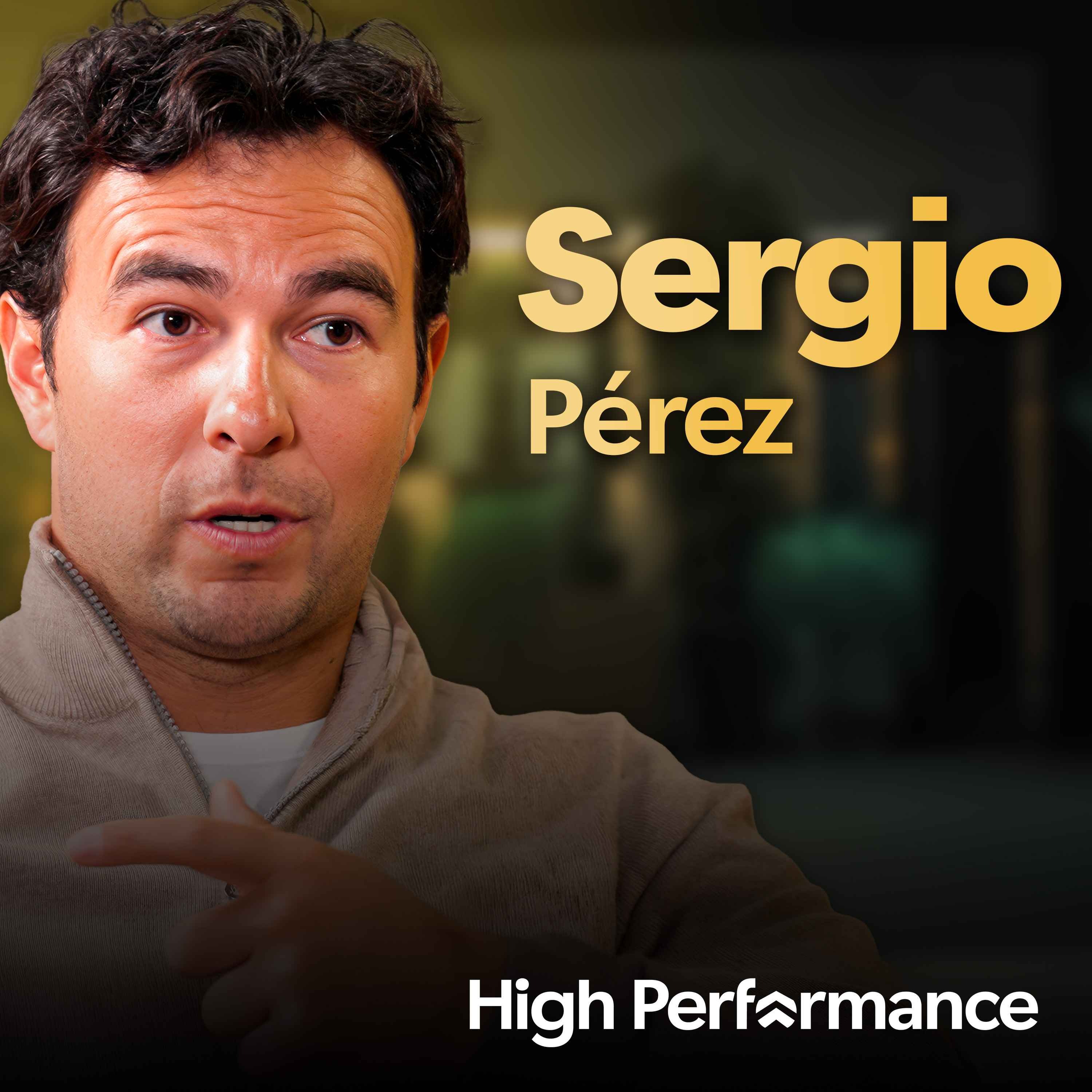
The High Performance Podcast
Sergio Pérez: What Red Bull Never Revealed About My Shock Exit (E422)
01:04:18
Loading summary
Transcript245 lines
- [00:04]
Host 1
You say it's the hardest job.
- [00:05]
Host 2
As a former non driver sharing a team with Max, the toughest.
- [00:09]
Sergio Perez
I was going into a project that was built for Max. First time I met Christian, he told me we go racing with two cars because we have to, you know, otherwise we will be super happy just to race with one car. I said, look, I come here and I make the most of it.
- [00:23]
Host 1
In all regards, Sergio Perez wins in Azerbaijan to take his sixth career victory to beat his teammate.
- [00:31]
Sergio Perez
I over deliver all areas, even for me that I'm mentally, I feel mentally very strong. They were very, very tough and I would say toxic. You know, I didn't want to leave the sport that has given me everything in those terms. I can show myself that I'm one of the best and I want to do that.
- [00:52]
Host 2
Sergio, welcome to High Performance.
- [00:53]
Sergio Perez
Yeah, thanks for having me.
- [00:55]
Host 2
So look, this conversation isn't just for Formula one fans. This is for anyone who wants to understand why hard work matters, why dreams are not always what they seem. And I honestly think that the conversation we can have over the next hour or so can change the way that people view what life is really like for a Formula one driver at the top of their sport. Definitely. Before we come to the present day and talk about Cadillac and the amazing project that you're involved in there, we want to go right back to the beginning. Teenage Sergio living in Mexico with a dream. What were you doing at that point in your life to make Formula one a reality rather than just a dream?
- [01:35]
Sergio Perez
To be honest, when I started it was just a dream and I knew that it was like such a far dream because we in Mexico, we never had Formula One drivers. Like, I never grew up with F1 drivers looking at it and I knew like Formula One was, wasn't that big. It was more about IndyCar in the US and nearby. I don't have, I don't come from family with lots of money to be able to go to Europe. I always wanted to race karts in Europe because I believed I was one of the best in the world because I was doing karting at a very high level. I was like 12 racing drivers of 25American drivers that were doing well. But I never had the opportunity to come to Europe because it was too expensive. But more importantly in karting, I knew that I had to win the championship. I was in shifter 125s. I had a special license. I was 12. And you can only drive the championship, I think with 16 minimum. So I had a special person.
- [02:33]
Host 2
How did you get a License to
- [02:34]
Host 1
do it for you.
- [02:35]
Sergio Perez
Because of my level, like I was, I won the championship by ADCC. So the next was 125, but I was too young for it. I was too young for the adcc. So they gave me a special license and if I won that championship, I will get the opportunity to drive for, to do a test in Skip Barrel, which is a series in the us. So I was leading that championship and I was leading it by a margin. And I had a crash with one of the guys that was very influential in the Mexican Federation. And long story short, they removed my license so I couldn't finish the championship. I didn't want the championship. So I thought like, it's all over, you know, like I quit from, from karting because I thought like, if I don't get that opportunity to go with Escuderia Telmex there, what's going to be, you know, how far I will make it. So I'm wasting my time here. And then Carlos Lim and Jimmy Morales, the owners of Escuderia, they found out about it. They called my dad and I came back from school and my dad told me, hey, Carlos called me, I had a word with him and with Jimmy and they said, don't worry, you will be doing the test in Skibara with the championship. You too. The whole project was very much biased into the US and I knew that I wanted to come to Europe, I wanted to race in Europe. But I have to convince Carlos because they didn't want to invest too much money in a 14, 14 year old boy. Yeah, you know, you don't know how good he's gonna be. So I was always trying to convince him, writing him on messenger. You remember msn?
- [04:24]
Interviewer/Analyst
Yeah.
- [04:24]
Sergio Perez
And what are you saying? Like, Carlos, look, I got a new offer from a new team. They want, they want, they want, they want me. It's like they want you for how much? You know, like they. Because they want you. Yes, but at the end of the day it comes a story that you say how you attract them, you know, I knew I had to wake up like at 3am in the morning to fund all the teams in Germany to get proposals. All I will say is, you know, I have a big sponsor, big money, and I'm very fast, you know, it's what I will say, you know, I have a big sponsor, big money. Carlos Lim. Carlos Lim. And when I told them Carlos Lim, they were like, okay, so now we're talking.
- [05:04]
Host 2
But the money wasn't guaranteed.
- [05:06]
Sergio Perez
You didn't have money. The problem the Problem is, like, I have a lot of money, but they don't want to spend it, you know, like so. And they were giving me offers to. To drive in Formula BMW in Germany, but they were all very expensive. So I keep. I kept sending those offers to Carlos. He was like, no, that's too much money. Too much. And then all of a sudden, I found that less than 50% of the budget to do the Formula BMW with a team that had one car in their garage, a team that finished. They had one truck, they didn't have mechanics or engineer. Say I have. He sent me an offer, and it was like the cheapest of all. I said, this is it. This is the one that we. So I sent it to Carlos and look what I got. And wow, this is really. This is. You want to do this one? Yes. So we got the deal. And I was like. I remember on the fly home, on the flight from Mexico to Germany, I was freaking myself out because I thought this could be a fraud. I got there, and a great friend, you know, a great guy, Gunther. Gunther Unterramer was there waiting for me. It was in December, so cold. This is what I signed up for, you know, And I already had the opportunity. I was super happy. Gunther was great guy, but we didn't have mechanics, we didn't have engineers. So he. He found an engineer. We found few mechanics around. We. We made a great team. And on. On our debut, we. We nearly won the race. I was racing with Hulkenberg.
- [06:45]
Interviewer/Analyst
Really.
- [06:45]
Sergio Perez
He won the race, and I finished second. And it was like, Carlos thought, like, wow, this makes. This guy is. Is good, you know, like, he's hungry and so on, and. And everything started there.
- [06:57]
Interviewer/Analyst
Can I ask you, from the age of 12, when you first realized this is what you want to do, up until you arrive in Germany, you put yourself under an awful lot of pressure.
- [07:07]
Host 2
Yeah.
- [07:08]
Interviewer/Analyst
What did you learn about yourself during that period that you still use today?
- [07:13]
Sergio Perez
I think I developed my character, you know, because I've been through so much at a young age, you know, and the uncertainty of not knowing what comes next, what you're gonna do with your future. Like race after race, facing that uncertainty to build a sector, a certain character. Even if I didn't make it, if I didn't make it to F1 or if I didn't have a successful career. What. You know what? Teach me there. That character that I built, I could do anything, you know, because it's really hard to build that part, you know, with so much on your shoulders at such a young age. That I felt like, what. When I came to Formula one, I've had a tough, tough period. They've been nothing for me, you know, because I already built that character.
- [08:01]
Interviewer/Analyst
That moment at the airport where you leave your family in Mexico and you're flying over to Germany, what was the strongest emotion? Was it the regret at leaving your family home the first time?
- [08:11]
Sergio Perez
It was excitement, you know, coming here to Europe, raise the Europeans, meet all the 401. You know, you develop this sort of picture in your mind that you will come here to Europe and you will be meeting all the Formula one drivers, hanging out with them, potentially going to parties with them, you know, like, you know, you're gonna be part of their gang, but you come here to Europe completely on your own. Yeah, I was shocked. You know, I was like, what I do now in Germany, I didn't speak any English, less German. I was like completely on my own. And they would drop me in the. At that, at that point, I was living on, on a hotel. How you call it?
- [08:53]
Host 2
The.
- [08:54]
Sergio Perez
Where the truck is.
- [08:55]
Host 2
A truck stop.
- [08:56]
Interviewer/Analyst
Truck.
- [08:57]
Sergio Perez
Truck stop hotel. I was living in one of them.
- [09:00]
Host 2
You came to Germany and ended up in a truck stop motel?
- [09:03]
Sergio Perez
Yeah, yeah. Motel, yeah.
- [09:05]
Sponsor Voiceover 1
Really?
- [09:05]
Sergio Perez
Yeah, yeah, yeah.
- [09:06]
Host 2
I was there with all the truck drivers.
- [09:07]
Sergio Perez
Yeah, yeah, all the truck drivers. All the truck is completely on my own. I was like, you know, I'm only racing on, on the weekends, you know, so it was really, really tough. And I couldn't come back to Mexico between races because it was very expensive. I was very tight on budget. So for me, the toughest periods were when. When the race finished. I remember, like coming back from a race, you know, we. We had a motorhome.
- [09:32]
Interviewer/Analyst
Yeah.
- [09:33]
Sergio Perez
And. And Gunther will drive it. I will be next to it. He will like, leave me at home. I was like, you know, when is the next race? In two weeks. What I'm gonna do the next two weeks, you know, because they're in the middle of nowhere and those periods were very tough. But then Gunther did a restaurant. He was building a restaurant. So he told me, do you want to help me to build? I was like, please take me wherever. So we start building a restaurant. And then once the restaurant was ready, he told me, you want to come? You can live there with the chef on the top floor. I was like, for sure, you know, like I could live with someone. I can speak to someone. It was the worst nightmare for the chef because imagine a 14 year old Mexican with a Mexican time zone, you know, because when I was not racing, I was just Speaking to my friends on the computer, but on their time zone, you know, and it was, it was a chaos, but, but overall it was fantastic, fantastic experience.
- [10:42]
Interviewer/Analyst
And what did you learn about loneliness and how to cope with that during that time then?
- [10:48]
Sergio Perez
Yeah, I, I, you know, that's a tough question because for me, loneliness, it's, is really good. I think it's a period where, where you can analyze deep inside you, like what, what you want, you know, what you want out those moments. For me, it wasn't a game. For me, it was my future. It was the opportunity of my life. I remember I wanted to go back, you know, like I was about to call Carlos and say, look, Carlos, thank you very much for the opportunity, but it's too tough for me to, to be away from my family. And I remember my, my brother, because he was higher up, he tried in, in, in Formula Ford and he tried to come to Europe, but then he had to stop because he didn't find opportunity. He told me, like, the easiest way you can do is to give up and come back, you know, because, and then if you come back and you want to do it later, in two, three years time, it's over, you know, the opportunity is now, the time is now and you have to make the most of it. So I was pretty shocked. Yeah, it was tough. And I said, look, so in that loneliness, it helps you to really go deep on yourself. For me, when I'm alone and on my own, I go really deep on myself on what I want, you know, And I know that when I want something, it means, you know, you have to get it now. And to get it is the difficult part of it because we all want a lot of things, but it's how you get them. And for me, that loneliness helped me to go deep on myself.
- [12:17]
Host 2
And it turned out to be the greatest thing you ever did. Because the race results were good, you continued to have support from Carlos.
- [12:24]
Sergio Perez
It wasn't good at the beginning, at the beginning. But then when I, when I went to England, I came to a great team T Sport with Russell Ecot, with Skelly. It was the best time of my, of my career, you know, in F3, it really switched on my career. You know, I came from very tough period to great time.
- [12:46]
Host 2
Make sure you stay where you are. In a moment, Sergio is going to
- [12:49]
Host 1
tell us what happened when he finally
- [12:50]
Host 2
got the opportunity to race in Formula one. We'll be right back after a quick
- [12:55]
Host 1
word from our partners.
- [12:59]
Sponsor Voiceover 2
Is your kid's birthday coming up? Don't stress the Prep the party Shop at Michael's is your one stop shop for every theme from bluey to rodeo. Transform your space into a birthday wonderland with dreamworthy tablescapes and decor. Starting at $0.99 plus get free helium inflation on select balloon styles. Whether you're crafting a one of a kind bash or grabbing the essentials, Michaels has everything to make their big day legendary. Shop now and order ahead for delivery or in store pickup. Michaels everything to celebrate anything.
- [13:36]
Sponsor Voiceover 3
Could AI help you do more of what you love? Workday is the AI platform for HR and finance that actually knows your business. We help you handle the have to do's so you can focus on the can't wait to do's.
- [13:48]
Sponsor Voiceover 1
It's a new workday, avoiding your unfinished home projects because you're not sure where to start. Thumbtack knows homes so you don't have to. Don't know the difference between matte paint, finish and satin or what that clunking sound from your dryer is. With Thumbtack, you don't have to be a home pro, you just have to hire one. You can hire top rated pros, see price estimates and read reviews all on the app download today.
- [14:14]
Host 2
And that period was really when you came to the attention of the Formula one teams, when you were racing in the feeder series. And eventually the opportunity comes through Sauber. So taking into account the fact that England was great, but Germany was a challenge on the track, a challenge off the track, it was lonely. But you'd backed yourself as a 14 year old, ringing all of these teams in Germany and in Europe. You'd seen the dream when you were 12 with your brother. This had been such a long journey. The first day that you're at Sauber and you pull on a helmet as a Formula one driver, is that a sense of I've achieved it or is it a sense of now I better deliver?
- [14:54]
Sergio Perez
No, for me it was like I made it. But now it's the time that the real challenge comes, you know, because you are against the best drivers of the world with the best teams, people you know here you cannot survive. The only thing that can make you survive is your attitude and your, your commitment and your results. I knew that straight away. So it was about like full on it, you know, like, because how many I've been in the sport and I've seen through my career, so many great, great drivers, they do for one one to five years and then that's it, you know. So I knew, like to have a very successful career, it was not just what Happens on track. It's what you do out of the car with your team, with your sponsors. It's a whole package, you know, with the media. All of that to me was. I was very switched on because of the early, early years. So I knew that it wasn't about. I made it, you know, now I can relax. It was. Now the reworks starts, you know, and yeah, it was great. But at the same time, you know, in hindsight, I always had a lot of pressure on my shoulders and I regret something in my career, you know, because now I'm towards the end of it, that because I had so much on my shoulders, I felt like, I don't know if all the drivers. I have that much that I forgot a lot to enjoy, you know, through my career. I feel like I didn't enjoy the, the good times or the bad times as much as I should. I regret like not enjoying them more.
- [16:36]
Host 2
And what was, what was the pressure?
- [16:39]
Sergio Perez
Well, you know, the support, the support that I've. That I've got to my family. You know, my, like what's going to happen at a very young age, you have the, the, the. The need of support, your family and everything is relying like you making it into it. So all those combined and the opportunities that will go by, you know, you have an opportunity, if you don't grab it with both hands, it's not coming back at you.
- [17:07]
Host 2
See, I think this is really interesting because so often we have people that sit in the chair and they talk about the pressure and then the natural question is, well, Carlos wanted the best for you and was supporting you, your family, love you, regardless of whether you're a Formula one driver or not, like, your mum's still gonna give you a hug at the end of the day. So actually the pressure was. Although you felt it was your family and your backers and your supporters and the nation of Mexico, the truth is the pressure was internal. It was you.
- [17:35]
Sergio Perez
It was me knowing that the opportunity, you know, you are there and you know that the opportunity can slip so quickly, you know, and there are thousands of people willing to take it away from you. So knowing you've been through all of it and then you know that now the real thing starts.
- [17:56]
Interviewer/Analyst
It was interesting, your answer there that you said when you got there, you looked at the results are going to be important, but the only thing you could influence was your attitude. Attitude is a small word. What did it mean in terms of your behavior? What was a good attitude?
- [18:10]
Sergio Perez
Well, you know, first of all, respecting everyone, coming with the right attitude in terms of humble, you know, I see some kids coming in. They won't last, you know, they won't last that long. You need to come with the right attitude. You need to work with your teams, with your engineers. But you have to be extremely humble, because to be here, first of all, you have to realize, no matter how good you are, you are lucky. You are very lucky. You know, you are here because of the right timing, because of the right opportunity. So many factors that you have to realize that you are very lucky to be here. And you cannot come here and just be with an arrogant attitude, you know? And, I mean, once you build your career, you can do whatever you want. But I knew that, starting at it, you have to be extremely intelligent. I think that you have to be very clever. It's not just about what you do on the car. People come in here and think that sometimes it's all about what you do just on a single lap and on your results. It's not about that. Formula One is much more than that. And there are a lot of very, very good drivers, very quick drivers. And it's not just. It's how you feed your engineers, your sponsors, the whole package. You are a brand, and you have to be able to. To have a very strong package around you.
- [19:42]
Interviewer/Analyst
So can you give us a distinction? I think it'd be helpful for people watching or listening to this Sergio. Between confidence and humility, because they're two sides of a different coin, aren't they?
- [19:53]
Sergio Perez
I think confidence goes in humbleness. The more confident you are, I think the more humble you can be, you know, because at the same time, you know, like when you jump in the car and. And people see you, you will be able to show what your potential is. But you don't have to be out of the car, an asshole. You know, you can be just, you know, always remember where you come from and how lucky you are to be in the position you are.
- [20:27]
Host 2
Could we go a bit deeper on the word confidence? Because you raced? I think I'm right. 190 Grand Prix before your first win.
- [20:34]
Sergio Perez
Yeah.
- [20:35]
Host 2
That's. 190 times you have to watch someone else on the podium. 190 times where you have to ask
- [20:41]
Host 1
yourself the question, could I have done a better job today?
- [20:44]
Host 2
Who knows?
- [20:45]
Sergio Perez
Yeah.
- [20:46]
Host 2
How do you stay confident and most importantly, retain the belief that one day you will be a Formula one race winner?
- [20:52]
Sergio Perez
When it's been that long, you know, because It's. It's Formula One. And the unfortunate thing in Formula One that 90% of your success is down to your. To your car, to your surrounding, being there at the right time, at the right moment, with the right package. You know, I think there are so many good drivers in Formula one that are going to leave the sport without even a win or even a podium. And it's not because they didn't deliver or they didn't deserve that. It's because they are fantastic drivers. And, I mean, it's crazy to think that Hulkenberg has one podium in his career. You know, it's. I've grew up with him. He's one of the best drivers out there, but he hasn't had the opportunity. He hasn't been there at the right time, and that's just how Formula one is.
- [21:43]
Interviewer/Analyst
We had an interesting conversation with George Russell on this that spoke about. He would set different targets than what we as the public would assume. So if he was 12th, he would set himself a target. I want to be 11th in the next race. So the outsider might go, you've got. You've come 11th. But he would see it as a victory for himself. How did you go about setting targets, then, when you know that 90% of what the public are gonna judge success is outside of your control?
- [22:09]
Sergio Perez
Well, I think for me, it was about, for example, if I was driving for a team that was top five finish, putting the car, always top four, like, knowing that, you know, I deliver the hundred twenty percent out of the car, I could go comfortably home, you know, if not, I always had that regret of, you know, I didn't deliver in qualifying, I didn't deliver in the race. So I was always thinking how I'm going to be able to overcome that in the. In the next race.
- [22:39]
Host 2
See, if I look at your career, I think there's been some amazing moments. I mean, I would say, though, that Sakia 2020 sits at the top.
- [22:47]
Sergio Perez
Yeah, that was a really, really good, good moment.
- [22:50]
Host 2
Before we talk about it, I think it's important, particularly for people who don't know much about Formula one, just to share a bit of the backstory around what happened, because if we rewind the clock a little bit, you were a team that were going bust, right?
- [23:05]
Host 1
Yeah.
- [23:05]
Host 2
So when did you first realize that Force India had some financial issues going on?
- [23:10]
Sergio Perez
It was really late, like, at the very latest stage. I had no idea on low, everything to do with Law, but I was on some money. They didn't pay my salary for, like, for the entire year. So I was like. It was quite kind of normal, you know, like, we were having a bit of Delays. But then there was. My manager told me that there was a winding up petition, so. From. From one of the suppliers that hasn't been paid. What does that mean? Yeah, basically they can shut down the company, you know, and the whole team will lose their job. I was like, wow. And you can save it. So what we gotta do? Well, we did the whole process to end up to put the team in administration before the winding out petition comes in place.
- [24:02]
Host 2
Who did that?
- [24:02]
Host 1
You did.
- [24:03]
Sergio Perez
Together with Julian, my manager.
- [24:07]
Host 2
Your manager?
- [24:08]
Sergio Perez
Yeah.
- [24:08]
Host 2
So hold on. You and your manager made a decision to effectively sue the team, to put them into administration?
- [24:15]
Sergio Perez
Yeah, because if we didn't put them into administration, the team will have gone bankrupt at the time and all those
- [24:22]
Host 2
people would have lost.
- [24:23]
Sergio Perez
And all the people, all the team, so at the time was Force India, which is now Aston Martin. Aston Martin wouldn't exist. So we went, we had 90 days to find a buyer and luckily for the team came Lawrence and ended up buying while we were on administration.
- [24:40]
Host 2
So those days where you were having to make a decision to put the team into administration yourself.
- [24:47]
Sergio Perez
Yeah.
- [24:48]
Host 2
Can you talk us through your decision making process? Because that is a huge decision that you know is going to reverberate around the world.
- [24:54]
Sergio Perez
That was crazy, you know, because all of this was happening during the summer, actually during race after race after. So I remember like before going into the, into the car, like having a conversation with lawyers, not understanding it at all. Now it's a lot easier. Now you can ask ChatGPT and it gives you the answer back then, tell
- [25:16]
Host 2
me how to put Formula one team into administration.
- [25:19]
Sergio Perez
Back then it was not, not so clear. And, and then at the end I remember like telling all my, my people around, like, because it sounds bad, like the driver is putting the team in administration, so we are a team. So I remember talking to all the staff in one of the races, telling them, look, I'm doing it because it's only right for everyone here, otherwise you guys are going to lose everything, all your jobs and so on. So I end up explaining them how it worked. So they were a lot more can. But at the end of the day, it was a lot of uncertainty during the administration period.
- [25:57]
Host 2
Were you not overwhelmed though, with trying to deal with that and then get in the car and drive the car?
- [26:02]
Sergio Perez
Well, I mean, as a driver, ideally you want to be in the scenario where you can just focus on performance, on your performance with your team, but sometimes you are not in that luxury position.
- [26:13]
Host 1
Wow.
- [26:14]
Interviewer/Analyst
So how did you do it then?
- [26:16]
Sergio Perez
So I end up, you Know, like trying to be the best, say, lawyer I can be for the team and the best driver, trying to separate when I had to jump in, in the car, trying to deliver, you know, as much as possible for the team. Because we were having some good races, some races we were on the points, even on the podiums. So, yeah, but at that point it was very, very critical, the future of the team.
- [26:43]
Interviewer/Analyst
But was it like, how did you go about setting boundaries where, like, what was your cutoff point of. We're not talking about legal issues now.
- [26:50]
Sergio Perez
No, there was. No, no, you couldn't separate it at that because it was at the stage that was very critical. So I would be having meetings just before qualifying. I remember in one of the race, I think in Paul Rickard, it was just before qualifying, like literally with, with lawyers and so. And then jump in the, in the car. And then before the race, instead of being with the engineers, I was with some other meetings, but I was there. I had to do it and have to save the team at that point as well.
- [27:22]
Interviewer/Analyst
So when you look back on that period, do you think that actually helped you because those distractions allowed you to maybe have a greater perspective?
- [27:32]
Sergio Perez
I mean, all I can say, I think I was there and I had to do it. You know, ideally I would have liked to be in a team where I could just focus on performance. But it end up being that at the end of the day, you travel the world with your people, with your mechanics, engineers, all this stuff, and you're family, you know, you're together, you're a family. And if you can do something for, for them, I'm sure that anyone will do it.
- [27:57]
Host 2
The crucial point here is if you're the master of compartmentalizing, right? This is an interesting thing for a lot of people to understand. So Sergio saves the team by putting the team into administration, allowing Lawrence Stroll to buy the team. Just before his first ever win in Formula one, Lawrence Stroll told him he wouldn't carry on with the team. So the guy that you had enabled to buy it decided to take you out. So before we talk about Sakhir, that was the backdrop, is that you were told that your time with the team was over. How difficult was that for you?
- [28:35]
Sergio Perez
It was difficult, like you say, you know, because I had a three year contract with the team, obviously with options in it, and it was like my future was going to be with that team. You know, that I've been pretty much my whole life and I helped to buy it and so on. So I really thought that I was Going to be part of that project together with Lawrence and Lance. But then obviously Sebastian came available. You know, a four time world championship champion became available. And I understood this is how the sport works. You know, I knew that it was a great interest. He was going to be a great interest for Lawrence. So he had an option, he didn't renew it and then he went for Sebastian. And I was like, look, there is no loyalty in this sport. I didn't took it personally. I actually have a great relationship with all the people in Aston. So I said, look, now what can I do? Now I just focus on what I can do, which is perform on track, see what happens. If there is a good opportunity for next year, I'll take it. If not, I sit out for a year and then come back because there was some interest. I had few alternatives, but not for the year after. And then I end up winning my race towards the end of the year. And then Red Bull came. The only team I thought that I was never going to drive for was Red Bull, you know, because they always have their academy drivers. So I end up driving for Red Bull, you know, a very late stage in, in the season.
- [30:16]
Host 2
Do you think that you would have got the Red Bull drive without the win in Sakhia?
- [30:20]
Sergio Perez
No, I think that win was very, very important, you know, because it was, it was, it wasn't easy to get into the Red Bull program. For Red Bull to say, well, we need to look outside of, of our pool. They deal with, with whoever and they didn't really want. It's like our, our, our academy is not working. We need to, to go and find someone else. It's really hard, you know, for, for them. So there were a lot of things. So I think when, when I won the race, it was quite obvious for them that they had to do it.
- [30:57]
Host 2
Come on now, let's just not throw this away with when I won the race. I mean how you won that race was absolutely remarkable. So you got touched, you had to pit. You're basically now at the back of the grid and you come through the whole pack. Can you take us into the cockpit that day, talk us through some of the decision making processes that you went
- [31:18]
Host 1
through during that race?
- [31:20]
Host 2
Because it was, it felt like you really won the race that day.
- [31:23]
Sergio Perez
Basically. I, I knew we had a massive potential because we were in Bahrain and we ra. It was Covid. So the, the, the weekend before we raced in Bahrain in the normal circuit and Bahrain is the toughest circuit on, on tires is the roughest, you know, so it's the toughest, is the most degradation you, you have in Bahrain. So we came there in Bahrain but it was a very different Bahrain with a long, very long straight. They changed the circuit so that we don't race in the same one but it was the same tarmac. So I remember after the first session, the first Friday, I told the engineers, let's take all the downforce out. I mean how would you do that in Bahrain? I said, because this is not a normal Bahrain, this is a very different Bahrain, so let's take all the downforce. And we were flying that weekend because everyone was running a lot higher downforce and we were flying and not degrading the tire as much. We really found the balance. I knew we had a very good race car. My strength comes in the races with looking after the tires and so on. And then I had a good start and I was next to Max. I think Bottas was leading, Bottas was leading the race and I was second. Max was, was in the inside and then Charles was on even more on the inside. So at the end Charles took, took us both out thing, he crashed into me, Max tried to avoid me and he ended up crashing. I was like, I mean how can this happen? You know, it's my massive opportunity, I need it for my, for my career,
- [33:09]
Host 2
you know, you knew you were out
- [33:10]
Sergio Perez
because the race before I was on the podium in Bahrain, I was, I was third, I was running third. And two, three laps from the end the engine blew up.
- [33:20]
Host 2
I forgot about that.
- [33:21]
Sergio Perez
Yeah, yes, the engine blew up. So I was like, you know, again it's, it's over, you know, because this was the race that I could make the difference. So I turn around, I keep going. They asked me how is the car? Well, it feels okay, but I don't know, you never know with the aerodynamics, if they touch on the floor or anything like that, it can be a big problem. Everything was feeling fine. So we end up changing the tires and we start again one by one. I was overtaking them all the cars at the back so easily. So halfway through the race I was back on the race to score points. So I kept going towards the later stages. I was really onto the podium and we were like, you know, and then the safety car, George was leading, you know, because he stepped in for Lewis, Lewis got Covid and George stepped in, he was winning, he was leading the race. I think Bottas was second or bothas retired somehow and then they had an issue. I ended up in the lead. Eight races, eight laps to go. I was matching George Pace and then he had a puncture. He had to come back to the pits and I ended up winning, winning the race from the rag. It was really important. And myself, my thinking was like, look, whatever comes next, I won a race in Formula one, you know, even if I ever don't, if I don't come back, if I don't do anything, I've won a race and period.
- [35:03]
Host 2
And did you allow yourself to enjoy that moment?
- [35:05]
Sergio Perez
Yes, yes, it was very, very enjoyable. I remember calling my family straight after and they were in, in Dubai. They were coming for, for my final race. Yeah, in Formula one. And because they had to quarantine, you remember, it was a big issue with COVID so they were waiting for me in Abu Dhabi. They were quarantined in there and they were super happy and we were so happy. And look, let's go now onto our final race. Let's see what happens.
- [35:37]
Interviewer/Analyst
What I find remarkable though is that instinct that you had to go to the engineers and suggest that you race in a different way. How did you get the confidence to back your instinct when nobody else seems to have done that? And the data maybe would challenge you.
- [35:51]
Sergio Perez
You always have to as a racing driver. You always have to go with your feeling, you know, with the. There is so much data can say, but it's always much more important. Your feeling, your experience, your knowledge. If there's something I've learned in the sport, it's always, always go with your feeling, always. Because regardless of if it's right or wrong, you challenge the data.
- [36:19]
Host 2
Well, you challenge the data. You finally, after 190 attempts, you won your race in Formula One. And that little 12 year old kid with a dream is suddenly on the top step of an F1 podium. Then it gets even more ridiculously amazing for you. And you get that phone call from Red Bull which you and no one else was expecting because they have their own young driver program. And suddenly you're in, at the time, the top, top team in Formula one. And this is like a big moment for you. How do you now reflect on that period in your career at Red Bull?
- [36:51]
Sergio Perez
It was great. I would say that it was, it was fantastic. I knew, you know, that I was going into Red Bull, into a project that was built for Max over the years. You know, I was. When they signed me up, it was very clear, you know, I knew what I've signed up for.
- [37:08]
Host 2
And when did they tell you what you'd signed up for? That it was. Did they make it clear? This is built around Max, did they sign up?
- [37:14]
Sergio Perez
The first time I met Christian, he told me, I mean we go racing with two cars because we have to, you know, otherwise we will be super happy just to race with one car. You know, like everything. It's for Max around. Max, we want to win the championship.
- [37:30]
Host 2
It was that.
- [37:31]
Sergio Perez
Yeah, yeah. So instead of me thinking, you know why, I say, look, I come here and I make the most of it in all regards. And it's what I did, you know, I went there with the tools available that I had to my expense. I think I over deliver in all areas over there, you know, it worked out perfectly. Of course it turned out to be there were some very tough times, very tough periods. Towards the end as well, the pressure and everyone internally were we had too much success. So people got bored, I think, and they were fighting each other and you know, all the drama around. But they were fantastic, fantastic. Four years, I think I over delivered and only once I left and they brought in all the other drivers, they realized the job that I've done for them for four years.
- [38:29]
Host 2
Well, you know that Otmar has said on record on our other show, High Performance Racing, that if they'd have kept you, he thinks last season that they would have won the world title.
- [38:42]
Sergio Perez
Well, you never know if you don't know. But for me, on a personal level, you know, I still big friends with everyone at Red Bull, everyone at Aston Martin. That's also some very important, you know, I kept my credibility and my gratitude to all of them. Red Bull transformed my career. Aston Racing Point gave me a massive opportunity. So you, at the end of the day, this is a business and you have to play it.
- [39:15]
Host 1
Stay where you are. Plenty more still to come from Sergio Perez.
- [39:19]
Host 2
We'll be right back after a quick
- [39:21]
Host 1
word from our partners. What if the real question isn't where you're going, but the adventures you experience along the way? It's time to set your sights higher on peaks still to be climbed, rivers still to be crossed, and greater dreams to pursue. It's time to embrace the impossible with Defender, a family of vehicles built around capability, durability, tested on some of the most difficult terrain. Defender defines tough luxury. And I should know, I've driven one for the past three years. I have the Defender 130, but from the compact confidence of the Defender 90 to the versatility of the 110 through to mind the Defender 130 with seating for up to eight, there's endless potential. You feel it in the details as well. The rugged body design, the robust materials all working together so you can head out with confidence and inside Clearsight technology helps you see the world around you in a new way. While the PV Pro keeps your navigation routes and playlists flowing seamlessly as you go. And with up to 89 cubic feet of cargo space, there's room for everything you need on your journey. Explore the full Defender lineup@land roverusa.com on high performance we talk about cutting the
- [40:21]
Host 2
noise, and that's exactly the energy that
- [40:23]
Host 1
Mint Mobile brings to wireless. There are things in life you don't want to be transparent, but when it comes to your wireless bill, well, transparency is everything. And that's exactly what Mint Mobile delivers. Mint Mobile took everything that's wrong with wireless and made it right. Premium high speed data, unlimited talk and text. All on the nation's largest 5G network. For 15 bucks a month, every plan including unlimited. No surprise price hikes, no monthly contracts, no nonsense. You you can bring your current phone and your existing numbers across. Pick from 3, 6 or 12 month plans, pay upfront and you're done. No bills dropping into your inbox every month. Just coverage that works. To get your new wireless plan for 15 bucks a month, go to mintmobile.com hpp that's mintmobile.com hpp cut your wireless bill to 15 bucks a month at mintmobile.com hpp that'S it. No catch. Upfront payment of $45 for three months, $90 for six months or $180 for 12 months required $15 per month equivalent taxes and fees extra initial planned term Only greater than 50 gig may slow when network is busy. Includes up to 20 capable device required availability. Speed and coverage varies. See mintmobile.com
- [41:25]
Sponsor Voiceover 2
Is your kid's birthday coming up? Don't stress the prep. The party shop at Michael's is your one stop shop for every theme from Bluey to Rodeo. Transform your space into a birthday wonderland with dreamworthy tablescapes and Decor starting at $0.99 plus get free hello Helium Inflation on select balloon styles. Whether you're crafting a one of a kind bash or grabbing the essentials, Michaels has everything to make their big day legendary. Shop now and order ahead for delivery or in store pickup. Michaels everything to celebrate anything.
- [42:05]
Host 2
And there aren't very many Formula one drivers that have been around as long as you have and they still love the teams they raced at. But more importantly, the teams love that driver like it's quite rare and it says a lot about you as a person. I'm really interested though because it gets spoken about so Much by other people that have never shared a team with Max Verstappen. You know, what is it actually like having.
- [42:27]
Host 1
Don't know. Would you say it's the hardest job
- [42:28]
Host 2
as a formula driver, sharing a team with Max?
- [42:32]
Sergio Perez
To face Max at Red Bull is the toughest. I mean, already to face Max in any other team, it will be very tough. But to face him at Red Bull, you know, with. With his team, his people, is surrounding, you know, it's. I mean, yeah, basically it's tough and you need the best of the best in all areas and you just don't have it, you know, while he has it, all the, all the opportunities in terms of engineering, senior engineering and experience engineering, you know, that everything goes to Max. But I knew it before I came, so I thought, look, I can either complain or get on with what I have. And this is what I did. You know, the four years I was there, I kept my same engineering team. Something I feel extremely proud of.
- [43:24]
Host 2
What would happen on a weekend where you were faster than Max and you won the race or you dominated?
- [43:30]
Sergio Perez
They will be very happy. They will be very happy in the team, but the problems will happen. You cannot perform at your best, and it's what happened.
- [43:38]
Host 2
Would you be happy to take us into what the psychological impact is of having to deal with all of that?
- [43:45]
Sergio Perez
It's very tough. I think the only reason I survived there for so long is because, first of all, of how I built my character. So for me, it was like peanuts. And in that regard, being in that position and accepting, I think you have to accept in which position you are, you know, and you cannot over push the system too much because they just break you. So being able to. And also, I was completely on my own at Red Bull, you know, so I could.
- [44:19]
Interviewer/Analyst
How do you mean?
- [44:20]
Sergio Perez
Yeah, in terms of management, like, I felt like I. There was not much we could do with. With the system, you know, this is what you get given and that's. That's really it.
- [44:32]
Host 2
Did you feel right? Okay, so did you feel supported?
- [44:37]
Sergio Perez
I felt supported to a certain point. You know. You know what I mean?
- [44:41]
Host 2
Yeah.
- [44:41]
Sergio Perez
Like, more than that, nobody was willing to do it. I felt supportive. The team was behind me, like Christian Helmut, they will get happy if. If I win a race and so on. But at the end of the day, they will tell me, you know, the whole project is done for our driver and our driver is Max. So for me it was clear and I accepted that, you know, I just tried to make the most of it. And there were years where I thought, you know, we are on a path. I can really give a fight. But then as soon as there were the upgrades they were going in, the difference will just increase quite a bit.
- [45:21]
Interviewer/Analyst
And what was that certain point that you felt supported and when did it run out?
- [45:27]
Sergio Perez
Pretty much throughout, I would say, you know, they were really happy because they knew what that second seat was. Was about. And they knew that whoever they bring, they will break him in two, three races because not. Because they're not quick enough or that you have to be extremely, mentally extremely strong. You have to have the character to be able to cope with all of that. And when they brought the youngsters, I mean, Liam lasted, I think, two races, and then Yuki, you know, they forgot how difficult it was. But before that, there was Gasly, there was Albon, extremely quick and talented drivers. But the system just breaks you. And that's it.
- [46:09]
Host 2
My issue with this, and I know that you're Formula one drivers, right? You know the rules of engagement in
- [46:14]
Host 1
your sport, but you're still talking about
- [46:15]
Host 2
young guys with dreams, ambitions. They're still human beings. They still have mental health problems and psychological challenges and families to care about. And that's before you even talk about the pressure from the outside world, from social media, from Twitter. And you got all of that, all of that on your shoulders. Did you ever seek outside help?
- [46:38]
Sergio Perez
Yeah, I seek out outside help because they pushed me for, you know, because in Red Bull, it was funny every time you didn't. There were some mental issues. So I thought, look, I'm open to try anything, okay?
- [46:51]
Host 2
So the car gets designed for the other team, mate. And when you're not quick enough.
- [46:55]
Sergio Perez
Exactly. So what's going on? You are too focused on, you know, whatever they will think, they will really believe, you know, because all of a sudden you see that the driver is fighting the other driver. And then you come to another race and it's one second between teammates. It's like they were fighting the last race and now they are second. So you are not focused, you know, so I was hoping to anything. So I tried, But I knew that it's like, what was the main course of it. And I took it because I felt like potentially it will show the right attitude for the team, you know, that I'm willing to do anything to overcome these issues.
- [47:38]
Interviewer/Analyst
And you've spoken about confidence started to disintegrate. What did you do to arrest that spiral?
- [47:45]
Sergio Perez
I always kept believing in myself, you know, always knew that in the situation that I was. I was always conscious of how I was driving you know, like as soon as those upgrades were introduced, instead of being driving on an automatic mode and focusing on performance, you are trying to prevent things like I knew, like I have to come off the brake because otherwise the radius end up rotating and that sort of thing. So I end up knowing that I was in that situation, so I have to get the most out of it. And you end up developing new skills of driving differently and understanding things differently.
- [48:29]
Host 2
Did it weirdly make you a better driver, do you think that period?
- [48:31]
Sergio Perez
Definitely, definitely, I think. And also it showed me, you know, being four years next to Max, he's a driving force, although he has all the support you can dream of a racing driver. Max is a tremendous force, a tremendous, complete driver in all the areas, you know, and it really teach me how to lead that team as well, you know, how to be.
- [48:59]
Host 1
Explain that.
- [49:00]
Sergio Perez
Yeah. Max is a pure leader on how he pushes everyone around him and in performance he knows exactly what he needs to go quick and where he's lacking. And he's a tremendous, you know, a hard worker as well. So being able to learn, to learn that from, and seeing that in firsthand from. From Max for four years in very different cars definitely has made me a faster driver. And also I think not having the right tools on my side made me to raise my level as well.
- [49:39]
Sponsor Voiceover 2
Yeah.
- [49:40]
Host 2
And did the psychology ever help? When you met the psychologist, how many sessions did you have?
- [49:45]
Sergio Perez
To be honest, I didn't feel like I was quite open to it, but I felt like my issue was not. It made me understood, you know, like for example, where. Where all this pressure was coming from and so on. Having that conversation with someone, I think is very important if you, if you feel like you need it, seeking that help with someone you feel comfortable on and explaining your just your details. All I needed at the time, I think, was how you say, like a club and say like you are in this situation, just make the most of it and that's. That's really it, you know.
- [50:27]
Host 1
Yeah.
- [50:28]
Interviewer/Analyst
And what like you said that Max was a pure leader. What. What's the one aspect that you saw him do that you would take into your own future career?
- [50:39]
Sergio Perez
Pushing the team in, in a certain direction, you know, like giving them the direction. Not many drivers can do that. So telling them where exactly we are lacking and how we can get there, that's something very, very unique that I've learned. I had on those meetings. Adrian. Adrian Iwi, Christian Pierre. So knowing from all those guys how they were dealing when we were dominating the sport without a Really, I would say that the most competitive package, it was tremendous to see how. How much the effort was behind the scenes.
- [51:18]
Host 2
And now you get to use all of those skills that you learned at Cadillac. And I think this is what's really interesting, because Cadillac didn't just hire a driver that is great on the tyres and uses his brain to win a Grand Prix, as well as his ability behind a wheel. They didn't just hire a guy who had had a year out and had a sabbatical to really work out the role of Formula One in his life. They didn't just hire a guy who'd shared a team with Max Verstappen and so saw what leadership looked like from a driver's perspective. They also hired someone who has got all the experience.
- [51:48]
Host 1
But it's so clear now that the
- [51:50]
Host 2
fire is still so strong in you to deliver for Cadillac, but in a different way. It isn't about race wins, is it? But it's about a different kind of performance.
- [51:58]
Sergio Perez
Definitely. Definitely. I think this project really. So when I. Basically, when I left Red Bull, I had to take a year out because mentally was very tiring. You know, my last six months at Red Bull were very tough, even for me that I mentally. I feel mentally very strong. They were very, very tough and I would say toxic. And I really wanted a break. So the year out came perfectly in. Perfect timing. I didn't know at that time if I wanted to come back. When I left F1, I really thought, like, it could be it, and I was ready for it. I'm very grateful. I wouldn't come out, come, come back at any cost, but I also felt like, you know, I didn't want to leave the sport. That has given me everything in those terms. Yeah. So when the project with Kadila came, I thought, it's a project. It's a massive project. It's a massive brand. When I met Dan, you know, his commitment, I know this guy is very competitive and he will. He will do whatever it takes to. To take it to. To a very good level. And it can be my project as well, and I can be part of it and I can show myself that I'm one of the best. And I want to do that because I always believe that I'm one of the best in the grid. But obviously my period at Red Bull, it takes that confidence of you when you are not delivering and your teammate is winning and so on. And I always knew what were the issues. But it takes confidence away from you, and that's why I wanted to come back. And I remember one engineer that told me when I finished with Red Bull told me, like, wherever you go, you are extremely fast. And we all know that. You know, I won't say his name, but he would tell me, like, we all know that wherever you go, you are one of the best. And we all know that. I said, he's just telling me that because I'm leaving. But I also knew deep inside me the issues. And most of the engineers, they understood all these problems. But when I came back and when I showed to myself, I did a test with Ferrari in the middle of last year to get up to speed. Cadillac organized the test because I set a year out a formula one. I didn't drop anything because I wanted. I was of course, interested in other series and so on, but I wanted to keep my muscle memory of Formula one. So I didn't do anything. I did some cutting and so on to keep fit. But. So when I went to, to do this test in Imola, I was like, you know, I haven't driven like for eight months, so how. How gonna be? I don't know. And I went there and within three runs, I was on the pace like everything was with me, you know, and the Ferrari was much more of a normal car, you know, like, I will come in. And then I started to relax and let my natural speed carry it around. And I was like. I knew straight away I wasn't the issue and that I was going to be extremely competitive in more of a normal car.
- [55:19]
Host 1
I love that.
- [55:20]
Interviewer/Analyst
And what did the eight months give you in addition to what you'd had before you left?
- [55:25]
Sergio Perez
Oh, a lot. You know, it made me disconnect from the sport. It made me understand sport a lot more, you know, because when you are in this bubble, I call it a bubble Formula one, at the end of the day, it's a bubble that it's very important for us and a lot of fans. But at the end of the day, we as a driver tend to focus on, you know, you feel the worst driver and you go down really easily if you didn't get a hundred percent of. Of your potential, you know. And when you're outside the sport, 99 of the fans don't even understand if you got the 90 or the 30. You know, you should worry less. I felt like should worry less and enjoy it and enjoy more the. The sport.
- [56:07]
Interviewer/Analyst
Because you said that when you first came in that you wish that you had have learned to enjoy it.
- [56:11]
Sergio Perez
Yeah, I think that's. That's the main thing I, I learned when I, When I stood up, when I went out. It goes by so quickly, your career, that when once I realized I was out of it and, you know, I should have enjoyed it more. The good moments, we all enjoy them for sure, but even, even them, even then you should enjoy them more. You know, you should appreciate them more. And the bad moment as well, you know, like, enjoy them because at the end of the day, you are here and it's going to finish at some point.
- [56:41]
Interviewer/Analyst
Yeah.
- [56:42]
Host 2
And also I think a chance to reconnect with your kids.
- [56:44]
Host 1
Right.
- [56:44]
Sergio Perez
Because I know that, that, that to me. And with. We were able to travel. We went to Africa. We loved it. We went twice in one year. We traveled so much with my kids. You know, the summer, it was, it was, it was great. I really, really enjoyed it. I had great projects as well, you know, with my. I was. I started some other projects out of racing and I was really busy, really active. I think I was not just sitting back on the beach, I was playing golf. I. I was in my office, you know, building my family office and everything. It was great time. I really, really enjoyed it. But when the project came, when I met the owners, I knew that, you know, I still have fire in me to show myself that I'm one of the best. And I really wanted to come back.
- [57:38]
Host 2
Obviously there was that period towards the end at Red Bull that you were pretty broken, right?
- [57:42]
Sergio Perez
Yeah. Yeah. It was very tough those six months.
- [57:45]
Host 2
And I feel like that sabbatical for it. I know you had a watch and you engraved Sabbatico. Is that right on the watch?
- [57:51]
Sergio Perez
I'm a big watch collector. I love watches. And before I used to buy more, but now, you know, like, I always like to buy if something nice.
- [58:01]
Commentator/Analyst
Yeah.
- [58:01]
Sergio Perez
Happens in your life, you know, like, I want to remind myself, you know, so when every time you put that watch on, it's like I have it from my first ever salary or like my, my sabbatical or.
- [58:13]
Host 2
And I think you needed that sabbatical to rebuild yourself.
- [58:16]
Sergio Perez
Totally. Yeah. Yeah.
- [58:17]
Host 2
Yeah.
- [58:17]
Sergio Perez
I think there, there. There are times where I've talked to a lot of drivers, you know, like, sometimes all they need is a sabbatical.
- [58:25]
Host 2
And what does success look like for you now at Cadillac?
- [58:30]
Sergio Perez
I think being able to build something together with the team that potentially can end up being one. One of the best teams in, in the sport will be a massive, A massive thing for me.
- [58:43]
Interviewer/Analyst
And you've said previously that Checo is a character and not the real you. So.
- [58:49]
Sergio Perez
Yeah.
- [58:49]
Interviewer/Analyst
Who's Driving the car. Today
- [58:54]
Sergio Perez
I'm driving the car, you know, but when I put the suit and the helmet, people see you differently. And you have to be very careful not to get carried away into that character. Because at the end of the day, one day you will take that helmet off and that suit off and you are Sergio and I'm Checo, you know, and so I always believed, you know, when, like it can get too carried away. But at the end of the day, Formula one, it's such small part. Once you're done with it, I mean, hopefully we all have 50 years ahead of us. You know, there is, there are so much more things and at the end of the day, the sport is big. It's important, but it's just such a small part.
- [59:35]
Host 1
We're going to wrap up with a
- [59:36]
Host 2
few quick fire questions. After all your experiences, the great highs, the race wins, the challenges, the difficult times, what do you believe high performance is?
- [59:47]
Sergio Perez
It's not giving up in difficult circumstances.
- [59:51]
Interviewer/Analyst
What are the three non negotiable behaviors that you and everyone around you is expected to buy into?
- [59:56]
Sergio Perez
Hunger. Number one, the dry force. You know, to, to.
- [60:03]
Sponsor Voiceover 1
To.
- [60:03]
Sergio Perez
Don't just. I hate when, when people just deliver, you know, if you hire someone just to deliver, everyone can deliver. But to deliver to their maximum. For me, it's. I'm building that culture around you. To people deliver at their maximum. Not, not just deliver, it's a big difference. Being able to deliver at your maximum. I want to be with part of that team, you know, that and that surrounding. If you're able to get that surrounding around you, you made it. And then gratitude. I think it's very important. Those three.
- [60:40]
Host 2
What is your biggest strength?
- [60:42]
Sergio Perez
I'll say it's my character, my brain. Yeah.
- [60:47]
Interviewer/Analyst
And your biggest weakness?
- [60:48]
Sergio Perez
I might get fed up a bit quicker.
- [60:51]
Host 2
Impatience.
- [60:52]
Sergio Perez
Okay. Impatience.
- [60:53]
Host 2
From everything that you've seen inside Cadillac, do you believe that this is a team building something that one day can deliver race wins and potential world championships?
- [61:03]
Sergio Perez
Of course, it's very early days. We are only on our sixth race and there's a sort of culture that is building. It's very early to answer you that question, but I, I can see that the owners will not stop until they do that. You know, and you're talking about General Motors and twg. So there are two great forces that are not going to stop until they get there.
- [61:32]
Host 2
And for people that have listened to this fantastic conversation, your golden rule for other people to live a high performance
- [61:38]
Sergio Perez
life, do never give up. Never give up and enjoy the ride.
- [61:43]
Interviewer/Analyst
And can I ask you one last question? You're a father of four children. What would you want them to say about you?
- [61:50]
Sergio Perez
That I always look to do the best and to use most of my capabilities to reach my potential. Whether that potential is to be a world champion or to be a great entrepreneur. Whatever is that potential, I always deliver to that potential. And. And that I was grateful.
- [62:10]
Host 2
Well, we've got here a little memento and a thank you gift for you coming on the show. Oh, those are the. That's the commentary notes from. From the TV coverage of the day that you won your first Grand Prix. So those are all the little bits of information that were being used.
- [62:25]
Sergio Perez
That's how it started.
- [62:26]
Host 2
Exactly. That's where it started. That's a gift from us to you. And, you know, that is a reminder to you and your kids that you absolutely have found the edge. You have found the limit. And it's a pleasure.
- [62:38]
Sergio Perez
Thank you so much. I will. I will save it at home. I will have a nice place at home.
- [62:42]
Host 2
Thank you so much, Sergio.
- [62:44]
Sergio Perez
Thank you,
- [62:46]
Host 2
Damien. Jake, that was the deepest I've ever
- [62:50]
Host 1
heard Sergio go on the mental toll of his time at Red Bull. And I know that you want to
- [62:55]
Host 2
talk about a lot of the sort
- [62:56]
Host 1
of upbringing stuff and the.
- [62:58]
Host 2
The way that he kind of built himself in those early days when he was living in Germany all on his
- [63:03]
Host 1
own, but from my perspective, he really laid bare there what it feels like when you're told, okay, you're told a team is backing one driver, right? But remember, Sergio can't publicly come out and say, listen, I've been told this team is backing Max. He has to just accept the criticism because he can't tell the full story. And then he drives well in the car and he feels good. But then the team designed the car to suit Max's driving style more and more and more, which is very different to Sergio's. So then that opportunity to win races and get great results goes away. So then he just gets massively criticized. And even at that moment, he again can't come out and go, well, the car has changed, and this doesn't suit my style. It's all about him and all about his failures and all about his struggles. But I actually think there's a few things that have been really valuable for him. I think the fact that he left Red Bull and the people that replaced him didn't deliver, right? I think the fact that towards the end of his time there, certain people pulled him aside and just said, look, by the way, we Know, you're fast, and this team was not set up for you to succeed. But I think probably the most important thing, you know, he. He said, didn't he, towards the end that basically he was broken by that time at Red Bull, he used the word toxic. And then we spoke about his sabbatical. I think the most important thing was for him to have that timeout, to gather his thoughts, to kind of remind himself of who he was a bit like, you know, at the very start when he said he learns a lot about who he is in the quiet times when he was in that truck stop all on his own and he was bored. I think that was exactly what. The process he went through all these years later after leaving Red Bull. And he is renowned, by the way, as one of the nicest guys in the paddock. And I think that it's. I'm really pleased that he's had this kind of opportunity with Cadillac to not leave in the. In the way that he had left with Red Bull.
- [64:52]
Interviewer/Analyst
Yeah, definitely.
- [64:53]
Commentator/Analyst
I agree with everything you've said, Jake. I really enjoyed him. I liked his energy. He was really calm and considered and polite. So you can see why he's been such a valuable member of every team that he's been a part of. And again, I wouldn't underestimate that, that point. He said that he's left on good terms with every team he's been part of. And I think that's something that says something about the character of him. The humility. But. The gratitude and the. But there was a word that he used there in the interview that kept coming back to me time and time again, attitude. Because I think so much of what Sergio was describing was the concept that the Royal Marines talk about it as dislocated expectations. When you think life has got a plan for you and then it keeps changing. And I think he's a guy that's learned to cope with dislocated expectations. I think I'm in a team and then it goes bust and I've got to negotiate. I think I'm in a team that I've got the potential to race really fast. And then they tell me that it's not set up for me. And I think his attitude is the bit that was consistent through all those different periods of turmoil, change, and ambiguity. And I think the fact that he saw. It's not just what I do in the car, it's what I do off the car. It's the way that I respond to setbacks. It's. I make the Best of every situation. So many lessons there that any of us watching and listening to this can take and ask ourselves at any one moment, what's my attitude like, regardless of the. Of the situation that I find myself in?
- [66:20]
Host 2
And the thing that I hadn't fully appreciated was what was going on at Forsee India when the team was facing
- [66:26]
Host 1
clowns and he was coming into the paddock, signing affidavits, having serious legal meetings, which he said he didn't understand. So there's the added confusion there.
- [66:38]
Host 2
And he has to do all of
- [66:39]
Host 1
that moments, and he told us moments before racing, moments before qualifying, and then get in the car and then switch into race driver mode and then hit your braking points and then nail the apex and then find the 10th on track and then try and make it through to the final part of qualifying and then try and score points or get on the podium. And as soon as that was over, out the car and back into another legal meeting. Because he had principles.
- [66:59]
Interviewer/Analyst
Yeah.
- [66:59]
Host 1
And he wanted to protect himself and protect the people that worked at that Formula one team.
- [67:03]
Host 2
And I agree with you that whether you love or don't love Formula One,
- [67:08]
Host 1
whether you care or don't care about that as a sport, that was a very human conversation. And I'm really pleased that he chose High Performance to share it.
- [67:15]
Commentator/Analyst
Yeah. We never take for granted how privileged we are that people trust us to come and share those insights with us. And that's another great example of a great bloke doing a great job and willing to share his great insights.
- [67:27]
Host 1
Absolutely. Thank you very much, mate.
- [67:29]
Commentator/Analyst
Cheers, mate.
- [67:29]
Host 2
Really enjoyed it and I hope that you enjoyed it too.
- [67:32]
Host 1
If you did, please don't just keep this to yourself. Share it with your friends.
- [67:34]
Host 2
Tell people that you heard Sergio on
- [67:36]
Host 1
High Performance and send them the episode. Please also hit like and hit subscribe. You know, almost everyone that enjoys these conversations, they don't subscribe to the channel. And it makes such a big difference for us. If we can grow our subscribers, if we can get the likes, it means we can keep on attracting incredible guests and having remarkable conversations with them. So please make sure you do that. Don't forget, you can delve into the archive for so many great Formula one conversations, but we will see you every Monday, every Wednesday, every Friday for new
- [68:03]
Host 2
episodes of High Performance.
- [68:05]
Host 1
Appreciate you being with us. Remember, stay humble, curious and empathetic, and
- [68:11]
Host 2
we'll see you next time.
- [68:21]
Sponsor Voiceover 2
Is your kid's birthday coming up? Don't stress the prep. The party shop at Michael's is your one stop shop for every theme from Bluey to Rodeo. Transform your space into a birthday wonderland with dreamworthy tablescapes and decor starting at $0.99 plus get free helium inflation on select balloon styles. Whether you're crafting a one of a kind bash or grabbing the essentials, Michaels has everything to make their big day legendary. Shop now and order ahead for delivery or in store pickup. Michaels everything to celebrate anything.
- [68:59]
Sponsor Voiceover 3
Could AI help you do more of what you love? Workday is the AI platform for HR and finance that actually knows your business. We help you handle the have to DOS so you can focus on the can't wait to dos. It's a new workday.
- [69:13]
Sponsor Voiceover 1
Are you a parent looking for an independent, flexible and tuition free school in Oregon? Evergreen Virtual Academy offers a dynamic and tuition free public education with Oregon certified teachers for PK through 12th grade students. Your student gets a laptop, live class sessions and the ability to chart their own unique path plus in person events and social activities all year. When school has no walls, learning has no limits. Learn more and enroll now. Evergreen virtual academy evergreenvirtual.org.