Loading summary
Transcript169 lines
- [00:00]
Joe
You have one new message
- [00:04]
Joan Oshera
translating.
- [00:06]
Joe
Disney and Pixar's Hoppers is now available on Disney.
- [00:09]
Joan Oshera
You could say that again.
- [00:11]
Joe
Critics are calling it Pixar's funniest movie ever and a wildly entertaining ride. Blizzard Potato. It's certified fresh and verified hot.
- [00:19]
Jim Davidson
Now we party.
- [00:21]
Edward J. Reilly
This is incredible.
- [00:23]
Jim Davidson
Wow.
- [00:24]
Joan Oshera
I am clearing the rest of the day.
- [00:26]
Joe
Disney and Pixar's Hoppers now available on Disney. Rated pg.
- [00:30]
Joan Oshera
Before we get started, just to let you know, if you want to binge this whole series today and without ads, you should become a paid subscriber to the Free Press. Our paid subscribers can listen to all six episodes right now with no ads and will gain all the other benefits of a paid free press subscription. That's access to our journalism podcasts, community features and event perks. Subscribe today and save yourself waiting for the next episode.
- [01:03]
Kurt Perhaps
My name is Kurt Perhaps. I am an attorney and I'm here to talk to you today about the Lindbergh kidnapping case.
- [01:10]
Joan Oshera
Kurt is a lawyer based in New Jersey. As we heard last episode, he's now fighting his own legal battle over this case. And like so many people we met making this podcast, it began with an obsession that took hold when he was barely a teenager.
- [01:27]
Kurt Perhaps
When I was 13 or 14, I read a book called Kidnap. I became extremely fascinated by a lot of twists and turns in it, especially on the legal front. It's the first case in US jurisprudence history to involve a wood expert.
- [01:43]
Joan Oshera
Curt comes at this, where I come at it fundamentally, whether or not you think Bruno did it, his trial was deeply unfair. And all the Lindbergh conspiracies start right here, because this is where the thought first arises. Did Hauptman really do it?
- [02:02]
Kurt Perhaps
As I read the trial transcript and the appellate transcript, the defense attorney just did an awful job on so many levels, and it just made me think, I can do this. I can do better than this. And this seems to me like it's a travesty of justice.
- [02:16]
Joan Oshera
How Kurt hopes to undo that travesty is a subject we'll return to later. Right now, my producer, Poppy Damon and I, with the help of some actors and our team of experts, are going to take you back to January 1935 and recreate the trial of Bruno Hauptmann as best we can. If the kidnapping was the crime of the century, then the trial was certainly the trial of the century. The only thing comparable in my lifetime was the O.J. simpson trial. And at the center of it was a German immigrant carpenter who would insist on the stand just as he would Insist as he sat in the electric chair, I want to tell the people
- [02:55]
Jim Davidson
of America that I am absolute innocent
- [03:00]
Joan Oshera
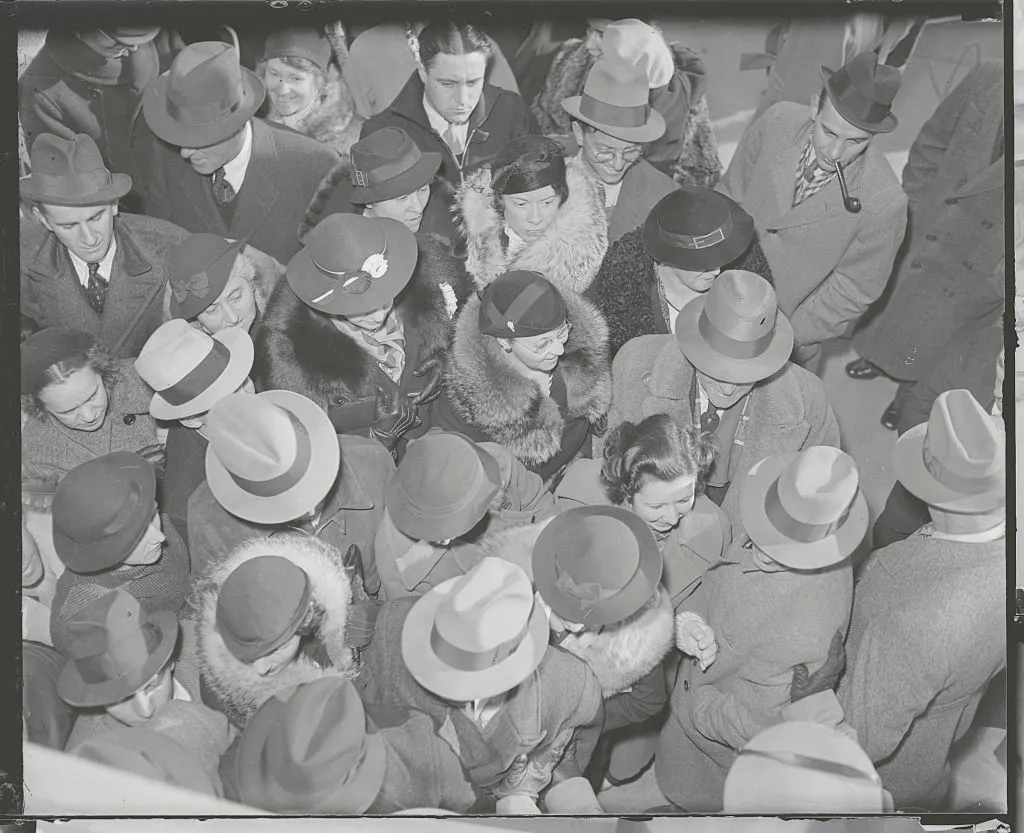
of the crime and murder. Was he telling the truth? I'm Joan Oshera, and for the free press, this is the Lindbergh conspiracies. Episode 4 the Trial of the century. Bruno Hauptman's trial lasted five weeks. It began right after New Year's, January 2, 1935, in Flemington, New Jersey, the county seat. The temperature was often below freezing, yet every night there was a line of shivering people hoping to get in the courthouse for the next day's session. Needless to say, Poppy and I visited Flemington. Standing outside that courthouse, the first thing that hits you is how small it is.
- [03:53]
Joe
You know, for a period of time, this was the center of it all. We can see all the power cables up. I mean, they've installed phone lines in this town just to make it possible that reporters could run out and file as they did back in the day.
- [04:06]
Joan Oshera
Jim Davidson grew up in flemington, and he wrote a book about what the town was like during the trial. He called it when the circus comes to town.
- [04:16]
Jim Davidson
You have to keep in mind Flemington had probably 2,500 to 3,000 people in the town. In the first week, there were 50,000 people there. I talked to a woman from Jersey city that drove all the way out to see where the baby was found and the line. She had to wait four miles to get to the spot on that road
- [04:40]
Joe
where we were just on.
- [04:42]
Jim Davidson
In flemington, the traffic was backed up 20 miles to Somerville to come through town.
- [04:50]
Joan Oshera
The big hotel in town, the union hotel, was a block from the courthouse. The jury was sequestered on the third floor. The press took over the rest of it. At dinner, jurors sat in the dining room, shielded only by a white sheet. They could hear everything the rowdy reporters were saying about Hoffman and the trial. It really wasn't much of a sequester. One local diner served dishes called Bruno gravy, lindbergh steak and gao goulash for Betty Gough, the nursemaid.
- [05:23]
Edward J. Reilly
People were hawking little bundles of blonde
- [05:27]
Joan Oshera
hair as Charlie's hair. Mariah Fredericks is the author of the Lindbergh nanny.
- [05:34]
Joe
Little wooden ladders as souvenirs.
- [05:40]
Jim Davidson
I think I read complete newspaper coverage of 40 different newspapers and just found out. Crazy tidbits here and there. A friend of mine told me his father was a news boy there and would get 25 cents every time he could hook up a hooker with a john. And there were tons of prostitutes running Around Flemington, that is in no books.
- [06:10]
Joan Oshera
HL Mencken, the most influential American critic of his day, called it the biggest story since the resurrection. And right in the middle of all this frenzy, a man's life was going to be decided. Here's Poppy, my producer.
- [06:29]
Joe
So on one side you have the prosecutor, David Willence. He's 39 years old, he's a New Jersey attorney general. He's, he's very ambitious, he's organized, he's brilliant in front of a jury. He had, however, Joe, never tried a criminal case.
- [06:43]
Joan Oshera
Here's Patrick Bambarak, you'll remember, he's the great grand nephew of New Jersey governor Harold Hoffman. David Wilentz's side of the equation as the Attorney General, the prosecutor of this criminal, this evil Bruno Hauptman, ultimately, or whoever this would be that they'd catch. That was the ultimate upside because you have the opportunity then to be the person who is the one who catches the bad guy and sends him to justice. On the other side, Edward J. Reilly, large, boisterous, always in a pinstripe suit with a white carnation. He boasted that he had represented over 2000 defendants and obtained acquittals for most of them. Even if that were true, which it probably wasn't, he was well past his prime. At 52 years old, he was a serious alcoholic. The night before the trial, Reilly was passed out from all his carousing at a New Year's Eve party. He had been hired, it later emerged, by the Hearst newspapers, which had purchased the rights to Anna Hauptman's story and therefore had a direct financial interest in a dramatic, sensational trial. As Anthony Scudutto put it, it was
- [08:02]
Edward J. Reilly
spectacle more than trial. Low camp theater masquerading as justice.
- [08:11]
Joan Oshera
January 3, 1935. The jury's been chosen. The trial opens. Anne Lindbergh takes the stand. On the trial's first day. She's quiet, dignified and heartbreaking.
- [08:25]
Witness/Expert
What else did the child wear that evening?
- [08:27]
Joe
As bedclothes, he had diapers fastened to the small shirt, to the second shirt, and on top of that he had a sleeping suit, a wool sleeping suit.
- [08:37]
Witness/Expert
Did you buy that sleeping suit yourself?
- [08:40]
Joe
I did.
- [08:41]
Witness/Expert
I show you what purports to be a sleeping suit, number two, Dr. Denton, and ask you whether or not you recognize that sleeping suit.
- [08:49]
Joe
I do.
- [08:50]
Witness/Expert
What sleeping suit is that, Mrs. Lindbergh?
- [08:53]
Joe
It is the sleeping suit that was put on my child the night of March 1st.
- [08:56]
Joan Oshera
She identifies her son's sleeping garments. When she gets off the stand, she leaves the courtroom and Never returns.
- [09:05]
Edward J. Reilly
Lindbergh, during the trial, is seen as
- [09:07]
Joan Oshera
a tragic and sympathetic figure. Thomas Dougherty is the author of Little Lindy Is Kidnapped.
- [09:14]
Edward J. Reilly
Ann even more so.
- [09:15]
Joan Oshera
Ann does not break down and sob on the stand, which is actually, in some ways makes it more heartbreaking because the people in the gallery cry for her. And so she's very stoic and very dignified, as is Lindbergh. The next day, Charles Lindbergh is on the stand and what he says matters enormously. Not because of what he saw, but because of what he heard. And also, of course, because of who he was. He's asked about the voice he heard in the cemetery. He's asked since that time, have you heard the same voice? Yes, I have, he replies. Whose voice was it, Colonel, that you heard saying, hey, Doctor? And he says, that was Hauptman's voice. Think about what that identification actually rests on. Lindbergh was sitting in a car at night some distance from a dark cemetery. What he heard was a two second shout. Hey, Doctor. He heard it once, more than two years before the trial. Yet in that courtroom, with all eyes on the most famous man in America, he has no doubt, and it's devastating. Defense counsel Riley Cross examines Lindbergh, tossing out the names of possible alternate suspects. Betty Gow, Violet Sharp, even Condon. Then, inexplicably, he asks a question that practically seals his client's doom.
- [10:52]
Edward J. Reilly
Do you believe that the defendant is guilty? I do.
- [10:58]
Joan Oshera
A first year law student would know never to ask that question. Hauptman audibly groans. January 8th. A man named Amandis Hakhmuth takes the stand. He's 87 years old, small, frail. He lives on the road leading to the Lindbergh estate. He testifies that on the morning of March 1, 1932, the day of the kidnapping, he saw a man in a green car drive towards the Lindbergh home with a ladder in the back. The man, he says, glared at him.
- [11:34]
Witness/Expert
The man you saw looking out of that automobile, glaring at you, is he in this room?
- [11:39]
Kurt Perhaps
Yes.
- [11:40]
Joan Oshera
He points to Haltman. But for Wilentz, pointing isn't enough. He asks the old man to walk across the courtroom and physically touch the defendant. Hochmuth puts his hand on Haltman's knee. At that precise moment, a power failure sends the courtroom into semi darkness and defense attorney Riley quips, it's the Lord's
- [12:03]
Edward J. Reilly
wrath over a lying witness.
- [12:05]
Joan Oshera
It's a great line. And it may have been closer to the truth than anyone realized. Jim Davison drove Poppy past Hawkmuth's House
- [12:14]
Jim Davidson
Amandus Hawkmuth lived right in this house right here, and he was the one who was blind. He was 87, and he saw Bruno Hartman come from Hopewell, turn around and get stuck in his ditch. And initially he said, now this is March 1st, when it's raining outside. He said he was sitting on the front porch of his house here and saw this. Now, who would sit on a cold winter day on the front porch? But that didn't jive with what the state police said. So they said that by the time he got to the trial, he said, well, I was feeding my chickens at five o' clock at night when this car went by.
- [12:56]
Joan Oshera
And here's what the trial record actually shows. Hawkmuth had originally told police he'd seen nothing suspicious the day of the kidnapping. Nothing. He changed his account entirely before testifying. This was not an anomaly. This was a pattern. January 9th, Dr. John Condon, the one and only Jaffsy, takes the stand. He is, of course, one of the central characters in the Lindbergh kidnapping saga. The man who negotiated with the kidnapper directly, who sat with Cemetery John in the dark and who handed over $50,000 in ransom. He identifies Houtman.
- [13:39]
Joe
So the thing is, in September 1934, when he was brought to a police lineup, he had spent half an hour examining the men and couldn't make a positive identification at all. He didn't pick Houtman.
- [13:51]
Joan Oshera
It's kind of unbelievable. There were 13 people in the lineup. He was allowed to go up to each one of them to talk to them, to touch their hands to see if they have certain marks that he supposedly said Hopman had. And then he asked Hopman to speak. And it turned out Hopman had a high pitched voice. And Condon had always said that Cemetery John had a husky voice. Then the cops would ask him over and over and over, isn't it him? Isn't it him?
- [14:15]
Jim Davidson
Isn't it him?
- [14:15]
Joan Oshera
And he said he would just basically say, I can't make an identification, which is kind of incredible. And so the rumor has always been that basically they told him if he didn't identify Houtman, he would be indicted himself.
- [14:35]
Joe
And maybe that's why he picked him on the stand.
- [14:38]
Joan Oshera
I would suspect that might be the case. It wasn't just Condon and Hakhmuth, Ludovic Kennedy and Anthony Scudutto who both dissected the trial for their books. Each went through the FBI files, the New York Police files, the Bronx DA files, and each came to the same conclusion. Witnesses who had initially given descriptions that did not match Houtman, or who had initially reported seeing nothing. By the time of the trial, they'd changed their stories completely. The guy never had a chance.
- [15:12]
Joe
We gotta talk about the gold certificates. The gold certificates were found at Houtman's house. And they're the main, you know, follow the money and it leads to Bruno Hauptman, and it's pretty hard to get away from.
- [15:23]
Joan Oshera
January 11th, a federal agent takes the stand to present what, on the surface is the most straightforward piece of evidence in the whole case. In Hopman's garage, investigators found $14,600 in ransom money. Gold certificates. Remember how the Treasury Department insisted that the serial numbers be recorded before the handover? They were hidden behind a board and wrapped in a carefully constructed wooden structure. This, the prosecution argued this was the smoking gun. You can debate handwriting and wood grain and everything else, but you can't debate whether $14,600 in marked bills were hidden in a man's garage, because they were. Or can you?
- [16:12]
Joe
So the thing is, Joe Haltmann's explanation was consistent from the moment of his arrest to the moment of his execution. He says the money had been left with him by his business partner, the German named Isidor Fish. And Fish had handed him a shoebox when he departed for Germany in December 1933, and Houtman had put it on a shelf in his kitchen closet. He hadn't looked inside it. He didn't know what was in it. But when Fish died of tuberculosis In Germany in March 1934, Haltmann discovered what the box contained. And considering that Fish had owed him $7,500, he kept some of it and he spent the rest. And by the time the police discovered it, he had hidden it in different locations. So that's in the garage and in the canister, the oil canister.
- [16:56]
Joan Oshera
Jim Davidson gave us his assessment of this explanation.
- [17:01]
Jim Davidson
One of the theories is that Isadore Fish was involved in this. He got the money and then he found the money, had the serial numbers recorded, and it was hot money. So what did he do is he unloaded the money and Hartman ended up with it. Although I don't think Haltman bought the money, I think his story that on his going away party that they had for Fish, Fish came in with this suitcase and a box and said, hold these for when I come back. And he put them up on the top shelf of a closet in the kitchen, which was up high. And it sat there for two years until Fish died in Germany and he had owed Haltman $7,000 that Haltman had let him. So when his roof leaks and he gets his box out and he opens it, he sees this money. He did what any red blooded American would do. He hid it and didn't tell his wife.
- [18:03]
Joan Oshera
The prosecution attacked the fish story relentlessly. Relatives of fish actually came all the way from Germany to testify that he'd been nearly destitute. Not a man who could have had ransom money to distribute. A cashier testified that Haltmann had spent ransom bills before Fisch even left for Germany. And most damaging of all, when Anna Hauptman took the stand, she admitted she had never seen a shoebox on the kitchen shelf. But there was something the jury never heard, something the prosecution knew and did not put before them or tell the defense. Wilh built Hauptman's motive around his supposed financial desperation, which then led him to hatch the plan for the kidnapping.
- [18:55]
Joe
So Joe, he puts a Treasury Department accountant on the stand and he tries to build this image of Haltman as broke, a man who'd gambled and lost everything in the crash of 1929. He was desperate for this ransom money, and even when he had, it had continued stock speculation. And by March 1932, prior to the kidnapping, was effectively penniless.
- [19:18]
Joan Oshera
But the FBI conducted its own financial investigation. Their accountant had found something entirely. According to Kennedy, citing FBI records, Hopman's total stock market losses from 1929 to the date of the kidnapping in March 1932 were $363.65. Not thousands. Not ruin. $363.65.
- [19:49]
Joe
So this is where it's a bit dodgy, because the FBI agents who'd found that out had been prepared to testify. And in Kennedy's book, he says, you know, that they had told the prosecution, we're going to tell the truth. And because that's not what the prosecution wanted, they didn't bring them forward to testify in front of the jury.
- [20:07]
Joan Oshera
And of course, Riley for the defense didn't call him either, because, you know, who knows why? But anyway, think about this. The entire motive, the engine of this case, the answer to the question, why would this man do this? Rested on a financial picture that the prosecution's own government colleagues had found to be false. I mean, a man who loses $363 in the crash is not a desperate man. He's not a man at the end of his rope, and he's not a man who needs to kidnap a baby.
- [20:40]
Joe
Yeah, and irrespective of whether you think he did it, it's just such a dirty trick and shows the lengths they're willing to go to in order to convict him and execute him.
- [20:49]
Joan Oshera
Here's something else, Poppy. The jury also didn't know that the initial FBI reports had concluded that the kidnapping required at least two people. Evidence that quietly contradicted the prosecution's lone wolf theory.
- [21:04]
Joe
Yes, and all the investigators were working on that theory until they got Houtman. And after that, it just became a goal to convict him and execute him. And all of that stuff went out the window.
- [21:16]
Joan Oshera
There's one more thing about the gold certificates that rarely gets discussed. Before Hoffman's arrest, large amounts of ransom money had been appearing in circulation, spent on the Lexington Avenue subway line at stores in the Bronx, in the German neighborhood of Yorkville. It could have been Hoffman for sure. Or not. Before Hoffman ever spent a single bill, someone deposited nearly $3,000 of the ransom money at a Manhattan bank under the name of J.J. faulkner, a name that matched no one connected to Haltman. That money was never traced back to anyone. The person was never identified. Before Hoffman's execution, Governor Hoffman received a letter from someone claiming to be Faulkner and saying the wrong man had been convicted. That lead was never seriously pursued.
- [22:13]
Joe
And Remember, Joe, roughly $35,000 of the original ransom was never found at all.
- [22:20]
Joan Oshera
January 11th to January 16th. Five full days devoted to handwriting testimony. Eight experts for the prosecution, one for the defense. And from the moment the first expert took the stand, the jury was looking at the blow up photographs of letters and words, comparing loops and curves and backward ends, and being told that only one person in the world could have written those 14 ransom notes. Bruno Richard Hauptmann. The handwriting evidence was presented as Science in 1935. It was treated as something close to settled fact. But the story behind these samples, how they were collected, what the prosecution did with them and what was suppressed, is one of the most troubling aspects of the entire trial.
- [23:12]
Joe
Okay, so this is how Haltman's handwriting samples were actually obtained. On the night of his arrest, he was taken to the Greenwich street police station in Manhattan. And there, over a number of hours, he was made to write out the contents of the ransom notes. And he was made to do this repeatedly. And by many accounts of officers and so forth of different historical record. He was instructed not just to copy the words, but to reproduce the specific misspellings that appeared in the notes. So for hour, he had it as O U E R. Money is spelled M O N Y. Note was spelled not bored for boat. I mean, clearly not as first Language English speaker. And according to the FBI agent Leon Truro, Haltmann was told to make his writing look as much like the writing in the ransom notes as possible. So any testimony that came from what he produced at that time is obviously very dodgy, very dubious and was done presumably under threat from violent officers.
- [24:12]
Joan Oshera
Poppy, that was an excellent explanation. But I think there's another way of saying this, which is to say the handwriting analysis was total bs. Those coached dictated samples produced under duress in the middle of the night with police instructing him to mimic the very quirks they were supposed to prove his guilt. Were the samples submitted to the jury as state's evidence? Eighteen months later, it gets worse. The prosecution's own top handwriting analysts, according to Kennedy and Skidutto, had once again initially concluded that Hoffman did not write the ransom notes. Just like the other witnesses, they changed their conclusions. Before the trial and the defense. Riley had retained multiple handwriting experts of his own. Several, after examining the notes against Hopman's known writings, declined to testify. Two others were retained and prepared to appear. Inexplicably, they were never called. One expert, John Trendley, did take the stand for the defense. And he testified that despite the spelling similarities he did not believe Hauptman had written the notes. He was largely ignored. The other experts who could have supported this view sat silently in the gallery, unused. Instead, Riley seemed to try and make the time he had with this expert all a moment to point out the large budget the prosecution had at its disposal.
- [25:49]
Edward J. Reilly
I submit his experience of 387 cases covering a period of 49 years. And the court will recall we didn't have the opportunity to send all over the world and examine into the records of the $150,000 case prepared by the state of New Jersey. And the experts brought in here, they brought men in here that we did not know five minutes before they took the stand they were going to be called. I ask that the court strike from the record the remarks of counsel. I think they are highly prejudicial about the state's $150,000 case and its experts. I will strike out the $150,000 case.
- [26:26]
Witness/Expert
The jury will of course disregard that.
- [26:28]
Edward J. Reilly
As a result of your study, are you in a position to render an opinion as to whether or not Hauptman wrote the ransom notes? In my opinion, he did not.
- [26:39]
Joan Oshera
What no one in the courtroom told the jury was how these samples had been produced. What no one said was that the handwriting itself had been dictated to Houtman by the cops. There's Something else worth understanding about handwriting analysis as a science. Unlike DNA, unlike fingerprints, it has never been subjected to rigorous statistical validation. There is no established error rate. There is no peer reviewed standard for what constitutes a match. In 2016, eight decades after the trial, the President's Council of Advisors on Science and Technology issued a report finding that many forensic disciplines, including handwriting analysis, lack sufficient scientific foundation to be considered reliable evidence. A court today would scrutinize this testimony far more carefully than Judge Trenchard did in 1935. A court today, in fact, might not admit it as evidence at all.
- [27:48]
Joe
So, talking of pseudoscience, the next kind of scientific evidence that is presented is all about the wood expert. And you know how much we love ladder and wood experts in this podcast.
- [27:59]
Joan Oshera
Joe January 23rd. This is the moment the prosecutor has been building Dorrit's Arthur Kohler, a wood expert, takes the stand. Kohler was the first forensic wood scientist ever to testify at a murder trial. He spent years examining the kidnap ladder. He traced the wood grain through mills, through shipments, through lumber yards. He had concluded that the wood from the ladder was purchased from a yard in the Bronx near Hauptman's house. But the kicker was the now famous rail 16. He told the jury that one rail of the ladder, rail 16, had not been purchased from any lumber yard. It had come from somewhere much closer to home. It had been cut, Kohler said, from a board in the attic floor of Hoffman's building.
- [28:55]
Joe
So Koehler gets on the stand and he claims that the growth rings in rail 16 showed an exact match of curvature, number and width with the attic floorboard. And he calculated the chances of this exact set of circumstances occurring twice. As in the chances of it just being random was 1 in 10, quadrillion.
- [29:15]
Joan Oshera
Poppy and I went to Houtman's house in the Bronx with ex cop Greg Algren and Renell Delmont. This is where he built the garage with the permission of the owner. He didn't own this house. He rented the top floor. There were two other families living in the house. The landlord, The Rauch family, Mrs. Rauch and her son lived beneath him. Those windows are his bedroom. The prosecution called it the single most powerful piece of evidence in the entire case. Several jurors after the verdict said Rail 16 was what convinced them.
- [29:52]
Joe
And also, Jo, it gets even more dodgy because this floorboard that's, you know, used as a one in a quadrillion chance match had been discovered by a Lt. Louis Bonman of the New Jersey State Police. But at the time, he found it the attic had already been searched 19 times by 37 police officers from New York and New Jersey and the FBI, and none of them had noticed a missing floorboard.
- [30:19]
Joan Oshera
Believe it or not, Bornman had moved into Hopman's apartment after the arrest, with the defense team locked out. And then, alone in the attic, he made his miraculous discovery. When the physical evidence was scrutinized, I mean really scrutinized, the problems multiplied fast. The floorboard in the attic had 7 knots. Rail 16 had 3. Rail 16 was actually 1/16 of an inch thicker than the attic board, making a precise match between the two essentially impossible. New Jersey Governor Harold Hoffman looked at it, and he openly stated that this evidence was false.
- [31:03]
Joe
And, Joe, now we get to talk about the four nail holes.
- [31:07]
Joan Oshera
Here's the story of the nail holes. The four nail holes in rail 16, according to Kohler, were what made the match irrefutable. They lined up perfectly with holes in the attic beams.
- [31:19]
Edward J. Reilly
I made the investigation on October 9,
- [31:22]
Witness/Expert
1933, the first time having taken off this section. What did you find?
- [31:27]
Edward J. Reilly
I found that the nail holes in it corresponded exactly with the four nail holes in the joists in that attic and the grain of the wood in that rail corresponding exactly with the grain of the wood of the board next to it.
- [31:38]
Joan Oshera
But a fingerprint expert testified that when he examined Rail 16 for fingerprints on March 13, 1932, two weeks after the kidnapping, there was only one nail hole. Governor Hoffman later produced a photograph of Rail 16 from March 2, before the investigation had even properly begun, in which there were no holes at all. Ludovic Kennedy made one more argument, a logical one, a carpenter's argument. Hauptman was a professional. He kept lumber in his garage, and there was plenty there. If he needed wood for a ladder, why on earth would he climb into his attic, remove the linen from a closet, clamber up the stairs, push open a trap door while carrying a saw, a hammer and a chisel, and then start chopping up his landlord's floor.
- [32:35]
Joe
I guess the idea, though, Joe, if you were trying to prosecute Haltman, was that he didn't have a lot of money and wood was expensive. And that's why he broke into his landlord's attic to steal a floorboard.
- [32:45]
Joan Oshera
Oh, come on, Poppy. January 24th. The prosecution rests. The state has buried Haltman under a mountain of eyewitness identification, handwriting analysis, wood science and ransom money. The defense's opening statement contains one remarkable line. Defense attorney Lloyd Fisher, who's working with
- [33:08]
Edward J. Reilly
Riley, tells the jury, no case in all of History was as badly handled or as badly managed.
- [33:14]
Joan Oshera
He was talking about the prosecution's investigation. Of course. He may, without knowing it, have also been describing how many defense January 28th, Bruno Hauptman takes the stand. He's calm, correct, occasionally defiant.
- [33:35]
Edward J. Reilly
Haldeman, were you ever in Hopewell in your life? I never was. On the night of March 1, 1932, were you on the grounds of Colonel Lindbergh at Hopewell, New Jersey? I was not. On the night of March 1, 1932, did you enter the nursery of Colonel Lindbergh? I did not. And take from that nursery Charles Lindbergh Jr. I did not. Did you leave on the window seat of Colonel Lindbergh's nursery a note? Well, I wasn't there at all. You never saw baby Lindbergh in your life, did you? Never saw it.
- [34:07]
Joan Oshera
He denies everything. He explains the ransom money. It was left with him by his business partner, Isidore Fish in a shoebox on a kitchen shelf. Then it's time for Wilentz to cross examine him. He is relentless. There's some archive footage illegally recorded at the time and played on newsreel. When you were arrested with this Lindbergh ransomware, you had a twenty dollar bill. Lindbergh ransomw. Did they ask you where you got it? Did they ask you?
- [34:39]
Joe
They did. Did you write him or did you
- [34:41]
Joan Oshera
tell him the truth?
- [34:43]
Joe
Did you.
- [34:44]
Joan Oshera
Did you lie to him or did you tell him the truth?
- [34:46]
Joe
I said nothing to him.
- [34:48]
Joan Oshera
You lied, didn't you?
- [34:49]
Jim Davidson
I did, yes.
- [34:50]
Joan Oshera
In case you couldn't hear that he acknowledges that he lied about where the $20 came from that he used to pay the gas attendant. It was devastating in front of the jury. It's one of those handful of moments that sealed Hopman's doom. This episode is brought to you by Fox 1.
- [35:12]
Witness/Expert
Watch all 104 matches of the FIFA
- [35:15]
Joan Oshera
World cup live in 4K for just
- [35:17]
Witness/Expert
$19.99 a month with 3 days free. Build your own multi view, choose up to three streams and follow players spotlights. Stay on top of every moment with
- [35:27]
Joan Oshera
live stats, highlights and instant replays.
- [35:29]
Witness/Expert
The FIFA World cup streaming live on Fox One offers a subject to change. See fox.com for complete terms and conditions.
- [35:37]
Joan Oshera
When you finally find your thing, you
- [35:40]
Edward J. Reilly
want the whole world to know about that thing. So you use a thing called Canva
- [35:44]
Joan Oshera
to make it an even bigger and better thing. Whether you want to create flyers for that thing, make presentations for that thing,
- [35:51]
Edward J. Reilly
or design merch for that thing, you can do anything so people can see your thing.
- [35:57]
Joan Oshera
Feel Your thing, Love. Your thing. The next thing you know, it's a thing, Canva.
- [36:04]
Edward J. Reilly
The thing that makes anything a thing.
- [36:08]
Joe
Joe, I want to talk about Anna Haltman's testimony. Because I'm a bit obsessed with her. I always picture when I'm thinking of the trial. Her hauled up with this press person going to trial every day. Her husband's the most hated man in America. She's got a young kid. And yet she tries to do her best on the stand. But she doesn't do him any favors.
- [36:29]
Joan Oshera
January 30th, Anna Haltman takes the stand. Under questioning, she admits she never saw a shoebox on the kitchen shelf.
- [36:38]
Witness/Expert
Now, this broom closet we talked about, that you just showed to the jury. Was a closet in which you kept. It was in the kitchen, wasn't it? Yes. And it was a closet to which you went every day, wasn't it?
- [36:52]
Joe
Yes.
- [36:53]
Witness/Expert
Every day you went to that closet. And you never saw any shoebox on the top shelf, did you?
- [36:58]
Joe
I don't know what was on the top shelf.
- [37:01]
Witness/Expert
You never saw a shoebox there, madam, did you?
- [37:04]
Joe
I didn't.
- [37:05]
Witness/Expert
From November 1933 or December 1933, the months and the day that Mr. Fish was last at your home until September 1934, you never saw a strange shoebox on the top shelf of that closet, did you? I never had anything to do with the top shelf.
- [37:25]
Joe
I didn't use it for my. For myself.
- [37:29]
Joan Oshera
It was a serious blow to her husband's alibi that the money, the $14,000, had been sitting in the kitchen for two years. As a homemaker, she was his key witness to this version of events. And then there was this reporter. Jeanette Smits had lived with Anna for five months covering the trial. The following November, she published an article in True Detective Mysteries.
- [37:56]
Joe
That noon, over the lunch table, Mrs. Huupman seethed. She cried out, he was only supposed
- [38:02]
Joan Oshera
to get the money.
- [38:03]
Joe
When I started to question her, she closed her lips and refused to talk anymore. She never repeated that strange remark.
- [38:10]
Joan Oshera
Could he have told her he'd been promised a cut of the ransom without being involved in the kidnapping itself? Was this just the garbled frustration of a terrified wife? Or was it something more? Anna Hauptman maintained his innocence until the day she died in 1994, at the age of 95. January 31st. Riley, having promised to name the real kidnappers and produced compelling alibi witnesses, instead produces a parade of crooks, con men, and what the trial record describes charitably as unreliable characters. Houtman himself, watching from the Defense table was heard to mutter.
- [38:54]
Edward J. Reilly
Where are they getting these witnesses? They're killing me.
- [38:59]
Joan Oshera
So here's what the jury in Flemington never knew. The jury didn't know that a witness named Hans Kloppenberg had wanted to testify that he'd been in the Haltman's apartment on the night Isidore Fish arrived carrying a shoebox. The prosecution threatened Kloppenberg with arrest if he took the stand. He did testify, but as he later put it, he was so frightened that he never mentioned the shoebox. The jury didn't know about the footprints found outside the nursery window on the night of the kidnapping. Police never measured them, never made casts. They would later establish that a plaster cast of Cemetery John shoeprint made during the ransom negotiations was too small to have been made by Haltman's foote. And here's a number that perhaps more than any other captures what happened in the courtroom. 90,000. That is the number of pages of evidence that the state withheld from the defense. We know this because a retired California judge named Lisa Pearlman wrote a book about the case in 2020 and she went through the archive, all 90,000 pages. It included the testimony of three witnesses whose accounts directly contradicted the state's theory of the case. February 11th. Edward J. Reilly gives a five hour defense summation.
- [40:23]
Edward J. Reilly
They would have you in one breath believe that this man Hauptman was a mastermind, that he planned this himself. And the next minute they would have you believe that he was the worst fool in the world, that he was dumb, that he didn't know anything. He would wear gloves making a ladder so his fingerprints wouldn't be left behind. And he would sit an hour and a half talking to Condon with his face exposed. In one, the careful mastermind. In the other, the perfect fool.
- [40:54]
Joan Oshera
He starts strongly casting suspicion on everyone except Houtman himself.
- [40:59]
Edward J. Reilly
They had a chauffeur and a second chauffeur who was afterwards replaced. And now he is a watchman. They had five or six maids. They must have had gardeners. What do you know about the antecedents of those people?
- [41:15]
Joan Oshera
Nothing.
- [41:17]
Edward J. Reilly
How do we know who Betty Gough talked to when she got the message Tuesday afternoon from Mrs. Lindbergh? Come over. The baby is not well, but she never communicated with Haltman. So that I say nobody in God's world knew that baby was going to be there Tuesday night. But this gal girl, ask yourselves the question from the evidence. Who besides Mrs. Lindbergh knew they were going to stay Tuesday night? And then you will come back the same as I did. And say Betty Gal and I don't know how many others she may have told over at the morrow servants quarters. Now, if, ladies and gentlemen, nobody knew where the colonel was or when he would be home. And with regularity the family always return to Inglewood on Sunday night or Monday morning. How can we place that knowledge in Haltman's possession? You can't.
- [42:16]
Joan Oshera
Then he breaks for lunch. When he returns four drinks later to give the rest of his summation. He wanders aimlessly until he finally sits down. To the relief of everyone in the room, including his own co counsel.
- [42:31]
Edward J. Reilly
I believe this man is absolutely innocent of murder. In closing, I wish to say to you that I appreciate the care and consideration that you have given us. And the patience that you have given to this case. And may I just extend to the distinguished jurist on the bench at this time my thanks for his courtesy. And to all the lawyers connected with the case. And I feel sure in closing, even Colonel Lindbergh wouldn't expect you and doesn't expect you to do anything but your duty under the law and under the evidence. May I say to him in passing that he has my profound respect. And I feel sorry for him in his deep grief. And I am quite sure that all of you agree with me. His lovely son is now within the gates of heaven.
- [43:21]
Joan Oshera
February 12th. David Wilentz gives his five hour reply. It is crisp, organized and devastating. He finishes with a call for the death penalty.
- [43:33]
Witness/Expert
What does life imprisonment mean? Nothing. Maybe in 15 years he will walk the streets again. We have proven it overwhelmingly, conclusively, positively. Now jurors, there is no excuse. You would never forgive yourself if you didn't do it. You wouldn't be happy. You wouldn't feel right. Honestly, you wouldn't. You convict this man of murder in the first degree. The grand jury of the county of Hunterton had the courage to do it. The state of New Jersey has the courage. They stand here unafraid and ask for the death penalty. Why? Because they know they are right.
- [44:13]
Joan Oshera
But he also does something in closing that the judge should never have permitted. And that Riley should have objected to.
- [44:20]
Witness/Expert
Public enemy number one of the world. That's what we are dealing with. You are not dealing with a fellow who doesn't know what he is doing. Take a look at him as he sits there. Look at him as he walks out into this room. Panther like, gloating. Feeling good. Certainly he stilled this little child's breath right into insensibility. Or right in that room. Whether it drew another breath or not doesn't make any difference. That child never could make an outcry. The smudges on the bed sheet cry out. Evidence of the fact that Betty Gow testified to the fact that the child didn't cry out when it was disturbed. Yanked.
- [45:01]
Joan Oshera
How?
- [45:02]
Witness/Expert
Not just taken up. The pins are still left in the bed sheets. Yanked. And its head hit up against that board. Must have been hit. He couldn't do it any other way. Certainly it must have hit up against that board. Still no outcry. Why? There was no cry left in the child. Did he use the chisel to crush the skull at the time or to knock it into insensibility? Is that a fair inference? What else was the chisel there for? To knock that child into insensibility right there in that room. Council wants to know why it didn't cry out. There is the answer for you.
- [45:39]
Joan Oshera
He introduces a brand new theory, never argued during the trial, that Hauptman killed the baby with the chisel. No motive given, no evidence supplied. Just an image planted in the jury's mind at the moment when the defense no longer has an opportunity to respond. It made my blood boil when I read about this. This is not what's supposed to happen in a court of law. The final summation, the final speech. You're only supposed to use the evidence that's been brought up in the trial. You're never supposed to bring up new evidence, new theory, new anything, and get away with it. But he did.
- [46:17]
Joe
Yeah, I think this is a really big deal because up until that point, there was the theory that the baby had fallen accidentally from the ladder. But by making it seem like it was possible that he intentionally killed the child, it made him a total monster. That would probably have left the jury thinking he deserved to be found guilty and deserved the death penalty.
- [46:39]
Joan Oshera
February 13, 1935. The judge gives the jury their instructions. It is completely biased against Houtman.
- [46:48]
Joe
I actually do think they got one
- [46:49]
Edward J. Reilly
of the right people.
- [46:50]
Joe
But they did want to get this trial over and done with. They did want a particular verdict. We can see that, you know, right there in the trial transcripts.
- [47:01]
Joan Oshera
Candace Fleming. The fact that Lindbergh sat there every single day in the front row so
- [47:07]
Joe
that everyone remembered that the great Colonel Lindbergh's this was his child certainly didn't help.
- [47:14]
Joan Oshera
The jury was also undoubtedly affected by the media coverage. Throughout the trial, the newspapers wrote about Hauptman as if he was already convicted. Headlines like Evidence Dooms Houtman Case Closed. Proof Piles up against Suspect and Slayer's Stony stare. Chill's courtroom. It only takes them 12 hours of deliberation to find him guilty of murder in the first degree. Houtman is sentenced to die.
- [47:45]
Jim Davidson
I have a friend of mine whose grandfather is on the jury. He is adamant that Bruno Hartmann was guilty. Totally adamant. And no matter what other book I give him to read, it doesn't matter. But I think the view has changed depending on what decade you're looking at. Like in 1935, after the trial, everybody in the country, with the exception of Germans living in the Bronx, thought Bruno Haltmann was guilty. There was absolutely no dissension that.
- [48:19]
Joan Oshera
Almost 90 years later, the physical evidence from that trial, the ransom envelopes, the ladder, the notes, everything sits locked in a state police archive in New Jersey, never tested with modern DNA technology, never subjected to the forensic tools that in case after case have overturned convictions that once seemed airtight. There's that lawsuit right now trying to change that. And the man behind it is the same lawyer, Kurt. Perhaps we heard at the start of this episode the kid from New Jersey who read a book when he was 13 years old and never quite got over it.
- [48:57]
Kurt Perhaps
I think when we reflect back and if we think of the old adage that history is written by the winners, it's largely true. And I think that when we reflect back on history and take a look deeper at different topics, our history is super ugly. It's super nasty. This happened during the Great Depression and the case happened at the height of the rise of anti German feeling, with the rise of Hitler in Germany going on. And it happened to the greatest hero in America, somebody who was on top of the world. And it's weird how the public likes to take down national heroes or people who are on top of the world at different times in history. What we've learned later in life about Charles Lindbergh is really ugly, messy stuff. And yet the generation that grew up with him idolizing and worshiping the guy, they never got to know that. So to me, solving this mystery would help shine a light on other things in American history to look back on ourselves. Did we get it right? Why should we jump to conclusions and instantly point and blame? The second they caught Houtman, this case was done.
- [50:14]
Joan Oshera
But if Houtman did not kidnap the Lindbergh baby, who did? Next episode, we dig into the alternate theories. Athletic Brewing Company crafts award winning non alcoholic beers for those who want to
- [50:37]
Witness/Expert
be part of every round.
- [50:38]
Edward J. Reilly
With over 185 flavor awards, they're exceptional NA beers that fit your lifestyle and any social occasion. Summer's full of good times, and Athletic fits right in.
- [50:48]
Joan Oshera
Go to athleticbrewing.com to have brews delivered
- [50:51]
Edward J. Reilly
to your door, or find them at
- [50:52]
Joan Oshera
a bar, restaurant or store near you. Near Beer Athletic Brewing Co. Fit for all times.