← The Naval Aviation Ready Room Podcast with Legends and Leaders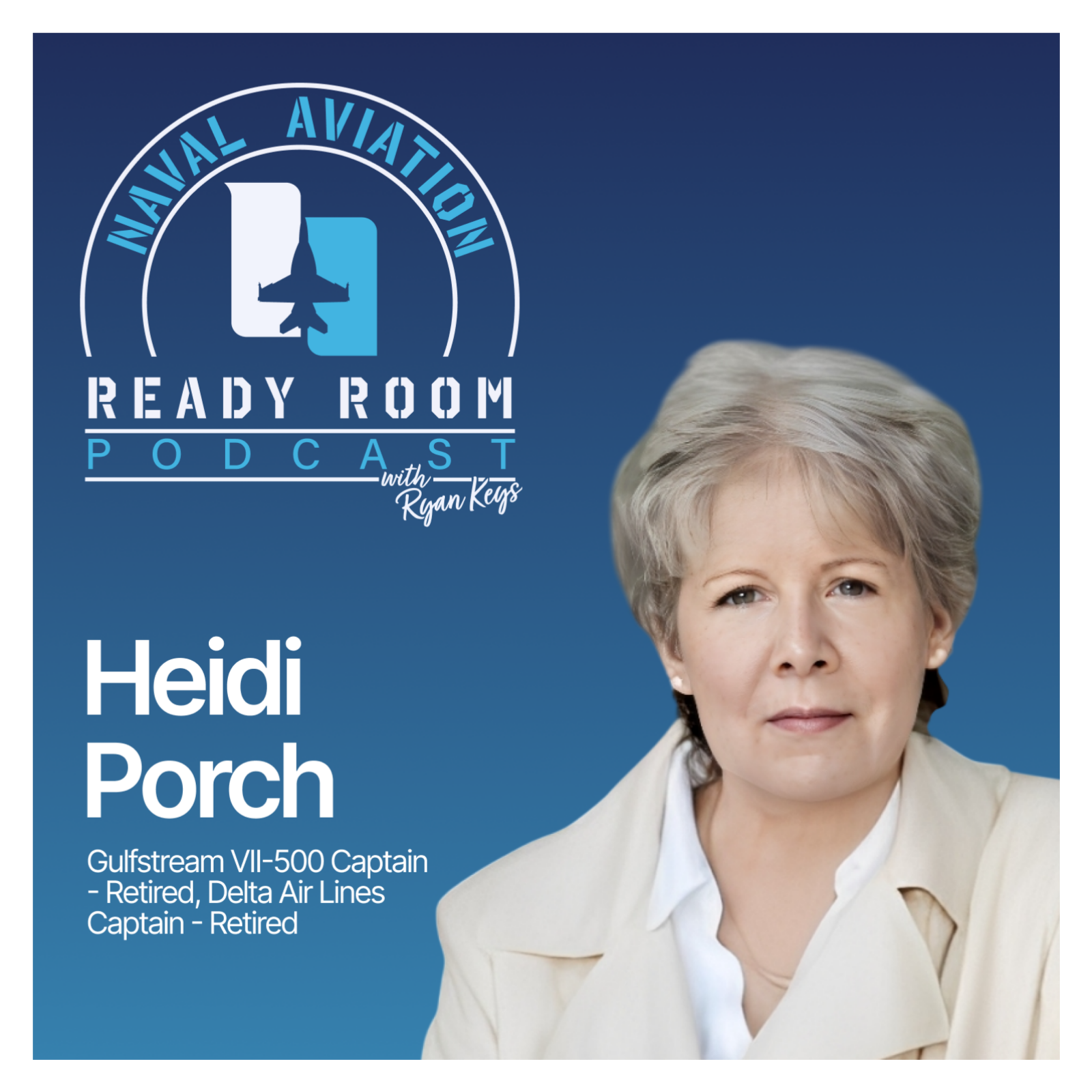
The Naval Aviation Ready Room Podcast with Legends and Leaders
540 Miles From Land: A Solo Pilot’s Nightmare and Miracle Rescue
01:05:02
Loading summary
Transcript306 lines
- [00:01]
A
So to have the raft in my lap and my seat all the way back, I could no longer reach the rudder pedals, so I had no yaw control left or right. I could not see over the nose anymore and I'm blind off the right side because of the tanks and the radios. So all I had was the left window.
- [00:20]
B
X ray one, radio check, one, two. Welcome to the Naval Aviation Ready Room podcast where the stories, leadership and leading edge technology of naval aviation come alive. Hosted by retired Navy Captain Ryan Keyes, this podcast takes you beyond mere museum artifacts as he delves into the personal stories, pivotal decisions and state of the art hardware that define the world's most prolific aviation force. Today's episode takes us into the intersection of aviation resilience, survival under extreme conditions, and the pioneering spirit required to break barriers in a male dominated industry. Joining us in the radio room is Heidi Poarch, an airline captain, author and aviator whose career spans more than three decades and includes one of the most harrowing survival stories you'll ever hear. From the age of six, Heidi knew she wanted to fly at a time when women weren't even being hired by major airlines. She began her career working as a line attendant at a glider port, eventually building flight time, towing gliders and ferrying aircraft across the Pacific. In 1984, during one of those ferry flights, Heidi experienced every pilot's worst nightmare. An engine failure 540 miles from land in the Pacific Ocean. Forced to ditch her aircraft, she survived the crash, spent nine hours alone at night in a life raft, and was ultimately rescued with the help of a Navy P3 squadron. She went on to build a remarkable 35 plus year airline career flying aircraft including the DC9, Airbus A320, A330, and the Boeing 747 the Queen, eventually retiring as the international widebody captain for Delta Airlines. Her story is captured in her memoir, Ditching the Sky, A memoir of triumph against all odds. A powerful testament to resilience, courage and perseverance. Heidi, welcome to the Ready room.
- [02:02]
A
Thank you. This is an honor.
- [02:04]
B
So a lot of firsts with this podcast. Okay, so first woman aviator that we've had on the podcast.
- [02:11]
A
Oh my goodness.
- [02:12]
B
Yep. Which is awesome. And then first at sea survival story that we've had as well. We had one Joan who ejected and was picked up short thereafter, but no one who had to survive in a raft for hours at a time as well. So that is incredible. And then we are. This is the book we're going to talk about today. This is your story. Ditching the sky. I just happened to hear Heidi on another podcast. I learned about flying from that. She was on that, told her story. I said, oh, my gosh, this would be incredible to have her. So I just reached out to you on LinkedIn. I found you on that. And we connected, had another call. And then this was the other first, was you're the first person who's ever traveled to come to the podcast as well. Everyone else has been in Pensacola locally or they've come to Pensacola for something else. And then we'll do the podcast. You're the first one who's ever, like, come here directly for you, travel all the way from Northern California to come and sit in the Ready Room, which is an honor just for you. To be able to do that and take your time to be able to do that is just incredible. So thank you for doing that.
- [03:17]
A
Well, I have a soft spot in my heart for the Navy, so. So as you can see.
- [03:22]
B
Yes. So as you can't see, maybe if you're listening to it, she actually is wearing a pair of gold pilot wings right now. Although she is not a Naval aviator, she is an honorary Naval aviator. They would give them to her by VP91, correct?
- [03:35]
A
Correct. They had a ceremony for me at Moffett Field and presented me with a citation from the Department of the Navy and a set of wings and made me an honorary Naval aviator. So this is the first time I've worn them since they were presented to me.
- [03:51]
B
No kidding.
- [03:52]
A
I thought, what better place than in the Ready Room at the National Naval Aviation Museum? So I hope it's okay with all the regular Navy guys out there.
- [04:04]
B
It's okay for sure. Yes. For me, it definitely is. I'm honored to have you here today.
- [04:09]
A
Thank you.
- [04:10]
B
So, yeah, let's go back in time. And my idea today is to, like I said, talk about the survival experience that you had in the incident for the majority of the time. But then I also do want to transition to your life as a commercial airline pilot, because I think that's amazing, too. We've had a lot of other commercial airline pilots here who are either Air Force aviators or naval aviators, one or the other. And then went and did that after their time or during their time. So tell me about when I first heard your story to me ferrying a Cessna 182 across the Pacific Ocean to New Zealand. That was at the destination. Right. Was New Zealand. Just as a guy who's flown over water in a helicopter for many years. Right. The job of an aviator to do that land on ships. Was it just the pure aspect of building time?
- [04:54]
A
Initially, when I went to work for this ferry outfit, Trans Air, I was doing domestic ferries from the Cessna factories in Wichita to California. And I said, I will do as many of those as you want, but don't ever ask me to go across the water. You guys are nuts.
- [05:12]
B
Yeah, it sounds a little crazy to me, I'll be honest with you. But okay.
- [05:17]
A
And over the next few months, you know, I got to know the other guys that were doing the over water flying. And I have always had a fascination with World War II. And I was hearing about the islands that they'd stop in in the Pacific. Samoa, you know, Pango Pango and Majuro and Ponpei. All these great places. And I thought, you know, it'd be fun to do it just once, just to say I've done it just one time. See these places and you either fall in love with it or you hate it. And I loved it. And so after I had done about 32 domestic ferries before I did my over water.
- [05:54]
B
And then how many over waters did you do prior to the incident?
- [05:57]
A
Nine and a quarter.
- [05:58]
B
Okay, so nine full ones.
- [06:02]
A
I was on my 10th delivery, but if you count each leg, it's basically over 60 ocean crossings because the shortest leg we flew was over 600 miles. The longest leg was between Hawaii and Pango Pango, and that was 2,256 miles where you didn't fly over any land.
- [06:24]
B
Okay, so I'm trying to wrap my head around this. So I have a little time in 172s and PA28s and from reading the book and listening to your podcast. So you would put spare fuel tanks behind you in the seat behind you in the seat next to you in the co pilot seat and then have an HF radio that was also over there. So you had enough gas. So you would take off from where in California?
- [06:48]
A
Typically Oakland to Honolulu was the first leg and that was, let's say a 182. That would be a little over 17 hours.
- [06:57]
B
17 straight hours?
- [06:58]
A
Yes.
- [06:58]
B
By yourself. So you had a wingman though on this trip? Right.
- [07:02]
A
We tried to go across in groups whenever possible, but sometimes I did a couple of solo crossings or you'd be mismatched. So a single and a twin would go. So the single would take off a couple of hours ahead, the twin would take off. At least that way you had someone to talk to most of the way.
- [07:20]
B
So you would fly 17 hours solo over water?
- [07:25]
A
Correct.
- [07:25]
B
And I mean 17 hours. There's not 17 hours of sunlight in a day, but I know you're traveling that way, so you get a little bit more time of sun. But you would take off maybe before the sunrise and land prior to sunset. Around sunset, but it depends.
- [07:40]
A
We would work backwards from the time we wanted to land in American Samoa, wanted to land there around 4 in the afternoon. So then you work backwards as to what time you'd take off in California because we were under Part 91 Fars, so there was no rest requirements or anything like that. And so typically we would take off from California anywhere between 2 and 4 in the morning, depending on the model airplane, and get into Hawaii mid afternoon, get something to eat, file a flight plan, get some sleep and be airborne by 3 or 4 the next morning. For Pango Pango.
- [08:20]
B
Oh, my gosh.
- [08:20]
A
Yeah.
- [08:21]
B
I assume you had snacks and water when you were flying.
- [08:24]
A
Yeah, I was really worried my first trip about staying awake and so I had a big thermos of coffee. But I talked to a doctor afterwards and he said you are awake for such a long stretch of time and the effects of caffeine will wear off before you can sleep and you'll be more tired, so don't drink coffee. So I would take sips of water and fruit juice, boxes of fruit juice, nuts, cheese, things like that. I paste my fluids.
- [08:58]
B
I mean, that's the human condition, right? I mean, it's something you have to deal with, especially as pilots being trapped in a little tube the whole time. So, yeah, we were lucky. In age 60, at least I flew in, we had a relief tube because it's unpressurized. Right. And so, yes, I'm honestly still trying to wrap my head around the fact. So how many hours did you need? So like I said, this is 1984, correct, or 84? 85.
- [09:22]
A
Yeah. I went to work for a trans here in 82.
- [09:25]
B
Okay. How many flight hours was the standard before you could really start applying to an airline?
- [09:32]
A
Most airlines wanted each airline varied, but around 2500 hours, something like that, it's
- [09:41]
B
about 1500, I think is the minimum right now for a lot of the airlines. So you need a way more hours. So you need to do these cross. You need to do these trans oceanic flights in order to get those hours a lot faster. Because you're not going to get it from going from Wichita, Kansas to Minneapolis, Minnesota.
- [09:57]
A
Right, right. Or flight instructing.
- [09:59]
B
Oh, yeah, right.
- [10:00]
A
As a sea up either. So we'd fly about 55 hours and four days.
- [10:05]
B
Oh my gosh. That's Amazing. Okay, so take me on all those nine prior legs like you said, where they have different destinations and then kind of talk me through how you would travel there.
- [10:15]
A
The majority of the planes were going to Australia or New Zealand to Cessna distributors because they don't make airplanes down there. So we had a contract with the Cessna distributors for both countries and delivered everything from 172s up through the Light Twins. And although because I started in at a glider port, I had a lot of tail dragger experience. And so I was a lucky pilot to ferry an AG Husky, which is a sustenance crop duster.
- [10:50]
B
Oh my gosh, that's awesome.
- [10:52]
A
To Australia. That was a six day trip. And I went. I was paired up with a 172. We converted the hopper into a fuel tank. Oh, wow. Yeah. Otherwise there's no way you could carry enough fuel.
- [11:05]
B
Well, so the only AG planes I know right now. Right. Is a single piloted one sitting up high. I think it even has a like a PT6 on it now. Right, but is that what it was too? Essentially it was single piloted, single pilot,
- [11:17]
A
tail dragger, big long nose. And it was fun to fly. But that was my longest flight ever. That was 20 and a half hours from California to Hilo because Hilo's a little closer than Honolulu. And I used a bungee cord for my autopilot.
- [11:34]
B
Hold the yoke in place or the stick in place.
- [11:36]
A
Yeah. I'd hook it over to the right side of the instrument panel, wrap it around the stick once and hook it to the left side. But it was a little bit too tight. And so slowly the nose would pitch forward. But it allowed me to let go for like 45 seconds at a time. So I could take a position report and plot on the chart and all of that. But that was a long flight.
- [11:59]
B
So not only are you flying the aircraft, I assume it's probably in okay weather the majority of the time.
- [12:06]
A
Yeah, we got really good weather briefings. We checked the wind trends. The winds were the big item. And we had a chart so we knew what our max overall headwind component would be for each model of airplane. So like a 172 could take 18 knots on the nose and still be able to make it to Hawaii.
- [12:27]
B
Wow, that's really good. So not only are you dealing with weather, but then, like I said, just the fatigue of doing it. But then now you're having to, like I said, do position reports on your HF radio to atc before gps, before ADS B, before anything like that. Yeah, I mean, I know. So yesterday when we were walking around, I think Diana was walking around and showed you the NC4. Right. The big aircraft that the first one to fly across in the Atlantic. I mean it was a huge aircraft. They stopped all time. It's a flying boat. They got fuel, they could take a break, they'd take off again and then they would just go do their own thing. I mean this is zero support solo flight across the Pacific Ocean.
- [13:08]
A
Yeah. And navigation was tricky because for navigation we used a loran C which is really meant for maritime. It's good within plus or minus 20 to 30 miles on a good day. So what we would do between California and Hawaii is we would fly on high altitude Eastbound Airways, but we'd be at 5 or 6,000ft.
- [13:35]
B
That's what I was going to ask you to see your altitude. Okay.
- [13:37]
A
But what that allowed us to do is see contrails of jets going from Hawaii to California. And we'd take off, like I said, like three in the morning. And before sunup we'd see the strobes, the planes coming over on the same airway opposite direction. We'd call them on 120 15, which they're required to monitor. Say, hey, are you coming up on cheek intersection on R65? You know, they go, yeah. And I go, hey, I'll tell you when you're directly overhead. Can you give us a position off your ins? They go, yeah. So then we'd compare that with what our loran said and we'd know if we were falling behind and we could still turn around and go back to California. So we would do that between California and Hawaii. But after you left Hawaii, there were no loran stations after that. So it was dead reckoning. So our longest leg between Hawaiian Pango Pango and didn't fly over any islands or anything was dead reckoning. And Pango Pango is only like 12 miles long.
- [14:46]
B
Yeah. You could just go flying right by it. Never even know.
- [14:48]
A
Yeah.
- [14:49]
B
Or you would know. Right. You'd be distance and timing. So like I should be here right now. Maybe I should kind of circle around or climb up a little bit. Maybe I could find it, whatever it is.
- [14:57]
A
Right. So we learned how to read the white caps and see which way they were breaking and compare that to the forecasted wind and know whether to set up a 1 or 2 degree correction. Never anything more than that. Because you're flying such long distances, you could be way off.
- [15:17]
B
That's right.
- [15:17]
A
Yeah.
- [15:18]
B
So I'm going to go out on a limb here and say, okay, I think you're 100% valid wearing those wings, because I can tell you that, I mean, the majority of naval aviators, so I'm going to say, other than the VP community, flies over water at those distances for that duration. Helicopters don't. I mean, the most we fly over water to go out to the ship or around it, I mean, is a few hundred miles.
- [15:45]
A
Right.
- [15:46]
B
You know, F18 jet guys, same thing. Right. I mean, they're. They leave here to go to the boat, maybe they'll, you know, during the early days and through OIF, we'd be 100 miles south of the border of Pakistan, and in a hundred miles, they'd be feet dry and then riding the boulevard up to Afghanistan to go and, you know, drop bombs and then come back. So a lot of the time was spent over land, not over water. The VP community, obviously, though, that's their job. Right. I mean, it's a patrol reconnaissance mission. But, I mean, they're probably 30%, 20% of naval aviation. I don't know if you knew this or not, but 50% of the pilots in the Navy are helicopter pilots. 50, 50%.
- [16:25]
A
I did not know that.
- [16:26]
B
That is a fact.
- [16:27]
A
That's really interesting. Wow.
- [16:29]
B
Yeah, it's. A lot of us, a lot of people don't really know that. No, that is true. So I'm just going to go back to my original thing, though. You have spent more time flying over water than, I mean, 90% of all naval aviators in history. I guarantee that. You did nine of those trips. And one time, 20 and a half hours from California to Hawaii.
- [16:51]
A
The first day
- [16:54]
B
on a trip. You always want the first day to be the longest day, right? Yeah.
- [16:58]
A
Although. Well, between California and Hawaii, that's the longest stretch of open water between two points of land in the world. Meaning the closest land is either turnaround and go back where you came from or continue to Hawaii. There's nowhere you can divert to that's closer. However, the second day was our longest leg. But if you got into trouble, you could divert to an island that was closer. We didn't fly directly over them, but we could divert. So that was our longest flight. Usually the second day.
- [17:30]
B
Okay, so many questions. So another thing, too. You never went through water survival whatsoever in your book. We won't touch on it because I want everyone to get your book and read it. But you had an incident when you were younger. 6 years old. 4.
- [17:42]
A
I was 4.
- [17:43]
B
4 years old in a pool, nearly drowned. Pretty much kind of scarred you from being comfortable in the water, wanting to be in the water. Ability to swim was minimal. And so everyone listening, think about that. That's in the back of your head. You had to overcome that in order to feel any semblance of comfort flying over water for these distances, just hoping that it would never happen.
- [18:08]
A
Denial is a wonderful place to live. It is. Nah, it's not going to happen.
- [18:15]
B
Oh, yeah, for sure. Oh, my goodness. Okay, so then Hawaii. And I said depending on where you went, Australia, New Zealand. And you drop it off and then you would get on an airplane and they bring you back.
- [18:27]
A
Yeah, be on Pan Am sometimes that night or the next day and fly back. But in Pango Pango, they had a great duty free shop. And I could get a liter of gin or vodka for seven bucks. And then checking in at the ticket counter, Sydney, here, this is for you. Which they could get a pint for $7. And amazingly, we'd get bumped up to bed, business class or first. That was the best $7 ever spent. Not always. Yeah.
- [18:58]
B
See, your airline education was starting early.
- [19:02]
A
Starting early, Yes. I had good foundation.
- [19:05]
B
Wow. Okay, so you did nine of those trips prior to the incident 1. How many hours total do you think you had or how close were you to applying to an airline? Right. Because what if you didn't have to take trip number 10 where it happened? But did you have to keep doing this for a while, you think?
- [19:23]
A
I did a few more domestic ferries after the ditching, but I lost most of my survival equipment in that ditching and to replace it would have been too expensive. Plus I thought I'd put my parents through enough. So I went to work for a commuter airline in Denver and worked for them for seven months before I got hired by Republic Airlines in 85. And I was short from what they wanted by a few hundred hours. But I had a good friend that hand carried my resume into the chief pilot and they called me for an interview.
- [19:58]
B
Wow, that's great. Let's don't get too far ahead. So let's go back. So let's talk about now the trip. So you left Oakland, took off, you were in a182.co pilot in a172. So you were paired up this time.
- [20:09]
A
Correct. My wingman was in a 172.
- [20:11]
B
Yep. So was it just a normal planning session? You weren't expecting anything, so talk to me about that.
- [20:16]
A
Correct. Although this plane that I was taking was used in. Most of the planes they had ferried were brand new. But before going over water, we always took A hot oil sample and sent it in for analysis to check for any metal shavings or anything that would indicate it needs a top overhaul. It all checked out fine. And so, yeah, just a normal flight and took off like 3 in the morning, something like that. Flight plan for 17 hours, 52 minutes. And about 11 hours into the flight, did a engine monitor and saw that the oil pressure, which is normally at the top of the green ARC, which is 60 psi, was down to 55. Not a big deal. You're flying for long hours, the oil viscosity thins out, you're going to have a drop. No big deal. About 20 minutes later, I looked and it goes, that looks lower. Looks like 50. And that's when I got an inkling something was not right. So staring at the gauge and the oil temperature was normal. Everything else was normal. So I called my wingman. I said, told him about the oil and said, can you fly around me and see any indication of smoke, streaks of oil, anything abnormal? No problems? He did because, no, everything looks fine. I said, I don't know, I think it's still decreasing. He goes, well, what do you want to do? I said, I think I better call him a day. Which. That only happens in the movies.
- [21:55]
B
Yeah, that's right. Those words are not going to come out of my mouth right now.
- [21:59]
A
Yeah. And he goes, okay, go ahead.
- [22:02]
B
So was he, had he done these flights quite a bit too?
- [22:05]
A
Oh, yeah. And he was my boss. He had done a bunch of flights, very experienced, but the tone of his voice was like, well, that's not what I would do. But go ahead if you think, you know, all right, you know, I thought it was an indication problem or just because this plane was used, maybe that was typical, whatever. But I had to listen to that little voice. So I tried to collect my thoughts. It was a jumble. I picked up the mic for the HF radio. I'm practicing in my head what I'm going to say. So I'm on. Okay. Honolulu Radio, November 8032 Mike with a possible mayday.
- [22:50]
B
Maybe, I'm not sure yet.
- [22:52]
A
Can I get back to you? So at the same time, There was a P3 Orion in the vicinity and they were listening to the H F radio and they heard my possible mayday call. And the lieutenant commander turns to his co pilot, goes, what is a possible mayday? You're either pregnant or you're not, you know. So that, of course, set everything into motion. And after answering all of Honolulu's questions, the P3 got in touch with me on 1215 said, did you just give a position report 20 minutes ago over like cheek or something? I go, yeah. They go, we passed you. You want us to turn around, see if we can find you? I go, yeah. So they turned around and a million thoughts were running through my mind. I was frazzled. I mean, my hands were shaking. I thought I should be doing something and what should I do next and plot my position. And after 10 minutes, that was driving me nuts. And I just had to say, Heidi, you're either going to get wet or you're not. Make up your mind. And I thought, I'm gonna get wet. And then it was like everything just settled down. It was out of body experience. It was almost like I was watching me go through this and I was cracking jokes with the guys and yeah, it was just kind of okay, let's figure out a plan.
- [24:17]
B
Yeah. He'd accepted it.
- [24:19]
A
Yeah. Cause if I had stayed the way I was in the first 10 minutes, it's not good.
- [24:23]
B
So what were the kind of things that they were telling you to do
- [24:26]
A
while they were looking for me coming back? I gave them a rough loran position, like I said, is good within 20 or 30 miles. I decided to climb up to 8,500ft. Normally we'd fly at 5 or 6,000, but that would give me a little extra time in a descent. And of course got out the operating manual and compared the procedure for ditching and forced landing or engine failure and kind of cherry picked items that would fit my situation. And then I read that checklist off to Earl and I said, if the time comes, I want you to read this off to me so I don't have to do anything from memory in the meantime. We saw a contrail coming up ahead and after several radio calls determined it was a Qantas 747 on its way to San Francisco, got a position fixed from him and he was directly overhead and relayed that position to the P3. And within 15 minutes, P3 had me in sight.
- [25:31]
B
Wow. What are the odds of that happening?
- [25:35]
A
Yeah. So I think if I delayed making the call, the P3 might have been too far away from me or who knows. So it worked out very well. And the P3 guys, you know, I was asking them because the only experience I had about ditching was what I read in Air Force survival manual.
- [25:58]
B
So did you read that in preparation for these flights just for the slim chance that this could happen?
- [26:05]
A
Yeah. One of the ferry pilots that I used to fly with all the time, Bob and We might have ended up getting married, I don't know. He was a load master in the Air Force, retired. So he gave me here's Air Force survival manual for deserts and forests and water and whatever. So that was really the only training that I had. And then talking to other pilots who had ditched, you know, so you had
- [26:33]
B
prepared a little bit because you knew it could happen. So you had done a sea and weren't, I mean, totally just out the Willy Milly.
- [26:39]
A
Right. So in Talking to the P3 guys, they said, Heidi, here's our advice for the best way to survive the impact. We'll give you a heading for the swells because we can see them a lot better because we're at 15,000 than you can. And you should stall it in. And I'm assuming your listeners all know what a stall.
- [27:04]
B
Yes, I would assume so.
- [27:05]
A
Yes, is okay. So it's going to be the slowest forward momentum at impact. My biggest fear was hitting my head on the edge of the gas tank. That was to my immediate right. And it came up to abeam my temple on the right side of my skull. And I thought if I stall the airplane the least bit too high, one wingtip might drop. I won't have any aileron control anymore. And it was a fixed gear 182. So that means one landing gear is going to hit before the other. It's going to cartwheel one direction and I might hit the side of my head on the edge of the tank.
- [27:49]
B
And it was a metal tank.
- [27:50]
A
Metal tank, aluminum.
- [27:51]
B
And were they strapped in? Strapped down?
- [27:54]
A
They're cable tied to the seat rails, so they're pretty sturdy. But still, it was only six inches away from my head.
- [28:03]
B
Oh, my gosh. You're packed in there like a sardine.
- [28:06]
A
Yeah. To make matters worse, I decided to use my four man life raft bundle as an airbag. But in order to have enough space in my lap, I had to move my seat all the way back. And I'm vertically challenged at 5ft 4 inches. Yeah.
- [28:27]
B
You're on the shorter side.
- [28:29]
A
Yeah. So to have the raft in my lap and my seat all the way back, I could no longer reach the rudder pedals. So I had no yaw control left or right. I could not see over the nose anymore. And I'm blind off the right side because of the tanks and the radios. So all I had was the left window. So I thought to stall it in and not be able to see how close I was to the surface. And I told them, I said, guys, I appreciate the advice, but I'm going to carry a few knots of airspeed, so at least I've got. I can keep the wings level. And that worked out much better.
- [29:08]
B
So then did they depart the area before you put it in the water?
- [29:12]
A
They were debating whether they should, because they were on their way back to Moffitt, and they had been away for a month on maneuvers, and they were full of brass, you know, in the back, and they wanted to get home. But initially they shut down one engine, and they were coordinating search and rescue with the Coast Guard at a barber's point. And at one point, they were talking to C130 that had been dispatched to come out to me, but they were already airborne on another mission. So they're talking back and forth about, well, we think we'll be there in 20 minutes. And the P3 is saying, well, if we want to make it back to California, we got to leave now. And they're going back and forth. What should they do? And finally, Bill Pierceg, the lieutenant commander on the P3, said, Heidi, what do you want us to do? And I said, I know you guys want to get home, but I'd feel a whole lot better if you had eyes on me until the Coast Guard gets here. And they said, okay. So they shut down second engine. And they stayed until Coast Guard showed up. And they stayed till I ditched, actually. Actually, I ditched before the Coast Guard showed up. So it was good. The P3 was there, and then the P3 decided to stay until the Coast Guard had visual on me. And then they went back to Hawaii.
- [30:35]
B
That's what I wanted to know. They ended up sacrificing their flight home to help you to go to Hawaii. I mean, I would expect them to do that.
- [30:43]
A
And they said I owed them a beer for that. So I made good.
- [30:47]
B
Yeah, I could. That's awesome. Yes. So what are the other things I kind of told you about? You said you had a life raft with you. What are some of the other survival equipment that you had with you?
- [30:55]
A
I had. Well, packaged in the raft were some minimal supplies, the usual stuff you'd find. And then I carried a helmet, military flight helmet bag that had extra survival equipment behind my seat. It went down with the airplane. Everything went down with the airplane except the raft. So I had the basic supplies in that.
- [31:18]
B
Because you had tied the raft to you, is that correct?
- [31:20]
A
Before going in, when I was on the descent and I had the raft in my lap, there's a flap on the outside of the bundle with A lanyard. So I pulled the lanyard out and tied that around my waist because I was going to have the door and window open before touching down. So I was worried if the fuselage torqued on impact, I could be trapped. So that was open.
- [31:44]
B
Was that your idea? That's a great idea. I mean, it is. I mean, seriously, people don't think about that, Right? I mean, in a helicopter, we have windows that you just pull a handle and the window will fall out. Right. And that's how you egress. You can't take the door off. And so if you can actually jettison your window prior to going in the water, that's what you try to do so that egress is easier. So you did exactly what you could do. Open the door, have it open so that it's, like you said, it's not pinned, and you're now locked in there, and it sinks, and you are not egressing at all. So that's basic water survival technique.
- [32:16]
A
And I think the windshield blew on impact, so it was full of water instantly.
- [32:22]
B
So did the engine quit beforehand?
- [32:24]
A
Oh, yeah. The oil pressure got down to zero. The oil temp never budged. So maybe that was the indicator that was fouled up.
- [32:33]
B
Yeah, tap on that one. What, there's no more oil?
- [32:36]
A
Yeah. And so at one point, you know, I'd never had an engine failure before, so I was asking Earl, my wingman, I said, what can I expect? You know? He goes, oh, you'll know. I mean, there'll be a lot of surging and banging and pop. You'll definitely know it's coming. I go, okay. And a few minutes later, I hear this tap, tap, tap. That was it. It was so quiet. And I go, wait a minute.
- [33:01]
B
And when you're at 8,500ft, then. Or had you descended?
- [33:03]
A
I was at 8,500ft.
- [33:05]
B
And so just point the nose down, get us stall speed, and just start.
- [33:08]
A
The prop kept windmilling till about 4,000ft, and then it froze. But I just immediately reverted back to my glider days. It felt completely natural. I was in a big glider.
- [33:20]
B
What a great point.
- [33:21]
A
Yeah. So I had full airspeed, control, and maneuverability. And, yeah, it just felt very natural. And the first impulse I had after the engine quit was, oh, my gosh, it's so beautiful out here because it was quiet. You know, you didn't hear the loud engine for hours on end. And it was two in the afternoon, and the sun was shining. It was really pretty out there.
- [33:49]
B
Unbeknownst to you, in the next 30 seconds. This is what's going to happen. I'm going to be swimming now.
- [33:54]
A
Yeah.
- [33:55]
B
So what did Earl do? Obviously, I'm sure he helped you, talk to you on the radio. But he couldn't hang out. Right. He still had 540 miles to go to get to Hawaii himself.
- [34:06]
A
Right. So we decided he was going to follow me down to the surface, which is risky too. If his engine hiccups, he's got no time. He moved into my five o' clock position, followed me down, and then beforehand we had worked out some signals. So I told Earl said, okay, if I get in the raft and I wave both arms, I'm fine, I'm not hurt. Raft's in good shape. Keep going. If I wave one arm, it man, I'm hurt, but not seriously. Maybe cracked rib broken, but basically everything's okay. Keep going. If I don't wave my arms, it means I think I'm hurt bad enough that I don't know how long I'm going to survive and somebody needs to get in the water with me. And if I don't get in the raft. So the first call my parents got was Heidi's ditch. She's not hurt. Raft's in good shape. Location's pinpointed. Help is on the way.
- [35:04]
B
Get out of town. Are you serious?
- [35:06]
A
That was the first call my parents got.
- [35:09]
B
Wow, that's amazing.
- [35:11]
A
So he followed me down and circled two or three times before I was in a position that I could signal him because I had some other problems going on, getting into the raft. And then he continued on to Hawaii.
- [35:27]
B
I know this may be a silly question, but did he end up keep ferrying his airplane to where he needed to do the next day and everything?
- [35:33]
A
Well, he waited in Hawaii till I showed up and then he continued on.
- [35:38]
B
Got it.
- [35:38]
A
Wow.
- [35:39]
B
And he still kept going.
- [35:40]
A
Yeah, yeah.
- [35:40]
B
It just happened, right? Just a thing happens. Okay, so talk me through. Then you ditch the aircraft, it does flip over and you are able to egress, though. Then talk to me about the raft part because I think that's pretty interesting out of the book, too.
- [35:52]
A
So the plane ended up in a little more than the 45 degree inverted angle. And as you mentioned before, I had that drowning incident when I was a kid, clinically dead, all that. Never been able to open my eyes underwater, but the sensation was that I was sinking rapidly. I was not. My feet were above the waterline, but it felt like I was sinking. But I knew there was a gas tank on one side of me and a door on the other. And so I just took my arms and pushed them out immediately. Right hand hit the tank, the left one hit the door and it swung open. And I just started moving in that direction. And when I went to undo my safety belt shoulder harness, the raft was gone. I go, whoa, where's the raft? You know? Well, it was kind of just bobbing on the surface outside the cockpit. So the good thing about ditching a high wing airplane is now that it's upside down, it's a low wing airplane. So I had a platform to stand on.
- [36:54]
B
Yeah. Your clearest scent to the top.
- [36:56]
A
Yeah. So I was able to get out of the plane, get up on the wing. The raft bundle was just kind of floating nearby. Took the lanyard, pulled it towards me, inflated the raft. And the size raft I had was identical to the one if you've seen the movie Cast Away with Tom Hanks, it was that size raft. So it was one tube with a floor, but it was opening upside down. So while it was inflating, I had to correct it quickly because I didn't want to have to pull it over.
- [37:28]
B
We practice that in water survival training. But it's a huge raft that we have. I think it's like a 10 person raft or something like that. But yeah, it takes. I mean, there's actually like a strap that you grab in order to do that to pull it back over.
- [37:39]
A
Yeah. So once I got it upright and then I jumped in the water, dog paddled over to it. Oh, first of all, I was wearing air force life vest and pulled on the tabs and all it did was unfold. It didn't inflate. I thought, don't worry about it now, just get in the raft. Get in the raft. So dog paddled over to the raft, got halfway in, got pulled back into the water.
- [38:03]
B
What was the sea state?
- [38:05]
A
Swells were maybe 2ft. Wind was under 10 knots. Couldn't have been much better. Tried again, Same thing. Got pulled back into the water on third attempt. Finally I looked down and that lanyard was much longer than I anticipated. And it was tangled around my ank and it must have been caught to the airframe somewhere. So I'd take up the slack and then it would pull me back in. So I dog paddled back to the wing, got on the wing, untangled my ankle. The raft is kind of moving away. Dog paddle back to it. With every ounce of energy I had, got into the raft and had my vest inflated. I would have had a really hard time getting into the raft because I Wouldn't have had the leverage and getting my torso.
- [38:48]
B
Because it's pushing you away from the raft.
- [38:51]
A
Right. Got into the raft and thought, okay, everything's good now. I'm going to maneuver back to the cockpit and get my supplies, all my extra survival equipment.
- [39:01]
B
So you're in the raft. You want to go back, but you're going to try to stay in the raft, not going to get out of the raft to go back. Okay.
- [39:06]
A
So I'm paddling as best I can and I'm not making any progress. If anything, it was worse. And then I heard this scraping sound and I turned and that lanyard that was caught to the airframe was now pinning the raft against the rudder of the corrugated metal. And I envisioned this balloon popping. So I knew I had to cut
- [39:32]
B
the lanyard or the aircraft could sink and pull the raft down.
- [39:36]
A
And pull me down. Exactly. There was a knife mounted to the inside of the tube. And I know you know what I'm talking about. And it was in a metal canister, taped up and finally fumbled with it. Got the knife out and it's sharp as a knife at your dinner table. I mean, it was butter knife. Exactly.
- [39:56]
B
Yeah.
- [39:57]
A
And hacked away and finally got the lanyard cut and started drifting away. And I knew I'm not attached to the raft anymore. And I don't know that I have the energy to leave the raft, swim to the airplane, get my supplies and get back into the raft. And there were no oars in the raft either. And so I just stayed put. So everything went down with the airplane.
- [40:21]
B
Okay. And do you remember how long it took for the airplane to sink?
- [40:24]
A
The engine pulled it vertical so it was just the aft section of the plane. And then probably about a half hour before it completely was submerged.
- [40:35]
B
Got it. Okay. So now that was the biggest challenge, Right. So far, was to do that. You don't have a radio though, Correct? Right. You gave the signal, though, double arm signal to Earl at that point. And then was anyone else coordinating with the P3? Obviously probably left, went back to Hawaii. The C130 is now on station and they're running the show at that point.
- [40:57]
A
And they dropped me two bundles tied together with a long rope, a 30 man life raft and a bundle of supplies. I could be wrong on that 30 man, because somebody just corrected me and said Normally they're like 12 man or 15 man. Still much better than what I had. I think there was a jukebox on it.
- [41:21]
B
I said it was a luxury hotel at that point. Right?
- [41:23]
A
Yeah. So they dropped that and first they were dropping a lot of smoke flares to check the wind direction. So their idea is to drop the supplies upwind. The target me, and it drifts towards me. And because it's connected with the rope, all I have to do is grab the rope, pull the raft, inflate it and all set. Well, having a healthy fear of the water and seeing where they dropped, I wasn't sure I would be able to swim towards it. I just didn't know. I figured, you know, probably anybody else would, but I think I just better stay put with what I've got. In a debriefing with both the Navy and the Coast Guard later, they both asked the first question was, when those supplies were dropped to you, why didn't you swim for them? And I explained why and they said, thank God, because we knew within a minute you would have died, never would have made it. And we were shocked that you stayed put because based on previous rescue attempts, that's where we lose people, is when they leave whatever flotation device they have cab to swim out to supplies that are too far and they can't swim in open water. And we were shocked that you didn't go for it. And good thing you didn't.
- [42:43]
B
You can start making a list of all the things that went your way that day, essentially by the grace of God. Right, to say that these things happened.
- [42:52]
A
Yeah. I had someone looking out for me. Bob had ditched a year and a half earlier and didn't make it.
- [42:58]
B
No kidding.
- [43:00]
A
In the same spot within 50 miles of where I went in. He was flying a twin, lost oil pressure, middle of the night, moonless night. Didn't know how close he was to the surface, trying to get into ground effect and went in. So I heard him talking to me.
- [43:17]
B
Yeah, for sure. Wow. So now I think this is one of the greatest parts too. This is the mid-80s.
- [43:23]
A
Yep. 84.
- [43:24]
B
Cold War, Cold War, Cold War going on. And yet who comes to save the day?
- [43:29]
A
The Soviets?
- [43:30]
B
The Soviet Union? The bad guys, the ccp or I'm sorry, the cccp. So how do we get there?
- [43:37]
A
Yeah, one of the Coast Guard planes that had checked on me was going back to Hawaii and saw a ship and tried calling it and they didn't respond. And he couldn't find the right frequency to get, so he marked its location on his map. He went back. He was supposed to be done for the day, but he refueled and came back out, found the ship again, flew across its bow and started dropping flares and then relayed that ship position to other airplanes. It took over for him because he could just drop a line of flares and then he'd have to hold until the ship could catch up. And then they drop some more flares and hold. Another airplane would take over. And this went on for hours. And in the meantime, Search and Rescue got hold of the USNS Meteor, which I was told is a gray ship. It's a navy ship with a civil service crew.
- [44:34]
B
Yeah, we call them a USNS ship. Military Sea Lift Command. Msc.
- [44:39]
A
Correct. And they were dispatched to come out. But during the course of the day and evening, these planes are going back and forth. They're talking to the meteor, but they're looking at this other ship that's been following flares all day and mistaking that for the meteor. So at midnight.
- [45:03]
B
I'm sorry. Yeah. What time did you ditch?
- [45:04]
A
Two in the afternoon.
- [45:06]
B
Two in the afternoon. Announcement. So 10 hours later.
- [45:08]
A
Yeah. And the swells were 10 to 12, 13ft and not good.
- [45:14]
B
You didn't have any water?
- [45:16]
A
No.
- [45:16]
B
Nothing to eat? Nothing. Sun baking down on you?
- [45:19]
A
No. But according to that manual I said you're not supposed to eat or drink anything for 24 hours anyway. You're kind of in shock. So what I found out afterwards what was happening was the airplanes were dropping flares and circling me. And they're telling the ship, the meteor, turn to your right. She's right in front of you. Just turn to the right. Turn to the right. She's right there. And finally the meteor says, look, we've done a 360 degree right hand turn. We don't see her. But the pilots are looking at this other ship that hasn't budged, hasn't gotten 360 degree turn. So they're totally confused. What's going on. I had one handheld rocket flare. I don't know if that's a term for it or not.
- [46:07]
B
Well, if it's the same kind, we call it a pencil flare. Does it look like a pin?
- [46:12]
A
No, it looked like a car. Roadside flare.
- [46:14]
B
Oh yeah. Okay.
- [46:15]
A
And you twist it and it fires. I had one and the ship was fairly close to me, but I could see the ship. And it had two searchlights on the deck. And I was waiting till both of those searchlights were pointed in my direction. I was beyond the range of that light. But I thought there's no point in firing the flare if they're looking the opposite way. So they finally were pointed towards me. And half the time I couldn't even see this huge ship. Cause I'D be on the backside of a. So I thought, they're not gonna fired the flare. And the ship started moving away. And that was the worst I felt during the entire incident. Cause I thought, another half hour, I think I'm gonna capsize. And that's that. They weren't leaving, they were just looking in a different area. And then I heard the noise of a launch. I couldn't see it, but I could hear it. And all I had left as far as equipment was a signal mirror, which is only good during the day. And. But I had a whistle. And if you remember the famous trumpet musician Dizzy Gillespie, and his cheeks.
- [47:25]
B
Uh huh, yes. They were huge.
- [47:26]
A
I blew that whistle so hard I thought my cheeks were just going to rip open. But that's what they homed in on.
- [47:33]
B
No kidding.
- [47:34]
A
The whistle.
- [47:34]
B
They could hear the whistle.
- [47:35]
A
And they came and threw me a line. And on the third try I caught it and pulled myself to them. And they pulled me out of the raft and pulled my raft up. And they had a covered cabin below with benches along the outboard sides. And they're talking.
- [47:55]
B
They're probably amazed at what's like, who is this person out here all by herself?
- [48:00]
A
And I didn't know who they were. And I'm trying to figure out what language it is. And finally I gave up. And I pointed to myself and said American and pointed to them. And he goes, ruski. And I sit there, I go, oh shit.
- [48:15]
B
The enemy. I've been captured by the enemy.
- [48:18]
A
The enemy. I'm going to end up in white slavery market.
- [48:22]
B
Yeah. The gulag. Yeah. In Siberia. Yeah. Oh my goodness.
- [48:26]
A
But I thought, you know what, don't worry about it. You're safe. The airplanes will figure it out.
- [48:31]
B
Wow. That's what went through your head at that time?
- [48:35]
A
Oh, yeah. Well, I hadn't slept in a couple of days.
- [48:37]
B
You weren't all with it.
- [48:38]
A
Yeah. They were going to torture me and get all my military secrets.
- [48:42]
B
Yeah, that's right.
- [48:43]
A
Oh my gosh, Heidi, you don't have any military secrets.
- [48:46]
B
What aircraft were you flying?
- [48:48]
A
Yes, but what's so incredible is that for hours and hours they're following flares being dropped by airplanes. They had no idea what they were looking for. Could it be an airliner, a cruise ship, a sailboat? No idea. So they thought, who is this kid? And I was 28 at the time. I looked like I was 17. So it was a little tense at first.
- [49:11]
B
So I'll fast forward a little bit. Once you left them, I assume you never saw them again. Have you ever been in touch with the Soviet Embassy after that? How does that work?
- [49:23]
A
Well, Earl took a really great photo when he flew overhead. It's the plane upside down and me in the raft. And I had that blown up to an 8 by 10 and framed. And I wrote, I had the name of the ship, the Euryskia Taiga, and it was based in Vladivostok. And I wrote a thank you letter and I sent it in the frame photograph to the Soviet Embassy in Washington D.C. with a letter of explanation asking them, is there any way you could forward this? Here's the date and all of that. And nine months later I got a beautiful letter from the captain. But no mention was made of the framed photograph. So that probably got liberated from someone. I got it. Really nice letter. And basically it doesn't matter. The nationality, the politics. When someone is in trouble, we're going to help. That was really, really special. It's in the book.
- [50:20]
B
Read the book. Oh, my gosh.
- [50:23]
A
Yeah. So, no, I did not see them again. Or that.
- [50:27]
B
So let's fast forward then to now. The. The VP Homecoming at Moffitt. Tell me about that.
- [50:32]
A
Yeah, they were a Reserve Unit, VP 91, the Stingers. On top, on time and on target, Serbia. And after I got home, they asked if I would come to Moffitt for a ceremony for citation, which of course, my dad was in the Navy, he wasn't a pilot, but it was really special. So I went there and the whole crew was there and everyone in their whites. And it was very moving. Biggest honor of my life. And I got up and gave a very short speech. But I said, I told you guys, if you ever got me out of this mess, the beer's on me. So here's a can of Fosters and a box of straws.
- [51:16]
B
Yeah,
- [51:19]
A
they're just like, wait a minute. Come on. Yeah, I did make it good.
- [51:25]
B
I'm sure you made good on that promise. Yes. Wow. You're the jokester man.
- [51:30]
A
Okay. It was great. It was quite an honor.
- [51:33]
B
My goodness. Like I said, I'm floored that you survived that, especially with the fear of water and still being able to do that and keep your head about you for 10, 11 hours out there all by yourself.
- [51:45]
A
You go through stages and at first you're in shock, but not the kind where you're comatose and you can't function. It's more. You load shed all the things you don't need. You don't need emotions. You don't need thirst or hunger or anything. It just says Deal with the situation and then stuff will come in later. What really surprised me is how much information comes back to you that you swear you had forgotten stuff that you might have picked up years and years earlier. And one of them was I was vomiting a lot from all the salt water. I swallowed a lot of salt water during the impact. And so I was vomiting and I thought, sharks chumming the water.
- [52:30]
B
Yeah, yeah, they're going to smell something.
- [52:33]
A
And I thought, how do I know that? And I didn't know if I had any internal injuries either. But 10 years earlier, I'd seen a documentary on sharks from Jacques Cousteau where he said they can home in on a few drops of blood.
- [52:46]
B
Drop of blood from miles away.
- [52:48]
A
Incredible. So I emptied a supply bag that was in the raft and I used that to get sick into. So I didn't put anything in the water. And I knew there were no sharks out there anyway because I never heard that music. Yeah, that's a dead giveaway.
- [53:02]
B
Yeah, that's right. You got me on that one.
- [53:04]
A
Oh, yes.
- [53:05]
B
Which makes me think if you haven't gone and listened to our first episode of the podcast, Ready Room, it is about the USS Indianapolis and the sinking of that. And so go back and listen to that because that's what I think of, too. When you ditch somewhere in the Pacific Ocean, it's like, oh, man, that's shark territory for sure. So, yes, everyone read the book, listen to on the other podcast. It's fantastic. So I want to transition now, though, to. Like I said, you did some more fairing after that. Got hired by Republic as your first airline flying the DC9.
- [53:36]
A
DC9. I went to work for a commuter for seven months, Pioneer flying Metroliners, and then got hired in September 85 for Republic. Went right into the right seat of the DC9. Flew the dash 10, 30, 40 and 50. All land. Completely different.
- [53:55]
B
Yeah, yeah, yeah.
- [53:57]
A
But great experience and right seat. Then went to the right seat of the Airbus 320, then in 95 upgraded to captain on the nine. Three years later, captain on the 320. And then I decided, you know, I ultimately wanted to do international flying, but I didn't want to do my first widebody flying a captain. I wanted to get experience. So I demoted myself, went to the right seat at 747, 400. Flew that for 15 years. Best Airline flying in my career. Absolutely loved it. And international, mostly Asia. But I would volunteer for Mac flights. And so I got to pick up troops coming home in Kuwait. That was really wonderful. And then Flew a right seat of the 330. They retired the 747 fleet.
- [54:54]
B
That was at Northwest.
- [54:56]
A
At Northwest. And I wasn't quite senior enough to hold Captain on the 330, so I went to the right seat, the Airbus 330 and then finally the left seat. And that's what I retired off of out of Seattle, doing Europe and Asia.
- [55:12]
B
So when you were flying the 74 to Asia, how long a flight was that?
- [55:17]
A
Typically, we were based out of Detroit and most of the flights went over to Tokyo. We had a huge presence in Tokyo and that was about 12 hours.
- [55:27]
B
So let's do a quick comparison here. Detroit to Tokyo, 12 hours in a 747 flying at 35 to 38,000ft, probably. And you, I assume, have what they call. I don't know if airline calls us. I know it's called it in summer lines. International Relief officer iro.
- [55:45]
A
Yeah.
- [55:45]
B
A third or fourth pilots sometimes depend upon the duration of the flight, right?
- [55:50]
A
Correct.
- [55:51]
B
How are you guys set up?
- [55:52]
A
We're required anything. I hope I remember this right. Anything over 10 hours required four pilots.
- [55:59]
B
Anything over 10 hours required four Pilots.
- [56:02]
A
Anything over eight requires three pilots.
- [56:05]
B
Right. So you'd rotate through the captain and the first officer would take off. Three hours into the flight, the captain goes and gets rest. Next FO comes up. Right. And then the two FOs are flying up front and then you just kind of rotate around, Right?
- [56:17]
A
Correct. Yeah. The 747 was nice in that most of the flights required four pilots and we had a bunk room right behind the cockpit. We called it dozing for dollars because
- [56:29]
B
airline pilots make some dollars.
- [56:31]
A
They make a good living. Yeah, but on the flights where it was just three pilots, it used to be two captains and an fo, and then they changed that to two fos and a captain. So the fos had to be captain qualified. So when you'd go for your check rides, you were held to the same standards as the captains, but you sat right seat.
- [56:52]
B
Well, I mean, someone had to sit left. I get that. But both fos had to be that way or just one had to be both. Wow.
- [57:00]
A
Yeah, it was really good training.
- [57:01]
B
Yeah. Right. To be an iro, you had to have that qualification, essentially.
- [57:05]
A
Right.
- [57:06]
B
Okay, so I'm just going back again now. You are doing this for 12 hours with four pilots, yet go back in time and you were doing it by yourself for 20 hours?
- [57:17]
A
Yeah, the first day.
- [57:21]
B
Oh, my goodness.
- [57:22]
A
Young and stupid. What can I say?
- [57:24]
B
I mean, well, dreams.
- [57:27]
A
Yes, dreams.
- [57:28]
B
You had dreams, right? I did and the way to get there was to this is what I had to do. I heard the other day that I think it's cirrus. You know, the aircraft manufacturer still ferries aircraft to Australia, New Zealand like that. So I don't know if Cessna still does or not.
- [57:43]
A
Yeah, they still do to this day.
- [57:45]
B
Oh my goodness. Well, that's obviously changed a little bit. I'm sure they're a little, maybe a little better prepared, maybe.
- [57:50]
A
Well, let's say you're a sheep farmer in New Zealand and you've saved up for this 182. And for an extra at the time that prices have changed. But for an extra like $3,000, you can have the plane delivered to you within three weeks of it being released from the factory. Or you can build a crate, take the plane apart, put it in a crate, put it in the bows of a ship. That can take up to six months to get down to Australia. And the salt air, the corrosion is an issue. Then it has to be recertified by their version of the faa. So we flew him.
- [58:30]
B
Yeah, for sure. So let's go back. What was your favorite destination to fly to? And I don't mean 7 4, a 330 any time that you had in your airline career. What was your favorite overnight place to stay?
- [58:46]
A
Paris.
- [58:47]
B
Really very nice.
- [58:48]
A
You could walk everywhere. Great history. And for it would have been maybe London. But the planes I flew never went to London out of the base that I was at.
- [58:58]
B
Right. I mean they fly twin engines now. Right. Etops. With that ability to do that, you don't need something that can go 12 hours just to do a little six hour flight over to London. Right?
- [59:09]
A
Yeah. I liked Europe just because of the history and that China was fascinating.
- [59:15]
B
Is that right?
- [59:16]
A
Yeah, that was really interesting. It's almost like who's your favorite child? You know?
- [59:23]
B
That's right. Yeah.
- [59:25]
A
Okay.
- [59:25]
B
I mean everyone has a favorite.
- [59:27]
A
Yeah. I like cooking and so on layovers I got to take some cooking classes at Cordon Bleu. And most of our layovers were just less than 24 hours. But occasionally we'd have a two day layover and I went to Normandy for the day and that was extremely moving. Went to the American cemetery. And so it was fortunate. Manila was fascinating.
- [59:53]
B
You did it all. Yeah, I mean you literally did it all from flying Cessnas around over the Pacific to commuter airlines to starting in a DC9. And you were a training pilot during that time too, right?
- [60:07]
A
Yeah, I went into the training department and was mostly the simulators, occasional OE but ended up being promoted to fleet training Captain on the DC9. So I was in charge of the whole training department. And at that time, the DC9 fleet on its own was the eighth largest airline in the world. We had that many DC9s. And then. You've heard of the Peter Principle?
- [60:32]
B
No.
- [60:33]
A
It's like you're promoted to the point where you're lousy at it. You should have stopped before that last promotion. I realized I was not suited for administration and I missed the flying. So I still did simulator flying occasionally
- [60:50]
B
and then went from Republic. And then you saw the merger with Northwest and then saw the merger with Delta at that point. So you survived all those mergers, the downgrading of seniority numbers, which is. I mean, I think everyone, hopefully, maybe everyone who listens, understands that seniority is everything in the airline industry.
- [61:08]
A
Yeah.
- [61:08]
B
You survived all that. Man, what a time.
- [61:12]
A
Yeah. I mean, there's always people better off than you and people worse off. I mean, I was never furloughed. Went through one strike that lasted, like, three weeks. It's all on where you're hired in that cycle of up and down. And I was very fortunate. Yeah. I lost some seniority. It could have been a 747 captain had it not been for the Delta merger. But I had it good. I was very lucky.
- [61:38]
B
I'm glad you can look back on it and see that, because a lot of people don't. A lot of people don't really kind of look back on their past and really value all that much. So. That's fantastic.
- [61:47]
A
Yeah, I'd like to do it all again.
- [61:49]
B
Yeah, that's right. You know, a lot of naval aviators will see the young students around here, and they'll say, I'll trade places with you any day.
- [61:57]
A
Yeah. You know, sometimes I'm like.
- [61:59]
B
You could say that. But.
- [62:01]
A
Yeah.
- [62:02]
B
I don't know. I used to like getting paid as a Navy captain rather than a ensign, but. Yeah, no, I get it for sure. So that's it. I mean, I wish we could talk longer, to be honest with you, but is there anything else you want to end with?
- [62:13]
A
By chance, put me on the spot here. Just. I still find it interesting that people are interested in my story, because when it happened to me, it was, oh, just one of those things that happens. No big deal. And it only took me 40 years to write the book.
- [62:29]
B
Yeah, 40 years. Pushed by your friends to do it.
- [62:33]
A
Well, when I would fly a trip, you know, it's like being stuck in a closet with somebody for hours on end. And you tell stories. So my story got out there and they'd say, heidi, you need to write a book. And I thought they were just being nice. And years ago, I was on a YouTube channel, Flywire, with Scott Perdue, all aviation. And he interviewed me. And the comments from the listeners, most of them said, where's the book? And I thought, well, these are strangers, you know, they're not just being polite. And that's what got me to write the book.
- [63:09]
B
Well, that's great. I'm so glad you did, or else I never would have heard you on the podcast and then had you here. And we got to see the Blue Angels fly yesterday.
- [63:17]
A
Oh, I know. That was so great.
- [63:19]
B
And so first time in Pensacola and again, first guest who's ever flown here for the podcast to be in studio. So that just warms my heart, I'll be honest with you. So thank you again for doing this.
- [63:31]
A
This is one of the highlights.
- [63:33]
B
Well, good.
- [63:33]
A
Thanks, definitely. And if you've never been to this museum out there, you've got to come. It is incredible.
- [63:40]
B
It is an amazing museum. We have some incredible aircraft, incredible volunteers, docents who just know so much about all this here. And it is amazing. All right, so thank you for joining us on this flight through, I would say, resilience, determination, breaking barriers. I mean, there's so much to your story. Again, I'm just so honored to have you here. So thank you for coming to the Ready Room. We hope you enjoyed today's episode. And everyone please follow her. Look her up because she is an amazing and classy lady. I will say classy lady for sure. So thank you very much.
- [64:15]
A
Thank you so much. This was so much fun.
- [64:17]
B
Great, Heidi. Thank you.
- [64:18]
A
Thank you.
- [64:20]
B
Thank you for joining us on this flight through history and innovation here at the Ready Room. We hope today's episode inspired you with new insights and the incredible stories that make naval aviation so extraordinary. If you enjoyed the journey, be sure to subscribe, leave a review and share the podcast with your network. It helps us reach more listeners like you. Don't forget to visit the National Naval Aviation Museum in Pensacola, Florida, or explore our online resources@navalaviationmuseum.org to dive deeper into the stories we've shared. Follow us on social media for updates, behind the scenes content, and a sneak peek at upcoming episodes. Until next time, thanks for listening to Ready Room. See you on the next flight.