← The Naval Aviation Ready Room Podcast with Legends and Leaders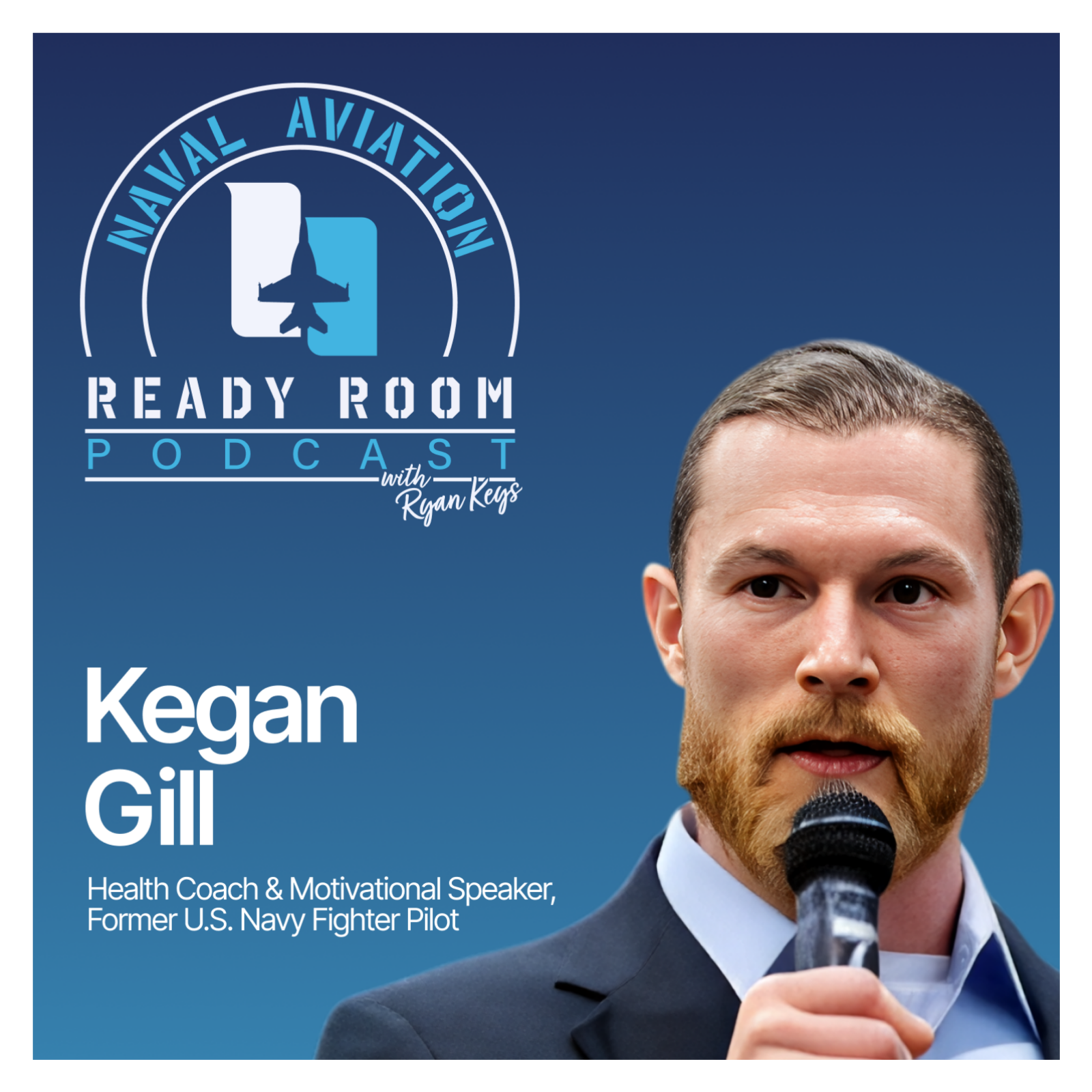
The Naval Aviation Ready Room Podcast with Legends and Leaders
Trapped Under the Abyss: 37-Degree Water and Malfunctioning Gear
00:50:54
Loading summary
Transcript72 lines
- [00:00]
Kegan Gill
The explosive force that I impacted that sound barrier with was 100 times the force of a category one hurricane. Instantaneous. And it just turned me into a rag doll, ripping my helmet off my head, causing a traumatic brain injury. I broke my C1 in my neck. One, two.
- [00:20]
Podcast Host
Welcome back to the Naval Aviation Ready Room podcast. Two weeks ago, on May 12th, we began an incredible high stakes conversation with Kegan Gill. We tracked his journey from a wild childhood in Michigan to flying strike fighters for the puking dogs of VFA143. But our episode ended on a stunning cliffhanger with Kagan initiating an ejection at nearly 700 miles per hour. Today, May 26th, the story continues. Kagan doesn't pull any punches as he details the catastrophic toll the ejection took on his body, the critical game time decisions made by rescue swimmers on scene, and the grueling years of physical and mental health challenges that ultimately transformed his life's mission. Pull up a chair. The Ready Room is back in session for the conclusion of Kegen Gill's record breaking survival story.
- [01:10]
Kegan Gill
The explosive force that I impacted that sound barrier with was. It was 100 times the force of a category one hurricane. Instantaneous. And it just turned me into a rag doll, ripping my helmet off my head, causing a traumatic brain injury. I broke my C1 in my neck, so my top vertebrae. I broke my left scapula in the shoulder, bilateral humerus fractures in my upper arms. My right humerus tore through my right brachial artery, causing internal bleeding. My left forearm shattered the radius and ulna and severed the median nerve that controls my left hand. The compression of my spine actually damaged the brachial plexus, which is the nerve group that helps to control a lot of the upper body and shoulders. And then my spine compressed. I was already short. Now I was even shorter with my helmet ripping off my dry suit shredded apart. My survival equipment on my vest ripped off. So my radio, my signaling equipment. Not that I could have used it anyways because my arms were completely destroyed and lifeless. My feet were flailing around so violently that the steel toed boots I was wearing smashed open my tib fibs in my lower legs, causing two open compound fractures with chunks of my bones falling out to chum the water from Mary Lee below.
- [02:22]
Podcast Host
Yeah, sorry, I'm laughing.
- [02:23]
Kegan Gill
No, no, please do. It's supposed to be funny.
- [02:27]
Podcast Host
This is incredible. I cannot believe you survived.
- [02:30]
Kegan Gill
Yeah, it was really miraculous that I did. I mean, the ejection sequence takes about half a second for you to exit the aircraft after you pull the ejection handle. So by the time I had exited the aircraft, I was a second and a half from impact with the ocean. And in that time the jet impacted the ocean, vaporized into pretty much nothing. And in that second and a half, I had the parachute fortunately opened and slowed me enough so I didn't die in impact with the ocean. And then I plummeted into that icy cold, churning Atlantic swell. And the parachute that had just saved my life very quickly sunk under the churning ocean and started to drag me under as I bled out in these shark infested waters. And for anybody who's ever been held under the water, when you need a breath of air, you know how horrible that feels. For anybody who's ever jumped in a cold plunge that's 37 degrees Fahrenheit, you know what that feels like on your skin, that piercing needles on your skin, it takes the breath out of you. And I spent approximately the next two hours battling to breathe as this parachute pulled me under, teabagging me over and over. In the meantime, fortunately, my flight lead spotted my parachute opening and acted very quickly. He coordinated as the on scene commander and started coordinating with air traffic control. And in his few seconds that he had to figure this out, before he was out of fuel, he spotted a fishing vessel about a mile away from my position. So he tried to contact them on maritime guard on button 16 as it was in Virginia beach at the time, and no one was answering. So he used his fighter jet to get down really low and really fast and he thumped over the bow of their ship, so giving a little bit of a flyby to get their attention, and that did the trick. So they dialed up the emergency frequency and he was able to direct them over to my approximate position. So he had to bingo profile back to Virginia beach at Oceana on the fumes that he was running on at that point. But his quick decision making was the first step in saving my life that day. This fishing vessel arrived on scene, was able to spot me. They actually threw a rope out to me, but because I was so injured and I was so tangled in paracord and being pulled under, I wasn't able to grab the rope. But they at least were providing a visual cue for my approximate location. Had they not gotten there, I would have been a little tiny dark bobbing head that was largely under the water with no beacon. My beacon had malfunctioned. I had no signaling equipment, no radio. And you know, after flying over the ocean, how vast the Atlantic Ocean is.
- [04:59]
Podcast Host
So it's tough to spot ahead.
- [05:01]
Kegan Gill
Finding a needle in a haystack would have been easy compared to finding my body in that ocean on that day. But fortunately, that quick action of my flight lead saved my life. And in the time being, they had coordinated with air traffic control. They had an aircraft, a helicopter, an H60 coming from HS11 off of the nearby aircraft carrier that, as you mentioned right before we started, was actually out there for a search and rescue sort of detachment. And so they were actually the first ones to arrive on scene as far as an aircraft goes. And there was a miscommunication with their new rescue swimmer who jumped into the ocean and ended up swimming past my position and getting onto the fishing vessel, thinking I was already on the fishing vessel. And in the meantime, another helicopter had arrived from HSC 28. And their rescue swimmer, just the week prior actually had another aircraft mishap in almost the exact same part of the ocean there where it was a Navy Sea Dragon helicopter. One of the heavy lift H53s had gone down very close to where I had just gone down. And at the time, the policy for the Navy was any aircraft accident required the rescue swimmers to put each survivor onto a backboard in order to lift them into a helicopter in case they have spinal injuries, which are so common in aircraft mishaps. But because it took so long for them to put each member of the crew onto a backboard and get them up, imagine trying to put somebody on this floating contraption in the rough oceans. It takes a little bit of time and it's really challenging. And because it took so long, several members of that crew, while they had survived the initial crash uninjured, perished from hypothermia. And so this rescue swimmer, Cheech, was just coming off a pretty traumatic week in his career. He didn't get any time off. He didn't get some time to talk to somebody in the next week. Literally a week later, he was back in his suit, ready to jump in the ocean and save me. But in the back of his mind, he remembered that this guy's been in the ocean for almost two hours. He's going to be severely hypothermic, if he's even still alive. I don't have time to mess around with the backboard. And so he made the game time decision to just jump in. He swam over to me, he said he hooked up his carabiner to me to keep hold of me. And the force of that parachute was like a bag of cinder blocks. And it just pulled both of us under the Ocean. And while he had trained for that in a lit warm pool, he said when he looked down, as this thing is dragging both of us under the water, he could just see this tangled mess of paracord and the dark blue abyss below, which was absolutely terrifying. But his training kicked in and he was able to cut me loose from all the tangled paracord and get me back to the surface. Just strapped me up and got me up into the helicopter.
- [07:43]
Podcast Host
So don't you have automatic explosive devices, right. That supposed to release the parachute from you? Did that not work?
- [07:49]
Kegan Gill
Yeah. So that c worse, that little explosive device, they're designed to, when they go into salt water, they're supposed to detonate and release your coke fittings. So. So you're not connected to your parachute. And unfortunately, as you know, a lot of our gear is like Vietnam era survival equipment that we're still utilizing. And one of the C wors activated, but it didn't disconnect and the other one didn't even fire whatsoever. So I remained attached and with my arms completely destroyed, I was unable to reach up and manually disconnect, but was fortunate to survive despite that. Got pulled up into this rescue helicopter. And right before HSC 28 had been called on this rescue. They thought they were just going to be going out for doing a little training mission that afternoon. And Joey, one of the flight crew in the back, had started eating his meatball sub. And in the chaos of the rescue, he had to throw his sub in back into the remnants of the wrapper and in kind of the chaos of getting me on board. And I was coding in and out of consciousness, in and out of life repeatedly as they were flying me to Norfolk General's Level 1 Trauma Center. And in that chaos, Joey's meatball sub had broken loose from the wrapper and I ended up covered in meatball and marinara. And so as they're offloading the Level 1 Trauma center in Norfolk, they're explaining to the medical staff, hey, this guy is really bad off. But that's just Joey's lunch because it looked like blood and gore, you know. But there was a wild twist in the fact that the second helicopter got me because the first helicopter from HS11, not realizing the extent of my injuries, had been instructed to bring me back to the nearby aircraft carrier, thinking that that would get me to care more quickly. However, they didn't have the level one trauma capabilities that Norfolk General did. So it ended up being a blessing in disguise that the second helicopter got me out. But just another crazy twist of the story, but they got me to the hospital. They started treating me immediately for severe hypothermia. My core body temperature was at 87 degrees Fahrenheit, so I should have been dead from the severe hypothermia, But I must have some Viking blood or something that kept me alive. I had multiple blood transfusions. I didn't have the beard at the time.
- [09:58]
Podcast Host
Yeah, yeah.
- [10:00]
Kegan Gill
I would have been perfectly warm if I did.
- [10:02]
Podcast Host
Yeah.
- [10:04]
Kegan Gill
But, yeah, they got me semi stable, and then they rushed me into the trauma surgeons, and fortunately, they just had the trauma surgery dream team on that day with all the right equipment. They performed fasciotomies on all four of my extremities to salvage my limbs from amputation, restoring the blood flow. They installed titanium rods and steel plates through a lot of my long bones and my arms and legs. So I have, like, a no kidding Wolverine X ray now, if you see it. Yeah.
- [10:31]
Podcast Host
Get through tsa. You got to get, like, totally wanded and all that stuff, right?
- [10:34]
Kegan Gill
Yeah. I pretty much always just opt to get padded down because whenever I go through the microwave scanner, where you put your hands over your head, it always shows that I have something metal right at my junk. And so having to get patted down, like, I think it just confuses the thing. So it's like, all right, I don't know where there seems to be metal everywhere. So it's just like, all right, the junk check is junk. And so every time I go through that thing, I got some sweaty TSA agent that wants to feel me up without buying me dinner, which I think is rude. Yeah, that's not cool. But they don't appreciate when I ask them to buy me dinner or if I ask for a cigarette after.
- [11:09]
Podcast Host
Yes. Oh, man.
- [11:13]
Kegan Gill
So that was the day.
- [11:14]
Podcast Host
So how long did you spend in the hospital on your initial stay? How many surgeries did, like, do a surgery once and then, like, did another one three days later? I think you went through a total of a dozen, is. I think is what I read correctly around that. Let's talk about the rehab time. I think when we talked before you talked, it took. Your desire was to get back, to fly again, and it took you two years to be able to go through that process, through surgeries, rehab, going through the waiver process with nami, the Naval Aerospace Medical Institute and everything. But ultimately, your desire to go back and to do that again is what drove you through this, kept you going, I should say.
- [11:56]
Kegan Gill
Yeah. I mean, I spent initially that first week they performed around a dozen different Trauma surgeries between the installation of all these metal pieces, the fasciotomies to just salvage my limbs from amputation and to keep me alive. The brachial artery bypass that they had to do as I was still bleeding internally, that took them a little while to recognize. But after that first week, I was still comatose, but they had completed all those initial surgeries and they were trying to get me to come back. And then I spent that next week in a non induced coma where my family and squadron members were all just waiting to see, like, is he going to be a vegetable? Is he going to wake up? And fortunately, after two weeks, I remember the first thing I could remember was I could smell this nasty disinfectant and I could hear familiar voices talking around me. And eventually I could open my eyes and it was like waking up out of a dream in your own bedroom, except for some reason, it doesn't look like your bedroom. And why are all these people in my room and why are there all these wires and beeping machines? In between the head injury and all the medications that they had me on for pain management, I was really out of it. But a little by little, I started to kind of come back to. And the medical staff came in to kind of explain it. And just to lay it out realistically, they told me without sugarcoating it, hey, you've been in a high speed ejection, you're lucky to be alive. But we don't think you're ever going to be able to walk again. You're not going to be able to use your arms again, and your military flying career is over. And I remember trying to move in the bed and I thought my squadron mates had played a prank on me and it tied me down, but it was because I was paralyzed, I couldn't move. And in that moment, it was pretty dark. I had every reason to give up hope just from the doctor's prognosis and the fact that I was laying there paralyzed. I just crashed an $89 million aircraft. My life was over. And there was a lot of darkness in that moment that was crushing, but also in that moment I had this little spark inside me that was like, what if I prove them wrong? What if I come back? What if I get back and can walk and fly? And so it became my mission to do that, just to prove them wrong. You think I can't do something? I'm going to show you otherwise. You want a fighter pilot to do something, Tell him it's impossible. And so every day was just what can I do to get better? I really visualized myself getting back in the cockpit. I visualized having my body working. But I think more importantly, each and every day, I did everything I possibly could to maximize my potential of getting better. And at first, that was just, can I wiggle something? Can I make any part of my body move? And little by little, over the course of the next three months that I spent as an inpatient in the VA Poly Trauma center in Richmond doing therapy day in, day out, you know, I had to relearn how to use my eyes. I had to relearn how to speak. I had to relearn how to use my hands, how to walk. I was doing all day. Every day was just therapy, therapy, therapy. But after three months, I was able to get around on a walker well enough that I was able to go back to Virginia beach and continue outpatient therapy. Once I got back, an investigation kicked off for the fenab for the loss of this expensive aircraft that I had been at the controls of and had signed for, which was a very invasive process. But I came to find out, fortunately, when you go through a phenab, it's done by a board of other aviators.
- [15:16]
Podcast Host
That's right. That's a. Yeah. Field Naval Aviator Evaluation Board. Just want to know, for people who
- [15:21]
Kegan Gill
may not know what that is a good mouthful. That's why it's an acronym, I guess.
- [15:24]
Podcast Host
Yeah, that's right. That's right.
- [15:27]
Kegan Gill
But, yeah, they dive into every aspect of your life. They want to know what you had for breakfast the day before. Like, they want to know everything. And so it's a pretty vulnerable position. And I'm still learning how to walk again. And now going through what at times felt like an interrogation. And it was made very clear that I did have fault in that mishap. I had made a decision to maneuver that aircraft at a nose low, at a higher than recommended airspeed. And there were other factors that played into it as well. But at the end of the day, I had signed for that jet and I had crashed that jet. And so that was a tough pill to swallow. There was a lot of shame that I'm not a good person. I did something terrible, that I don't belong. I don't deserve to be a Naval aviator. So a lot of struggles with that mentally as I continued to try to heal. And that whole review process took months and months and months. And it culminated where I was still walking around with a cane and I had to put on my summer white uniform and drive over to Norfolk to see the admiral. And he was going to be the final determination if I got to keep my wings and what my fate would be. And I remember walking into that room with a big, long wooden table flanked by aviators on either side who'd been part of the investigation. And the admiral walked in. So we all stood out of respect, and he told us to please sit. I'm sitting at one end of this long table. He's on the other end, and he sits down, and he looks across the table at me. And the only question he asked is, Lieutenant Gill, are you fearless? And, you know, what do you say when that admiral asks you that with your life on the line? And the only thing that came out of my mouth, I don't know where it came from was, sir, I don't remember a lot from the ejection, but I'm certain what little cushion there is on the ejection seat was puckered up inside me real tight.
- [17:12]
Podcast Host
That's your response?
- [17:13]
Kegan Gill
Was. That is my actual response. He didn't blink. He didn't smile. He just paused for a moment, stood up, and walked out of the room. And everybody in the room was just kind of like, what just happened? And I was thinking, well, there goes my flying career. This is the end. It was fun while it lasted. And the room just kind of slowly cleared out as everyone's kind of confused what was going on. And as I walked out of the room, one of the senior captains that was in the board meeting pulled me into his office, and he pulled out this glass jar of Lifesaver mints, and he grabbed one, he handed me one. And so we take the wrappers off, and we're just sitting there sucking out these Lifesaver mints, and I'm still, like, wondering what is going on? And he goes, Lieutenant Gill, if you can get your body working again, we're going to get you back in a Super Hornet. And so that was massive fuel onto my recovery effort from that point forward. And there was still a lot of hurdles to overcome. I still was barely walking around with a cane, but over the course of the preceding months and year, I ended up overcoming prescription drug addiction to all the pain meds I was on. I ended up gaining a stack of medical waivers from nami, which was another stack of miracles in itself. As you know, going through NAMI can be a real process. And I was able to again, max out the Navy's prt, again the physical fitness test. And I was performing again. I was mentally there. I was physically there, and people were really Inspired and amazed to see how far I had come. And one day I was working at the wing doing my computer desk job that I had been doing while I was recovering. And the Strike Fighter Wing Commodore walks in, he goes, hey, Lieutenant Gill, what are you working on today? And I was like, email this, blah, blah, blah. And he goes, hey, you want to go back and fly Super Hornets instead? And it was like, yes, sir. I had been working towards this for two years and I had overcome so much and now all of a sudden it was real, it was overwhelming, like, holy shit, I have to go back and fly those things now. And there was a little bit of hesitation in me, like it's actually happening. And I ended up going back and flying the Super Hornet. I went back through retraining at the FRS or the what used to be called the rag there at VFA106 and was performing really well. Ended up graduating as the top stick in my class and headed to VFA 136. The Nighthawks out in Lamour, California is my next squadron. And this is kind of where the happy ending should be, right where I fly off into the sunset and I live happily ever after and have the best flying career, you know, but unfortunately, you know, things don't always work out like a Disney movie. And I initially felt really good, really strong. But as you know, once you get into the fleet life and a military squadron, it's hard work and you're burning the candle at both ends. And I found myself kind of getting worn down and I could tell that there was some unresolved issues from that brain injury. But I was able to get by. I was able to make things happen. I noticed that my memory was not as good. Things were a little more difficult for me than they had been previously, but I was still making it happen. And I had a flight down at Tyndall Air Force Base doing what's called in Wessip, which is a live fire missile exercise. So I got to go out and shoot a aim 9 Mike Sidewinder heat seeking missile at a drone. And then after that I got to break off and do dissimilar air combat training. So dogfight a F22 Raptor from the Hawaiian Raptor squadrons, which was absolutely awesome after being a kid to see those things at the air showed, actually be in the air with one in a dogfight was an incredible moment. But when I got back from that flight, I realized I didn't remember large portions of, of firing a live missile off of my wing. And I was very Confused in the tapes. Debrief. Watching my radar symbology and things that I was very familiar with seemed very foreign. And I got back to my hotel that night, and sitting all alone in the room, quietly, as I sat down, the whole room started to tumble around me. I was experiencing severe vertigo that I had never experienced before. My heart was racing in my chest. I was having a panic attack, even though I was sitting in a quiet hotel room with nothing going on. And I tried to set my alarm on my phone, and I couldn't figure out how to use my alarm clock or how to do the math so that I could wake up from my flight in the morning. And in that moment, I realized something was not right. And I reached out to the squadron safety officer and explained my symptoms. And the thought was, potentially this is type 2 decompression issue, which was becoming common in the Hornet and Super Hornet communities. At that time. There had been problematic pressurization systems that were causing random pressure fluctuations in the cockpits of those aircraft. There was actually a Growler crew that's essentially the same system as the Super Hornet, where the pilot and the backseater were both so badly injured from that pressurization on the ground that I think they were both permanently incapacitated. But a lot of guys were coming back to the point they were starting to put hyperbaric treatment facilities on the aircraft carriers because it had become such a common issue, especially in the Legacy Hornets. The thought was maybe I had gotten this type 2 decompression sickness, which, for anybody who's a scuba diver, you've probably heard of the bends, where you come up from depth too quickly and the nitrogen will actually come out of solution in your blood. Just like when you open a soda bottle and you see the bubbles rise to the surface. That basically happens with your blood when you come up from depth too quickly or there's too rapid of a pressure change. Now you get those bubbles in your joints, and it's very painful. They call that type one decompression sickness. But if those bubbles get into your brain, they can block the blood flow and cause aneurysm like symptoms or even kill you. And so the thought was, maybe I had one of these bubbles in my brain. And fortunately, Mayport Dive base was only 20 minutes from where we were staying on that detachment. So my commanding officer and safety officer drove me to that facility, and overnight they treated me in that hyperbaric treatment facility. And the next day, I felt a little bit better, but something was still not right. And the doc that I Worked with. There was like, when you get back from this detachment, you need to go talk to the flight surgeon. There's something more going on here. We don't really know what it is. And so when I got back from that detachment, still not feeling right, dealing with persistent insomnia, I just couldn't fall asleep. I was constantly on high alert, kind of borderline paranoia at times. I reluctantly went into medical, which, as you know, as an aviator, the last thing you want to do is go cry uncle to the docs because especially after going through everything I had done to get all these waivers is now I'm going to put a red flag on myself and potentially lose my security clearance, potentially jeopardize my medical clearance. And they had very little understanding of brain injury at that point in the community. And I think largely in the conventional medical system today, there's a lack of understanding on what brain injury really means. And unfortunately, the first stop was, you need to go see psychiatry. We think this is some sort of emotional.
- [24:00]
Podcast Host
Really? That was what they told you?
- [24:02]
Kegan Gill
Yeah. And pretty quickly it was kind of this idea like, oh, this is just all in my head, like this is emotional issue. And pretty quickly I got a delayed onset PTSD diagnoses and everything bit off onto that, which is this is some sort of emotional processing. And you know, as an aviator, we get so good at compartmentalizing so that we can handle very complex tasks, emergency procedures, even when we're literally on fire, we can compartmentalize and function. And so for them to tell me that this was some mental thing, I was like, no, this is not. I'm mentally strong. This isn't some mental things, like it's an emotional issue, that it didn't make any sense. And so as I went through that process, it became more and more frustrating because I felt like the real issue was not even being acknowledged. And unfortunately, before long that led to medication. And that delayed onset PTSD diagnosis impacted my flying career like a warhead. As soon as you see mental health, like air goes flying and, you know, they told me this was the best they could do. Try taking these sleeping meds so you can get some sleep. Try taking these anti anxiety meds so you can unwind. And unfortunately, those things only complicated my case. And I kept getting worse and worse. And as I lost my role as an aviator, as I lost my squadron, I kind of fell into a dark hole without a sense of purpose, without. Without a tribe, without a community. And I felt deep shame. Like all these people that had put their faith in me to get back in the jet, to put me back through that training. I was letting everybody down and that I was, frankly, I felt just like a complete piece of shit. And late one night I was just basking in that darkness, in that misery of being this broken human that was unworthy. And I remember reaching to grab my pistol that I kept near the bed. And as I contemplated what is the gun oil gonna taste like on my tongue? What is the muzzle gonna feel like on my teeth when I put this in my mouth, I looked beside me to see my beautiful wife and newborn baby boy sound asleep beside me. And the only thing that stopped me in that moment is I didn't wanna wake them up. So I put the pistol away and tried to lay down, to fall back asleep, which I just couldn't even with all the drugs they were giving me. And I continued to spiral out of control mentally.
- [26:13]
Podcast Host
How long was this? From the time that you were kind of get through that diagnosis until that moment when you almost took your life? How long was that? How long were you suffering like this?
- [26:24]
Kegan Gill
From the time I had gotten back from the detachment where I really started to spiral out of control, it was probably a solid three to six months. I don't remember exactly, as things were a bit foggy in there, but it was about a three to six month period of seeking the conventional mental health system of the medications, of losing my opportunity to go back to fly with the diagnoses. So it happened fairly quickly. And then as they started to implement the medications, things spiraled out of control really quickly to the point where my wife was at home dealing with a brand new baby boy, which was relatively easy to dealing with me because I was a full grown man who was in and out of delusions, paranoid, hyper vigilant. I would come into the house and I would dive and hide under the couch because I thought there were snipers trying to shoot me. I thought I was being poisoned for some reason. And so my wife would be cooking dinner and I'd run into the kitchen and I'd throw the food in the garbage, I'd dump out the water in the sink and I'd say it's poisoned, we can't eat that. And I was being poisoned, but it was in these FDA approved pills that I'd been prescribed anyways. It was a huge burden on my wife. My day in and day out oscillated between extreme dread and terror with these hallucinations to very exciting hallucinations, like it was a wild ride of my imagination for that time period. I ended up going through a medical board process. I was eventually medically retired from the military and moved back to Northern Michigan with my family, where I continued the same treatment through the VA system, which was more problems, more pills, more pills, more problems. And I just continued to spiral until one day my wife had come home from a job interview, she's a trauma nurse, and she found me in the house. I was completely nude. I had shaved off my hair and chunks for some reason, I'd shaved off my eyebrows. And I. The only thing I was wearing is I had a black garbage bag tied around my neck like a cape because I thought I was going to go out into the northern Michigan snowy weather and fight crime like a superhero.
- [28:24]
Podcast Host
I can only imagine coming home to see that though. I mean, that'll catch you a little
- [28:29]
Kegan Gill
off guard, but at least you wanted
- [28:31]
Podcast Host
to be a superhero.
- [28:32]
Kegan Gill
Yeah, yeah. And luckily, you know, I always listened to my wife. I always trusted her through this process. And so I was very responsive and agreeable with her. Whenever she told me to do something, I would do it, which was probably what saved me from her putting me into a facility sooner. But in this moment, she ended up taking me to the emergency room. I was checked in as an inpatient and I spent a couple nights in just a full on out of body experience, completely out of my mind on the floor of the ER in this plexiglass room. And in that time while I was unconscious, at least my body was unconscious. And I think I was just traveling through time and space mentally to some place I had never been before. And it's actually difficult to describe. I think the closest thing I've ever heard it described is it's like a purgatory where the soul leaves the body and your body lay lifeless and is dying and your soul is out exploring the vastness of the infinite universe. And I apparently made a conscious decision to come back into my body. And when I came to, I had been transferred down to the Battle Creek Inpatient Psychiatric Facility run by the VA about four hours south of where I grew up in Northern Michigan. As I came to on the floor, I was still in and out of really intense hallucinations and psychoses. But I started to kind of see some flaws in the system there as I became more lucid. One when you're on one to one care in these facilities, every 15 minutes they would come in and shine a flashlight in my face to wake me up to make sure I wasn't harming myself. So I'm already extremely hypervigilant. I'm already extremely sleep deprived, dealing with the PTS symptoms. And now they're going to wake you up every 15 minutes. So you're sleep deprived. The food was absolutely abysmal quality, ultra processed junk. There wasn't fresh fruit or vegetable to be seen. Everything was packaged. There were Nutter Butters and Oreos and Frito Lays. But this was food that was sapping my nutrients just to process. It wasn't restorative. We didn't get to go outside more than maybe once a week if we were lucky. There's no sunlight, no fresh air. And when we did get to go outside, it was 15 minutes into a confined concrete lot with high rise brick buildings and metal fences all around it.
- [30:46]
Podcast Host
So you're in prison.
- [30:47]
Kegan Gill
It was, it was imprisonment. And you're even wearing prison scrubs while the staff wears these white lab coats. So there's the Stanford prison experiment dynamic that unfolds from that relationship. And so you get treated less than human. Now in survival training in the military, we got to get a little taste of what it would be like to be in a situation like that. And you take a perfectly healthy physically and mentally robust pilot or special forces member and you put them through that training and within a few days to a week of that sort of treatment, the sleep deprivation, the malnourishment, the confinement, being treated less than human. You see, perfectly healthy people start to suffer from visual and auditory hallucinations. Now you take somebody who's already in a psychosis and you do the exact same things to them, what do you think is going to happen? And in my mind, it was all to break your will so that you would just take the medications. And that was the only answer. And unfortunately, the VA has become a cash cow for the pharmaceutical industry and they get to dictate a lot of the policies and their policies are intentionally designed in order to drive more people onto their products. And I was very frustrated. I tried to escape that facility despite having been voluntarily admitted. When I wanted to leave, they would not let me leave the facility. And I was actually forcibly drugged with a medication called Haldol in order to incapacitate me. That was a pretty brutal experience. Eventually I was fortunate to get out of that facility with the advocacy of my family and return home to northern Michigan. And from that point on, I was just a broken shell of a human being. I was miserable. The only emotion I could feel was rage and betrayal for the country that I had served. And I was just a really dark human being to be around. I was on the verge of divorce with my wife. I was pushing my kids away anytime they tried to come up and interact with me. I couldn't read anymore. I could barely do the dishes. I'd become so low functioning from all the meds and all the sleep deprivation and all the trauma. I was just completely broken.
- [32:50]
Podcast Host
What year was this? When was this?
- [32:52]
Kegan Gill
This would have been like 2020. So I was medically retired at the end of 2018. I ended up going to that facility in early 2019 where I was an inpatient in the psych facility. And then after that, for a couple years, I really struggled after I got home. So I was in a bad, bad spot and self medicating with alcohol, which wasn't helping anything, obviously, but it was the only way that I could maybe even feel any remnants of something positive, or at least not feel the pain.
- [33:24]
Podcast Host
What was the turning point?
- [33:25]
Kegan Gill
You know, I had a friend, he came and picked me up. He was a friend that I was a kiteboard instructor with. It was his kiteboarding school that I worked for.
- [33:32]
Podcast Host
It all goes back to kiteboarding.
- [33:34]
Kegan Gill
Yeah. He came one day and he's like, hey, man, grab your mountain bike. And so we loaded up our mountain bikes and he drove me up to Michigan, up in the upper peninsula of Michigan, which is just phenomenal. It's like Alaska up there, you know, it's the real wild north. And we spent the next couple days just out on our mountain bikes, out in nature. And he handed me a book called Finding Ultra by Rich Roll. And he's got a big podcast now. He's written this book, Finding Ultra, but it basically talks about he was really struggling. He was a high functioning corporate attorney. He had all the money in the world, all. But he was miserable and he was drinking too much and eating too much junk. And he saw his life starting to crumble apart. And in order to remedy that, he decided to start pursuing ultra endurance athletics. And he really cleaned up his diet, his nutrition, focused on his sleep, got super healthy through this process. And my friend gave me that book. Like, he knew I needed something like that in my life as I got out of his truck after that trip, and I saw, like, this is the way forward. I need to start taking care of myself. Oh, my gosh.
- [34:36]
Podcast Host
That was it. Physical fitness.
- [34:37]
Kegan Gill
Yeah, that was the big turning point. And so through that, I started to focus on my nutrition. I had always eaten fairly well, but I did a deep dive into it and I started to realize how broken our food system is and how many things that are labeled as nutritious are really not.
- [34:53]
Podcast Host
Oh, we could talk all day about that. My wife is very much into that as well. We're gonna do a whole nother podcast on that.
- [34:58]
Kegan Gill
Watch Food Inc. Yeah, that's one of my favorite subjects. Yeah, that's a good one. But I started to do a deep dive into that stuff. I learned about sleep. I learned about alternative modalities for healing, mental health issues, and brain injury. And I started to reach out to this network of veteran nonprofit organizations that is out there sort of filling the gaps for all the people that are falling through the VA system.
- [35:21]
Podcast Host
Yeah, all the veterans from OEF and oif. Right. Like I said, sf, nsw, guys from breaching to. You name it, all the concussions that they've had, and they said the lack of care for TBI and understanding of it in the medical system. Right. So alternative care comes in at that point. Yeah, it's amazing. Please keep going. But I just had to say that there are a lot of places, there are a lot of nonprofits, though, who have focused on that, looking for people just like you. And that's what you found.
- [35:51]
Kegan Gill
Yeah. I was really fortunate to get accepted into some of those programs and gain access because, yeah, the VA has its place. I was very fortunate to receive financial support through the VA system as I'm trying to rebuild my life that kept a roof over my head and kept my kids fed when I was incapable of doing anything. I'm very grateful for that aspect of the va. But when it comes to dealing with mental health and brain injury and the symptoms of operator syndrome, which we can get into a little bit, there's a great misunderstanding, and the system just isn't designed to deal with those things the way that they ought to be dealt with. But through these nonprofit organizations, I was able to receive funding to go to treatment programs for traumatic brain injury, to go through these holistic remedies that actually started to heal me at the base level, to heal my brain, to heal my nervous system, to heal my soul so that I could continue to improve. And as the time went on and I received more and more of these treatments. Access to hyperbaric oxygen therapy.
- [36:51]
Podcast Host
Yeah, I was gonna say. Yeah. Tell me some of the stuff have you done? I've heard of microdosing, Ketamine and stuff like that, but. Yeah. What exactly have you gone through in order to help heal?
- [36:59]
Kegan Gill
Yeah, you know, at a baseline, it was just starting to improve sleep quality, improve nutrition, improve exercise, connection to nature, just getting sunlight, like these very, very basic, you know, all the stuff that our Grandma and grandpa probably told us to do. But what really helped accelerate that process and to get at more of the underlying issues of my damaged physiology, of my brain. For so long it had felt like in the conventional mental health system, it was like I had the broken computer hardware and they were just trying to do these software updates, and a software update doesn't work when the hardware itself, in the hardware of my neurochemistry and physiology was all disrupted. My hormones were all out of balance, my nervous system was physically damaged, my brain was physically damaged. And so these protocols started to actually address healing. The underlying issue at the root cause, which was this damaged neurology and my damaged soul that had just been battered from all the way back to childhood trauma that I didn't even know was there. But some of the things that I got access to were a two week traumatic brain injury clinic down in Dallas at a facility called Resiliency Brain Health. I was sponsored through an organization called Defenders of Freedom that paid for the whole two week program. That would have probably been 20 plus grand out of my pocket that I didn't have. But in that facility, before I had even arrived, they had done a very in depth lab analysis of my blood. So before I even showed up at the door, they had already done this deep dive. And they knew so much more about me than anybody had ever revealed, about which hormones were out of balance, where I had deficiencies, where I had a thyroid issue that I didn't even realize. And then they did a full neurological evaluation. They did all this computer testing for balance, for response, for memory, for all these different tests. The whole first day was just test, test, test. But at the end of that first day, they had a really in depth understanding of what was off with me and how to fix it. And so I spent the next two weeks doing balance training, doing all these things that seemed really simple, honestly. They had a popsicle stick with a sticker on it and they were doing eye training where I would just follow that popsicle stick with my eyes without moving my head. Eye tracking. And by doing that eye tracking, it actually helps improve the circulation of the brain, as the eyes are effectively an extension of the brain. And it was just a lot of little modalities like that. There was nothing that crazy or wild that we were doing. But after the two weeks of that program of improving my nutrition, we did a deep dive in nutrition, Nutraceutical supplementation, introduction to peptides, which were incredibly valuable for healing and recovery. I started to improve drastically. And when I retested at the end of that two weeks, not only was I sleeping way better without any medication, by the end of that two weeks, I was feeling better. I was more alive. It was like the light had come back to my eyes. And when they did all the assessments at the end, I had drastic improvements in every single category that they had tested. I continued that nutraceutical protocol with supplementation taking things to help balance out my hormone disruption that's so common from people that are dealing with operator syndrome and chronic stress and lack of sleep. I then received funding to head to Peru through Heroic Hearts project and experience Ayahuasca ceremonies, which is a heavy duty entheogen or a psychedelic medication that also has a very deep healing impact on the nervous system. It accelerates neuroplasticity and neurodevelopment. And it really helped me understand myself on the deep level of my soul. That this whole time I had been this scared little boy that had put up all these walls year after year after year to try to make myself out to be tough so that I could be big tough guy, a big fighter pilot, so that I could be loved. And I kind of started to understand myself on a deeper level that all this time I had just been trying to prove to the world that I was deserved to be loved. And that fuel that I'd been using for so long was anger and rage that had gone all the way back into my childhood from being picked on as a little runty kid. You know, all the things we go through as kids that can have an impact on us. But I started to understand myself and I started to develop a relation with something higher than myself. A spiritual relationship that I had never really had before. And it wasn't what I was seeking when I went the route of using psychedelic healing, but it was just something that was revealed that had been there the whole time. And it was wild that I just wasn't able to see it before. But there was this deep connection to something much greater than myself that we're all part of that was, you know, it's at the core of all of our being. And I felt that really deeply for the first time. And that completely altered who I was. And it was like I could never go back to my old self because I had seen a glimpse of the truth of what this existence is. And so that kind of helped accelerate my healing by giving me a lot of neuroplasticity. And while the healing that comes in the moment with those medicines is valuable, it's really the integration process after the medicine is over. That's the most important part. You get this opportunity after that experience to become whoever you want to become. But then you have to do the work to rebuild those habits. And it's all about just changing subtle habits. Eating the food that's going to help you thrive, getting the exercise that's going to help you grow and get stronger, getting the sleep that you need to get so your body can recover and heal. Emotional regulation, downregulating the hypervigilance and the sympathetic nervous system. Getting out of that fight or flight mode through breath, work and meditation. And over the years I was very fortunate to get access to a very wide range of modalities that are just completely off the beaten path of what you get when you go to the VA or what you get through Tricare insurance. It just doesn't exist in our current health system. Unfortunately, the mainstream medical system is so profit driven that the modalities that are available are largely pharmaceutical based and they don't actually do anything to treat the underlying issue. While I'm very grateful for western medicine, when I had my trauma and if you get in a car accident or a jet ejection or, or anything severe like that, there's no better country to be in in the world than level of trauma care that you can get in our country. But when it comes to chronic health conditions, when it comes to mental health, when it comes to brain injury, unfortunately our system is just not designed in a way that is very beneficial for the patient. It's not a healing environment. It's a profitable environment, which is why it now exists and is thriving. But it's not what's best for the individual. And so I found this entire back secret room of medical modalities that are largely, like I said, sleeping better, eating better, better nutrition, better sleep, better exercise, connection to nature, finding a new sense of purpose, all these very basic foundations of life. And so now that's what I really help people do through the health and performance coaching I do at Sharp. Performance coaching. It's what I help people do through the meditation program at the Wisdom Dojo, where we take largely a lot of Special Forces veterans and other combat veterans coming off of a big medicine journey through some of the nonprofits out there that are sending people down to programs like Veteran Solutions, Heroic Hearts Projects, the Mission within, that's sending people to Ambio and Beyond and some of these clinics where people can experience psychedelic assisted therapy. At the Wisdom Dojo, we take those individuals fresh off of that experience and we help them integrate it by building Meditation and mindfulness habit and daily ritual.
- [44:34]
Podcast Host
And did you have found the dojo? Did you do that? Was that your creation?
- [44:38]
Kegan Gill
No, it is not my creation. It was actually created by a former Air Force fighter pilot named Mark Williams and a master meditation coach named Bill Filter. They had been in the corporate world for a while, teaching corporate personnel how to meditate. And they started to see that by having a big medicine experience with psychedelics, kind of unlock something in people to help them have a much deeper understanding and actually be able to meditate. And they wanted to serve the veteran and first responder community. So they started the nonprofit. It's called the Wisdom Dojo now, which is taking all these veterans like myself and putting us through incredible meditation training and breathwork training, that is. Honestly, I never thought I'd be the guy meditating. If you had told me 10 years ago, you know, when I was a fighter pilot that I was someday going to be instructing meditation, I would have laughed at you.
- [45:29]
Podcast Host
Yeah.
- [45:30]
Kegan Gill
But to describe it in a few words, it's the ultimate technology for understanding the truth of who we are and what this existence is and finding peace in this existence. And so it's been an honor to get to be part of that. I ended up writing a book about my experiences called Phoenix Revival. You can get it on Amazon. It's on Audible, ebook, hardcover, paperback, whatever you're into, I'll listen to it.
- [45:52]
Podcast Host
I'm a book listener. I'm not a reader. I can't read.
- [45:55]
Kegan Gill
It's a pretty quick one. And that's how I get my books these days, is audiobook. Just because sitting down at home when you got kids around, it's pretty rare that you get a moment to open a book and sit in peace and quiet. But when I'm driving or doing some work, I can listen to an audiobook for sure. But yeah, Phoenix Revival, it's out there on Audible and on Amazon. It's the easiest places to probably get it. If you'd like to get an autographed copy personalized to you, please reach out to me. I'd be happy to send you one. But yeah, I wrote that book as in part as a therapy for myself and also because I knew that there was value in the experience that I had been through to talk about these things. We operate in the world of naval aviation where these are kind of taboo topics to discuss. And because of that, there's very little understanding of where to go when you start to struggle. And my goal is to try to get the word out there that there's a lot that can be done proactively so you don't end up falling down the same hole that I did that so many other veterans find themselves in, which is the symptoms of operator syndrome, where we have this combination of physical, emotional trauma, brain injury, years of operating at high speeds, not sleeping, treating our bodies pretty poorly, honestly. And it takes a toll. Even if you don't have something obvious like an explosion or an injection, we can start to feel these symptoms over time and it really starts to degrade our sleep, it degrades our personalities, it makes us grumpier, it makes us lower performing. And before we know it, we're in a bad spot. But because the transition is so slow, we oftentimes don't even recognize it until our lives are falling apart around us and we go, what happened?
- [47:26]
Podcast Host
That's a slow poisoning of the self. Right. Underlying it is.
- [47:30]
Kegan Gill
And fortunately, there's a lot that can be done in the world of health optimization that doesn't require you to get a diagnosis. We're not here to label you as something that's going to derail you from your career, but instead, like, how do you just become the best version of yourself? What are the things that we can do now so that you have a long prosperous career? And this is starting to catch on in the special forces communities big time. The Green Berets are using it, the seals are using it, and I hope someday it starts to catch on in naval aviation, honestly, because there's a lacking of that.
- [48:01]
Podcast Host
Yeah, let's hope so. I feel like there has been in the recent years, I mean, just something as simple as in the helicopter community. We have a lot of back issues because of the way that we carry our vest and our weights, especially our crewmen in the back, our rescue swimmers and how they're hunched over all the time and the stress it puts on the lower back and then the vibrations of the helicopter, fixed wing fighter pilots, the G forces on your neck with night vision goggles on. And that's just the tip of the iceberg, to be honest with you. And really, I mean, when I got to the wing back in 2019, it
- [48:31]
Kegan Gill
really started coming out.
- [48:31]
Podcast Host
So it's been around for a little bit. You're right, it's an iceberg. Right. It's a glacial shift in the naval aviation community to say, hey, pilots, NFOs, flight crews can be injured through their day to day job. And it's just something that is just takes time because a lot of as you get older, a lot of people don't want to talk about it, as you said. Yeah. That's one of the reasons why I relished you coming on. So that people, you know, normally our audience is, I'd say, older people and former aviators from Vietnam timeframe. Right. Or Desert Storm. And they may have experienced this, but they never brought it up. You know, they just marched on.
- [49:07]
Kegan Gill
They just put it in a bottle.
- [49:08]
Podcast Host
They did that maybe later on that. Right. Totally affected their life in a negative way. And so I hope that they're listening to that and also aspiring aviators hear this, too, to know that it's not a stigma, it's something that can be brought up. Just have to be kind of careful about how you do it and go about it. So, yes, there is a fine line when it comes to that. You hope that as more people come forward with issues that it'll be more mainstream, I guess you could say. Yeah.
- [49:36]
Kegan Gill
And that's why I feel there's a lot of value in just popping that cork and getting the stuff out in the open. I really appreciate you having me on the show to talk about all this and it was an honor to be here and to share the story with you. And I hope your listeners enjoy.
- [49:48]
Podcast Host
Yeah, I know they will. Kegan, thank you so much for taking your time for being on here and like I said, bringing this to light. Hopefully with the Naviation community that will listen to your story and buy his book. I'm going to listen to it, so.
- [50:01]
Kegan Gill
For sure. Yeah. Phoenix Revival. Check it out. I hope you enjoy it. All right.
- [50:05]
Podcast Host
I'll let you know after I finish it.
- [50:06]
Kegan Gill
All right. Yeah, I'd be curious to see what you think.
- [50:08]
Podcast Host
All right, great. Thank you so much.
- [50:09]
Kegan Gill
Thanks again.
- [50:11]
Podcast Host
Thank you for joining us on this flight through history and innovation here at the Ready Room. We hope today's episode inspired you with new insights and the incredible stories that make naval aviation so extraordinary. If you enjoyed the journey, be sure to subscribe, leave a review and share the podcast with your network. It helps us reach more listeners like you. Don't forget to visit the National Naval Aviation museum in Pensacola, Florida, or explore our online resources at navalaviationmuseum.org to dive deeper into the stories we've shared. Follow us on social media for updates, behind the scenes content, and a sneak peek at upcoming episodes. Until next time, thanks for listening to Ready Room. See you on the next flight.