← The New Yorker Radio Hour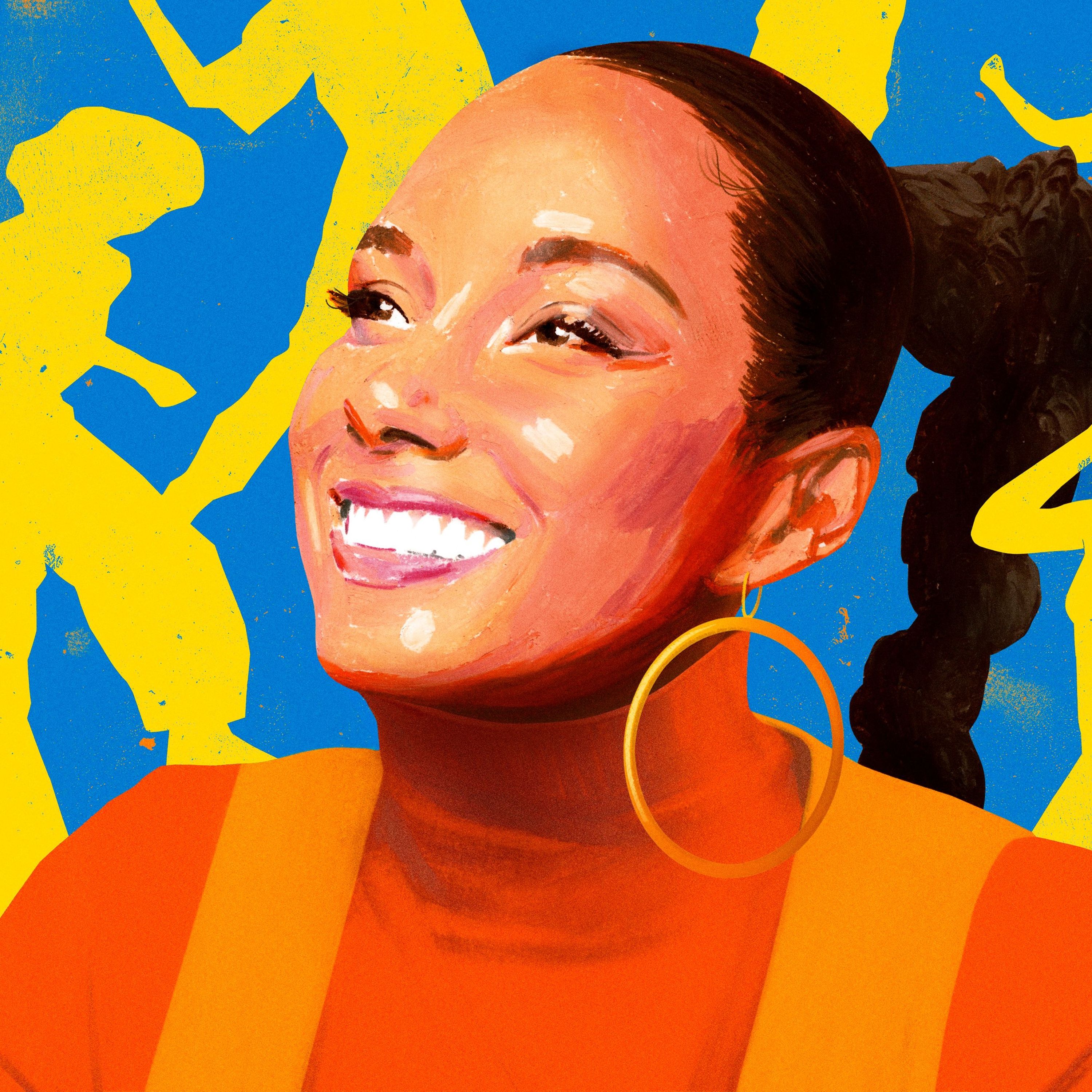
The New Yorker Radio Hour
Alicia Keys’s New York Musical Goes on National Tour
00:32:24
In her Tony Award-winning Broadway musical, Keys tells a story very much like her own life—but don’t call it autobiographical.
Loading summary
Transcript112 lines
- [00:00]
David Remnick
Traveling isn't about where you go, it's about what you find and who you become. Silver Sea brings you to the places that stay with you long after you've left, from the tropics to the Arctic and everywhere in between. Explore every continent on small ships that redefine ocean travel. Venture further than ever thought possible and return transformed. Here's to you to finding the best version of yourself with Silver Sea and to finding more. Visit silversea.com to learn more. Hello, I'm Ozempic and I other GLP ones kind of like him. Are you shaking a maraca? Nope, I'm shaking the pill version of Ozempic, which no one should ever do except in ads like this. A nice disclaimer.
- [00:41]
Interviewer/Host
Hey, thanks.
- [00:42]
David Remnick
Ask your doctor about which FDA approved uses of the Ozempic pen or pill may be right for you. Call 1833 ozempic or visit ozempic.com to view the medication guide and learn more about ozempic semaglutide tablets 9 milligrams and ozempic semagLutide injection 2 milligrams there's a
- [00:58]
Alicia Keys
pill version of Ozempic
- [01:04]
Interviewer/Host
the New Yorker
- [01:04]
Alicia Keys
Radio Hour is a co production of WNYC and the New Yorker.
- [01:10]
Adam Howard
Welcome to the New Yorker Radio Hour. I'm Adam Howard, sitting in today for David Remnick.
- [01:15]
Alicia Keys
New York how you feeling tonight?
- [01:18]
Adam Howard
There's no doubt the unofficial anthem of New York City is Empire State of Mind, the Jay Z song with that unforgettable hook sung by Alicia Keys. So it was only fitting that when New York celebrated the Knicks with a triumphant parade, Alicia Keys took the stage at City Hall. You could see Knicks Captain Jalen Brunson and New York City Mayor Zoran Mamdani grooving along in the background. It was a classic New York moment for an artist who is herself Classic New York Alicia Keys musical Hell's Kitchen uses her songs to tell a story about a teenager growing up in Manhattan, right near Times Square. It won two Tony Awards, including best actress in a musical for Malia Joy Moon. In her first appearance on Broadway. Alicia Keys talked with David Remnick when the show was still in previews in 2024.
- [02:25]
Alicia Keys
We're recording and he said that the level looks fantastic. It's gonna be the most phenomenal level you ever had.
- [02:34]
Adam Howard
Hell's Kitchen just started a national tour, starting in Las Vegas and going all over the country. Here's David Remnick with Alicia Keys.
- [02:43]
David Remnick
Can you pin down how long it's been in the making in your Mind from first conception to right now delivering the baby.
- [02:52]
Alicia Keys
I'm going for 13 years because I know it was before my first son was born. And then I know that Chris and I, the book writer Chris Diaz, we talk often about that. Even when Egypt was very, very little, like just born, we were talking through the concepts and how we wanted to develop the characters and all of these things. So.
- [03:14]
David Remnick
And what was the original idea? What was the original impetus to do that? You had a. Have a huge career as a singer, as a songwriter, as a performer. And this is something entirely different. Even though I know you love musicals in general. But for you to do this on an autobiographical basis to make your life the centerpiece of this work, how did that begin?
- [03:40]
Alicia Keys
Well, first, I do wanna say that this isn't autobiographical. I think that's important to say. Cause I think a lot of people think autobiographical and they think quite literal, like every single piece, but is definitely based on the experiences that I had growing up in New York. And so in that way it's very, very real. It's very authentic, it's very genuine. And so that was a bit of the impetus of like, why is this important to me? And why I felt motivated and eager to create something that really reflected the level of diversity that I've been blessed to grow up with. And for also it to be set in Manhattan Plaza, which is the building that I grew up in and is a quite unique building because it's a subsidized, rent controlled living for artists who, as we know, oftentimes there's months they go without work or there's times when you have more work and you know, it's a fluctuating lifestyle. And my mother would have never been able to raise me in the city if we hadn't lived there.
- [04:40]
David Remnick
Did you find the three, the four minute record, the song form limiting in some way and you wanted to break out of it and do something larger on the screen? Did you see things on screen that you thought, oh, I like this form, this could really fit for me. This could work for something called Hell's Kitchen and based at least on my own story.
- [05:02]
Alicia Keys
I love songwriting and it's such a beautiful way to capture a moment, an emotion, a special, you know, a special feeling. But you know, I do also love performance. And my mother, she was born in Toledo, Ohio. She's the quintessential New York story, I like to say. She was born in Toledo, Ohio and moved to New York City to follow her dreams of dancing and acting. She went to NYU and that was how she got here. That was why I was born here. That's the reason why. La la la. So I think that. I think that because of that and because of her love of acting and her love of theater specifically, I was really introduced to the theater world from a very young age. You know, I remember we would stand on the, like, lower price ticket line, the TKS line, and everybody be there and you get your tickets and you go to the show. And I was able to really see different worlds, different creative experiences from a young age. And like, I'll never forget seeing Bring in the Noise, Bring in the Funk. That was the first time I felt, whoa. One I see myself up there. Or I feel rhythm, I feel dance, I feel power, I feel street. I feel, you know, these different New York experiences. And so I was very attracted to that. And so now as I look back at it, it's so thrilling to be able to merge two worlds together. This kind of contemporary music world with this musical theater world.
- [06:24]
David Remnick
Talk to me about the neighborhood. The show is called Hell's Kitchen, and of course it's cheek by jowl with what we think of in our imaginations and in reality of the great White way Broadway.
- [06:36]
Alicia Keys
Right?
- [06:37]
David Remnick
Exactly. So talk to me about that side by sideness that you grew up with. You grew up in the middle of. You're growing up in Manhattan Plaza, in Hell's Kitchen. What was the Hell's Kitchen of your childhood and adolescence and how did it coexist with this street of dreams, this Broadway that you were so taken with and that becomes the subject also of your show?
- [07:02]
Alicia Keys
You're so right. And you know, Hell's Kitchen when I was growing up was literally perfectly described in that name. Like, you know, and those who lived or walked the streets of Hell's Kitchen, I always like to say that it was the place of the have nots. Like it was. It was the place where everyone who kind of didn't belong anywhere accumulated prostitutes, drug dealers, pimps, you know, X rated theaters, you know, all kinds of grimy Hell's Kitchenesque vibe was all up in there. And so I think that in a lot of ways, being so close to that reality all the time, it really hardened me. It really kind of gave me a certain grit and definitely a certain way to protect myself. And I also think, to your point, there was this unique balance between that grime and then the potential of Broadway.
- [08:01]
David Remnick
You started playing the piano, I think, at 7 years old. When did the dream of doing it as a real performer, as a professional enter into Your mind? Seven and a half.
- [08:14]
Alicia Keys
Probably four.
- [08:15]
David Remnick
Because even before you sat down at the Keys.
- [08:19]
Alicia Keys
Yeah, because I remember really being introduced to music through my very first, first kindergarten teacher. She was one of those people that even to this day she's still alive. And, you know, she was always had some scheme up her sleeve. She was gonna get us to sing at the this place and get us to perform at the that place. And, you know, we always kind of had the okay. And I think that that was a wonderful experience for me to try things that was quite nerve wracking. And I. But the minute I opened my mouth, I learned this song and I sang. I just felt something that I had. I was like, this is something that takes away all the nerves, all the fear, all the things that get in our way.
- [08:57]
David Remnick
Do you remember what you were singing at that point?
- [08:59]
Alicia Keys
I do. It was Summer of the Rainbow. It was for the wizard of Oz. It was like the quintessential song that would open your mind like that. You know, the song we just released for Hell's Kitchen called Kaleidoscope is very much this somewhere over the rainbow kind of feeling of, you know, your mind opening and realizing that there's more for you out there in the world. Tonight is shining bright, you know. Oh, yeah. Oh, no. Light it, light it, light it, light it, light it up. Put it in the air and let it go. This is really about a life of a young girl in her seventh grade and how she is trying to find her way out from under everybody's expectations, everybody's demands, everybody's, you know, weighted things that end up on all of our shoulders. Because people really, they want to protect us, but they in a lot of ways stifle us. And so she's in that very critical time in her life, she's looking for more. She's feeling quite rebellious. She doesn't want to just be told what to do and just, you know, be treated as a little girl. She really is looking for her muse.
- [10:20]
David Remnick
So your main character is 17 years old and she's named Ally.
- [10:24]
Alicia Keys
She's named Ally and some people call me Ally, but not many.
- [10:29]
David Remnick
Not even then.
- [10:31]
Alicia Keys
Nope. That's a very special reserved name for only the very, very, very, very most intimate to me. So people really didn't call me that. They called me Alicia. They called me Lelo. I had another nickname, Lelo. Nights like this never wanna finish. So her name is Ally and she's. And she's 17. She's. And she's really looking for her muse and she finds a Woman who is named Ms. Liza Jane. And she ends up being quite the mentor for her. She opens her universe to the craft of piano playing, actually. And so she's a skilled, beautiful classical pianist. And so when she hears her in the Ellington room, which is this kind of multi purpose room in Manhattan Plaza that really exists, she's blown away. And she feels like she was protest. She's found what maybe's been calling her. Her mother's raising her as a single mother, and she is really doing everything she possibly can to hope that she could escape all the. All the traps her mom, Jersey has had to endure.
- [11:51]
David Remnick
Has your mom been able to see the show?
- [11:53]
Alicia Keys
Yes, she has.
- [11:54]
David Remnick
I want to hear all about that. How did she. How did she react moment by moment? Did you sit with her?
- [12:00]
Alicia Keys
Of course. First of all, she's at the public while Hell's Kitchen was at the public. She went at least two times a week. And she. And she is the world's best audience member, no question. She's gonna scream, she's gonna yell, she's gonna ooh. She's gonna ah. She's gonna sing as if she never saw it before.
- [12:20]
David Remnick
It must also have been a deeply emotional, fascinating thing to cast someone to play the character that is essentially. You. Tell me about it.
- [12:33]
Alicia Keys
You're gonna stop that. I told you, it's not autobiographical. And you're not gonna keep saying that.
- [12:37]
David Remnick
Yeah, I know. But on the other hand, you keep giving it away, saying how autobiographical it is, but we won't argue. Tell me about casting this young actress. Was it an audition process or did you go to see people perform around town? How did it work?
- [12:55]
Alicia Keys
Yeah, it was an audition process. We have a tremendous casting agency and they were able to bring forth a lot of different, you know, a lot of different options. I've definitely been notoriously hard on everybody because it really has to resonate and feel pure. And so we auditioned a couple of different people and then all of a sudden, Malia kind of showed up and we were like, she would have this tenderness and this ability to tap into these emotional places that felt really sincere.
- [13:29]
David Remnick
Now, any number of the songs in the show are songs that you've recorded and made hits, gigantic hits in the past. But there's also, I think, four new songs.
- [13:38]
Alicia Keys
Yes, there are new songs. And it's been really. It's been great to kind of see what works in regards to the songs that you might be familiar with. It's also been wonderful to see what works with songs that have been in my catalog but are not the quote, unquote, gigantic hints. And there's a really special way to connect with them. And in some ways, I feel, man, these songs must have been written for this.
- [14:20]
David Remnick
Talk to me a little bit about songwriting, something that you've been doing since you're quite. Quite young. I think maybe 11 years old was the first time you're writing songs.
- [14:30]
Alicia Keys
Yeah, I think you're right. Eleven, yes.
- [14:32]
David Remnick
How has that process changed for you over time?
- [14:38]
Alicia Keys
Surely I've definitely gotten more accustomed to how it kind of happens. At first, mostly I was writing out of. Out of pain or passion or inexperience or things like that. And that's really how I always write. So that hasn't changed too much. But I do think that with growing, I learned how to create. How to just create the container for what wants to be held. And then also recognizing that through that creation, sometimes there's different ways it comes about. If anything has changed, it's that I realize that I never know how it's gonna happen, ever.
- [15:18]
David Remnick
Well, take a song, an early song like Fallen, which I think is also in the show.
- [15:23]
Alicia Keys
It is.
- [15:23]
Interviewer/Host
It is.
- [15:24]
Alicia Keys
It's really cool. The way we put it in there. It's totally unexpected. You've never heard it sung like this before.
- [15:29]
David Remnick
How did it come about?
- [15:31]
Alicia Keys
Like the song itself. Yeah, the song itself was really written. I remember writing it while I. In my first car, which was a Mazda 626. And at the time. At the time, I was living between in Harlem, and I was also going back to my mother's house because she had the piano, and I would go to my mother's house to play the piano, but I wasn't really living there anymore. And I remember feeling kind of frustrated about a very early relationship I was in. And it was like, sometimes it was so good, and then we'd be, like, arguing and be frustrated, and it was annoying. And then I didn't get it. And then we were like, what was happening? And I remember being in my car, like, feeling that back and forth and back and forth. And I remember singing this kind of hook thingy. Something. I was doing something, you know, something. And I was recording it in my or my voice notes. And then I got to the. My mother's house and I sat at the piano and I kind of played these basic chords. And somehow between there and there and there, all of that emotion and feeling kind of revealed itself in this song.
- [16:49]
David Remnick
I'm talking with Alicia Keys, the songwriter and performer, and we'll continue in a moment. This is the New Yorker Radio Hour More to Come.
- [17:10]
Interviewer/Host
The New Yorker Radio Hour is supported by Mint Mobile. There are things in life that you don't want to be transparent, like your swimsuit or your search history. But when it comes to your wireless bill, transparency is everything. That's why Mint Mobile's wireless plans have no gimmicks and no gotchas. Just high speed data and reliable coverage on the T Mobile 5G network. And right now all plans are $15 per month, even unlimited. Choose from 3, 6 or 12 month plans and say goodbye to a monthly bill. You can even bring your current phone and your number to get your new wireless plan for just 15 bucks a month, go to mintmobile.com nyradiohour that's mintmobile.com nyradIOhour cut your wireless bill to 15 bucks a month at mintmobile.com nyradIohour that's it. There's no catch. Upfront payment of $45 for three months, $90 for six months or $180 for 12 months. Plan required $15 per month equivalent taxes and fees Extra initial plan term Only greater than 50gb may slow when network is busy. Includes up to 20gb hotspot capable device required Availability, speed and coverage varies. See mintmobile.com on this week's on the Media.
- [18:28]
Alicia Keys
A small town whodunit filled with divorce, corruption and backstabbing. The mystery who is behind the brazen attack on a local newspaper. Okay, I understand you're not people who
- [18:40]
David Remnick
are involved in this. However, you are in big deep, right?
- [18:44]
Alicia Keys
Okay, okay. Don't miss this week's on the Media from wnyc. Find on the Media wherever you get your podcasts.
- [18:59]
Adam Howard
This is the New Yorker Radio Hour. I'm Adam Howard. We've been hearing from Alicia Keys, one of the top R and B singers of our time with a huge string of hits and Grammy awards. Her musical Hell's Kitchen, which opened on Broadway, is now touring the country. It's loosely based on Keys own experiences. The main character is a teenage girl named Ally, growing up in the gritty New York of the 1980s, falling in love with music and wanting to get out into the world. She has a love interest, but the crucial relationship in the show is really between the girl and her protective mother. Keys herself grew up early. She had a record deal and was struggling with the music industry while she was in her teens. Here's David Remnick talking with Alicia Keys in 2024.
- [19:44]
David Remnick
Now. You are so committed. You've been so devoted to this pursuit for such a long time and at the same time, I think I'm getting this right. You really, seriously considered getting out of the music business? There was a time that you were burned out. You booked a trip to Egypt. I think it was only after you'd run a full marathon in Greece. What was happening with you, God only knows. You had made it. Now you're trying to think about going out the back door.
- [20:17]
Alicia Keys
You know, I don't know if I ever felt like I was gonna not be a part of music, but I definitely, for sure, experienced a very, you know, critical time to recognize how much you have to protect your spirit. And whether you're in music or whether you're a doctor or whether you're a hedge fund person, it doesn't matter who you are. If you're in college, you have to protect your spirit. And the world won't do it for you. They really won't. And a lot of times we're out here chasing what we think is success or what we think is a dream or whatever it is that we want to achieve. And oftentimes we're forgetting about how to continue to be a whole human being and a whole person. And at the time that you're referring to, I was so eager to be successful. I was so eager to. You know, you only get one shot at a dream. So here it is, and you see it right in front of you. And you get all these opportunities, and you're running after them. And you say, I could do this and I could do that, and I could also do that, and sure, I could do that, but I didn't really get any sleep, but I could still do it, because maybe tomorrow they won't ask me again. And you have all these. These feelings of, like, fear and lack that you won't ever have the chance to do these things again. And so it depletes you. And so at that point, I was realizing that I lost a part of myself, or I had never found it yet and I needed to slow down. Since then, I've messed it up a hundred thousand times more. I had no boundaries. I still didn't create space. I had people that didn't have my best interest in my world. But slowly but surely, you start to realize, you know, you have to take control of your life.
- [21:57]
David Remnick
But you've talked sometimes about the loss of what you've called sweet anonymity. And yet there you are, halftime at the Super Bowl. You're on concert stages. You're about to open a big show. What is that like to lose the gray zone? Pretty much forever. I mean, I don't know how you get that back.
- [22:20]
Interviewer/Host
Huh.
- [22:21]
Alicia Keys
You know, I feel like I have found a good balance. You know, I think that a lot of times I realize that it's also where you go, you know, when I. If I go upstate and take a hike among the trees, you know, there's a few other people on the trail, and I'm just doing my thing, and nobody's. Everybody's just trying to get to the
- [22:48]
Interviewer/Host
top of the mountain.
- [22:49]
David Remnick
You a girl who believes in trees?
- [22:51]
Alicia Keys
I do.
- [22:52]
David Remnick
Oh, man.
- [22:53]
Alicia Keys
Not in the beginning. I was like. I was like, what? What do you mean, trees? I only know cement, concrete. And I hated camp. My mother would send me to camp and I'd be like, ugh, trees. I don't like the bug. The trees, the grass.
- [23:06]
David Remnick
I'm with you.
- [23:08]
Alicia Keys
But now I realize, wow, you know, you're missing out if you're not touching the grass or seeing some trees or seeing some nature. Like, that's part of how you. You keep on hold onto your soul and your spirit, too.
- [23:20]
David Remnick
I have to ask you about this. There was a song that came out called Thunder on the Mountain by Mr. Dylan. And all of a sudden, the lyrics are. I was thinking about, I won't do the voice. I'll spare you. I was thinking about Alicia Keys. Couldn't keep from crying when she was born in Hell's Kitchen, and so on and so forth.
- [23:37]
Alicia Keys
I was thinking about Alicia Keys. Couldn't keep him crying when she was born in him.
- [23:44]
David Remnick
I'm wondering where in the world is the Keys?
- [23:47]
Interviewer/Host
Could be.
- [23:49]
David Remnick
How did you hear that and how did you react?
- [23:54]
Alicia Keys
You know, the craziest part is that the person who told me about Bob Dylan writing a song with my name in it and Hell's Kitchen, he was. He had a premonition of this musical that was John Mayer, and he was like, did you know that Bob Dylan wrote a song with your name in it about you? And I was like, what? What are you talking about? I had no idea, because he was so early, you know, to it, that I just. It hadn't made its way to me yet. Thunder on a mountain Rolling like a drum on a sleepover and so, of course, then I.
- [24:34]
Interviewer/Host
In shock.
- [24:35]
David Remnick
Did you meet?
- [24:37]
Alicia Keys
I felt like we couldn't meet. I was like, there's no way we can meet. Like, if you wrote that amazing song and put me in it, I just feel like I need to. I just need to forever see you from afar and just be in awe of the greatness. So we actually Didn't. We didn't.
- [24:54]
David Remnick
Now it's a good thing you really stuck through that hard time that you were describing earlier, because fast on its heels came tracks on Jay Z's album Empire State of Mind, which came out in 2009. Tell me a little bit about that collaboration. You've had so many amazing collaborations. That may be the most famous single to come out of a collaboration. What was that like? What's that working process like?
- [25:34]
Alicia Keys
Well, I think what was unique about that process is I was right at the precipice of making a lot of changes in my life. And, you know, sometimes there's different relationships that you have and you hold onto and, you know, you don't know how to move from them. But during this process, I remember hearing from somebody else that Jay Z was really trying to make sure I heard this song. And I'm like, what song? I never heard the song. And so he was saying that he was going through all the channels, all the professional channels and all the things to get me the song. And, like, nobody was answering him back. Like, nobody was getting back to him. And so he started to think of, like, well, who else can I call? Like, maybe I should call.
- [26:19]
David Remnick
Nobody was returning his call for what?
- [26:22]
Alicia Keys
I don't know why? Or it was just have no idea. But like I said, there were some needs for some change, and I was just on the precipice of kind of
- [26:33]
David Remnick
learning that heads were gonna roll.
- [26:37]
Alicia Keys
I mean, shouldn't I at least know about something coming from a esteemed, you know? You know what I mean? So anyway, of course then I was like, are you kidding me? Let me come see you, and let me listen to what it is. And I remember sitting in the room with him, and he had kind of the very bare bones of the song, but immediately you could feel this energy and this great, like, uplifting triumph in the music and the song and, of course, about our city, you know? But funny enough, creating that song was definitely not kind of normal. Normal to me because I'm a kind of a true school creator where I really like to be in the room with people that I work with, that I'm creating with. I'm cutting the bass lines and I'm playing the Moog parts. And, you know, we're putting it all together and we're together. Yeah, we're gonna write together. We're gonna be in the same room. We're gonna be, like, feeling the whatever, and we're gonna, like, create it. I really like that the best. And in this case, he was kind of on one side of the planet, I was on another side of the planet, and we had to get it. You're sending files back, sharing across files. And that was one of my first experiences kind of doing it like that. Which is why there's also a quite a funny story that came from it, that I cut the first vocals in LA and I send it to him and he asked me to redo it.
- [28:08]
David Remnick
Excuse me.
- [28:11]
Alicia Keys
It was a good idea because I was sick. I was trying to get it done because he was on deadline.
- [28:17]
David Remnick
Did you have laryngitis or something?
- [28:19]
Alicia Keys
I didn't have laryngitis, but I had like a cold and so you could hear it in my nose. It sounded a little nasally and it was just like. It just wasn't exactly right. But I just wanted to deliver.
- [28:46]
David Remnick
Now we've all seen, read books, seen movies, heard about the bad old days of the music business. And musicians take piano lessons, they take singing lessons, they have all kinds of apprenticeships, but usually they're not trained in business. But sooner or later, if you get as big as you are, or Jay Z or whoever, you encounter business and the stakes are high. What's the music business like now? And what do you have to watch out for?
- [29:17]
Alicia Keys
Man, the music industry, let the record show.
- [29:18]
David Remnick
Alicia Keys just went.
- [29:24]
Alicia Keys
The music business is one of the most corrupt businesses, period. It's been that way since it started, since inception. You know, it's like, it's definitely, you know, you'll go, you'll see Fortune 500 kind companies and, you know, really experience different, different businesses that are set up as businesses should be. And you can see plainly the difference in, in the music business. And those businesses are baffling. Like, if I have my music lawyer look at something and then I have a traditional business lawyer look at it, they will not understand why the deal is done the way it's done. They're like, like why? This doesn't make any sense. So still to this day, it's a pennies business. You know, people, people get pennies on the dollar from street.
- [30:13]
David Remnick
You mean from streaming?
- [30:14]
Alicia Keys
Especially from everything from, you know. Yes. Is it now even more, More of a smaller division? Yes. But even when records or CDs or, you know, things like that were more popular, you still getting only a small percentage on the dollar. You're gonna get maybe 17%. Even as an artist, when you have managers or business managers or, you know, all of them, they try to take 20% and 15% and 25% and they'll take it on gross, not even on net, right. So it's like, it's dangerous. And you don't know these things at first, right? You're just coming off of the street and you, this is an opportunity and somebody offered you whatever, a hundred thousand, two hundred thousand, and you're thrilled and you're like, yes, this is great. And you don't realize you're gonna spend your whole life trying to get it back.
- [31:07]
David Remnick
You feel like you've gotten screwed over time.
- [31:11]
Alicia Keys
You know, I feel that I have definitely had my share of screwings for sure. But I also feel like I have also been able to because I'm the writer and because I'm the producer and because I'm also, you know, because I do so many sides of the creative process. It's definitely been more favorable for me and because I fortunately learned relatively quickly that a lot of these, you know, deals are what you create. You don't have to take a standard deal from anybody. And so I feel like I've ended up in a place that actually is where it should be.
- [31:48]
David Remnick
A lot has changed because of streaming. We've long ago, for the most part, the album unit has shifted over to the song unit in the way people consume music. Do you feel that influence yourself about the way you listen or the way you create?
- [32:06]
Alicia Keys
Hmm. I mean, I still really love creating whole projects, which is another reason why I think maybe Hell's Kitchen feels so good is because it gets to really be a whole project that's a little bit different now in the music. You know, before we had a Stevie Wonder that could create a songs in a key of life that would have so much storytelling and it would all be united all together and you cohesive. Yeah. You had to listen to the entire thing and to really get the whole message. Now there is much more of a short term mentality and people are kind of, you know, they don't even really want to hear a song longer than two minutes at this point because we're in a TikTok generation and we're in a really more short content. They call it snackable content and people want that right now.
- [32:55]
David Remnick
I believe that your husband is not a fan of musicals and that your goal was to create a musical that even he would like. So has he seen it and have you gone over the bar?
- [33:07]
Alicia Keys
He gives his thumbs up.
- [33:10]
Interviewer/Host
He.
- [33:11]
Alicia Keys
I have to say, he, you know, he's. There's been times in the past where I say, baby, let's go to Broadway and let's watch X or whatever. And he's kind of like, I mean, I'll go with you because I love you, but I have to be shaking him the whole time. Are you paying attention? Are you listening?
- [33:26]
David Remnick
He's falling asleep.
- [33:28]
Alicia Keys
He's falling asleep. I'm like, wake up. So he really loves this piece, and not just because he's my husband, but because he really feels like there's a place of connection. No matter what age you are, no matter what style of music you like, there's something here that really engages you and captures you. And he says, man, you did it. Like, how did you do it?
- [33:51]
David Remnick
You did it well, then put that on the marquee. My husband even likes this.
- [33:57]
Alicia Keys
And your husband might too.
- [33:59]
David Remnick
There you go.
- [34:00]
Alicia Keys
There you go.
- [34:01]
David Remnick
Alicia Keys, thank you so much. I really appreciate it.
- [34:05]
Alicia Keys
Thank you so much, David. Great talking to you. Thank you for some very thought provoking questions. I appreciate it.
- [34:16]
Adam Howard
R B superstar Alicia Keys. She created the musical Hell's Kitchen with a book by Christopher Diaz. The show is making a national tour and it's in Reno, Nevada this weekend. This is the New Yorker Radio Hour. Stick around.
- [34:31]
Alicia Keys
Come on. Yeah. The New Yorker Radio Hour is a co production of WNYC and the New Yorker. Our theme music was composed and performed by Meryl Garbus of Tune Yards, with additional music by Louis Mitchell. This episode was produced by Max Balton, Adam Howard, David Krasnow, Jeffrey Masters, Louis Mitchell, Jared Paul and Ursula Sommer. With guidance from Emily Bottin and assistance from Michael May, David Gable, Alex Barish, Victor Gwan and Alejandra Deckett. The New Yorker Radio Hour is supported in part by the Tsarina Endowment Fund. Choose to lean into it. Every Mazda is engineered to give you effortless control. I wake up so good, so good, so good. New summer arrivals are at Nordstrom rack stores. Get ready to save big with up to 60% off brands like Rag and Bone, Levi's, Adidas and free people. Join the NordicLub to unlock exclusive discounts. Shop new arrivals first and more. Plus, buy online and pick up at your favorite rack store for free. Great brands, great prices. That's why you rack.