← The New Yorker Radio Hour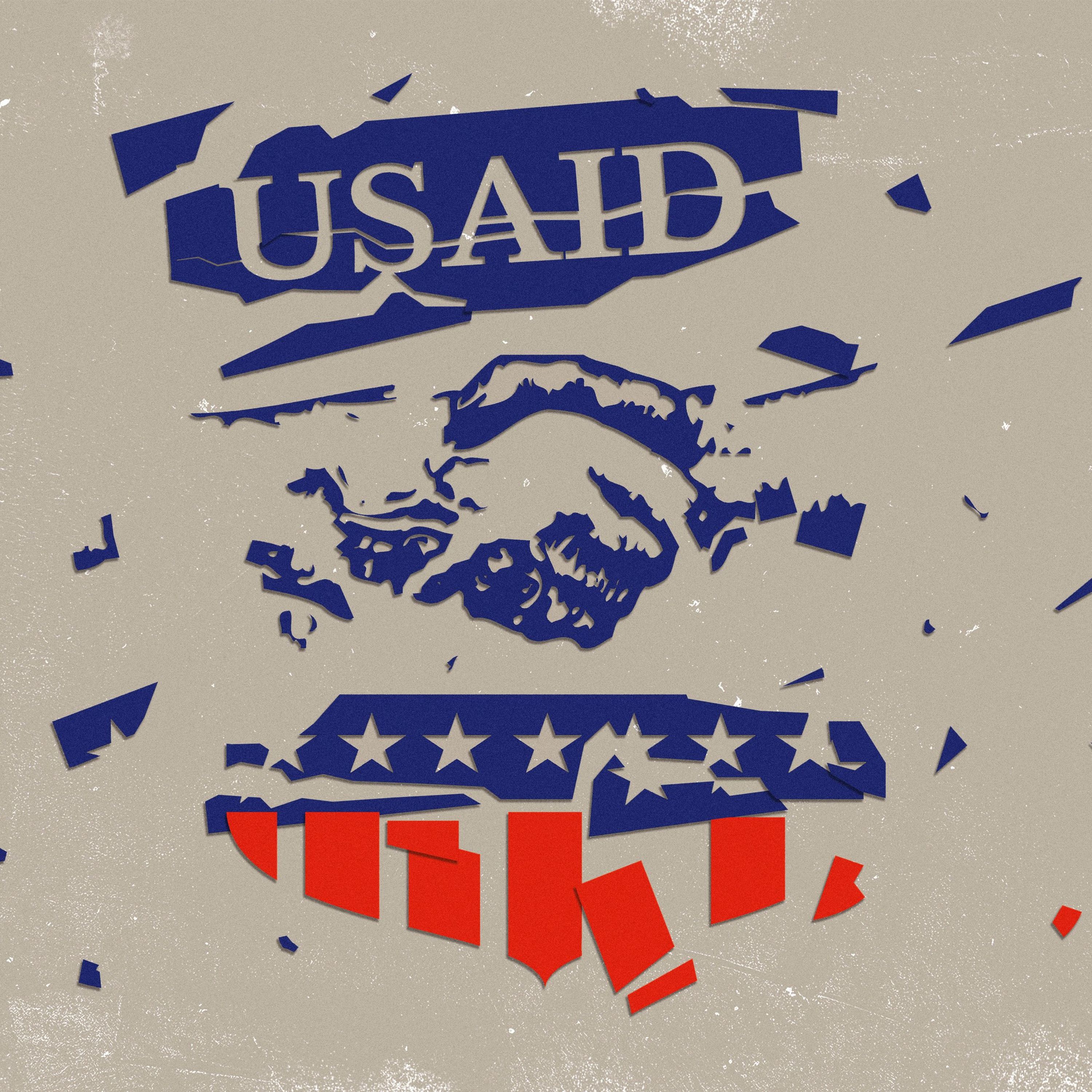
The New Yorker Radio Hour
How an Estimated Seven Hundred Thousand People Have Died from DOGE’s U.S.A.I.D. Cuts
00:31:47
Atul Gawande, the former assistant administrator for global health at U.S.A.I.D., on the devastating effects of cuts to international aid by DOGE and Elon Musk.
Loading summary
Transcript67 lines
- [00:02]
Narrator/Producer
The New Yorker Radio Hour is a co production of WNYC and the New Yorker.
- [00:09]
David Remnick
Welcome to the New Yorker Radio Hour. I'm David Remnick. Doge, the so called Department of Government Efficiency has officially been terminated. Its July 4th sunset date was part of the original Trump executive order that created the agency. And Elon Musk, the chainsaw wielding leader of dogecoin, oversaw the dismantling of usaid, which used to provide life saving, medical and nutritional programs all around the world. Musk, who recently became the world's first trillionaire, claims there's no evidence that a single person died after the Trump administration canceled more than 80% of USAID's programs, cutting basic health care access to some 95 million people.
- [00:55]
Narrator/Producer
All right, it's Monday in America and
- [00:57]
Atul Gawande
Elon Musk is having a stage five
- [00:59]
Narrator/Producer
meltdown on Twitter over Congressman Ro Khanna.
- [01:02]
Narrator/Announcer
That's right.
- [01:03]
David Remnick
The world's richest person has spent all day tweeting, going after me.
- [01:08]
Angelina David Duer
Why?
- [01:08]
David Remnick
Because I cited an academic study that his Doge cuts may lead to the deaths of millions of children overseas.
- [01:17]
Atul Gawande
Musk says no one can name a single person who died, Quote, not a single name. And he also tried to claim that USAID is responsible for COVID 19 and the Russian invasion of Ukraine. Trump was fixated on USAID and its spending, which is a little surprising given it amounted to less than 1% of the federal budget. Yet Trump and Elon Musk quickly dismantled the agency, with Elon at one point proudly tweeting he'd spent the weekend feeding USAID into the wood chipper.
- [01:44]
David Remnick
Atul Gawande was the assistant Administrator for Global Health at USAID until he stepped down the same week that Donald Trump stopped US foreign assistance. Gawanda says an estimated 700,000 people have already died as a result of these cuts. Back in 2025, I first spoke to Atul, who writes for the New Yorker, when USAID was being targeted. And over a year later, I wanted to check back in with him to see what's happened in the aftermath. Atul, Elon Musk claims there's no evidence at all that Doge cuts to USAID led to even a single death. He tweeted that, and I'm quoting here, that no validated medical funding was stopped and that legitimate life saving funding continued. And you've replied saying that the reduction in life saving aid has already led to no less than 700,000 deaths. How do you come to that number? And how do you imagine he came to his conclusion?
- [02:49]
Atul Gawande
The 700 plus thousand that have been estimated to have died at the end of a year since the USAID closure comes from a couple of different sources. One is a Boston University estimate. A separate one comes from an international study published in Lancet looking at the impact USAID had over the last 20 years, saving 92 million lives and projecting, based on the cuts that have occurred, how many deaths have occurred. And they came up with a very similar number. This is what pissed off Elon Musk. Ro Khanna cited the estimates that 4.5 million children, just children, would die by the end of 2030. The precision of the numbers is a question, but it's clear it's at minimum tens of thousands in 2025 and very likely hundreds of thousands.
- [03:47]
David Remnick
This is an enormous number. So I think it would be worth specifying what people wear. People dying of what? Maybe if you could put some more specificity on this, that it ceases to be just a gigantic number. Yeah.
- [04:09]
Atul Gawande
A big part of what USA did was humanitarian response, disaster relief for tens of millions of people who are fleeing war or in conflict zones or were driven out by floods and those kinds of things. WHO estimates that where 80 million people were reached by emergency health services in 2024, that number in 2025 dropped by more than 50 million people. That included, for example, 14 million people who were victims of severe acute malnutrition. 2.5 million of them were children. Like a peanut bar that gives you your calories for the day distributed by community health workers that US manufactured but was cut off the. That cut the death rate to less than 1%. That's just 1 category. Another one is childbirth. You know, many of these people who are being forced out of their homes are pregnant. They deliver thousands of babies and die when they have no services. Another example is Ukraine was the biggest single beneficiary of aid and that was energy infrastructure that kept heat going. It was services for three and a half million children and pregnant women displaced from their homes. I could go into the HIV story, I could go into the TB story. I could go into the ways that USAID was ensuring vaccines were going out in the world. We're not even beginning to see the vaccine preventable deaths, the HIV deaths, the TB deaths rise. We know these are only going to grow with time.
- [05:53]
David Remnick
Atul, there's a great deal of discussion about the number 700,000 and the mortality data itself. Help me on that.
- [06:02]
Atul Gawande
One of the complaints is these are projections and therefore the projections are fake. When will we actually know what the child mortality rates are? It's going to be a While the US was the provider of some of the best, highest quality data in the world out of usaid, which was dismantled, the inspectors general that would be doing audits and investigations to show what systems were broken, they fired the inspector general at USAID and have intimidated the IGs from doing those kinds of investigations. And so the result is, in the best of circumstances, we will have data over the next two to three years. This is not like deaths of war where there are mass graves. You have a jump in child mortality from 3% to 4%. That's a 1/3 jump. And yet when you're in a community that has a 97% survival rate versus 96% survival rate, you don't feel it and you don't see it just from people walking around. We've been compiling a tracker. I say we, I have put together a team of a group of reporters and journalists that have been compiling all of these reports and already they have documented not only the systems have gone down, but 1200 different individually identified people who have directly died from the shutdown of foreign aid.
- [07:28]
David Remnick
Musk defenders have responded saying that the United States shouldn't be responsible for taking care of people around the world. What do you say to that argument?
- [07:39]
Atul Gawande
When JFK argued for usaid, he was arguing that assistance abroad would first and foremost was also assistance to the United States itself. This is a tremendous source of influence for a President of the United States in exerting the power of this country in a way which serves our security and the long range security of the countries that are involved. If we did not have this program, our voice would not be as distinct. So that this is very essential.
- [08:08]
Narrator/Announcer
I don't.
- [08:09]
Atul Gawande
One is the direct benefit to the United States of eradicating polio in the world, eradicating outbreaks. We were the driver of eradicating smallpox. Interestingly, with Russia as the instigator of the idea. This was rooted in the Marshall Plan, the idea that we would, instead of pillaging the world around us as they were defeated in war or weakened, we would invest, invest in their liberty, invest in their economic capacity, invest in their survival. And the result was trade partners of the United States received assistance from the United States along the way, whether it was Germany or South Korea or then India or then places like Mexico and Latin America. And now we see Africa starting to become middle income. Along the way, total foreign aid from the United States was in the $60 billion range, got cut more than 60% and then what was left has been sort of turned into give me your critical Minerals, or I won't give you HIV drugs. This goes hand in hand with an approach that says we don't cooperate in the world, we try to dominate. USAID couldn't be more opposite in its approach to the world.
- [09:25]
David Remnick
You mentioned JFK. Let me mention RFK Jr. I haven't heard that much about him in this context. What has he been doing with the CDC and other agencies that fall under Health and Human Services, his agency? What's he had to say about all this?
- [09:40]
Atul Gawande
First of all, he's reached beyond HHS by stepping in to block foreign assistance with the White House backing for vaccines around the world. But within the hhs, CDC is hollowed out as an organization capable of acting abroad or at home in public health. More than a quarter, quarter of their staffing has been removed, their laboratories have been shuttered. Significant parts of them, the vaccine advisory committees needed to approve vaccines are not functioning at this point. And it's going to take a while to recover that. CDC can recover it because they still have an institution, they still have budgets that can be restored. It will take a while to build the expertise and infrastructure. USAID is a shell and will be hard to bring back. It will take time for countries to trust that every election does not become a change in the goals in the first place. It takes years to eradicate polio, years to build their surveillance for polio pandemics, years to reduce malnutrition in the world. And if we're divided about that and that becomes political fodder, then the institutions can't function. We won't be able to make a way forward. So I'd say the number one thing to restoring capacity is getting back to a place that we believe that these kinds of institutions are what we all want.
- [11:24]
David Remnick
Atul, you can't read anybody's mind, but what was Elon Musk's motivation when it came to cutting US Aid so severely?
- [11:34]
Atul Gawande
The approach of Doge was like the approach he's taken with companies like Twitter. Take over, slash and burn. If anything's broken, we'll fix it after. And that was what continues to this day to be his argument.
- [11:47]
David Remnick
So is vanity, the vanity of an efficiency expert.
- [11:52]
Atul Gawande
Only he's destroying in the name of efficiency and left no efficiency behind at all. And he came in believing you could cut $2 trillion out of government. And it hit the shoals of USAID, this obscure agency accounting for less than $10 per American taxpayer per month. And within weeks, suddenly it became apparent that there would be massive loss of life. And it made the Enterprise incredibly unpopular. He thought this was going to be a weekend and we'll move on. And it didn't turn out to be the case at all.
- [12:34]
David Remnick
I wonder if you could give a specific example of a program that went down in flames in this effort and what the effect of its destruction has been in concrete terms.
- [12:49]
Atul Gawande
The TB program which dealt with a long term effort to try to reverse what is still the biggest infectious killer in the world. And there are drug resistant strains that are now evading our current arsenal of TB drugs. That work involved a project that I was part of that brought chest X rays that were read by an AI reader. For countries that didn't have a radiologist, you would screen, get a molecular test the same day and be able to be put on treatment and follow up so that you stay on your medicines because you have to stay on your medicines for a year. Those trials, the innovation was stopped. The programs to roll out, the innovations that have been created were stopped in South Africa, in Mozambique, in other places like that where you had high rates of tb. And they have now seen the tuberculosis deaths starting to rise. The cases have grown by multiples and they had the names of people who've died.
- [13:57]
David Remnick
A couple of things happened financially in the world in the last two weeks. First is that we have now conclusively discovered that the President of the United States, we have to say is the person most responsible for this, has enriched his family by at the very least a couple of billion dollars in cryptocurrency scams that have taken hold while he's president, that enriched him and his family. And Elon Musk has become the world's first trillionaire in the history of humanity. The first trillionaire. When you think about this, what possibly motivates these two unbelievably wealthy human beings to exact such. What seems to me, and certainly seems to you, ruthless destruction on programs that for with all their flaws and all programs have flaws, such ruthless destruction on the health of humanity, what could possibly motivate them? And here I'm enlisting someone who's a surgeon as a possible psychiatrist.
- [15:05]
Atul Gawande
Let me put it this way. The. In the memorandums of understanding that they now make with countries where they are putting some foreign assistance in, you don't see commitment to goals like we're going to reduce the overall mortality of. Of for children in the world. We're going to stop neglected tropical diseases that the US has led the way in eliminating conditions that ranged from leprosy to river blindness. It's unimaginable that this is a group of people who would commit to such goals. They see them as woke. They see them as signs of weakness instead of taking a ruthless their view of the world.
- [15:52]
David Remnick
Wait, wait, how is it woke to save the lives of children? Is it because they're not white European children? In the main,
- [16:01]
Atul Gawande
the worldview, the actions that you see are that you believe the world is in a moral, ruthless Mad Max world of the dominators and the dominated. And it is woke to believe that we can come together and solve problems. It is naivete and worse. It's a distraction from the fact that we're in a battle and the world is governed by those who are strong dominating the weak.
- [16:39]
David Remnick
I'm speaking with Atul Gawande, former Assistant Administrator for Global Health at usaid. He's also a surgeon, a professor of health policy, and a longtime contributor to the New Yorker. This is the New Yorker Radio Hour.
- [17:10]
Narrator/Announcer
The New Yorker Radio Hour is supported by Mint Mobile. There are things in life that you don't want to be transparent, like your swimsuit or your search history. But when it comes to your wireless bill, transparency is everything. That's why Mint Mobile's wireless plans have no gimmicks and no gotchas. Just high speed data and reliable coverage on the T Mobile 5G network. And right now all plans are $15 per month, even unlimited. Choose from 3, 6 or 12 month plans and say goodbye to a monthly bill. You can even bring your current phone and your number. To get your new wireless plan for just 15 bucks a month, go to mintmobile.com nyradiohour that's mintmobile.com nyradIOhour cut your wireless bill to 15 bucks a month at mintmobile.com nyradIohour that's it. There's no catch. Upfront payment of $45 for three months, $90 for six months or $180 for 12 months. Plan required $15 per month equivalent taxes and fees extra initial plan term Only greater than 50gb may slow when network is busy. Includes up to 20gb hotspot capable device required Availability, speed and coverage varies. See mintmobile.com this is IRA Glass of this American Life.
- [18:28]
David Remnick
Do you know our show? Okay, well either way I'm going to tell you about it. We make stories, old fashioned stories that hopefully pull you into the beginning with funny moments and feelings and people in surprising situations. And then you just want to find out what is going to happen and cannot stop listening. That's right. I'm talking about stories that make you miss appointments and Ignore your loved ones. This is American Life. Every week, wherever you get your podcasts, This is the New Yorker Radio Hour. I'm David Remnick. USAID was originally established by President Kennedy in 1919 61. It helped eradicate smallpox in the 70s, and since 2003, it's provided HIV and AIDS treatments that have saved some 26 million lives. In recent years, it helped save more than 9 million children through vaccine access, and it also helped eradicate wild polio in Africa in 2020. I'm speaking with Atul Gawande, someone who's very familiar with the successes of USAID over the years. He was an assistant administrator for global health at the agency before stepping down in January of 2025. Let's return to our conversation. I had never, never had the impression that Trump voters wanted this, that Trump voters were voting for Trump the first time, the second time, or the third time because they wanted to see aid to really disadvantage populations all around the world dry up and disappear, leading to hundreds of thousands of deaths.
- [20:14]
Atul Gawande
I couldn't agree more. That has been extremely unpopular. As the word filtered out of abandoning HIV patients, people in clinical trials, you name it, the US across both parties and independents, reacted with horror.
- [20:37]
David Remnick
What is your sense of how reversible this is? In other words, how much more damage is going to be done and how much is it possible to put this terrible genie back in its bottle, if that's the right metaphor.
- [20:51]
Atul Gawande
It's so unpopular that both Republicans and Democrats in Congress, in the Senate, voted for restoring the budget for foreign aid. They also refused to end and close down USAID completely, so it didn't exist on paper. And they want the president and his officials to spend the funds on the things they specified. The power of the purse includes instructing the executive branch. It's already become apparent to the administration that they need these functions after all. They are now attempting to rehire into the State Department disaster assistance teams that were dismantled, but they have none of the infrastructure we had with offices around the world and embassies, depots that had stockpiles ready to go. And it's not clear they have the intent, but they know that it's unpopular. So they're trying to say we're doing some of this stuff.
- [21:54]
David Remnick
So let's assume the best thing happens and the money is restored, infrastructure is rebuilt, and in the end, what will be the damage report for this adventure in Doge?
- [22:09]
Atul Gawande
It's already public. Man made death. We're at hundreds of thousands of dead. We're seeing the signs of reversal of gains in hiv. I just received information from the African Neonatal Network and they have spikes already in women delivering babies who have hiv. So we know these conditions are getting worse. It's not just Democrats turning some of these things back on. We have to have a bipartisan commitment about the idea of the role the United States plays in discovering solutions, cooperating and leading the world together to get them out into the world and to set high standards for what the world can accomplish. That'll take time, but it's going to be millions of deaths.
- [23:05]
David Remnick
Millions of deaths.
- [23:07]
Atul Gawande
It's millions of deaths.
- [23:10]
David Remnick
Earlier I asked you to be a psychiatrist. Now I'm asking you to be a political analyst. And both things are asking a lot. Who will be held accountable by either the law or more likely, history in this episode, and let's hope it's a limited episode. How will the amount of destruction and death be accounted and what effect do you think it'll have on the lives of those responsible for executing this?
- [23:40]
Atul Gawande
I think that the reason why Elon Musk, the same month he's been made a trillionaire, is screaming online and aloud at congressmen and others and responding to things that I put online is because he believes he's going to be held accountable by history. Trump routinely asks publicly and reported privately about whether he's going to hell or not. And the anger that is so directed at those who suggest there has been public man made death. The anger comes from the cognitive dissonance between what they want to think they are world dominators, people who have been remembered in history as having done good. They can't countenance the image that is suggested by this, which is that they are monsters.
- [24:38]
David Remnick
Atul, you were just in South Sudan or not long ago. Tell me, why were you there in the first place and what were you trying to find out?
- [24:46]
Atul Gawande
The United States has been instrumental in supporting its very establishment as a country. It's the youngest country in the world. It has still unresolved political issues and conflicts that have left people very vulnerable. And providing aid against suffering has been a key thing that the United States did. The sub counties I visited where these primary healthcare centers were, did not have intact government services. Otherwise.
- [25:15]
David Remnick
Who did you talk to?
- [25:17]
Atul Gawande
Well, I met with, first of all, a woman named Angelina David Duer, who is the clinical manager in the county for the International Rescue Committee clinics. She was overseeing the clinics that were shut down and could tell me exactly what happened.
- [25:36]
Angelina David Duer
Yes, I got a call that the manager, the health manager, James, sent a boat to go and pick me Because I was not aware that something is going to happen. I was just carrying out my normal duty. So I was called by phone. Angelina, you prepare your things. You call back. I say, what happened? Why I have not finished my work, say no, the information came from the head office that we have to stop what we are doing and any spending on that project should stop. Then I say, okay, I went and packed my thing, came to the boat, I came to gang here. When I reached at evening, I was called by the health manager, field manager, Angeline. This is what happened. So this is a stop order, not from irc, not from South Sudan. It's from where we are getting the funding that we should stop. And that order come from the President of United States.
- [26:40]
Atul Gawande
You know, it was a complete shutdown and a scramble because there were medicines and other things on the shelves they didn't want looted. So they had to get out to these places and they're very far away. You have to travel in some cases 7, 8 hours in order to get to the extent of what's there. I then went and visited some of those facilities and I connected with, with her help to the sub county chiefs, they're called the PIEIM administrators who keep their own records of deaths. So one of the things I found was that their own records showed that they are measuring an overall tenfold increase in child and adult deaths.
- [27:22]
David Remnick
Wait, wait, wait, a tenfold increase? Yes, a tenfold increase. And how much of that increase can be put at the feet of Doge and the cutting of American aid?
- [27:34]
Atul Gawande
I can't exactly parse it out, but a huge amount of it, you know, went from 42 deaths in those seven sub counties for children, for example, over two years, 2023 to 2024, and those deaths rose to 214 that they recorded. I also met with villagers and learned of dozens of cases of direct effects. I'll give you an example. So one was a woman I met in a community called Machar and her name was Nyajiek Guy Gol. Her niece was staying with her, a two year old girl who developed what the symptoms of a pneumonia. The clinic that would have been there to take the girl to was no longer there. In order to travel, she had to go three hours walking and by canoe.
- [28:30]
Angelina David Duer
So when they start traveling from here, every minute they stop, they stop. Then they give water till they reach almost to the nearest to the near facility. Then the lady stopped, the girl stopped taking any taking the water at all. She cannot able to swallow.
- [28:44]
Atul Gawande
The girl arrived alive. They, you know, attempted to do resuscitation.
- [28:50]
Angelina David Duer
They tried. They tried, like giving some air to support her in breathing till now the child's twice start diarrhea, start passing stool, coming out alone. And then from there, the breathing now reduces. The breath reduces slowly, slowly. Then the nurse came again and shed the breathing, trying to check how the baby, the child is breathing until the last breath. And then she told the nurse, now this child is no longer breathing.
- [29:19]
Atul Gawande
She had already gone into organ failure and died. Completely avoidable. And I found numerous cases like these.
- [29:28]
David Remnick
I have to say, not only must this make you beyond furious, the people there, their attitude toward the United States must be transformed.
- [29:40]
Atul Gawande
No, it's heartbreaking and devastating to see the people we've abandoned, they first and foremost are furious at their own government. These are people led by leaders who've been at war with each other for. For now, on and off for a couple of decades. Part of our role there has been to be a steady force of support against suffering. America is loved there, and that has not faded.
- [30:09]
David Remnick
How is that possible?
- [30:11]
Atul Gawande
Because we've generally been there and there is belief that we have not yet completely abandoned them, that we may yet come back. They know Trump has done it. When I left, however, this is the first time I've seen this. There was someone from China Aid. You know, China has rebranded their agency in providing cooperation and assistance. They've now called a China Aid, and there was an official coming to visit to offer their capabilities.
- [30:42]
David Remnick
Let's say that in the best scenario, the system is reconstructed. What will that require? And if the best scenario comes about, what do you think ultimately the death toll will be?
- [30:58]
Atul Gawande
You know, my parents came from India, and India was a place of starvation and recurrent droughts. And with support that lasted a quarter century, emerged after the Green Revolution and food aid as a place that was a food exporter and a breadbasket to the world. And if we're not committed to this fundamental proposition, then nothing happens. If we are committed, as we were, as the vast majority of Americans were for six decades, then incredible things happen. And I think you can see reversal. You know, if we believed in it today, we could stop this from being in millions. The only reason I predict that it gets to seven figures is because we're so deeply divided over everything right now as a country, that will halt worsening the damage, but it'll take joint effort to actually stop it and regain our momentum.
- [32:08]
David Remnick
Well, Atul, I'm sure we'll check in with you again as this terrible saga continues. And I want to thank you for all the extraordinary work you've done and you continue to do. Atul Gawande, thank you.
- [32:22]
Atul Gawande
Thank you.
- [32:27]
David Remnick
Atul Gawande is former assistant administrator for Global Health at usaid and he's currently working on a documentary about the dismantling of the agency. You can find his writing@newyorker.com I'm David Remnick and that's our program for today. Thanks for listening. See you next time.
- [32:50]
Narrator/Producer
The new yorker radio hour is a co production of wnyc and the new yorker. Our theme music was composed and performed by meryl garbus of tune yards, with additional music by louis mitchell and jared paul. This episode was produced by max balton, adam howard, david krasnow, jeffrey masters, louis mitchell, jared paul and ursula sommer, with guidance from emily bottin and assistance from michael may, david gable, alex barsch, victor guan and alejandra deckett. The new yorker radio hour is supported in part by the cherina endowment fund. You're more than just one thing. Your vehicle should be too. More connectivity when you're the boss. Hey, Google, when's my next meeting? And more space when you're the mom. Everyone in the all new Mazda CX5 more to move every side of you. Google is a trademark of Google llc. Sequences shortened and simulated on Big Lives.
- [33:51]
Atul Gawande
We take a single cultural icon, people like Jane Fonda, George Michael, Little Richard, and we pull apart the story behind the image. And we do this by digging through the BBC's vast archives, discovering forgotten interviews that change exactly how we see these giants of our culture. We're here for the messy, the brilliant, the human version of our heroes. I'm Emmanuel Joci. I'm Kai Wright. And this is Big Lives. Listen to Big Lives wherever you get your podcasts.