← Thriving Kids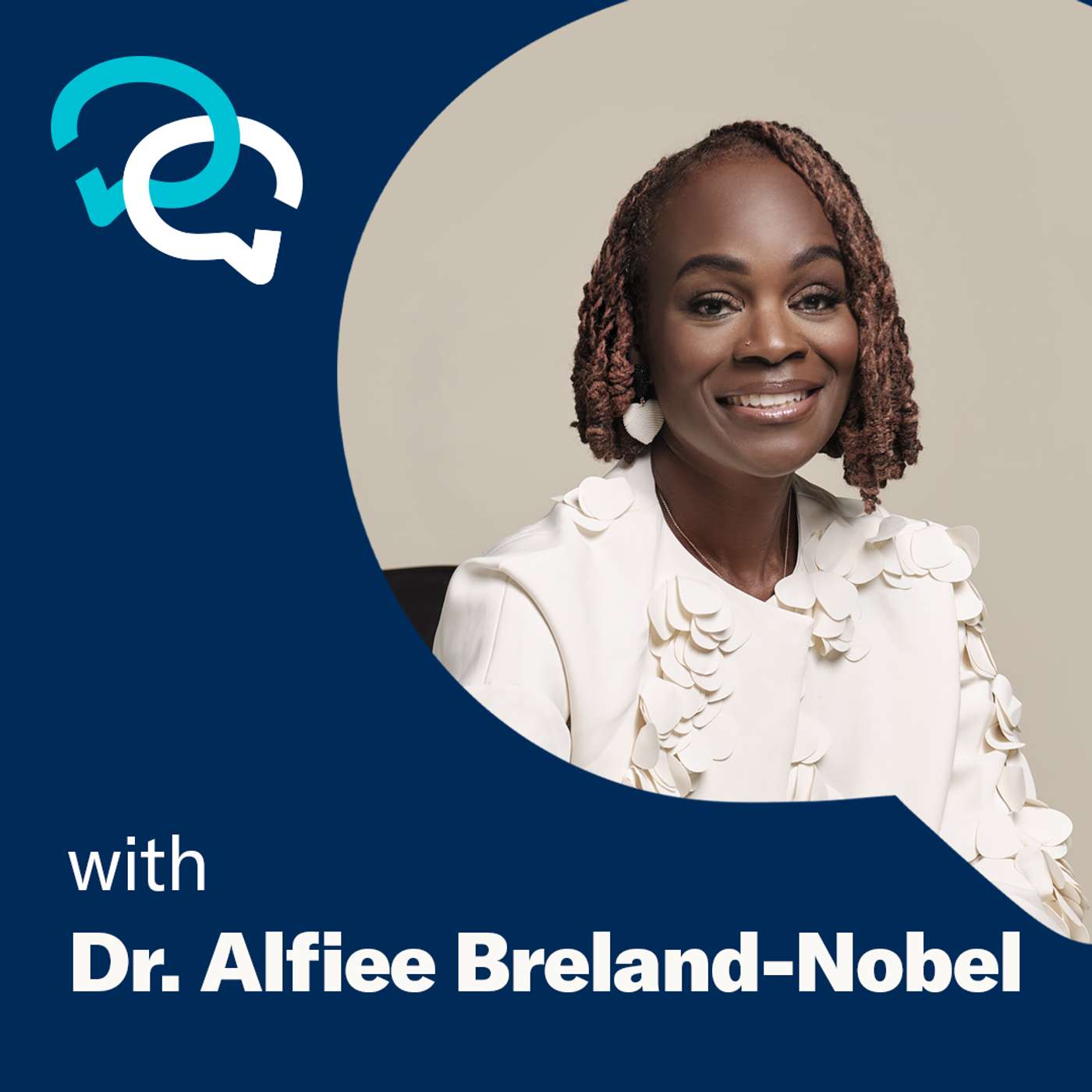
Loading summary
Transcript77 lines
- [00:00]
Dr. Dave Anderson
Hello and welcome to Thriving Kids, a podcast from the Child Mind Institute, a nonprofit dedicated to transforming the lives of children with mental health and learning disorders. I'm Dr. Dave Anderson, clinical psychologist and your host. Today I'm joined by Dr. Alfie Breland Noble, psychologist, researcher, and founder of the ACOMA Project, a nonprofit focused on the mental health of diverse youth. Dr. Alfie's work is focused on understanding what young people are actually experiencing today and making sure organizations closest to them have what they need to keep going. In this episode, we'll talk about what a recent ACOMA Project survey of nearly 9,000 young people reveals about mental health stigma, social media, and the toll of today's political climate, why meeting kids where they are, including in online spaces, is central to reaching marginalized youth, and how an empathy match can matter just as much as a racial or cultural match when it comes to mental health care. Let's get into it.
- [00:56]
I am here with a very special guest for this Thriving Kids podcast episode, Dr. Alfie.
- [01:01]
Dr. Alfie Breland Noble
Hi.
- [01:01]
Dr. Dave Anderson
Welcome.
- [01:02]
Dr. Alfie Breland Noble
Thank you. Thank you for having me.
- [01:04]
Dr. Dave Anderson
And for those of our listeners who like to watch us squirm a little bit or deal with all kinds of things, we have dealt on the podcast with dogs barking, dogs breaking down doors, lights going off in the middle of it, that kind of stuff, you know, all technical difficulties. Right now, I may only be able to see you at various points when the screen blinks in and out while recording virtual.
- [01:26]
Dr. Alfie Breland Noble
Gotcha. No problem.
- [01:28]
Dr. Dave Anderson
Your sound and everything, you could see me very well. So this is good for our listeners.
- [01:32]
Dr. Alfie Breland Noble
Yes, we're golden.
- [01:34]
Dr. Dave Anderson
So, Dr. Alfie, just to start off with, I mean, you have such a kind of breadth and scope of your work. Can you tell us a little bit about. I mean, maybe we can take the last just, I don't know, four or five years. You've done so many things, and you can hit some of the highlights for us on what that looked like.
- [01:53]
Dr. Alfie Breland Noble
I love that. What a wonderful question. And thank you, Dr. Dave, for having me. It was a joy to be on the panel with you at AURA a few years ago when we were together. And, yeah, so I like that you cut it down to a chunk because we'd be here the rest of this, me talking about everything I've attempted to do or actually done. And so in the last couple of years, really what my work has focused on is generating data, putting research out there for everybody. So we work very hard to try to make sure. And when I say we, I'll clarify. I mean at the ACOMA Project, which is a Nonprofit that I founded in 1999, and it used to be my research lab. So you and I talked a little bit about our backgrounds when we met. Long time ago. And my background is I was a psychiatry professor for about 15 years. First I was at Duke. I'm trying to remember it all. And then I was at Georgetown, and then I left that and came. So the last few years, it's been my research lab turned into a 501C3. And within that, we've generated a lot of data. And all of our work focuses on the three pillars of the ACOMA project. Raising consciousness, empowering people, and changing the system of mental health. That's been the bulk of it. And then more recently, I've become a funder in 2024. These are the two big, big buckets of things in 2024. Melinda French Gates named me a global leader. And I have a fund called the Maddie Fund. M A T T I E is named after my mom who passed away 20 years ago. So those two big buckets. And then I have a new book called Rise and Thrive. So all of those prior two things that I mentioned have really informed the work that went into putting this book together. And all of it focuses on exactly what you all do at the Child Mind Institute. I go way back with that institute. We have to have that story another time, just in terms of knowing people there and the origins and all that kind of thing. Used to be a Duke psychiatry professor, and that's been the bulk of it. So I appreciate the question.
- [03:52]
Dr. Dave Anderson
Yeah. So, okay. Just getting into a few of those things because you. You definitely, you know, the. The move from academia into turning your lab into a 501C3, which I feel like it's also a trailblazing aspect that could help some other psychologists who might be doing some of those things in the field, you know, over time.
- [04:10]
Dr. Alfie Breland Noble
Yeah.
- [04:11]
Dr. Dave Anderson
And you talk about kind of the data. I know that in 2025, a coma project actually released a study, and it was like 9,000 youth that you had surveyed.
- [04:21]
Dr. Alfie Breland Noble
Correct.
- [04:21]
Dr. Dave Anderson
And so, first of all, faster than the normal academia track would take to be full size things, which is great.
- [04:28]
Dr. Alfie Breland Noble
Yeah.
- [04:29]
Dr. Dave Anderson
And you all put out some fantastic graphics on your website about what it showed. What would you say were some of the main points that you saw in that work?
- [04:37]
Dr. Alfie Breland Noble
I think the biggest things were how much our young people are, I don't want to say struggling with, but managing loads of different things. Right. And so I'm sitting here looking at some of our briefs in front of me, and one of the briefs was on the impact of political media content. And that's very timely. I'm based in the dmv. Virginia is going through, you know, a big thing that they're voting for actually in the next couple of days. And so politics, where I think when I was coming through school, I don't necessarily know that we thought about young people struggling with those things. Of course they did, but it wasn't something we talked about a lot. So when I look at our data, I think about things like we learned that 60% of all youth and young adults of color who were in our survey report that they have been negatively impacted in terms of their emotional well being by what they've seen in the news related to politics. Right. And for me it makes sense because there's so much diversity in our sample and so many of those kids were negatively impacted either by Covid, you know, all kids were, and, or by some of the other political unrest that we've seen lately just here in the United States. So that's one example. There are many other examples of things that we learned. I think one of the biggies is that over 50% of our young people reported severe to moderate symptoms. Right. We used some of the same data as the not data, excuse me, same measures as the cdc, because we want it to be comparable with depression and anxiety. So things like that really stand out to me. So these unique things like political unrest and then these more universal things like what is our young people's experience with things like depression and anxiety, you know, which everybody talks about nowadays. Those were some of the insights that we gained. But there's so much more out there and that data set is so rich. We'll be generating stuff from that for a really long time.
- [06:32]
Dr. Dave Anderson
Well, and what you reminded me of with the kind of political aspect of the data there is like we did kind of research release with Sergo Health.
- [06:41]
Dr. Alfie Breland Noble
Yeah, of course, I know exactly what you talk about. Yeah, I know.
- [06:46]
Dr. Dave Anderson
And it was looking at kind of political events and political kind of discourse as well as, you know, political news and youth mental health. And one of the things that came out of that research as well was this sense that it was confirming what you saw, that youth are deeply affected by what's going on politically right now. The other piece that I found really distressing was that they're also finding fewer spaces to actually talk about in the sense that adults in their village are worried about talking to them about it, schools are worried about talking about it. You know, I think during that we, we talked A lot about how even if we went back a couple decades, schools used to do things like mock votes, you know, for major elections in school, which currently I have a nine and a six year old. They do not know what a mock vote looks like. That's never happened in their public elementary school. And so it's like this sense that if the political discourse is causing this kind of stress, but there's no place to discuss it, it then even falls further in the mental health sphere, which I think makes it really, really difficult.
- [07:45]
Dr. Alfie Breland Noble
I agree. And what you're speaking to is spot on for what so many young people go through. And that is, I think they're having to find alternative outlets to try to express themselves around the things that distress them. And you know what I'm gonna say, you know where they're turning? They turn to social media. Right. That's where they're getting all their information. That's where they find community. And so I think we have a duty in our field with the work that we do to try to figure out how do we insert ourselves into those spaces, because that's where the kids are going now. Is it the only place? No. But is it one of the places? 100%. So finding ways to engage them and as you know from your work, meet people where they are is like a really critical thing. But it starts with what you just shared, the work that you've done with Sergo. The work that we've done at a coma is giving us the information that we need to be able to find the points of entry to help our young people.
- [08:38]
Dr. Dave Anderson
Well. And also I think it really puts all of us in mental health space in a very precarious position where we have to be talking about the risks of social media in a realistic and kind of research based way, while also realizing it can be life saving for marginalized populations.
- [08:53]
Dr. Alfie Breland Noble
Correct.
- [08:53]
Dr. Dave Anderson
And kids were finding no help anywhere else.
- [08:56]
Dr. Alfie Breland Noble
Correct. And I couldn't have said it better. I mean, I think that what you've described is our right now. I feel like it's the perennial dilemma we are always struggling with. Social media is bad, you know, because that's what everybody tells us. And there are aspects that are challenging, but I think we also have to figure out how do we not leave young people behind who are in that space and who really use that space to find community. Particularly when I think about subsets of marginalized populations, like LGBTQ young people or even disabled young people. They may not even have people around them in their physical vicinity who can relate, but they have a thriving community online and on socials. And so I think it's up to us to figure out how do we make that marriage work between good mental health outcomes and the use of social media by our young people.
- [09:46]
Dr. Dave Anderson
I think that's a really good point. Another. Another point just from the Acoma project's data. One of the things I noticed was it seemed like you all had mapped that mental health engagement was increasing, but stigma. Or. Sorry, mental health engagement was increasing, but so with stigma.
- [10:03]
Dr. Alfie Breland Noble
Yeah.
- [10:04]
Dr. Dave Anderson
What did you make of that?
- [10:06]
Dr. Alfie Breland Noble
Well, I think the idea is it's good for the. But not for me. That's the way I always characterize it. Right. And so because the language is so prevalent and so Ingr in every aspect of society, the first thing that pops in my mind, and I'm sure people listening or watching can conjure an idea of some big name celebrity in the last five years who's been out there talking about their mental health. Right. So like major celebrities. So you know that I've done work with Carson Daly. He's very open about his own mental health. People like Charlamagne, Tha God, you know, I think about athletes. DeMar DeRozan and the Biggie, the first one that always pops into my head is Simone Biles. And so because our young people look up to these folks and admire them, they are really encouraged by the conversations. But that's for those folks out there, I think when it comes to me, right. And my family and my immediate vicinity, there are all these barriers still, stigma being a huge one that get in the way.
- [11:06]
Dr. Dave Anderson
So on the note of the barriers, because you also exist at this incredibly unique nexus as a funder in the way you became a funder. So this is Melinda French. Gates said, I want you to be a funder. Yes, yes. It's like the dream scenario for anyone.
- [11:24]
Dr. Alfie Breland Noble
Yes, it is.
- [11:25]
Dr. Dave Anderson
And you didn't. And this is where, like, I just want to laud you in this. You. You didn't say, okay, great. This is going to be an endowment for the Acoma Foundation. You started the Coma project. You said, this is now going to be something that I utilize to fund things. What kinds of things are you funding and what barriers are you trying to address with that?
- [11:43]
Dr. Alfie Breland Noble
I love this question. This has been something that has been such a joy for me and was not something I ever expected. Like, it literally just the way it came about, it just kind of came out of the blue. But I'm so happy that I've been placed in this position. So for the most part, what I fund I like things that are primarily, but not exclusively. They don't have to be exclusively focused on mental health and diverse young people. Right. That's the big thing. That's the biggie. I think also important is a focus on women, girls and gender expansive people. Again, not exclusive. But that's why I like to put the energy then beyond that, what really appeals to me are innovative approaches to again, meeting people where they are. So I think about one organization. I think to date we've probably funded. This has been about 18 months. We probably funded 50, maybe 55 organizations. It might be a little bit. It might be 60. I mean, we still have some ways to go. So when I think about the concept
- [12:38]
Dr. Dave Anderson
in there, I just wondered who's like, this is great. Okay.
- [12:41]
Dr. Alfie Breland Noble
Yeah, yeah, we've tried really hard to. My thing is to like far and wide, to try to reach as many people as possible through our funding. Because so many of these organizations, I mean, I'm sure you know this because of where you live and like what's around you. Yeah, so many organizations are out there working sort of hand to mouth, month to month. Like, you know, maybe they have one month of reserves to carry them forward and they're doing incredible work and they have cultural cache in their communities and people respect them. So I've named, you know, how many, like what my giving interests are. But I'll just describe one or two of the organizations. One is called the Daddy Stroller Social Club. So remember I said it doesn't have to be exclusive to women and girls and gender expansive people. But what the Daddy Stroller Social Club does is this big organization, very diverse men. I think they're based in Texas. They go out on these literal strolls and there are all these men with their kids in strollers, holding their hands, walking. They teach classes, they do all kinds of things to really build community around these men. With the idea of helping diverse men be good dads or be better dads. And so to see the visual of these guys out there on social, it blows me away every time. Cause there's all men and all little babies and it's fantastic. So that's one example. Another example is there's an organization that focuses on the birthing process. This organization in particular is based in the D.C. area. And their primary focus is black women, obviously because of the black maternal health crisis. So they train doulas, they support black women in birthing and that kind of thing. So those are just some examples. And again, you can hear the theme. Maybe it's not easy to see where the mental health components are, but clearly there are mental health components to both of these approaches to doing the work. And that's what's really important to me. So making sure that the widest range of people are able to at least see themselves engaged in the conversations with. Around mental health. And obviously, my heart is with young people. So a good portion of my giving is organizations that focus on youth and young adults.
- [14:56]
Dr. Dave Anderson
I think that if I could get any billionaire to listen the last four minutes, I'd be like, here's a great reason to just give the money to expert mental health professionals and then have them give the money to organizations doing good work is, first of all, the daddy stroller thing. Just as a dad who also got through parts of the pandemic by insisting with myself that I should take a walk in a stroller with one of my young children every day, I would have been really excited for my own mental health if there was a club in my town that might have, you know, have it around that.
- [15:26]
Dr. Alfie Breland Noble
Yes.
- [15:26]
Dr. Dave Anderson
It would have been fantastic.
- [15:27]
Dr. Alfie Breland Noble
Yeah.
- [15:27]
Dr. Dave Anderson
Because there were many times where I was kind of walking around being like, I wish somebody else was out here. Like, you know, my kids at least either asleep or, you know, thinking it's cool to see that squirrel. But, like, right. You with some conversation.
- [15:40]
Dr. Alfie Breland Noble
Yeah. And I think that's great for, like, exactly. For the reasons that you said. You need community. Like, you don't want to always be doing these things in isolation. And then for your partner. Right. For your other parent, Think about what that does for them. Like, for a moment in time, they get a little break. Do you know what I mean? There's that piece. And it also helps you bond with your children in a way that I would say, honestly, 40 years ago, like, 40, 50 years ago, you probably wouldn't have. It wouldn't have been encouraged for you to bond with your child in that way. And that has so many mental health benefits.
- [16:12]
Dr. Dave Anderson
Well, and I think it relates through to the research that, you know, even what we see with this parenting generation is that the guilt of this parenting generation, as well as the time spent, is so different in the sense that we see even that, you know, dads and moms are spending more time with their kids. That's kind of this question of, like, if we are spending all this time and we didn't have models for how to spend that time, how do you make it quality? How do you make it something that's bonding for your kids? How do you also. I mean, what. I just love about this is I think of all of my, the parents that I work with and how often it is that like we'll say, let's just say that like sometimes one parent is the primary caregiver and one parent is not. And there's this dynamic where the one parent who's not the primary caregiver leaves with the kids and then texts the primary caregiver with all the problems that are happening, which the primary caregiver then says, this is not a break for me. If you just take the kids on a walk and constantly text about how you bring the right snacks and everyone's melting down. So like, I just think the daddy stroller thing is solving two things of like giving dads community and also occupying them so they don't text their partners, like all the things that are going wrong so their partners actually have a break. This is genius. But then just go back to something you, you went straight past that. I also want to make sure all of our listeners are aware of. You mentioned a black maternal health crisis. Yes. Can you talk just a little more about that? For those of us who may not have been aware as easily of the problem, there's maternal health crisis and then there's an even more pronounced problem for black maternal.
- [17:43]
Dr. Alfie Breland Noble
Correct.
- [17:43]
Dr. Dave Anderson
Can you talk about that for a second and why.
- [17:46]
Dr. Alfie Breland Noble
Absolutely. So in a nutshell, black women are exponentially more likely to die in childbirth, giving birth to their child, to have different illnesses and diseases associated with pregnancy like preeclampsia, and just have overall poorer. A poorer trajectory. I am a mom. I gave birth to two kids and had two miscarriages. For black moms, it is just the overall process is just much more difficult and much more laden with the possibility of serious injury or death. Right. Like it literally is just that simple. And while for developed nations around the
- [18:31]
Dr. Dave Anderson
world, staggeringly terrible to begin with.
- [18:33]
Dr. Alfie Breland Noble
For a developed nation, yes, it's just bad. And so for us to be as developed a nation as we are and have these issues for a subset of the population is just unconscionable. So that's essentially the crisis that there's documented evidence, years worth of data. You know, it's not a flash in the pan that this has been an ongoing thing for many, many, many, many years. And you know, people are really trying to figure out innovative ways to address this crisis with this population specifically. So that's essentially the maternal, the black maternal health crisis. Right.
- [19:05]
Dr. Dave Anderson
And it also sounded like in your, your funding priorities. And I think this, this goes back to a lot of the work that we do across the country as well. So, like, this is something we talk about childmind all the time, is that like, no one necessarily wants child mind to come in with child mind people in their community, if they already have people in their community doing good work. So it sounds like your focus is also on making sure that those who are representative of community already work in a community, have the ability to do that sustainably.
- [19:31]
Dr. Alfie Breland Noble
Is that a hundred percent? You nailed it. And I think I will say briefly how that ties into all of my work is I really do believe that people resonate with and people relate to. And I feel like it can be a smidgen easier to make those connections and help move people from stigma to action on their mental health when they see people who they recognize as relating to their experience. So I always say I'm less concerned with the racial match. I'm more concerned with the empathy match. Can you empathize with my challenge now? Is a racial match important or other parts of identity? Is that match important? Of course. But that's not the only thing that's going to build those relationships. And so that's what's really important to me is that empathy match.
- [20:17]
Dr. Dave Anderson
Sure. That is, you know, I, I try to make sure that I'm. I'm kind of thinking about this because especially as you talk about these aspects, I am obviously a very white dude. Yeah. Doing a lot of this, you know, kind of mental health work. And so it's. Yeah, it's very helpful in talking to patients whenever I'm working, you know, across any sort of context or intersectionality to kind of be like, look, let me remind you that if you would feel more comfortable or it make you more likely to engage in mental health care, if there were aspects of my identity that you more shared with the therapist, I'm there. And then there's also, you know, the notion that I still do want to help if I possibly can for anybody who's, you know, wanting, wanting to work with me for that reason. But I think that always there's this kind of feeling of like, we don't want to think as mental health professionals, for any of us, that we're unicorns and we're the only ones who can do particular kinds of work, that there are so many reasons why people will feel engaged or, you know, feel helped, and we want to honor those. And sounds like you do a ton of that. Something. This is just incredible. I want to keep up with. Okay, so this is. You've named it the Maddie Fund after your mother underneath the coma. Just kind of indexing everything in my head now. Yeah, we're going to get to your book, I promise. The next question. Yes, but just one more question, because one of the reasons why I was my, my memory was jogged to want to invite you on the podcast, talk about all the work you're doing is I saw a. I think it was his radio show or I can't remember if the Breakfast Club is a podcast or radio show, but it was Charlamagne, the God and you talking about the Mental wealth alliance, the work you're doing together, you know, that kind of stuff. So can you talk about that a little bit before we get to the book?
- [21:52]
Dr. Alfie Breland Noble
Sure. So for the past five years, I worked with the Mental wealth alliance, which is a creation of Charlamagne, the God who everybody knows. He has a TV show. He does the Breakfast Club, which is also runs on TV in addition to, you know, the world famous radio show that they do, based out of New York. And Char has had a passion around mental health for many years. He's written two books about his own mental health. And so the Mental Wealth Foundation. I'm sorry, Mental wealth alliance was really designed to take his message and put it out there to the masses in a way that felt welcoming and invites people into these conversations. And ultimately he has this goal of getting millions of people access to mental health care. That, that's the vision and that's the dream. And so one of the ways that we've done that over the past five years is every year we host a Mental Wealth Expo. For the last four years, it was in New York. Last year, it was in Newark. Every time it's been wonderful. So the expo brings together all kinds of celebrities, loads of incredible people, and they're all folks who are invested in furthering conversations around mental health. So you have mental health professional, you have celebrities, you have religious leaders who, who participated, you have all kinds of folks who participate. And the goal is a free event for anyone in the community to come to. It's always packed and just have an opportunity to learn more about mental health. We have workshops that happen at the same time. You have yoga. We, we have had all kinds of. He's done a podcast, a live podcast before, in the earlier years with Michelle Williams from Destiny's Child. And so there are loads of things there for people to take advantage of and tip their toes into the idea and concept of taking care of their own mental health. And the final thing I'll say is this. Char's fan base, they love him and so when he says, this is important to me, it becomes important to them. And what could be better than having someone you admire say, look, my mental health is important. I'm taking care of mine. I want you to take care of yours. That encourages people to get engaged completely.
- [23:58]
Dr. Dave Anderson
And. Sorry, is the next Mental Wealth Expo planned? Because I remember on the Breakfast Club, Char said that you that he had family in Newark and that was one of his big connections and why he really liked it. Yeah, but is the next one happening in Newark? Are we.
- [24:13]
Dr. Alfie Breland Noble
I'm not sure. It's still in planning stages. So the best. The most honest answer I can give is, I'm not sure. But. But what I will say is when it happens, it always happens around World Mental Health Day. So, you know, it's always going to be around the 10th of October.
- [24:27]
Dr. Dave Anderson
Makes sense. No, this is great because so far what I'm cataloging is like, we always have show notes. We've got all kinds of leave behinds, and it's like, you know, we have a coma project already, a link to the study data. We have the Mental Wealth Alliance.
- [24:38]
Dr. Alfie Breland Noble
Yes.
- [24:38]
Dr. Dave Anderson
We can have a link to the Breakfast Club and, you know, discussions of mental health. Now, getting to your exciting upcoming news. Well, I should say it's upcoming as of our filming, but this will probably be released in three weeks, so it'll actually be like a week old. You have a new book that you've written. Tell us about that.
- [24:58]
Dr. Alfie Breland Noble
Yes, thank you so much for that, Doctor. So my book is called Rise and An Intentional Guide to Caring for your Mental Health. It's a guide for mental health for youth. And I also say for the young person inside all of us. So in a nutshell, everything that we've discussed for the most part, I took all of that together over like 30 years of a career and put it all into a book. And the purpose of the book is it really is an entry point for people. And it's not a book that you necessarily read cover to cover. It has sections. Each section focuses on a different aspect of mental health. So. And if people know me, they know I'm a very encouraging. I always call myself, like your mental health cheerleader. I'm always a person who wants to equip you with information, but I also want to equip you with the how tos for things you can try to take care of your mental health. Because while I would want everybody to have an opportunity to sit in Dr. Dave's chair, they may not get there. So what do they do? You know, what can they do until they're able to get into Dr. Dave's chair? Well, we talk about it in the book. So one example I'll give is one of the sections of the book in the book is called you are a gift. And that whole section is really about encouraging people, teaching them things like self esteem, self efficacy and self love and talking about what are the differences and then teaching them what kinds of activities can you engage in to help you take care of yourself, to help you practice self care, to help you develop self love, to help you develop a feeling of self efficacy. So we have journal prompts in there. We also have QR codes that will send people to a website where they can get explainer videos. So we have multiple explainer videos. The final thing I'll say is we have a caregiver corner on the web associated with the book. And the goal is, I really would love for parents and caregivers to get the book, sit with their young person, pick a section out, work through it together, talk about it. And I think the goal is not only is it there to support the young person, but it's also there. I think a byproduct I would love to see is for parents and caregivers to have an opportunity to reflect on their own mental health because it's doing something that you mentioned earlier in a different context. You're doing multiple things at once. You are not only talking to your child and supporting their mental health, but you are also modeling for your child that your mental health is important to you as well. And they need to see us behave in that way to know that they should behave in that way. If we don't take care of our own mental health, how can we expect them to take care of theirs? So thank you for the invitation to talk about the book. I am so excited about it. You know, it has data in it. Obviously we talk about a coma project's data in there. We talk about other folks data in there too. But it's evidence informed. I like to say it's culturally grounded for all different kinds of people. We are big on intersectionality, so the representation is there. And I'm just really excited for people to have an opportunity to pick up rise and thrive and take care of their mental health.
- [27:53]
Dr. Dave Anderson
When you say the representation is there, what does that mean for the book?
- [27:57]
Dr. Alfie Breland Noble
So for the book, when we speak about data, we're talking about six major almost got tongue tied six major racial ethnic groups, right? And so we make sure that we highlight those and we talk about data from the perspective of saying everybody's included in this data as much as we possibly could do that. I'm talking about everybody in terms of different identities. That's one, two is the visuals, right? So I have visuals of non binary folks in the book. I, I have visuals of Asian Americans, Native Americans, white people, Latinos, African Americans. Everybody is reflected in this book. So that's what I mean when I say the representation is intentional and it's included.
- [28:36]
Dr. Dave Anderson
Well, the data piece is terrific because we as a field have spent decades trying to solve a problem in the fact that so many of early studies of therapy were non representative samples. And so if you're able to say, like, no, no, no, but look, this was done with people who at least share backgrounds, you know, that's incredibly helpful. I also just love, I mean, you know, the book is doing a lot and it's kind of like a choose your own adventure, though. Like, you know, you've got the QR code, you've got the parent kind of corner. And it's this notion that, like, I really love it for the idea if I'm, you know, possibly recommending it to patient families or something like that, that like, I could say, like, do this together. This isn't like a book for a parent to give their kid and be like, look, understand yourself better and fix it. Like, this is. This is more like, we're gonna do this together. We can both do these exercises 100%.
- [29:27]
Dr. Alfie Breland Noble
And the other piece, I will say is it's for young people, parents and caregivers, but it's also for people like you and me. If you, if you're practicing, this is something you can use in your practice. And I try to, you know, teachers can use this to the extent that they're allowed to have these conversations in class because different district, I'm a public school kid too. Different districts have different rules. But you can do it in. You can use this book with groups, you can use it with individuals like you just shared, you would, you might recommend to families. So there are loads of uses for it. And I love the framing of choose your own adventure. That's essentially what it is. And the one other thing let me add really quickly, we do talk about depression, anxiety, trauma, acute stress, you know, long chronic stress. We talk about all of those kinds of things. So I don't want people to come away from it thinking, you know, we don't really dive in and talk about the real things that people struggle with in terms of their mental health. All of that is there, but we Also have other things where we talk about things like using your culture, using your background, talking with your family to learn about how maybe other people in your family have dealt with challenges. All of that is in there. So from. From my perspective, there's a little bit of something in there for almost anybody.
- [30:37]
Dr. Dave Anderson
Well, I think you also, you make an incredibly good point that, like, we see far too many books that treat it kind of like mental health all exists at this kind of surface level. And if you're really struggling, you know, to. To go back to your point about empathy, people are going to see themselves reflected if you at least mention these things. Note how difficult it is. Give people at least something that they can do around that before they hopefully seek some other help within their community.
- [31:01]
Dr. Alfie Breland Noble
You got it. I couldn't have said it better.
- [31:03]
Dr. Dave Anderson
And where did the title come from? Rise and Thrive.
- [31:06]
Dr. Alfie Breland Noble
Interesting. Years ago, during the pandemic, maybe a little bit before, my spouse gave me this pillow, and the pillow said, rise and Thrive on. And I was like, oh, that's fantastic. And it really speaks to and fits with my ideas around. You know, we don't exist in this life to just get through it. Like, at some point, we really would like to thrive. And so the idea is I want young people to feel like. Like the sun. Like when the sun, you know, rises in the morning, I want young people to feel like that. I want them to be energized. I want them to know that who they are is wonderful. I want them to know that there's a even better version of themselves they can grow into. And I want them to be patient with themselves as they try to grow into that. But most importantly, I want them to understand that if you don't take care of your mental health and you don't prioritize it, it makes it really hard for you to grow into that best and perfect version of yourself. And I want them, and I want us out here in the world to have the opportunity to experience our young people in all their uniqueness and all their wonderfulness. And we can't if they don't take care of their mental health.
- [32:12]
Dr. Dave Anderson
Yeah, I think it sounds beautiful. I. I was not expecting that. It came from a wonderful stitched pillow. Whoever made this, like, you know, pillow that you got has no idea the level of inspiration it clearly, you know, on you for over half a decade.
- [32:30]
Dr. Alfie Breland Noble
Oh, yeah.
- [32:31]
Dr. Dave Anderson
I just, you know, also going to, as, you know, our podcast called Thriving Kids, and part of. Part of the reason why we at childmind use the word thrive so much is it's kind of a positive psychology movement from making having people think of mental health just as the elimination of distress and more into the notion that you are cultivating well being. And so like this notion that you could rise and immediately be cultivating your wellbeing, which for a non morning person like me is a hard concept. This is it. It sounds like it'll be a wonderful, you know, kind of resource for, for parents, for parents to do with kids, for young adults and, and for others. And this is on sale as of mid May across all major, you know, everywhere selling retailers. Right?
- [33:18]
Dr. Alfie Breland Noble
You got it. Everywhere. As of May 12, it's everywhere. Including an ebook form. So if they, you know, somebody buys the ebook, it's going to get sent to them on May 12th. So yeah, you got it. You nailed it.
- [33:31]
Dr. Dave Anderson
So Dr. Abby, look, it's, it's a joy to have you here and just kind of discussing all of your work. I feel like in the span of a brief podcast, all we get to do is discuss all of the various triumphs that you've recently had in data collection, fund giving, you know, writing, things like that. Is there anything else you're really excited about in the work that you're doing that you want to either direct people to as a resource or uplift some other work that you're seeing that you really want people to pay attention to as a last?
- [34:01]
Dr. Alfie Breland Noble
That's a wonderful question. Oh my goodness. I think the only other thing I would say is I would want people to be out there even if they don't support a coma project. I would want people to be out looking for, finding, identifying and supporting in whatever way they can, organizations that focus on youth mental health. Because it is such a big deal, because the concept is not going anywhere. It's going to be with us. Because young people are going to continue to have triumphs with their mental health, but they're also going to continue to struggle. And so organizations that are out there really trying to do the work, I just want everybody to find them, pay attention to them, uplift them and support them in whatever way they can. So if that's a coma, if that's Childmind Institute, whatever that is, I really would want to encourage people to pay attention to the people who are really out there trying to help our young people find and take care of and uplift and support their own mental health and emotional well being.
- [34:57]
Dr. Dave Anderson
I could not agree with your points more. I mean, look, this also goes back to like, I feel like we, we are constantly hearing, you know, kind of negative talking points by this generation where folks will say things like, you know, the. The youth today are complaining or they're kind of making, you know, more out of mental health than previous generations did. And I really feel like the positive spin that aligns with what you just said is that this is the first generation that's truly holding its elders accountable for the help and support that they need. And, you know, for us to dismiss that and say, you know, oh, well, this is just, you know, a generational thing. I think it's more that, like, this is the first generation that's really been honest about what one needs to thrive, and we're meant to kind of meet them there. So to your point, the more that we can support youth mental health organizations like the ones we're involved with or others, any others, whether it's daddies with strollers or moms and their maternal and mental health, whatever, we can, you know, we're together on this.
- [35:54]
Dr. Alfie Breland Noble
Awesome. I love it.
- [35:55]
Dr. Dave Anderson
So, Dr. Alfie, thank you. It's been a joy to have you join the Thriving Kids podcast. We cannot wait to have the book join the bookshelf at lefoufou's behind us here in our set. And in the meantime, we will include links to everything we've discussed in our show notes when we release this episode. So thank you.
- [36:12]
Dr. Alfie Breland Noble
Thank you so much for having me. I appreciate it.