← Up First from NPR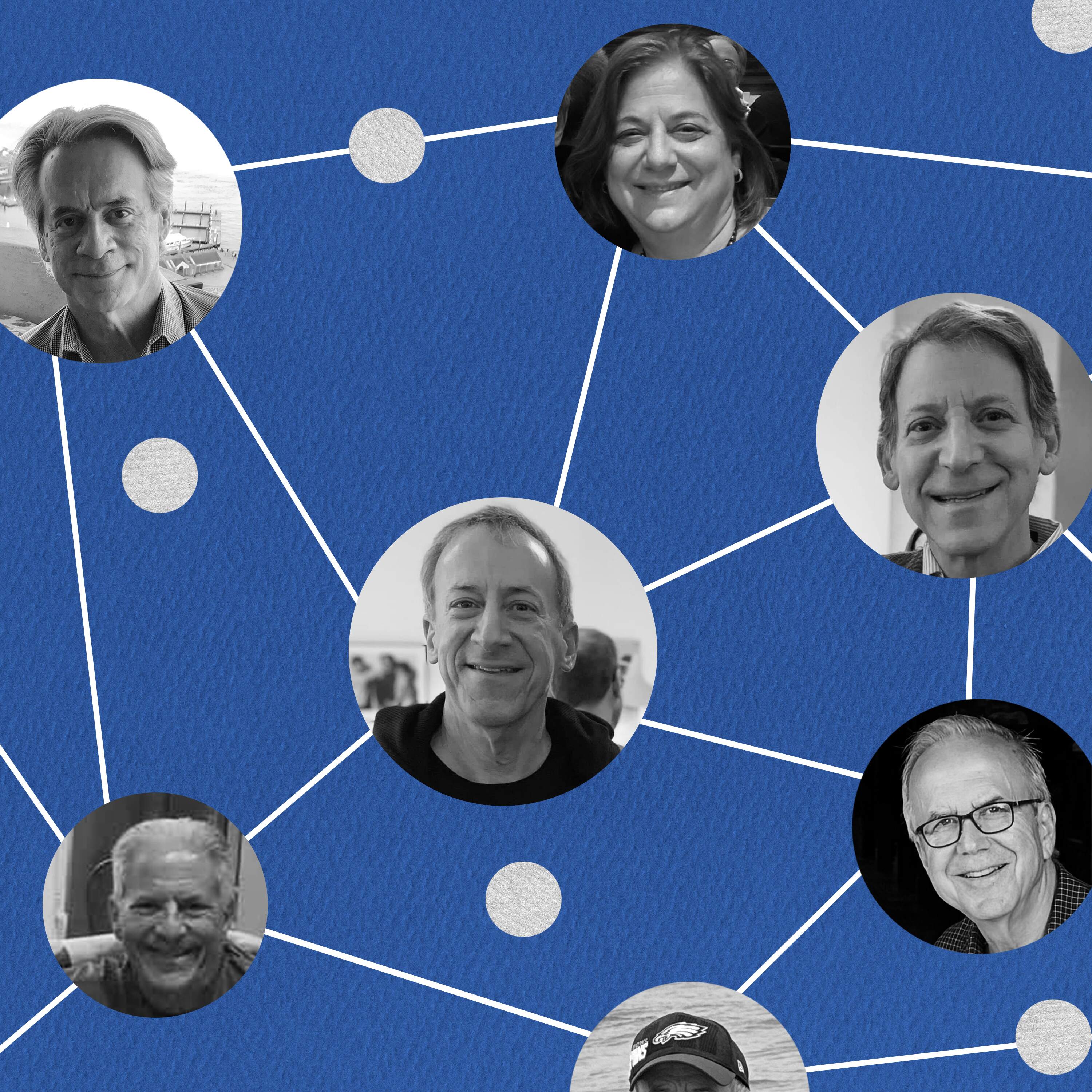
Up First from NPR
Infertility doctor secretly fathered dozens of children: how strangers became family
00:32:14
Loading summary
Transcript138 lines
- [00:00]
A
Aisha I'm Aisha Rascoe and this is the Sunday Story from Up First. Earlier this year, eight siblings gathered at a beachfront resort in Fort Lauderdale for a reunion. Like some families, this one makes T shirts for the reunion. Ryna, a retired college professor, hands them out.
- [00:23]
B
Did someone take a picture of Joe with his T shirt?
- [00:26]
A
The T shirt features a photo of a sibling's father. He's a bald man with glasses.
- [00:32]
C
Rather pleasant picture, thin lips, of course.
- [00:35]
A
This is Gil Brobsky, another sibling. He reads the speech bubble next to his father's mouth.
- [00:41]
C
Says Gilbert was my favorite.
- [00:43]
A
The T shirt is a joke in more ways than one. Gil never knew his biological father. Neither did anyone else at the table, including his half sister, Deena Harris.
- [00:55]
D
I don't know him. I mean, I think he was a bit eccentric, so who knows? I mean, it must have been sitting somewhere in his mind that what he did was odd.
- [01:05]
A
Until a decade ago, none of these siblings knew any of the others existed. And yet here they are at a family reunion, but not like one you've ever heard of. This is the story of a secret family, a group of strangers who uncovered a decades old deception, then out of that, built genuine family connections, turning what could have been a catastrophe into something affirming and meaning. NPR's Frank Langfit spent the last year interviewing 18 members of this unique family. This is the first time they're telling their story this week on the Sunday Story, One family's strange creation tale and what it says about the bonds that unite us. And just a quick warning, this episode does mention thoughts of suicide. Foreign
- [02:05]
E
this message comes from Schwab. At Schwab you can get everything from self directed investing to full service wealth management all in one place. No matter your investing goal, life stage amount to invest or know how you can invest your way with Schwab. Support for this podcast and the following message come from Strawberry Me. Be honest. Are you happy with your job? Are you stuck in a job you've outgrown or never wanted in the first place? Are your reasons for staying really just excuses for not leaving? Let a career coach from Strawberry Me help you get unstuck. Discover the benefits of having a dedicated career coach in your Corner and get 50% off your first coaching session at Strawberry Me. NPR this message comes from Odoo. Running a business shouldn't feel like surviving a software group project. Start managing your business with one unified system. Odoo is the all in one business management software. Try for free today@odoo.com Upfirst
- [03:12]
A
we're back with the Sunday story with our episode about a family and its secret origins. I'm handing it off now to NPR roving national correspondent Frank langford.
- [03:25]
F
Bryna is 65. She grew up in the Philadelphia suburbs. Bryna, like some other people you'll hear from in this story, doesn't want NPR to use her full name to protect the privacy of family members. For Bryna, the discovery of her secret family began with a question. Who am I related to? Bryna's mother was adopted in 2014. When Briana took a DNA test, she expected to find relatives she'd never heard of on her mother's side and of course, to see some familiar names of relatives on her father's side. But when the results came back, she didn't recognize a single name.
- [04:02]
B
I don't recognize anyone. Like, no one.
- [04:05]
F
Where were her cousins? On her father's side. Why weren't they there? There was more.
- [04:10]
B
I think there were like four or five people who were listed as close
- [04:15]
F
relatives, close enough to be half siblings. But neither of her parents had had other children. Bryna wondered who these people were and thought, could this be a scam in the making?
- [04:26]
B
I kept thinking, this is really sophisticated. And how much money do they actually think they're going to get from me? It's, you know, this is crazy.
- [04:34]
F
Despite her initial distrust, Bryna connected with some of these supposed half siblings. They were as baffled as she was. Bryna came to realize this wasn't a trick. A number of the half siblings told Briana they were donor conceived. Could the same be true for her? Brian and a half sibling named Kathy decided to share their raw DNA with an independent research geneticist to figure out how they were connected.
- [04:58]
B
It was three o' clock in the morning when I received a text message from her. I hope I'm not waking you. There is no other possibility except that you and Kathy have the same father. I don't know who the father is, but I am 100% sure
- [05:19]
F
Bryna was stunned.
- [05:21]
B
I went into a panic and I felt like I was sinking. And then the question was, where am I in the universe? And I had a desperate need to find out.
- [05:36]
F
As far as Bryonon knew, she had two biological parents. Her mother who had passed away, and her father. So Briana called her dad, who was then in his 80s.
- [05:44]
B
The question I asked is, did you and mom have any help with fertility treatment? Back when I was conceived. And my father's very good at. He was a master. If he didn't want to deal with something, he would deny it. And he basically said, you know, oh, I. No, no, I don't know, maybe your mother did something, something that I don't know about. And I just thought, okay, there it is.
- [06:11]
F
Bryna now knew the man who had raised her, whom she'd called dad for five decades. He wasn't her biological father. She became determined to find out who was. And along this journey, she would get a lot of help. As the months and years passed, more half siblings appeared through DNA websites such as 23andMe and Ancestry.com David Staskin is a urological surgeon in Boston. He, too took a DNA test and remembers reading his results.
- [06:41]
G
I get up and I look at the thing. Half brother, half sister, half brother, half sister, half brother.
- [06:48]
F
Eventually, they discovered 64 half siblings, all with the same biological father. The actual number is probably much higher. Only a small percentage of Americans have taken a consumer DNA test. One of the siblings, John Lowell, is an actuary. He estimates the total number of siblings could be 400 or more. Bryna created a private Facebook page for the growing group. Figuring out who their father was was tough, but there were clues. All the half siblings had been born in and around Philadelphia between 1945 and 1971. Most grew up in Jewish families. A genetic cousin got in touch with the half siblings. More than a year of sleuthing and blind alleys followed by they learned the donor was a doctor. The cousin had a realization. Diane, another half sibling, explains he had
- [07:39]
H
an uncle who was a world renowned male infertility specialist, and he just had a feeling that this could be the missing link.
- [07:50]
F
The Specialist's name was Dr. Charles Charney. Charney was an ivy league educated pioneering medical researcher. He'd served as the senior attending urological surgeon at what was then Albert Einstein medical center in Philadelphia. The half siblings needed to confirm it was Charney the problem. He'd been dead for ages, but he
- [08:11]
H
had a living daughter.
- [08:13]
F
This is Diane again.
- [08:14]
H
So they call the daughter. They say, hi, we think your father. And she basically says, I don't want to have anything to do with you guys. This is ridiculous. Da, da, da da.
- [08:26]
F
I reached out to Charney's daughter several times. She never responded. After she turned them down, the half siblings brainstormed. How could they confirm it was Charney without his daughter's cooperation? Time passed.
- [08:38]
H
They're so overthinking this. So I finally said, look, does this woman have any kids? Yeah. Do you know their names? Yeah. I said, well, give us the names and let's all go on LinkedIn and see if we know anybody connected to these guys.
- [08:52]
F
Diane found she had a friend who'd gone to law school with one of Charney's two grandsons. Law school grandson did not take a DNA test, but his brother did.
- [09:00]
H
He did 23andMe. And he was connected to us. And that's kind of how it all got confirmed. I think there was some just plain old relief. I mean, this was a long process,
- [09:12]
F
and it was just the beginning.
- [09:14]
H
It was a mystery story. Okay, so we have a name now. Who was this person?
- [09:25]
F
Charles Tarney was born in 1902 in an area which is now part of Western Ukraine. His family fled the pogroms that targeted Jews and settled in Philadelphia. Charney graduated from the University of Pennsylvania Medical School in 1926. Calvin Coolidge was president. Charney fathered his secret children between the end of World War II and the first Nixon administration, a span of more than a quarter century. The Charney sibs, as they began to refine, figured out that OB GYNs inseminated their mothers. The next question, how much, if anything, did their parents know about Charney's role? Many of the siblings adored the dads who had raised them and didn't want to cause them pain. Brian had briefly asked her father about her conception and got nowhere.
- [10:12]
B
I really struggled very early on with the question of, do I tell him about this discovery? I kept going back and forth, changing my mind about it, and I decided, you know what? I'm not going to say anything. This is his life story. He chose to tell his life story in a way that worked for him. My father was in his later years. I didn't want to take that away from him.
- [10:40]
F
There was a strange clue that at least one mother knew the semen was Charney's. Dena's mom was a painter, pretty much
- [10:47]
D
painted all the time, and she was good.
- [10:50]
F
It was at a time when women had trouble getting attention in art circles. So Dena's mom began signing her paintings with what seemed a masculine name, Charney
- [10:59]
D
Harris, which was kind of weird, and we didn't understand what that was about. So when my brothers found out the name of our biologic father, it was like, what? So if you ask me, did my mom know? Yes, of course she knew. Come on. And also, my brothers look like him.
- [11:20]
F
When David, the Boston urological surgeon, saw all the half siblings in his DNA results, he picked up the phone.
- [11:26]
G
I called my mother. Now she's at that time 90, living independently in Florida. And I said to her, mom, I said, dad didn't have any other children, whether he was married or not, and you could not have possibly had 20. So what's going on? And my mother's response was interesting because she answered right away, daddy and I went to a doctor in Philadelphia, and they process something in daddy's sperm. And then we had you. Now, she didn't say, you must be the doctor's kid, right? I would say, but mom, the father is the father of 20, some 30, some people at the time, 60 now. And the interesting thing that she said was, no, we never thought about it. We were just so happy to have you.
- [12:36]
F
David's mother declined to speak with me. Some sibs are convinced that their parents had no idea they were conceived through artificial insemination. For instance, one sibling said when she was growing up, her dad expressed a concern that he'd been afraid that he might have passed on diabetes and other genetic traits to his daughters. He apparently had no idea he wasn't their biological father. In conversations with parents and relatives, some siblings formed theories about the mechanics behind their conception. Diane said the process probably went something like this.
- [13:11]
H
There was a couple. She was going to a gynecologist. They were having a really hard time getting pregnant. The gynecologist sent them into Philadelphia to a specialist. And, you know, they would do what you would do today, take sperm samples, check things out.
- [13:31]
F
American medicine was very different back then. There were no sperm banks, patients respected and trusted physicians, and they didn't have much medical literacy in those days.
- [13:41]
H
There were a lot of men who had fertility issues. It was a source of shame at the time. What they were told was, we are going to take your sperm and we're going to give it a boost with the sperm of someone else, I think a doctor. We'll get the sample, we'll shake it up, we'll insert it back into you, and let's see what happens. And before this entire procedure, you should have sex before and after.
- [14:10]
F
This is a real thing that used to happen.
- [14:12]
H
And then these women would get pregnant. And I think because of the way it was a boost rather than a replacement, because of the fact that, you know, they had sex before and after. I think these people got pregnant and said, you never know, maybe it finally worked because we just needed a little boost.
- [14:40]
F
The Charney sibs still have questions. Why did Dr. Charney father so many children? And over such a long time, a little more than a quarter century, no one knows for sure. But at the mini reunion in Fort Lauderdale, Diane laid out the three theories the siblings have Come up with.
- [14:56]
H
Theory number one was he was just a research geek. He wanted to try doing this and see what happened and what takes and what doesn't take and, you know, just to try to further the whole field of infertility. Theory number two was he was super compassionate that he just saw all of these couples, like my parents, who were incredibly desperate to have children and who couldn't and decided that he could help solve the problem because he understood a lot about how fertilization worked. Theory number three was that he thought he had really phenomenal genes and wanted to spread his sperm throughout the world. So it was more of an ego thing than anything else.
- [15:51]
F
Joe Lubeck, another Charney Sib, is a Philadelphia neurologist. In may, he sent some of his fellow siblings a law review article. It noted that in the early decades of the last century, many practitioners of artificial insemination were explicit in their support of eugenics. A Minnesota doctor suggested in 1938 that, quote, we should use this procedure to practice good eugenics and encourage the procedure only in those who are apt to improve society. End quote. Eugenics encourages reproduction by people based on wealth, race, and physical traits. The article also said that would be parents were kept ignorant of the identity of the donor and that the doctors tried to create the illusion of paternity by the husband to spare the family shame and psychological pain. Some of the siblings who are physicians are critical of Charney. Here's David, the urological surgeon.
- [16:44]
G
If you said to me, was this ethical? I'd say no. I'd say by today's standards, it's not ethical. But I think by any standards, it's not ethical because it wasn't a donor. It was the doctor himself. Sip.
- [16:59]
F
Stu friedman is certain his parents had no idea Charney was the donor. That's because they specifically asked for a man who was not Jewish.
- [17:08]
G
I grew up Jewish, both parents Jewish. I had an older brother that was six years older than me that had a disease called familial dysautonomia.
- [17:21]
F
It's a disease carried almost exclusively by eastern European Jews.
- [17:25]
G
After my brother was diagnosed, my parents realized that they were both carriers and that if they had another child, there was a 25% chance that this child would have the same disease and probably not live to their 20th birthday.
- [17:40]
F
His parents wanted to make sure their next child, Stu, didn't get it.
- [17:44]
G
The major reason they needed a sperm donor was to avoid Jewish genes.
- [17:50]
F
Instead, they got the genes of Charney, an eastern European Jew.
- [17:54]
G
They went through this thing with my brother and they went through a lot of energy to make sure it didn't happen again. So, yeah, they would be very, very, very angry. So I'm kind of glad they went to their graves without knowing. Given the fact that everything worked out okay.
- [18:11]
F
Stu did not get familial dysautonomia. There's another thing that bothers some of the sibs. Charney continued to father children until he was 69. Most sperm banks won't take sperm from men 40 and older. That's because as men age, genetic mutations in their sperm increase, which can lead to rare diseases in offspring. Gilberotsky is an amateur songwriter. He's blunt about his feelings toward Charney.
- [18:39]
C
Miracle impersonator. Egotistic procreator. Medical fraud perpetrator.
- [18:51]
F
Despite the questions around ethics and Charney's motivations, some siblings main response is gratitude.
- [18:57]
C
I thank him for his genetic material.
- [18:59]
F
This is Ken Lasky, a retired nuclear and aerospace engineer.
- [19:02]
C
I think that he saw himself as a scientist and, you know, I was one of the experiments. I mean, if he wasn't doing that experiments, I wouldn't be here.
- [19:16]
F
Ken also says it was easier to accept the revelations about Charney because by the time he found out, he'd already lived most of his life and had a firm identity.
- [19:25]
C
Well, I'm glad that I found out when I was, you know, 65 rather than when I was 15. I don't know if I was mature enough that I could have handled it.
- [19:37]
F
There have been revelations about other doctors using their own semen to artificially inseminate women without their knowledge. The most notorious case in the US Involved a specialist in Indianapolis. He secretly fathered dozens of children between the 1970s and 1980s, pleaded guilty to two felonies. In a similar case in Colorado, families sued the doctor and won a nearly $9 million verdict. Those cases were marked by anger and recriminations. The story of the Charney sibs is different. After they figured out who their father was, they decided to go beyond emails and phone calls and meet in person. They organized their first reunion in 2017. Here's Bryna.
- [20:15]
B
We came together in Philadelphia. We decided, well, it's the one place that we all. We know how to get there. You know, when we arrived on Friday, you could tell people were nervous. All the women had their hair done, fresh manicures. I'll tell you, Frank, I went shopping for what I was going to wear. So many times I would buy an outfit, bring it home. It's not good enough. I'd go out again.
- [20:43]
F
14 sibs and a cousin showed. Each told their own story.
- [20:47]
B
Everyone had five minutes and I literally made a list of Here are the bullet points. This is what I want to cover. This is what I want to tell people about.
- [20:55]
F
Then, Bryna says, came a pivotal moment.
- [20:58]
B
One of our brothers said something that I really think changed things for us. He talked about problems in his family history and what are the chances that he would be here, that he would have a life. And he said what are the chances any of us would be here? We are miracles. And by defining it as such, the temperature in the room change.
- [21:28]
A
We'll be right back.
- [21:30]
E
This message comes from Schwab Investing with Schwab is like spending a Saturday at the farmer's market. You can fill your reusable tote bag with a bit of everything. Maybe you go for some free range self directed investing or pick up a few farm fresh trades while you peruse. You can even get help from a dedicated advisor. That's full service wealth management. No matter your goals or appetite for investing, Schwab has everything you need all in one place to invest your way. Visit schwab.com to learn more. This message comes from Miti Health CEO Joanna Strober shares why they started a virtual care platform for women in perimenopause and menopause.
- [22:11]
H
Our goal at MITI is to make sure that all women have access to really expert care starting around 35 and 40, making sure that they get access to all the things that can help them thrive as they're growing older.
- [22:24]
E
MIDI Health committed to helping women in midlife with perimenopause and menopause care, accessible via telehealth visits at. Join MIDI.com we're back with a Sunday Story.
- [22:38]
A
Frank Langfit picks up the tale of the Charney Sibs, a group of biological half siblings.
- [22:45]
F
One of the first things siblings bonded over was shared physical traits. Briana listed some of their distinct features.
- [22:51]
B
You know, like Peggy and Paul and I guess also Larry. There's a few who have like really high cheekbones and then you have the Frankenstein forehead. A lot of us have like these huge foreheads.
- [23:06]
F
Some also connected over the profession they shared with the father they never knew medicine. Charney was a renowned urologist. Gil, a doctor himself, explains, we've got,
- [23:16]
C
you know, 13 docs among us and none of us of the 13 of us grew up in a family where either parent was a doctor. It's one of the interesting mysteries of the family.
- [23:30]
F
Some of the parallels with their biological father are striking. It's something Gil reflected On in an earlier conversation.
- [23:36]
C
I have to tell you one thing which is kind of a spooky, almost a karmic connection.
- [23:42]
F
Charney was one of the first urologists in America to do testicular biopsies on infertile men.
- [23:47]
C
It's not that common a specimen.
- [23:49]
F
When Gill worked as a surgical pathologist, he took a special interest in testicular biopsies as well.
- [23:55]
C
I like to think that maybe something there more than just random coincidence.
- [23:59]
F
Charney held medical residencies in Vienna, Paris and Edinburgh. Like their biological father, many of the Sieves excelled academically. Gil studied medicine at Harvard, as did his half sibling, Scott. When Gil attended the sibling get together in 2018, he was surprised to run into Scott.
- [24:17]
C
When we went to my first reunion, Scott said, I know you. I said, huh? I said, yeah. We were in medical school. It was a year behind you. We were friends in Vanderbilt. So we talked about who our various friends were. And then he said, who'd you go out with? And there were a few that we had in common.
- [24:37]
F
Another Charney Sib studied in a combined MIT Harvard program. She attended a lecture which covered, among other things, the pathology of male infertility. Charney's expertise, the professor big brother Gil, who's 12 years her senior.
- [24:52]
C
So there I am teaching this to somebody who I had no idea was actually my half sister.
- [24:59]
F
In addition to Harvard and MIT, other Charney SIBs attended Yale, Penn and Johns Hopkins. Gill says the collective academic and professional achievement is a source of pride.
- [25:08]
C
We're a very distinguished family. We've got X number of doctors and authors and heads of academic departments and things like that. And it's like, wow, that's my family.
- [25:22]
F
As more half siblings popped up on DNA websites, someone had to give them an orientation. Over dinner at the Florida reunion, Gill explained that he came to serve as an ambassador of sorts to ease new siblings into the big news.
- [25:34]
C
It wasn't like, hey, I gotta tell you this something, fella. We try to be sensitive about it, and there's no shame, you know, we're proud to be who we are.
- [25:44]
F
But first contact can be tricky. How do you tell someone their father isn't who they think he is? When Joe, the Philadelphia neurologist, popped up on a website as a half sibling, Gil contacted him. Joe had known that he'd been conceived with the help of a sperm donor, but did not yet know who his father was. Before the Sibs spoke, Joe found an old medical staff photo of Gil online. The resemblance was striking. It looked like my college yearbook picture. I couldn't believe it. And I showed this to my wife and it was like a holy Joe got on the line with Gil. Joe was on edge. I got angry because I thought that Gil was going to tell me that his father, the one that that raised him, that he had the privilege of growing up in the same household with, was my sperm donor. And I was actually relieved when he told me otherwise. Why? Well, there was nothing that Gil had that I was really deprived of. Gil explained to Joe that he wasn't alone and that he was part of something much larger. Joe says that after hearing this, he went from trepidation to excitement. He was relieved that some of his siblings had already formed relationships and were welcoming him into a community. But some conversations with siblings backfired. Bryan recalls reaching out to a half sister after seeing her listed as a close relative on a DNA site before she spoke to Bryna, the woman had no idea the man who had raised her wasn't her biological father.
- [27:20]
B
She was very angry. My other siblings told me that I better lawyer up, that I'm going to get sued. And I'm like, what can I be sued for?
- [27:29]
F
Like, what was she angry about?
- [27:31]
B
Then I told her she was donor conceived. She had four cousins on the phone, drilling me and trying to poke holes in my to figure out where I was not telling the truth.
- [27:45]
F
The woman confronted Bryna at the second sibling reunion in Washington, D.C. she attacked
- [27:50]
B
me in front of everyone and told me that by telling her I could be responsible for suicides.
- [27:56]
F
The woman never attended another reunion. Bryna says the episode underscores just how difficult it is to share a revelation like this with a stranger.
- [28:05]
B
She's absolutely correct. I do not know at the time I'm talking to someone. I don't know who they are, what's happening in their life, whether or not this is a good moment to talk or not.
- [28:17]
F
Diane says other half siblings rejected this idea of a new family as well.
- [28:22]
H
We have 10 that really don't want anything to do with this. They're angry at their parents. They don't like us. They don't want to engage.
- [28:30]
F
For dena, who's now 75, the news came at a terrible time. She opened her DNA test results the day after her mother's funeral.
- [28:38]
D
You know, suddenly all of these little things about my family started to come into my head, and I realized, oh my God, this is real. And that was very painful, especially because I was also in mourning.
- [28:51]
F
In another way, the timing was fortuitous. Dina found out just before the second reunion in 2018, she says meeting other sibs in the same boat helped her start to process the news and feel less alone. The discovery of so many half siblings has been especially meaningful for those raised as only children. Larry Brook, 81, is a retired CPA. There are negatives to being an only child. The biggest negative is you have nobody to talk to. You have nobody to play with. I wanted siblings growing up much more than some. I mean, I always wanted a sister.
- [29:27]
G
I now have 30.
- [29:29]
F
What has it been like to have all these siblings? It's been fabulous. Tell me. I think the older you get, the more you have need. Need for what, Larry? Just somebody. Even if it's just to call them on the phone and talk to them. The reunions have now gone on for a decade. January's mini reunion in Fort Lauderdale. The siblings seemed like old friends or family, if an unconventional one jokes about Charlie. One day, the sibs and their spouses shared lunch on a terrace. Gil shared an inside family joke with Bryna about Dr. Charney's cause of death.
- [30:13]
B
I don't know the joke. Do you know the joke?
- [30:17]
G
He died.
- [30:18]
C
He died of carpal tunnel syndrome. Oh.
- [30:20]
B
Oh, I finally got it. At
- [30:24]
F
after lunch, Deena caught up with me by an artificial waterfall by the hotel pool. She reflected on how the reunions and relationships have changed over the years.
- [30:33]
D
Now it's evolving into a different kind of meeting where we just want to have fun with each other, that's all. So. And you could see we really do like each other. If we get along really well. It's very bizarre.
- [30:45]
F
The siblings I spoke with insisted they all saw Charney as their biological father, as opposed to the men they called their dads, those who cared for them and raised them. But during a reunion dinner in Fort Lauderdale, some wondered about the father they never knew. Here's Deana again.
- [31:01]
D
I did have a fantasy for a while that he was following us, following our childhood and who we were.
- [31:07]
F
Dina's one of several in her family her parents wanted, and with Charney's help, they got three children.
- [31:13]
D
My brothers and I had were very successful children, and sometimes we were in the papers, the local papers for winning chess tournaments.
- [31:24]
F
One of Dina's brothers won the national junior chess championship for kids under 16.
- [31:28]
D
I thought, Gee, maybe he watched us winning these tournaments and thought that was great. But I probably not. So that was a small fantasy.
- [31:37]
F
The Charney sibs have had time to ponder the meaning behind their extraordinary experience. Diane frames it like this.
- [31:44]
H
At the end of the day, this entire story is about what is family.
- [31:49]
F
Diane now sees parenthood and family as defined by love and nurture, not biology.
- [31:54]
H
I have no questions about who my father was. My father was not my sperm donor. My father was the guy who taught me how to ride a bike and who took me out for Chinese food on Sundays. That's my dad.
- [32:11]
F
Bryna draws a broader lesson.
- [32:13]
B
My entire life, the way that I've coped with things that are difficult or challenging is to look at it and say, how can I make this work as something positive in my life? I'm a big believer that we have choices in how we may look at things, and if one way of thinking about something isn't working, you have a choice.
- [32:46]
A
That was NPR reporter Frank Langfit. This episode of the Sunday Story was produced by Sharon Mushehy with help from Ben Rapoport and edited by Jenny Schmidt, fact checking by Will Chase and engineering by Robert Rodriguez. The rest of the Sunday Story team includes Andrew Mambo and Liana Simstrom. Irene Noguchi is our executive producer. Special thanks to David Langfit, Kathryn Laidlaw, Sasha Pfeiffer, Micah Ratner, Brian Reed and Joe Shapiro. I'm Aisha Rascoe. And up first is back tomorrow with all the news you need to start your week. Until then, have a great rest of your weekend.
- [33:32]
C
Our hopeful parents came to you cause they were desperate to conceive. You worked miracles. So they'd heard, so they were eager to believe. And so you help them have that child, which would have been more than enough. But why should you decide each time that you would just use your own stuff? You're just stuff. Serial inseminator, Miracle impersonator, Egotistic procreator, medical fraud perpetrator. When I think about what you did, you know, it makes me feel so sad.
- [34:24]
I
This message comes from HomeServe. A burst pipe, a dead water heater, the AC calling it quits. Who do you call? HomeServe is an easy way to handle unexpected home repairs with plans covering stuff basic homeowners insurance usually won't. Instead of scrambling for a contractor, you make one call to get the repair process started. Join the millions of customers who trust HomeServe right now. Go to HomeServe.com podcast for 50% less your first year savings compared to renewal price void in Florida.
- [34:57]
E
This message comes from Lisa. Beautifully crafted mattresses from LEESA are tailored for how you sleep and designed with specific preferences in mind. Go to Lisa.com for 30% off mattresses, plus get an extra $50 off with promo code.
- [35:13]
I
NPR support for NPR and the following message come from the William and Flora Hewlett foundation, investing in creative thinkers and problem solvers who help people, communities and the planet flourish. More information is available@hewlett.org.